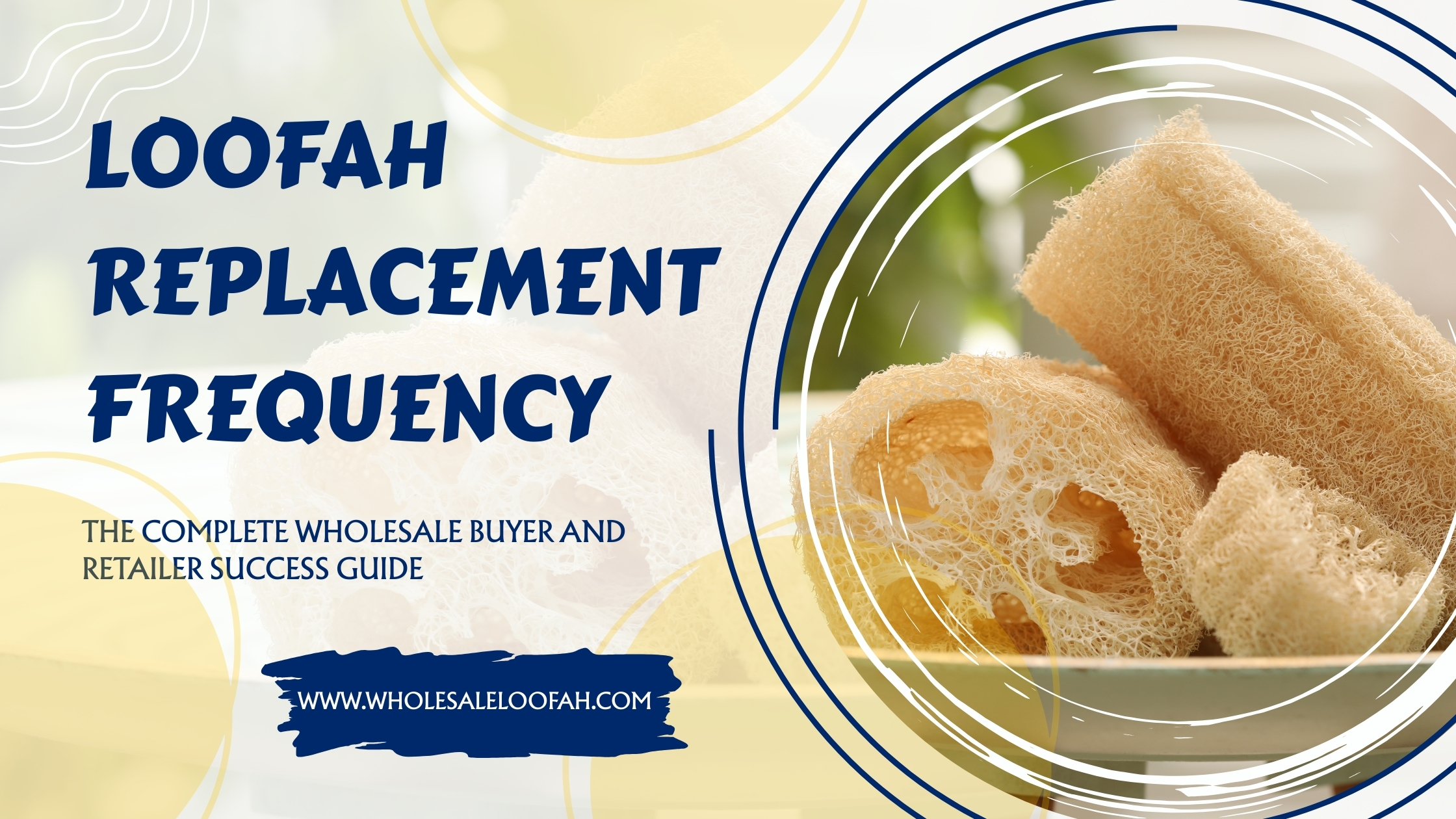
Understanding loofah replacement frequency drives profitability across the entire supply chain from bulk importers to end consumers.
The science behind when to replace loofah products affects everyone involved in the natural bath product market. These timelines translate directly into consumption rates that determine wholesale order quantities, retail stock levels, and customer education priorities throughout the distribution network.
This comprehensive guide serves wholesale buyers seeking to optimize purchasing decisions alongside retailers who need customer-facing information to drive repeat sales. You will discover quality factors that influence replacement intervals, learn how to calculate inventory needs based on consumption cycles, and gain access to consumer education materials that support your business objectives. Whether sourcing thousands of units monthly or building a retail loofah program, this resource delivers actionable intelligence for market success.
The Business Case for Understanding Replacement Cycles
Replacement frequency forms the foundation of sustainable loofah business models. Unlike durable goods purchased once, loofahs represent consumable products with predictable replenishment needs that create ongoing revenue opportunities for prepared businesses.
Market analysis indicates the global natural loofah market continues expanding as consumers shift away from synthetic alternatives toward sustainable personal care options. This growth makes understanding consumption patterns increasingly valuable for businesses positioning themselves within the supply chain. Companies that accurately forecast demand based on replacement cycles maintain optimal inventory levels while capturing market share from less prepared competitors.
The connection between product quality and replacement frequency creates strategic opportunities for wholesale buyers. Premium loofahs from superior growing regions command higher prices while simultaneously delivering better per-use value through extended replacement intervals. This relationship allows savvy distributors to offer products that cost more initially but provide better customer value, supporting premium positioning strategies that enhance margins throughout the channel.
Retailers benefit from replacement cycle knowledge through improved customer relationships and predictable sales patterns. Educating customers about proper replacement timing positions retailers as knowledgeable partners rather than transactional vendors. This expertise-based relationship building drives loyalty and repeat purchases that compound into significant revenue over time.
Calculating Business Impact from Replacement Intervals
Quantifying how replacement frequency affects business outcomes enables data-driven decision making for wholesale purchasing and retail planning. The following analysis framework helps translate consumption cycles into actionable business intelligence.
Consider a retailer selling natural loofahs to 500 regular customers. Extending the average replacement interval to six weeks through premium product selection reduces annual volume to approximately 4,333 units but potentially increases per-unit revenue through premium pricing.
For wholesale buyers, understanding downstream replacement patterns enables accurate forecasting for retail partners. A distributor serving 50 retail accounts averaging 100 monthly unit sales can project 60,000 annual unit demand. Seasonal variations, promotional activities, and consumer education initiatives all modify baseline projections in quantifiable ways.
| Business Model | Monthly Volume | Replacement Cycle | Annual Projection |
|---|---|---|---|
| Small retailer | 200 units | 4 weeks average | 2,400 units |
| Medium retailer | 500 units | 4 weeks average | 6,000 units |
| Regional distributor | 5,000 units | Mixed cycles | 60,000 units |
| National importer | 50,000 units | Mixed cycles | 600,000 units |
| Spa supplier | 2,000 units | 3 weeks professional | 24,000 units |
These projections assume stable customer bases and consistent replacement behavior. Actual results vary based on market conditions, competitive factors, and customer education effectiveness.
Planning stock for the year? Ask us for a wholesale quote. We answer within 24 hours and prices stay valid for 14 days.
Product Quality and Replacement Timing
Product quality directly determines how often customers need to replace their loofah, making quality selection a strategic business decision with downstream revenue implications. Understanding the relationship between product quality and replacement intervals helps wholesale buyers optimize their product mix for target market segments.
Higher Quality Characteristics
Higher quality natural loofahs, with dense and even fiber, tend to last longer and feel consistent in use. These products can support higher wholesale prices and retail positioning, and help build customer satisfaction and brand loyalty.
Fiber density represents the primary quality indicator affecting replacement frequency. Premium loofahs feature tightly packed cellular structures that resist bacterial penetration and physical degradation. This density results from optimal growing conditions, proper harvest timing, and careful post-harvest processing. Loofahs harvested at peak maturity from ideal climates develop these dense structures naturally.
Egyptian loofah is grown in the Nile Delta, where warm temperatures, steady humidity, and rich soil suit the plant. Wholesale buyers can ask any supplier how orders are checked. EGEXO checks every order by hand for colour, holes, size, and dryness.
Better made loofahs generally last longer between replacements. This can partly offset a higher acquisition cost while delivering genuine customer value that supports retail pricing strategies.
Value Product Considerations
Lower priced loofahs serve price-sensitive market segments where initial cost outweighs per-use value calculations. These products meet basic functionality requirements while requiring more frequent replacement, which increases long-term customer spending.
Low-cost products often result from poor growing conditions, premature harvesting, or inadequate processing. Looser fiber structures break down faster. While wholesale acquisition costs run lower, shorter replacement cycles may increase customer spending over time, creating potential value perception issues for retailers.
The wholesale buyer decision between quality levels depends on target market characteristics and positioning strategy. Mass market retailers competing primarily on price may find lower-cost products appropriate despite shorter replacement intervals. Specialty shops typically benefit from higher quality products that support expertise-based customer relationships.
This comparison illustrates why quality selection requires strategic thinking beyond simple cost minimization. The relationship between acquisition cost, replacement frequency, and customer value creates complex tradeoffs that vary by business model and market position.
For wholesale buyers seeking consistent quality, see the Egexo quality standards documentation from this Egyptian supplier.
Understanding these professional guidelines helps wholesale buyers and retailers anticipate demand patterns and develop effective customer education strategies.
Care Recommendations Summary
The three to four week standard assumes several conditions that affect actual replacement timing. Daily use accelerates contamination compared to less frequent use. Proper rinsing and drying between uses slows bacterial growth. Individual skin conditions may necessitate more conservative replacement schedules.
Many establishments specify two to three week maximum intervals for client-use loofahs with thorough sanitization between each application. Single-use policies eliminate cross-contamination concerns entirely and represent growing industry standard for liability-conscious businesses.
This care guidance influences consumer expectations and purchasing behavior.
Factors That Modify Standard Replacement Intervals
| Factor | Effect on Replacement Timing | Business Implication |
|---|---|---|
| Higher quality product | Lasts longer | Higher price point justified |
| Low-cost product | Shortens the interval | Value perception challenges |
| High humidity climate | Shortens interval | Regional demand variations |
| Excellent user care | Extends within reasonable limits | Customer education value |
| Professional spa use | Shortens the interval | Commercial account needs |
| Hotel amenity use | Single use recommended | Hospitality market opportunity |
Understanding these modifying factors helps wholesale buyers and retailers serve diverse market segments with appropriate product recommendations and inventory planning.
Warning Signs Retailers Should Communicate to Customers
Customer education about replacement indicators supports both consumer safety and retailer business objectives. Customers who recognize when to replace their loofah make timely purchases while appreciating retailers who provide valuable guidance rather than simply selling products.
Visual Deterioration Markers
Color changes represent the most recognizable replacement indicator that retailers can easily communicate to customers. Including this information on product packaging, point-of-sale materials, or retailer websites builds customer knowledge that drives appropriate replacement behavior.
Structural breakdown manifests as visible fiber separation, tearing, or areas that feel noticeably softer than surrounding material. Educating customers to inspect their loofahs regularly for these signs encourages proactive replacement before products become hygiene concerns.
Persistent staining that resists cleaning efforts indicates embedded contamination beyond practical remediation. Retailers can include care instructions that help customers distinguish between normal use discoloration and contamination-indicating stains.
Sensory Warning Indicators
Customer education materials should emphasize that healthy loofahs maintain neutral scent and any mustiness or sourness indicates disposal need regardless of visual appearance.
Texture changes during wet use provide important feedback that customers can learn to recognize. A slimy or unusually slick feeling when wet suggests biofilm formation. Retailers who explain this indicator help customers identify contamination that may not be visually apparent.
Customer Education Checklist for Retailers
Providing this information through various customer touchpoints reinforces retailer expertise while supporting replacement behaviors that generate sales.
Inventory Planning Based on Replacement Cycles
Accurate inventory forecasting prevents both stockouts that lose sales and excess inventory that ties up capital. Replacement cycle understanding enables data-driven purchasing decisions that optimize business performance.
Demand Forecasting Methodology
Baseline demand calculation starts with customer base size and average replacement frequency. A retailer with 200 regular loofah customers following four-week replacement cycles projects approximately 200 monthly unit sales. Seasonal variations, promotional activities, and market growth rates modify this baseline for realistic forecasting.
Wholesale buyers serving multiple retail accounts aggregate individual projections while accounting for channel-specific variations. Spa and wellness accounts typically show more predictable consumption patterns due to professional protocols. General retail accounts exhibit more variable demand influenced by consumer education levels and competitive alternatives.
Safety stock calculations should account for supply chain variability and demand uncertainty. Natural agricultural products like loofahs face potential supply disruptions from weather events, shipping delays, or quality issues. Maintaining appropriate buffer inventory prevents stockouts during supply interruptions.
Inventory Planning Framework
| Planning Factor | Calculation Method | Typical Range |
|---|---|---|
| Monthly baseline demand | Customers multiplied by replacement rate | Varies by account |
| Seasonal adjustment | Historical pattern analysis | Varies by market |
| Growth factor | Market trend projection | Varies by market |
| Safety stock | Demand variability coverage | Based on demand variability |
| Reorder point | Lead time demand plus safety stock | Supplier dependent |
| Order quantity | Economic order calculation | MOQ considerations |
Wholesale buyers should establish reorder triggers that account for supplier lead times. Egyptian suppliers typically require four to six weeks from order to delivery depending on shipping method and customs processing. Building these timelines into inventory planning prevents emergency situations.
For wholesale buyers seeking reliable supply partnerships, requesting quotations from Egexo provides pricing and lead time information for inventory planning purposes.
Wholesale Sourcing Strategies for Quality and Value
Strategic supplier selection balances quality requirements, cost objectives, and supply reliability to optimize total value rather than minimizing purchase price alone. Replacement frequency considerations should inform sourcing decisions given the downstream business impacts.
Supplier Evaluation Criteria
Quality consistency determines customer satisfaction and replacement interval reliability. Suppliers with documented quality control processes and established cultivation expertise deliver products that perform predictably. Inconsistent quality creates customer service issues and damages retailer credibility.
Production capacity affects supply reliability and scaling potential. Suppliers with substantial cultivation operations can accommodate demand growth and maintain supply during peak periods. Limited capacity suppliers may struggle with larger orders or seasonal demand spikes.
Geographic origin influences both quality characteristics and logistics considerations. Egyptian loofahs from the Nile Delta region consistently achieve premium quality standards. Sourcing from established Egyptian suppliers provides access to superior products while supporting efficient shipping routes to major markets.
Communication and responsiveness indicate supplier professionalism that affects ongoing relationship quality. Suppliers who respond promptly, provide accurate information, and resolve issues efficiently make better long-term partners than those offering marginally lower prices with poor service.
Supplier Evaluation Checklist
| Evaluation Category | Key Questions | Importance Level |
|---|---|---|
| Quality standards | Documented quality checks and processes | Critical |
| Production capacity | Annual volume capability and growth potential | High |
| Geographic origin | Cultivation region and climate conditions | High |
| Export documents | Certificate of origin and phytosanitary certificate available | Medium to high |
| Sample availability | Willingness to provide evaluation samples | High |
| Minimum order quantities | Alignment with business volume needs | Medium |
| Lead times | Order to delivery timeline reliability | High |
| Communication quality | Responsiveness and accuracy | Medium to high |
| Pricing structure | Volume tiers and payment terms | Medium |
| References | Existing customer feedback availability | Medium |
Thorough supplier evaluation before committing to significant orders prevents quality issues and supply disruptions that damage downstream business relationships.
Wholesale buyers can request samples from Egexo to evaluate quality firsthand before making bulk purchasing commitments.
Consumer Care Instructions That Extend Product Life
Proper consumer care extends loofah useful life within safe limits while supporting customer satisfaction that drives retailer loyalty. Wholesale buyers and retailers benefit from including care guidance with products or making information available through customer touchpoints.
Daily Care Protocols
Post-use rinsing removes debris that accelerates bacterial growth. Thorough rinsing under running water while squeezing expels soap residue, skin cells, and other residue from the fiber structure. This simple practice significantly slows contamination accumulation.
Complete moisture removal between uses creates conditions hostile to bacterial growth. Squeezing firmly from multiple angles expels excess water. Hanging in well-ventilated areas allows remaining moisture to evaporate before the next use.
Proper storage positioning affects drying effectiveness. Loofahs stored in shower caddies, enclosed spaces, or high humidity areas retain moisture that promotes bacterial growth. Relocating to drier areas between uses extends safe useful life.
Weekly Maintenance Procedures
Deep sanitization reduces bacterial populations that accumulate despite daily care. Heat treatment through microwave exposure effectively sanitizes natural loofahs. Saturating with water and heating for sixty to ninety seconds generates steam throughout the fiber structure.
Chemical sanitization provides alternative disinfection for situations where heat treatment is impractical. Thorough rinsing after chemical treatment removes residues that could irritate skin.
Care Instruction Summary for Product Inclusion
| Care Step | Frequency | Method | Benefit |
|---|---|---|---|
| Thorough rinsing | After each use | Running water with squeezing | Removes debris and soap |
| Moisture removal | After each use | Firm squeezing | Reduces bacterial growth |
| Air drying | Between uses | Hang in ventilated area | Prevents moisture retention |
| Deep sanitization | Weekly | Heat or chemical method | Eliminates accumulated bacteria |
| Condition inspection | Weekly | Visual and tactile check | Identifies replacement needs |
Including condensed versions of these instructions with products or making detailed guidance available supports customer success that benefits retailers through satisfaction and loyalty.
Professional and Commercial Market Opportunities
Commercial accounts represent significant opportunity for wholesale buyers and distributors. Understanding professional market requirements enables effective account development and service delivery.
Spa and Wellness Facility Requirements
Professional skincare establishments prioritize product quality and supply reliability above price considerations. Client safety responsibilities and brand reputation concerns make spas selective about supplier partnerships.
Replacement protocols in professional settings often exceed consumer guidelines. Many spas specify two to three week maximum intervals regardless of visual condition. Single-use policies for certain treatments eliminate cross-contamination concerns while creating predictable high-volume consumption.
Product consistency matters significantly for professional accounts. Spas need loofahs that perform identically across uses and over time. Quality variations create treatment inconsistencies that affect client experience and staff efficiency.
For businesses seeking to serve professional accounts, Egexo private labeling services enable custom branding that supports spa brand identity while leveraging established quality standards.
Hospitality Industry Applications
Hotels and resorts increasingly offer natural loofah amenities as sustainable alternatives to synthetic bath products. This growing market segment values eco-friendly positioning alongside guest experience quality.
Single-use amenity programs require high-volume supply with consistent quality at competitive pricing. Properties offering loofahs to each guest generate substantial ongoing demand that benefits prepared wholesale suppliers.
Premium resort positioning supports higher quality products that enhance guest experience and align with luxury brand standards. Wholesale buyers serving hospitality accounts should offer multiple quality tiers to match varied property positioning.
Commercial Account Development Framework
| Account Type | Volume Potential | Quality Priority | Service Requirements |
|---|---|---|---|
| Day spa | Medium | High | Consistency critical |
| Resort spa | High | Preferred | Reliable supply vital |
| Hotel amenity | Very high | Standard acceptable | Price competitive |
| Fitness center | Medium | Standard acceptable | Durable products |
| Wellness retreat | Medium to high | Preferred | Sustainability focus |
Understanding segment-specific requirements enables targeted account development strategies that match wholesale offerings to commercial buyer needs.
Building Customer Education Programs
Retailers who educate customers about proper loofah use and replacement timing build expertise-based relationships that drive loyalty and predictable sales. Developing systematic education approaches multiplies business benefits from replacement cycle knowledge.
Point of Sale Information
Product packaging provides direct customer communication opportunity. Including replacement interval guidance on packaging or hangtags ensures information reaches every purchaser. Concise messaging like recommended replacement every 3 to 4 weeks for best hygiene communicates essential guidance without overwhelming customers.
Display signage in retail environments reinforces replacement messaging while differentiating knowledgeable retailers from transactional competitors.
Staff training ensures consistent customer communication during purchase interactions. Employees who understand replacement guidelines can answer customer questions and proactively share relevant information that supports customer success.
Digital Customer Education
Website content about loofah care and replacement supports online retailers while providing resources for physical store customers. Comprehensive guides demonstrate retailer expertise while improving search visibility for related queries.
Email marketing to existing customers can include replacement reminders based on purchase timing. Automated messages at three to four week intervals after purchase prompt timely reorders while demonstrating customer care.
Social media content about loofah hygiene reaches both existing and potential customers. Educational posts build brand awareness while establishing retailer credibility in the natural bath products space.
A Note from EGEXO
EGEXO has been exporting Egyptian loofah since 2015. Our loofah comes from our own farms and partner farms in the Nile Delta and is processed in our own factory, and every order is checked by hand for colour, holes, size, and dryness. Wholesale buyers seeking products that deliver genuine customer value should evaluate supplier cultivation practices and quality control processes rather than focusing solely on acquisition cost. The EGEXO farm to export process shows how we work from farm to export.
Frequently Asked Questions
Q: How does loofah replacement frequency affect wholesale purchasing decisions?
A: Loofah replacement frequency directly determines consumption rates that drive demand forecasting for wholesale buyers. Understanding these consumption patterns enables accurate inventory planning, appropriate safety stock levels, and strategic product mix decisions that balance customer value with business volume objectives.
Q: What quality factors most influence how often customers need to replace their loofah?
A: Fiber density represents the primary quality factor affecting replacement intervals. Premium loofahs with tightly packed cellular structures resist bacterial penetration and physical degradation significantly better than loose-fiber economy products. Growing conditions, harvest timing, and processing quality all contribute to fiber density. Egyptian loofahs from optimal Nile Delta cultivation consistently achieve premium density standards that support extended replacement intervals.
Q: How should retailers communicate replacement guidelines to customers?
Positioning replacement guidance as helpful expertise rather than sales pressure builds customer trust while supporting appropriate purchase timing that benefits both parties.
Q: What replacement protocols do professional spa accounts typically require?
A: Professional spa and wellness facilities typically specify two to three week maximum replacement intervals for client-use loofahs regardless of visual condition. Many establishments implement single-use policies for certain treatments to eliminate cross-contamination concerns. Commercial accounts prioritize product consistency, supply reliability, and documented quality standards over price considerations. Understanding these requirements enables effective commercial account development.
Q: How do minimum order quantities relate to replacement cycle inventory planning?
A: Minimum order quantities should align with demand projections based on replacement cycles. Wholesale buyers calculate monthly consumption from customer base size multiplied by replacement frequency, then factor lead times and safety stock requirements to determine appropriate order quantities. MOQs that significantly exceed calculated needs may create inventory carrying cost issues while MOQs below needs may require more frequent ordering with associated administrative overhead.
Q: What is the business case for higher quality loofahs versus low-cost options?
A: Higher quality loofahs command higher wholesale prices but last longer between replacements, which delivers better per-use customer value. This value proposition supports retail pricing and margins while building customer satisfaction that drives loyalty. Low-cost options suit price-focused market segments but may create value perception challenges over time.
Q: How can wholesale buyers verify supplier quality claims about replacement durability?
A: Requesting samples before bulk purchasing enables hands-on quality evaluation. Key indicators include fiber density assessed by handling the product, uniformity throughout the product, appropriate coloration indicating proper processing, and neutral aroma confirming clean handling. Documented quality control processes and existing customer references provide additional verification. Establishing small initial orders allows real-world performance validation before major commitments.
Q: What seasonal factors affect loofah replacement frequency and demand?
A: Higher humidity during summer months accelerates bacterial growth and may shorten replacement intervals for consumers in affected climates. Holiday gifting seasons increase demand independent of replacement cycles. New year wellness resolutions often drive January sales spikes. Understanding these patterns enables inventory positioning that captures seasonal opportunities while preventing stockouts or overstock situations.
Conclusion
Loofah replacement frequency understanding creates competitive advantage throughout the wholesale and retail supply chain.
Quality selection significantly impacts replacement timing and customer value delivery. Premium Egyptian loofahs from established cultivators consistently support extended replacement intervals that justify higher price points while building customer satisfaction and loyalty.
Key Takeaways:
- Higher quality loofahs generally last longer between replacements than low-cost ones
- Quality at origin directly determines replacement frequency and downstream customer value
- Accurate demand forecasting based on replacement cycles optimizes inventory investment
- Customer education about replacement guidelines drives predictable sales while building retailer credibility
- Professional and commercial accounts follow more conservative replacement protocols creating distinct market opportunities
Ready to optimize your loofah sourcing strategy?
For wholesale buyers seeking premium Egyptian loofahs with documented quality standards, request a quotation from Egexo to explore partnership opportunities.
Download the complete Egexo product catalog for detailed specifications across all product categories.
Request samples to evaluate quality firsthand before making bulk purchasing commitments.
Keep reading: loofah life and care tips and shower sponge lifespan.