The Business Case for Natural Bath Product Bundles
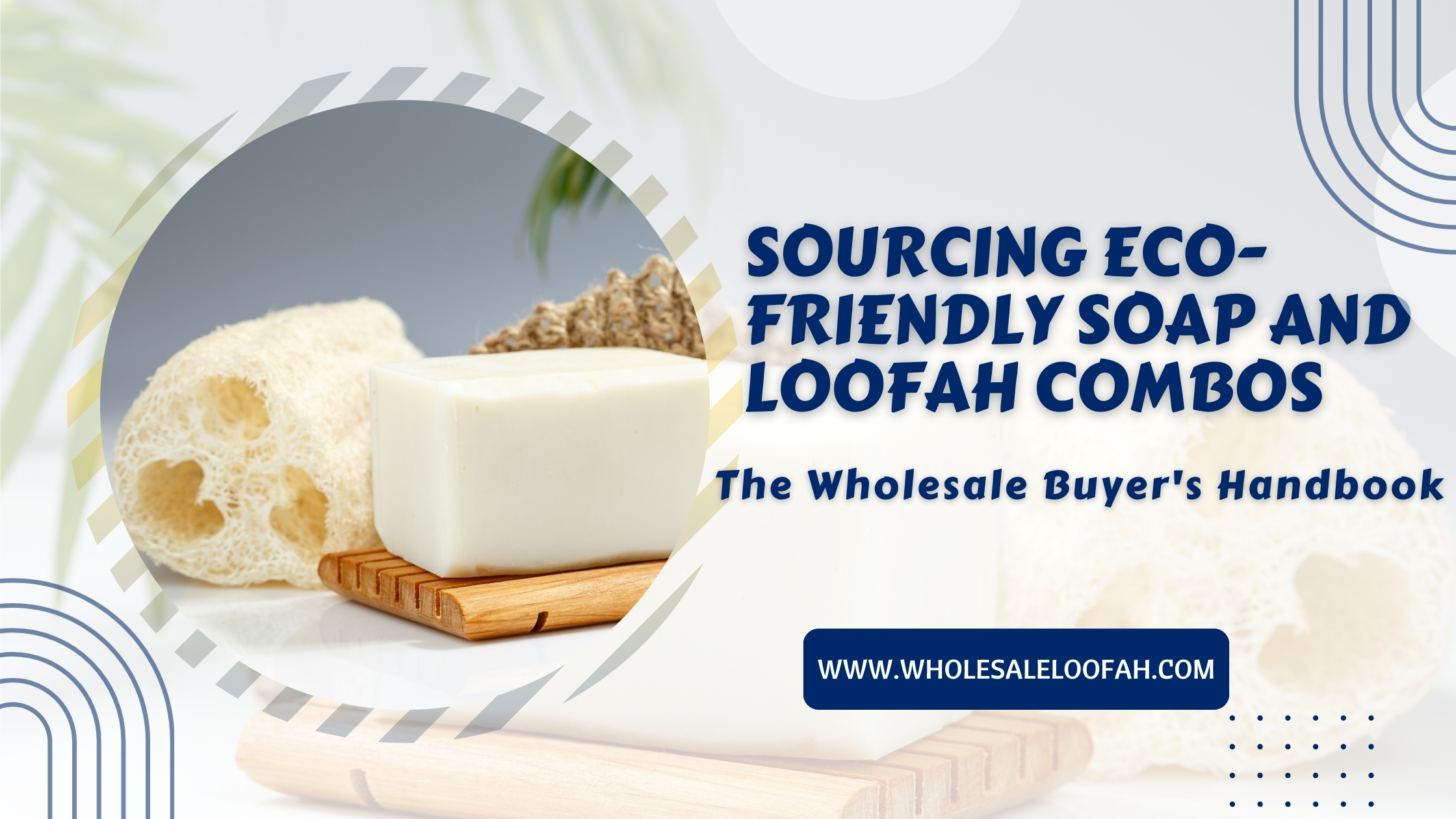
Within this expanding landscape, eco-friendly soap and loofah combos represent a particularly attractive opportunity for retailers, hospitality operators, and specialty distributors seeking high-margin products with proven consumer demand.
The bundling strategy itself drives profitability beyond individual item sales. Retailers report average basket increases of 23 percent when offering curated bath product combinations compared to standalone merchandise. For hospitality operations, premium amenity programs featuring natural alternatives generate measurable guest satisfaction improvements that translate into booking preferences and positive reviews.
Successful wholesale sourcing requires navigating complex decisions about supplier selection, quality verification, pricing negotiation, and inventory optimization. Buyers unfamiliar with natural loofah products face particular challenges distinguishing premium Egyptian-grown inventory from inferior alternatives flooding global markets at tempting price points.
This handbook provides wholesale buyers with actionable frameworks for sourcing eco-friendly soap and loofah combos profitably. From supplier qualification criteria to landed cost calculations, the guidance ahead equips purchasing professionals with knowledge typically acquired only through costly trial and error.
EGEXO has been exporting Egyptian loofah since 2015. Understanding what distinguishes reliable partners from problematic vendors protects purchasing investments while building sustainable supply chains.
Market Analysis: Why Eco-Friendly Combos Outperform
Consumer Demand Drivers
Several converging trends fuel accelerating demand for eco-friendly soap and loofah combos across retail and hospitality channels. Understanding these drivers helps wholesale buyers anticipate market direction and position inventory accordingly.
Environmental consciousness has matured from niche concern to mainstream purchasing criterion. This willingness translates directly into margin opportunity for retailers stocking authentic natural alternatives to plastic-dependent bath products.
Health awareness extends beyond food choices into personal care selections. Consumers increasingly research ingredients, avoiding synthetic chemicals associated with skin irritation, hormone disruption, and environmental persistence. Natural loofah and soap combinations satisfy this demand while delivering genuine functional benefits that justify premium positioning.
Gift market expansion creates additional volume opportunities. Eco-friendly soap and loofah combos present exceptionally well as gifts, combining visual appeal with practical utility and values alignment. Holiday seasons, wedding registries, and corporate gifting programs all drive significant combo sales for prepared retailers.
Competitive Landscape Assessment
Market entry barriers for eco-friendly soap and loofah combos remain relatively low, creating competitive pressure that rewards differentiation strategies. Wholesale buyers must consider positioning options when developing sourcing approaches.
Mass market retailers offer basic natural loofahs at aggressive price points, competing primarily on convenience and accessibility. These products typically feature lower-grade materials, minimal processing refinement, and generic presentation unsuitable for premium positioning.
Specialty retailers differentiate through curated selections emphasizing quality, origin stories, and complementary product pairings. This segment commands substantial price premiums but requires supplier relationships delivering consistent quality and reliable documentation supporting marketing claims.
Direct-to-consumer brands leverage digital channels to connect with environmentally motivated consumers seeking authentic products with transparent sourcing. These competitors invest heavily in content marketing and social proof, creating customer loyalty that traditional retailers struggle to match.
Hospitality and spa operators represent a distinct buyer segment prioritizing bulk pricing, customization capabilities, and supplier reliability over retail presentation considerations. This B2B channel offers substantial volume potential for suppliers meeting professional requirements.
Product Categories for Wholesale Sourcing
Body Loofah Varieties
The broadest category encompasses loofahs designed for personal bathing and skincare applications. Wholesale buyers source these products for retail resale, spa service integration, and hospitality amenity programs. The body loofah collection demonstrates the diversity available within this category.
Whole loofahs offer maximum flexibility for buyers serving craft retailers or offering customizable products. These uncut gourds appeal to customers preferring to portion their own sizes while providing excellent perceived value at retail.
Pre-cut slices and discs simplify retail merchandising with consistent sizing and presentation. Standard dimensions enable efficient packaging and display systems while meeting consumer expectations for ready-to-use convenience. These processed forms command modest premiums over whole loofahs reflecting additional handling.
Shaped and specialty loofahs include back scrubbers, bath mitts, facial pads, and ergonomic designs targeting specific use cases. Higher processing requirements increase wholesale costs but enable premium retail positioning with corresponding margin expansion.
Kitchen and Household Products
Natural loofahs serve household cleaning applications where sustainability-minded consumers seek alternatives to plastic sponges and synthetic scrubbers. Kitchen loofah varieties feature construction optimized for durability rather than skin comfort.
Kitchen-grade loofahs require denser fiber structures withstanding abrasive contact with cookware and hard surfaces. Processing typically involves minimal softening treatments preserving natural rigidity. These products appeal to zero-waste retailers, eco-conscious grocery chains, and hospitality operations seeking sustainable kitchen supplies.
Multi-pack configurations suit retail environments where replacement frequency creates repeat purchase opportunities. Bundling kitchen loofahs with natural dish soaps creates eco-friendly soap and loofah combos extending the category beyond personal care applications.
Specialty and Raw Materials
Raw loofah scrubbers serve craft markets, DIY retailers, and buyers seeking maximum processing control. These minimally processed products retain natural characteristics that some end users prefer while enabling custom finishing by retailers or consumers.
Pet and spa grooming loofahs address growing demand for natural pet care products. Pet owners increasingly apply sustainability preferences to animal care purchases, creating market opportunity for appropriately positioned natural grooming tools.
Bulk raw material sourcing serves manufacturers incorporating loofah components into finished products. Soap makers embedding loofah pieces, cosmetic companies using loofah-derived ingredients, and craft suppliers distributing to makers all require raw material access at competitive pricing.
Supplier Qualification Framework
Essential Evaluation Criteria
Wholesale buyers sourcing eco-friendly soap and loofah combos must systematically evaluate potential suppliers across multiple dimensions. This framework identifies critical assessment areas that predict relationship success.
| Qualification Area | Assessment Questions | Verification Methods | Risk Level if Inadequate |
|---|---|---|---|
| Cultivation Expertise | Years farming loofahs? Owned vs. contracted farms? | Company documentation, facility information | High – affects product quality |
| Processing Capabilities | In-house processing? Quality control systems? | Certification review, sample evaluation | High – affects consistency |
| Export Experience | Markets served? Shipping track record? | Reference checks, documentation review | Medium – affects reliability |
| Documentation Compliance | Phytosanitary certificates? Origin documentation? | Sample shipment verification | Critical – affects import clearance |
| Communication Quality | Response times? English proficiency? | Test inquiries before commitment | Medium – affects problem resolution |
| Customization Capacity | Private label options? Custom specifications? | Service page review, direct discussion | Low to Medium – affects differentiation |
| Financial Stability | Years in business? Payment terms offered? | Business registration, trade references | Medium – affects supply continuity |
Egyptian suppliers like Egexo document their complete farm to export process, providing transparency that supports buyer due diligence. This documentation demonstrates accountability at each production stage while facilitating marketing claims for downstream retail positioning.
Quality Standards Verification
Product quality determines ultimate success of eco-friendly soap and loofah combos in market.
Premium suppliers maintain documented quality standards specifying inspection criteria, grading definitions, and acceptable tolerance ranges. Request these specifications before ordering, comparing stated standards against actual sample products.
Grade A loofahs exhibit uniform fiber distribution, consistent coloring within cream to light tan range, appropriate density for intended application, and structural integrity throughout. These premium products suit retail environments where presentation matters and customers expect excellence.
Grade B products show minor cosmetic variations acceptable for applications where appearance matters less than function. Hospitality bulk amenities, kitchen applications, and value-oriented retail channels may accommodate Grade B inventory at reduced pricing.
Reject criteria include mold evidence, pest damage, excessive discoloration, structural defects compromising function, and foreign material contamination. Reputable suppliers segregate and discard substandard inventory rather than mixing into shipments.
Sample ordering enables physical verification before bulk commitment. Invest in comprehensive sampling across product categories, size ranges, and grades to establish quality baselines against which production orders can be evaluated.
Pricing Analysis and Margin Optimization
Wholesale Cost Structure
Understanding cost components enables informed negotiation and realistic margin planning for eco-friendly soap and loofah combos. Wholesale pricing reflects multiple factors beyond raw material value.
| Cost Component | Typical Percentage | Influencing Factors | Optimization Opportunities |
|---|---|---|---|
| Raw Material | 25-35% | Harvest quality, grade selection | Volume commitments, grade flexibility |
| Processing | 15-25% | Complexity, customization level | Standardized specifications |
| Packaging | 10-20% | Material choice, branding elements | Simplified packaging, bulk options |
| Quality Control | 5-10% | Inspection rigor, documentation | Established supplier relationships |
| Export Logistics | 15-25% | Shipping method, destination | Consolidated shipments, sea freight |
| Supplier Margin | 10-20% | Competition, relationship value | Volume leverage, long-term contracts |
Egyptian suppliers offer competitive pricing due to favorable growing conditions, established agricultural infrastructure, and experienced workforce. Requesting detailed quotations from multiple sources enables market rate verification while identifying best-value partners.
Retail Margin Analysis
Wholesale buyers must project retail margins accurately when evaluating sourcing options for eco-friendly soap and loofah combos. Margin realization depends on product positioning, channel selection, and operational efficiency.
See our wholesale prices on egexo.com.
Combo products consistently achieve higher absolute margins than individual items while delivering better perceived value to customers. This dynamic makes eco-friendly soap and loofah combos particularly attractive for retailers seeking both revenue growth and profitability improvement.
Volume Discount Structures
Wholesale pricing improves significantly at higher volume tiers, rewarding buyers who can commit to larger orders. Understanding typical discount structures helps negotiate effectively while planning inventory investments.
Entry-level orders of 500 to 1,000 units typically receive list pricing with minimal negotiation flexibility. These quantities suit market testing and initial inventory establishment but offer limited margin advantage.
Mid-volume orders between 2,500 and 5,000 units generally qualify for 10 to 15 percent discounts below list pricing. This range balances inventory investment against pricing improvement for growing retail operations.
High-volume commitments exceeding 10,000 units unlock 20 to 30 percent discounts that substantially improve margin potential. Established retailers and distributors operating at this scale gain meaningful competitive advantage through purchasing power.
Annual contracts with scheduled delivery releases may secure volume pricing across smaller individual shipments, reducing inventory carrying costs while preserving discount benefits. Discuss contract options with suppliers willing to support growing buyer relationships.
Private Label and Customization Options
Branding Opportunities
Private label programs transform generic eco-friendly soap and loofah combos into differentiated branded merchandise building retailer equity. Private label manufacturing services enable customization ranging from simple packaging modifications to comprehensive product development.
Packaging customization represents the most accessible branding entry point. Custom boxes, sleeves, bands, or tags featuring retailer branding convert supplier products into apparently exclusive merchandise. Minimum quantities for packaging customization typically start at 1,000 to 2,500 units depending on complexity.
Product specification control allows buyers to define dimensions, density ranges, processing treatments, and quality parameters creating genuinely differentiated inventory. These custom specifications prevent direct price comparison with competitors while establishing product standards aligned with target customer expectations.
Exclusive product development extends customization into unique items unavailable elsewhere. Custom loofah product design services support retailers creating signature offerings that define market positioning and resist competitive erosion.
Implementation Considerations
Private label programs require additional planning and investment beyond standard wholesale purchasing. Buyers should evaluate readiness before committing to customization programs.
Lead times extend significantly for custom orders compared to stock products. Allow 8 to 12 weeks for packaging customization and 12 to 16 weeks for custom product development beyond standard manufacturing timelines. Rush capabilities vary by supplier and typically incur premium charges.
Minimum order quantities increase substantially for private label production. Standard stock orders may ship at 500-unit minimums while custom packaging requires 2,500 or more units and custom products may demand 5,000-unit commitments. Verify MOQs against realistic sales projections before proceeding.
Design and development costs apply for custom packaging artwork, product specifications, and prototyping. Some suppliers amortize these costs across initial orders while others charge separately. Clarify fee structures during negotiation to avoid unexpected expenses.
Intellectual property considerations matter for proprietary designs or specifications. Discuss ownership rights, exclusivity arrangements, and confidentiality expectations before sharing sensitive design information with suppliers.
Inventory Planning and Management
Demand Forecasting Approaches
Effective inventory management for eco-friendly soap and loofah combos balances stock availability against capital efficiency. Several forecasting approaches suit different buyer circumstances.
Historical sales analysis provides the strongest foundation where prior data exists. Review monthly sales patterns identifying baseline demand, seasonal variations, and trend trajectories. Apply growth assumptions reflecting marketing investments, channel expansion, or market conditions.
Comparable product analysis substitutes when introducing new items without sales history. Identify similar products in existing assortments, adjusting projections for differences in price point, positioning, and promotional support.
Market research inputs supplement internal data with external perspective. Industry reports, competitor analysis, and customer surveys inform assumptions where historical patterns may not predict future demand accurately.
Seasonal Demand Patterns
Eco-friendly soap and loofah combos exhibit predictable seasonal demand variations that inform purchasing timing and quantity decisions.
| Season | Demand Index | Primary Drivers | Inventory Implications |
|---|---|---|---|
| Q1 (Jan-Mar) | 85 | Post-holiday lull, New Year wellness interest | Moderate stock, focus on replenishment |
| Q2 (Apr-Jun) | 105 | Spring cleaning, Mother’s Day gifting | Build inventory, gift sets emphasis |
| Q3 (Jul-Sep) | 110 | Summer skincare focus, back-to-school | Peak body care demand, expand selection |
| Q4 (Oct-Dec) | 130 | Holiday gifting season, year-end retail push | Maximum inventory, gift packaging priority |
Plan major purchase orders 10 to 14 weeks ahead of peak seasons accounting for production lead times and international shipping duration. Q4 holiday inventory should order by early August to ensure arrival and processing before November demand acceleration.
Inventory Turnover Optimization
Healthy inventory turnover balances stock availability against capital efficiency. Target metrics vary by channel and product category.
Specialty retail operations typically target 4 to 6 inventory turns annually for eco-friendly soap and loofah combos, translating to 8 to 13 weeks of supply on hand. This range supports product freshness while avoiding stockouts during demand fluctuations.
Mass retail channels pursue higher turnover of 8 to 12 turns annually, accepting tighter inventory and occasional stockouts in exchange for capital efficiency. These operations require responsive suppliers capable of rapid replenishment.
Hospitality and spa operations may maintain lower turnover of 2 to 4 turns annually, prioritizing supply security over capital optimization. These buyers often commit to larger orders less frequently, simplifying purchasing administration.
Storage conditions affect inventory holding viability. Natural loofahs maintain quality for 18 to 24 months when stored in dry, climate-controlled environments away from direct sunlight. Monitor inventory age and rotate stock systematically to prevent deterioration.
Logistics and Import Considerations
Shipping Method Selection
International sourcing of eco-friendly soap and loofah combos requires shipping method decisions balancing cost, speed, and reliability. Each option suits different buyer circumstances.
Sea freight offers lowest per-unit costs for large shipments, typically 70 to 85 percent cheaper than air alternatives. Transit times of 3 to 6 weeks from Egypt to North American or European ports suit planned inventory replenishment. Container loads (FCL) provide best rates while less-than-container (LCL) consolidation serves smaller orders at modest premium.
Air freight delivers speed at substantial cost premium. Transit times of 3 to 7 days enable rapid inventory response for urgent needs or initial market testing. Reserve air shipping for time-sensitive situations where speed value exceeds cost premium.
Express courier services suit sample orders and emergency replenishment of small quantities. Premium pricing limits viability for routine inventory but provides essential flexibility for business-critical shipments.
Import Documentation Requirements
Successful import of eco-friendly soap and loofah combos requires proper documentation satisfying customs and regulatory requirements. Missing or incorrect paperwork delays shipments and may incur penalties.
Commercial invoices detail transaction terms, product descriptions, quantities, and values for customs valuation. Ensure supplier invoices match actual shipment contents precisely.
Packing lists specify carton contents, weights, and dimensions enabling customs verification without complete container examination. Accurate packing documentation speeds clearance processing.
Phytosanitary certificates confirm agricultural products meet importing country plant health requirements. Egyptian authorities issue these certificates following inspection, and receiving countries require originals accompanying shipments.
Certificates of origin document Egyptian production for preferential tariff treatment where applicable and verify authenticity claims for marketing purposes. Some trade agreements provide duty reductions for qualifying products.
Bills of lading serve as shipping contracts and title documents for sea freight, while air waybills fulfill similar functions for air shipments. These documents enable cargo release and transfer.
Building Effective Supplier Partnerships
Communication Best Practices
Productive supplier relationships depend on clear, consistent communication that builds mutual understanding and prevents problems. Several practices enhance communication effectiveness.
Establish primary contacts on both sides with clear escalation paths for issues requiring management attention. Knowing who handles routine inquiries versus complex problems streamlines communication and sets appropriate expectations.
Specify communication preferences including email, messaging platforms, video calls, and response time expectations. Time zone differences between buyers and Egyptian suppliers require planning for synchronous discussions when needed.
Document agreements, specifications, and commitments in writing. Email confirmations, formal purchase orders, and specification sheets create reference points preventing misunderstandings and supporting dispute resolution if needed.
Provide constructive feedback on quality, packaging, documentation, and service. Suppliers value specific observations enabling improvement, while vague complaints provide no actionable direction.
Long-term Relationship Development
Sustainable supplier partnerships benefit both parties through reduced transaction costs, quality improvements, and business growth. Several strategies support relationship development.
Volume growth commitments demonstrate buyer value and justify supplier investment in service improvements, pricing concessions, and priority allocation. Share business plans and growth projections building confidence in partnership potential.
Prompt payment according to agreed terms establishes buyer reliability. Suppliers prioritize dependable customers when allocating production capacity or managing supply constraints.
Technical collaboration exploring product improvements, new item development, and process enhancements creates differentiation benefiting both parties. Suppliers appreciate partners bringing market insights while buyers gain innovation advantages.
Reference willingness and testimonial participation support supplier marketing while demonstrating satisfaction. These low-cost gestures strengthen relationship bonds while helping suppliers grow businesses that better serve buyer needs.
Review the comprehensive supplier overview demonstrating the credentials and capabilities wholesale buyers should evaluate when establishing new supply relationships.
Quality Assurance Protocols
Incoming Inspection Procedures
Wholesale buyers should implement systematic incoming inspection for eco-friendly soap and loofah combos protecting against quality problems reaching customers or inventory. Structured inspection catches issues early when resolution options remain available.
Visual inspection examines products against reference samples and specifications. Check color consistency, fiber distribution, dimensional compliance, and freedom from defects. Document variations with photographs supporting supplier communication.
Tactile assessment evaluates texture, flexibility, and structural integrity. Compare wet and dry characteristics against expectations. Note any products feeling excessively brittle, soft, or inconsistent.
Functional testing confirms products perform as intended. Test soap lathering, loofah durability under use conditions, and combo compatibility. Identify any performance gaps requiring supplier attention.
Documentation review verifies all required certificates, invoices, and shipping documents arrived complete and accurate. Missing or incorrect paperwork creates problems ranging from customs delays to marketing claim support.
Supplier Scorecard Approach
Systematic supplier evaluation using scorecard methodology enables objective performance comparison and improvement tracking. Key metrics for eco-friendly soap and loofah combos suppliers include:
| Performance Metric | Target | Measurement Method | Weighting |
|---|---|---|---|
| Quality Conformance | >98% | Incoming inspection pass rate | 30% |
| On-Time Delivery | >95% | Ship date vs. committed date | 25% |
| Documentation Accuracy | 100% | Complete, correct paperwork | 15% |
| Communication Responsiveness | <24 hours | Inquiry response time | 10% |
| Issue Resolution | <5 days | Problem correction timeline | 10% |
| Price Competitiveness | Market rate | Periodic competitive bidding | 10% |
Quarterly scorecard reviews with suppliers focus attention on performance gaps while recognizing excellence. Share results transparently, connecting scores to future business decisions. Top performers earn preferred status and growth opportunity while underperformers face consequences including volume reduction or relationship termination.
FAQ Section
Q1: What minimum order quantities apply for wholesale eco-friendly soap and loofah combos?
A: Minimum order quantities for eco-friendly soap and loofah combos vary by supplier and product configuration. Standard stock products typically ship at minimums of 500 to 1,000 units. Private label programs with custom packaging require 2,500 to 5,000 unit minimums depending on complexity. Custom product development may demand 5,000 to 10,000 unit commitments. Discuss specific requirements with potential suppliers during qualification, as some offer flexibility for new accounts or market testing situations.
Q2: How should wholesale buyers verify Egyptian loofah authenticity?
A: Verifying authentic Egyptian origin for eco-friendly soap and loofah combos requires documentation review and physical assessment. Request certificates of origin from suppliers and verify phytosanitary certificates reference Egyptian inspection authorities. Quality characteristics of genuine Egyptian loofahs include superior fiber density, consistent coloring, and exceptional flexibility when wet. Order samples from potential suppliers and compare against known Egyptian-origin products. Established suppliers like Egexo provide transparent documentation demonstrating cultivation and processing within Egypt.
Q3: What profit margins can retailers expect from eco-friendly soap and loofah combos?
A: Retailers typically achieve gross margins of 69 to 85 percent on eco-friendly soap and loofah combos depending on product configuration and positioning. Basic single-item loofahs yield margins toward the lower range while curated gift sets achieve premium margins. Combo bundling consistently outperforms individual item sales in both percentage margin and absolute dollar contribution. Volume purchasing improves wholesale costs by 10 to 30 percent at higher commitment levels, directly enhancing margin potential for buyers achieving scale.
Q4: What documentation is required for importing natural loofahs?
A: Importing eco-friendly soap and loofah combos requires several essential documents. Commercial invoices detail transaction values and terms for customs assessment. Packing lists specify shipment contents for verification. Phytosanitary certificates confirm compliance with plant health regulations and are mandatory for agricultural product import. Certificates of origin document Egyptian production supporting tariff treatment and authenticity claims. Bills of lading or air waybills serve as shipping contracts enabling cargo release. Reputable suppliers provide complete documentation routinely, and buyers should verify completeness before shipment release.
Q5: How long do eco-friendly soap and loofah combos remain saleable in inventory?
A: Natural loofahs maintain quality for 18 to 24 months when stored properly in dry, climate-controlled environments protected from direct sunlight. Natural soap shelf life varies more significantly based on formulation, with most quality products stable for 12 to 24 months. Inventory rotation using first-in-first-out principles prevents aging problems. Monitor stock age systematically and adjust purchasing to maintain fresh inventory. Seasonal demand patterns suggest planning major purchases 10 to 14 weeks ahead of peak periods, balancing freshness against stock availability.
Q6: Can wholesale buyers request custom eco-friendly soap and loofah combo configurations?
A: Yes, Egyptian suppliers like Egexo offer comprehensive customization for wholesale buyers developing differentiated eco-friendly soap and loofah combos. Options include private label packaging featuring buyer branding, custom product specifications defining dimensions and characteristics, exclusive product development creating unique items, and curated combo assembly combining products to buyer specifications. Lead times extend to 8 to 16 weeks for custom orders depending on complexity, and minimum quantities increase above standard stock levels. Discuss customization capabilities during supplier qualification to identify partners supporting specific requirements.
Q7: What quality grades exist for wholesale loofah products?
A: Wholesale loofah grading for eco-friendly soap and loofah combos typically encompasses Grade A, Grade B, and reject classifications. Grade A products exhibit uniform fiber distribution, consistent cream to light tan coloring, appropriate density, and complete structural integrity. These premium loofahs suit retail environments requiring excellent presentation. Grade B products show minor cosmetic variations acceptable for hospitality amenities, kitchen applications, or value-oriented channels at reduced pricing. Rejects display defects including mold, pest damage, excessive discoloration, or structural problems and should not enter commerce. Request supplier quality standards documentation defining specific grade criteria.
Q8: How should wholesale buyers handle quality issues with received shipments?
A: Address quality issues promptly through documented communication. Photograph problems clearly and prepare detailed written descriptions specifying affected quantities and defect types. Contact suppliers immediately, referencing order numbers and shipping documentation. Quality-focused suppliers respond quickly, offering remedies including replacement shipments, credits, or refunds depending on severity. Document resolution agreements in writing before accepting settlements. Track issue patterns using supplier scorecards to identify systemic problems warranting supplier change. Established relationships with reputable suppliers like Egexo minimize quality issues through consistent standards and proactive communication.
Expert Insight from EGEXO
Many importers new to eco-friendly soap and loofah combos underestimate quality variation in global markets and suffer disappointment when low-price purchases fail to meet customer standards.
We advise wholesale buyers to invest in comprehensive sampling before volume commitments. Request products across size ranges, grades, and intended applications. Test actual performance rather than relying solely on visual inspection. Compare samples against alternatives to verify quality claims.
Communication patterns during initial inquiry reveal supplier professionalism. Partners responding promptly with detailed information and transparent pricing demonstrate the operational discipline that predicts reliable ongoing service. Evasive answers, delayed responses, and vague specifications signal problems likely to multiply at larger scale.
For buyers ready to explore Egyptian loofah sourcing, we recommend starting with product catalog review followed by sample requests enabling hands-on quality evaluation before progressing to quotation discussion.
Conclusion
Wholesale sourcing of eco-friendly soap and loofah combos presents compelling opportunity for retailers, hospitality operators, and distributors positioned to serve growing consumer demand for sustainable bath products. Superior margins, differentiation potential, and alignment with environmental values create business cases that strengthen as sustainability consciousness deepens across consumer segments.
Success requires systematic approach to supplier qualification, quality verification, pricing analysis, and inventory management. The frameworks and guidance throughout this handbook equip wholesale buyers with professional purchasing capabilities typically developed only through extensive experience and costly mistakes.
Egyptian suppliers with established cultivation operations offer quality advantages that justify sourcing complexity. The combination of superior growing conditions, experienced workforce, and developed export infrastructure positions Egyptian loofahs as the benchmark for premium natural bath products globally.
Building effective supplier partnerships rewards investment in relationship development, communication quality, and mutual value creation. These partnerships deliver sustained competitive advantage through preferential pricing, priority allocation, and collaborative innovation that transactional purchasing cannot match.
Key Takeaways:
- Market growth projections and margin potential make eco-friendly soap and loofah combos attractive wholesale categories
- Systematic supplier qualification protects against quality problems and relationship failures
- Volume purchasing unlocks 10 to 30 percent discount improvement at higher commitment levels
- Private label programs enable differentiation that commands premium positioning
- Inventory planning must account for 18 to 24 month product shelf life and seasonal demand patterns
- Quality assurance protocols including incoming inspection and supplier scorecards maintain standards
Ready to explore wholesale sourcing opportunities?
Request Your Quotation: Get detailed wholesale pricing customized to your volume requirements and product specifications.
Download Product Catalog: Review the complete product range available for wholesale sourcing.
Order Samples: Request physical samples enabling hands-on quality evaluation before bulk commitment.
Browse Products: Explore available inventory in the products page for immediate ordering needs.