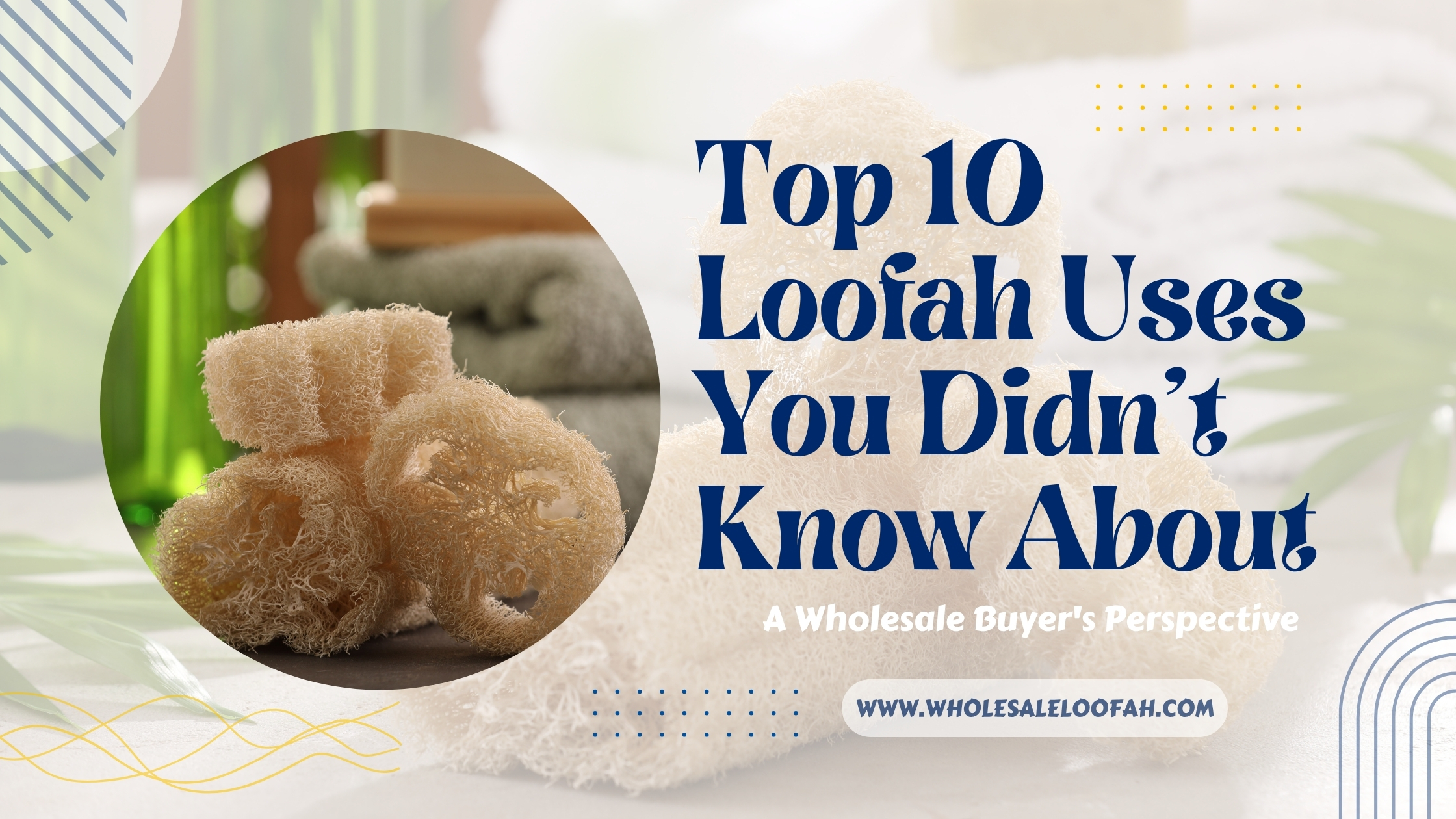
The loofah industry is larger than most wholesale buyers realize when they first start sourcing it. The global natural sponge and loofah market has grown significantly over the past decade, driven by consumer shifts toward sustainability, plastic reduction, and natural personal care. For buyers who see loofah primarily as a bath accessory, the top 10 loofah uses you didn’t know about represent something more important than interesting trivia. They represent product categories, shelf positions, and customer segments that most suppliers are not yet serving well.
This guide is built for wholesale buyers, distributors, spa operators, importers, and retailers who want to understand the full commercial landscape of loofah. That said, the consumer perspective is embedded throughout, because understanding what your end customer values is what drives purchasing decisions and repeat orders in any retail category.
Egyptian loofah is the global benchmark for quality. The fiber density, consistency, and durability of loofah grown in the Nile Delta region, processed by experienced cultivators like Egexo, is measurably superior to most imported alternatives. EGEXO has been exporting Egyptian loofah since 2015.
The Commercial Case for Expanding Your Loofah Product Range
Most wholesale buyers who stock loofah carry one or two skus, typically a standard bath loofah and possibly a loofah soap bar. That is a missed opportunity.
Natural loofah performs well across at least six distinct commercial categories: personal care, kitchen and household, pet grooming, foot care, spa and wellness, and garden and craft. Each of these categories has a different buyer profile, a different retail channel, and a different price tolerance. Stocking across categories means access to multiple revenue streams from a single supplier relationship.
Market Position Overview
| Product Category | Primary Retail Channel | Consumer Profile | Market Growth Trend |
|---|---|---|---|
| Bath and Body Loofah | Drugstore, health and beauty, online | Wellness-conscious adults | Strong and growing |
| Kitchen Loofah Scrubbers | Health food, eco home, online | Zero-waste households | Very strong growth |
| Pet Grooming Loofah | Pet supply, veterinary, online | Pet owners seeking natural options | Emerging and growing fast |
| Foot Care Loofah | Pharmacy, beauty supply, spa | Adults managing callouses | Steady |
| Spa and Wellness Loofah | Spa suppliers, wellness retail | Spa operators, wellness enthusiasts | Strong post-pandemic growth |
| Garden / Raw Loofah | Garden centers, craft stores, online | Gardeners, DIY and craft community | Niche but profitable |
Each row in that table represents a buyer segment that is actively looking for reliable, high-quality natural loofah and is not always finding it from their current suppliers. That is where a relationship with a quality Egyptian loofah producer becomes a meaningful competitive advantage.
The Top 10 Loofah Uses You Didn’t Know About: Commercial Applications
Use 1: Skin Exfoliation (The Established Anchor Category)
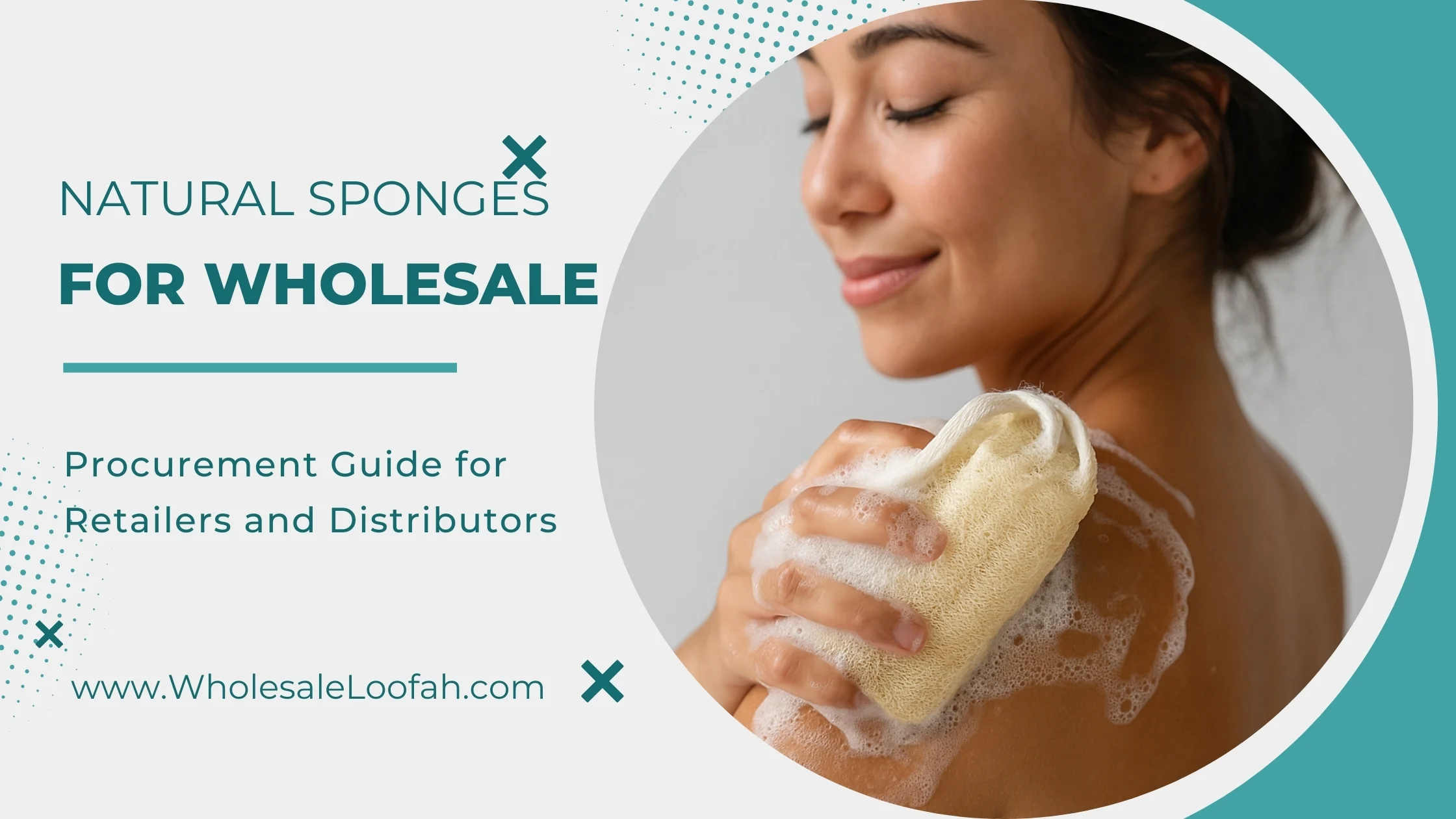
Body exfoliation is the use most buyers already understand, but the commercial potential within it is often underestimated. Loofah-based exfoliation products span multiple sub-categories: plain bath loofahs, loofah soap bars, loofah gloves, loofah body mitts, and loofah embedded in body wash bars.
Each sub-category targets a slightly different consumer preference and sits at a different price point. A retailer who stocks only plain bath loofahs is leaving the premium segments of this category on the table. Private label versions of loofah exfoliation products consistently perform well in both spa retail environments and direct-to-consumer online channels.
Egexo’s bath and body loofah range covers the full sub-category spectrum, and their private label manufacturing program allows buyers to build branded product lines without the overhead of managing their own production.
Use 2: Kitchen and Dish Scrubbing (The Fastest-Growing Segment)
The kitchen loofah category has grown more rapidly than any other loofah segment in the past five years. The driver is consumer awareness of microplastics in synthetic kitchen sponges. A growing number of households are actively replacing synthetic sponges with natural alternatives, and loofah is the primary beneficiary of that shift.
Kitchen loofah scrubbers are typically cut thicker than bath varieties, between 3 and 5 centimeters, and are often sold in multi-packs because the replacement cycle is driven by hygiene rather than degradation. Buyers who get ahead of this trend with a well-priced, well-presented kitchen loofah line are in an advantageous position.
The kitchen loofah category at Egexo includes pre-cut scrubber slices, full-length kitchen loofahs, and combination products ready for retail packaging.
Use 3: Pet Grooming (The High-Margin Emerging Category)
Pet product retail is one of the most resilient consumer categories globally. Pet owners consistently overspend relative to other discretionary categories, and the natural and organic segment within pet care has grown at double-digit rates in multiple markets.
Natural loofah for pet grooming is a product that ticks multiple boxes for this consumer: non-toxic, biodegradable, effective, and visually clean compared to many synthetic grooming tools. The wholesale margin on pet grooming loofah is typically higher than on standard bath loofah because the category is less commoditized and consumer willingness to pay for perceived quality is greater.
Egexo offers dedicated pet and spa grooming loofah products with sizing and fiber grading appropriate for animal coat care. This is a category where sample evaluation is particularly valuable before committing to inventory. Request loofah samples to assess quality firsthand.
Use 4: Foot Care and Pedicure Accessories
Foot care is a stable, recession-resistant retail category. Pedicure kits, heel care products, and foot soak accessories sell consistently across pharmacy, beauty supply, and spa retail channels. Natural loofah is a premium component in this category, used for gradual callous reduction and heel exfoliation.
The retail positioning for loofah foot scrubbers benefits from the natural and chemical-free narrative that resonates strongly with consumers in this category. Foot care loofah products can be sold as standalone items or bundled with foot soak salts, creams, and nail care tools to increase average order value.
Use 5: Bathroom Surface and Tile Cleaning
Household cleaning is a large category that natural loofah has not fully penetrated yet. A natural loofah cleaning pad for bathroom tiles, grout, and sink surfaces represents a genuine product gap in most eco-home product lines.
The consumer benefit is real: loofah cleans tile and grout effectively without scratching glazed surfaces, and it does so without requiring harsh chemical cleaners. For buyers targeting the eco-home retail segment, a bathroom cleaning loofah positioned as a plastic-free, chemical-free alternative to synthetic scrubbing pads is a credible product with strong differentiation.
Use 6: Food Contact and Vegetable Scrubbing
Produce scrubbing is a niche application that opens distribution into health food stores, organic grocers, and farm-to-table kitchen supply retailers. A natural loofah marketed specifically for vegetable cleaning sits comfortably alongside other food-safe, chemical-free kitchen tools that these retailers already carry. Samples are paid and the buyer pays shipping. The sample cost is credited to your first order of $1,000 or more, placed within 60 days.
The product needs to be clearly differentiated from bath loofahs in packaging and labeling. Buyers who develop a dedicated produce-washing loofah sku can access a distribution channel that standard personal care loofahs cannot enter. Egexo’s custom loofah product design service supports the development of application-specific products like this.
Use 7: Art Supply and Craft Texturing Tool
Art supply and craft retail is a niche but consistently profitable channel. Natural loofah sections used as texture applicators in painting and mixed-media art projects have an established community of users and are rarely stocked by mainstream art supply retailers, creating a genuine shelf gap.
Raw or minimally processed loofah sections in small multi-packs represent a simple product with good margins and low manufacturing complexity. The raw loofah scrubbers category at Egexo includes unprocessed options suitable for art supply packaging.
Use 8: Horticultural and Garden Applications
Garden centers and horticultural supply retailers are an underexplored channel for loofah wholesale buyers. Natural loofah sections used as biodegradable seed-starting pods address a genuine pain point for gardeners who want to reduce plastic use in their growing process.
The product requires minimal modification from standard raw loofah but is positioned and packaged completely differently, targeting a garden audience rather than a personal care one. Margins in the garden channel are often better than in personal care because competition is lower and perceived value is higher for a novel, functional product.
Use 9: Eco-Friendly Product Packaging and Cushioning
Artisan brands, handmade product sellers, and eco-conscious small businesses represent a growing B2B customer base for loofah wholesale buyers. Cut loofah pieces sold in bulk as natural packaging fill serve this audience, which is actively seeking alternatives to foam packing peanuts and bubble wrap.
This is a volume play rather than a premium margin play, but it provides a steady reorder channel for raw loofah inventory and builds relationships with a customer segment that is growing rapidly alongside the handmade and independent retail sectors.
Use 10: Spa Hydrotherapy and Professional Treatment Protocols
The professional spa and wellness sector represents one of the highest-value wholesale channels for loofah. Spas that use loofah in hydrotherapy treatments, body wrap protocols, and therapeutic massage sequences require consistent, high-grade product in significant volume. They also need reliability: a spa that incorporates loofah into a signature treatment cannot afford inconsistent quality across shipments.
This is exactly the type of buyer relationship that Egexo is structured to serve. A long-term spa supplier relationship built on consistent Egyptian loofah quality is more valuable than transactional volume purchases. Buyers who want to develop this channel should review the why choose Egexo page and consider beginning with a sample evaluation.
For spa operators building branded treatment lines, the private label program and custom product design services are the starting point for creating differentiated products. Request a bulk quotation to begin the conversation.
Supplier Evaluation: What Wholesale Buyers Should Be Asking
Choosing a loofah supplier is not just about price per unit. Quality consistency, export documentation, lead times, and the supplier’s control over their production process all affect your business outcomes. This checklist covers the key evaluation criteria.
Wholesale Supplier Evaluation Checklist
| Evaluation Category | Key Questions | What a Strong Supplier Provides |
|---|---|---|
| Production Control | Does the supplier grow their own loofah or buy from third parties? | Own cultivation from seed to harvest |
| Quality Grading | Is quality graded systematically or by visual inspection only? | Documented grading standards at multiple production stages |
| Certifications | What export and quality certifications are held? | Available documentation for import compliance |
| Consistency | How does batch quality compare across multiple shipments? | Reference contacts from existing wholesale customers |
| MOQ Flexibility | What are minimum order quantities, and is there flexibility for new buyers? | Tiered MOQ with sample option before full commitment |
| Private Label Capability | Can the supplier produce under your brand? | Established private label program with packaging options |
| Lead Time | What is the production and shipping lead time? | Clear timeline with communication at each stage |
| Sampling | Can you evaluate quality before placing a bulk order? | Sample program with reasonable turnaround |
Egexo meets all of these criteria. The full transparency of the farm to export process is documented, quality standards are published at loofah quality standards, and the team is available to walk buyers through the full product range via the product catalog.
Product Specifications for Wholesale Buyers
| Product | Dimensions | Grade | MOQ | Notes |
|---|---|---|---|---|
| Body Bath Loofah | 10-25 cm | Soft / Medium / Firm | No minimum order on standard products | Multiple grades available |
| Kitchen Scrubber Slice | 3-5 cm thick | Kitchen-grade dense | No minimum order on standard products | Pre-cut and full-length options |
| Pet Grooming Pad | 15-20 cm | Medium firm | No minimum order on standard products | Sized for animal coat care |
| Foot Scrubber Pad | 20-25 cm | Firm | No minimum order on standard products | Often bundled with foot care kits |
| Raw Loofah Gourd | 30-60 cm | Unprocessed | No minimum order on standard products | Multi-application use |
| Loofah Soap Bar | Standard bar | Embedded fiber | Private label from 1,000 units | Custom fragrances available |
| Loofah Packaging Fill | Cut sections | Bulk ungraded | No minimum order on standard products | For packaging applications |
Pros and Cons: Egyptian Loofah vs Other Sourcing Options
| Factor | Egyptian Loofah (Egexo) | Asian-Origin Loofah | Synthetic Alternatives |
|---|---|---|---|
| Fiber Density | High, consistent | Medium, variable | N/A |
| Quality Grading | Systematic, documented | Often batch-to-batch variable | Uniform (artificial) |
| Biodegradable | Yes | Yes | No |
| Private Label | Full capability | Limited | Sometimes |
| Export Documentation | Comprehensive | Varies | Standard |
| MOQ | Flexible (from 200 units) | Often high minimums | High volume requirements |
| Consumer Price Positioning | Premium natural | Mid-range | Low to mid |
| Reorder Reliability | High | Medium | High |
| Sustainability Claims | Strong and verifiable | Varies by supplier | Weak |
Expert Insight from EGEXO
The most common mistake wholesale buyers make when sourcing loofah for the first time is evaluating price before evaluating consistency. A lower price per unit means nothing if 15 percent of a shipment fails quality inspection or if the product looks different across orders.
Egyptian loofah from EGEXO is priced at a premium relative to mass-market imports because the fiber quality and production standards that justify that premium are built into every stage of the growing and processing cycle. Buyers who run the math over a 12-month supplier relationship, accounting for return rates, customer complaints, and reorder reliability, consistently find that the total cost of ownership is lower with a consistent premium supplier than with a cheaper but variable one.
We recommend every new buyer start with a sample order. It is the fastest way to understand the difference that consistent Egyptian loofah quality makes, and it costs very little compared to the expense of a problem shipment. Visit the why choose EGEXO page for more detail on what distinguishes our approach from standard loofah suppliers.
FAQ Section
Q1: What are the highest-margin loofah product categories for retail buyers? A: Pet grooming loofah and specialty spa loofah consistently deliver higher retail margins than standard bath loofahs because these categories are less commoditized and consumer willingness to pay for quality and natural credentials is stronger. Kitchen loofah scrubbers are also showing strong margin performance as the category grows rapidly. Buyers who develop private label products in these segments capture additional margin compared to reselling branded products.
Q2: What is the minimum order quantity for wholesale loofah from Egexo? No minimum order on standard products. Private label from 1,000 units. New buyers can begin with a sample order to evaluate quality before placing a full production run. Contact EGEXO or use the quotation request form to get specific pricing and lead time information.
Q3: How does Egyptian loofah compare to loofah sourced from Asia or other regions? A: Egyptian loofah from the Nile Delta region produces a denser, more resilient fiber mesh than most Asian-origin varieties, due to the specific mineral content of the soil, consistent growing temperatures, and traditional slow-drying processes. This translates into a longer product lifespan, more consistent quality across batches, and stronger performance in high-use applications like spa treatments and kitchen scrubbing.
Q4: Can Egexo produce loofah under my brand name? A: Yes. Egexo offers a complete private label manufacturing program that covers product sizing, fiber grading, branded packaging design, and labeling to meet the requirements of specific markets. This service is particularly popular with spa brands, wellness retailers, and eco-home product lines that want to offer branded natural loofah without managing their own production. The private label page covers the program in detail, and a custom quote is available on request.
Q5: What export documentation does Egexo provide for international buyers? A: Egexo provides full export documentation for international wholesale shipments, including certificates of origin, phytosanitary certificates where required, commercial invoices, packing lists, and quality certifications upon request. The team has extensive experience managing exports to Europe, North America, the Middle East, and other regions, and can advise on the specific documentation requirements for your destination market. Review the quality standards page for information on the certifications available.
Q6: Is there a growing market for loofah outside of personal care? A: Yes, and the growth rates in adjacent categories are significant. Kitchen loofah scrubbers have grown rapidly as consumer awareness of synthetic sponge issues increases. Pet grooming loofah is an emerging high-margin category. Garden applications such as biodegradable seed-starting pods represent a niche but profitable channel. Craft and art supply loofah sections are consistently sought by small retailers who cannot easily source them. Buyers who expand beyond the bath category are accessing multiple growth vectors from a single supplier relationship. For a complete picture of available products, download the Egexo catalog.
Q7: How should I evaluate loofah quality before placing a large order? A: The most reliable way to evaluate loofah quality is through a physical sample evaluation. Key quality indicators include fiber density, which should feel firm and resilient rather than loose or brittle; uniform color without dark spots or discoloration; a neutral smell with no chemical or musty odor; and fiber elasticity, meaning the loofah springs back to shape after compression. Egexo’s documented quality standards align with international export requirements, and samples are available for new buyers through the sample request page.
Conclusion
The top 10 loofah uses you didn’t know about are not just interesting applications for a single product. They are a map of the commercial opportunity in natural loofah for wholesale buyers who are willing to think beyond the bath aisle. Body care, kitchen scrubbing, pet grooming, foot care, household cleaning, vegetable washing, art supply, garden application, eco packaging, and professional spa use are all legitimate, growing market segments that natural loofah serves well.
Egyptian loofah from Egexo is the foundation that makes all of these applications work at the quality level consumers and end users expect. From the Nile Delta farm to the export container, every step in Egexo’s process is designed to deliver consistent, high-grade fiber that performs reliably across every use case covered in this guide.
Key Takeaways:
- Loofah serves at least 10 distinct commercial product categories, not just the bath aisle
- Egyptian loofah consistently outperforms other origins on fiber density, durability, and batch consistency
- The fastest-growing categories are kitchen scrubbers, pet grooming, and spa wellness applications
- Private label loofah represents a high-margin opportunity for buyers who want branded product lines
- Supplier evaluation should prioritize production control and quality consistency over unit price
Ready to experience Egyptian loofah quality?
- For Wholesale Buyers: Request a quote or download our catalog
- For Individual Orders: Browse our collection or order samples