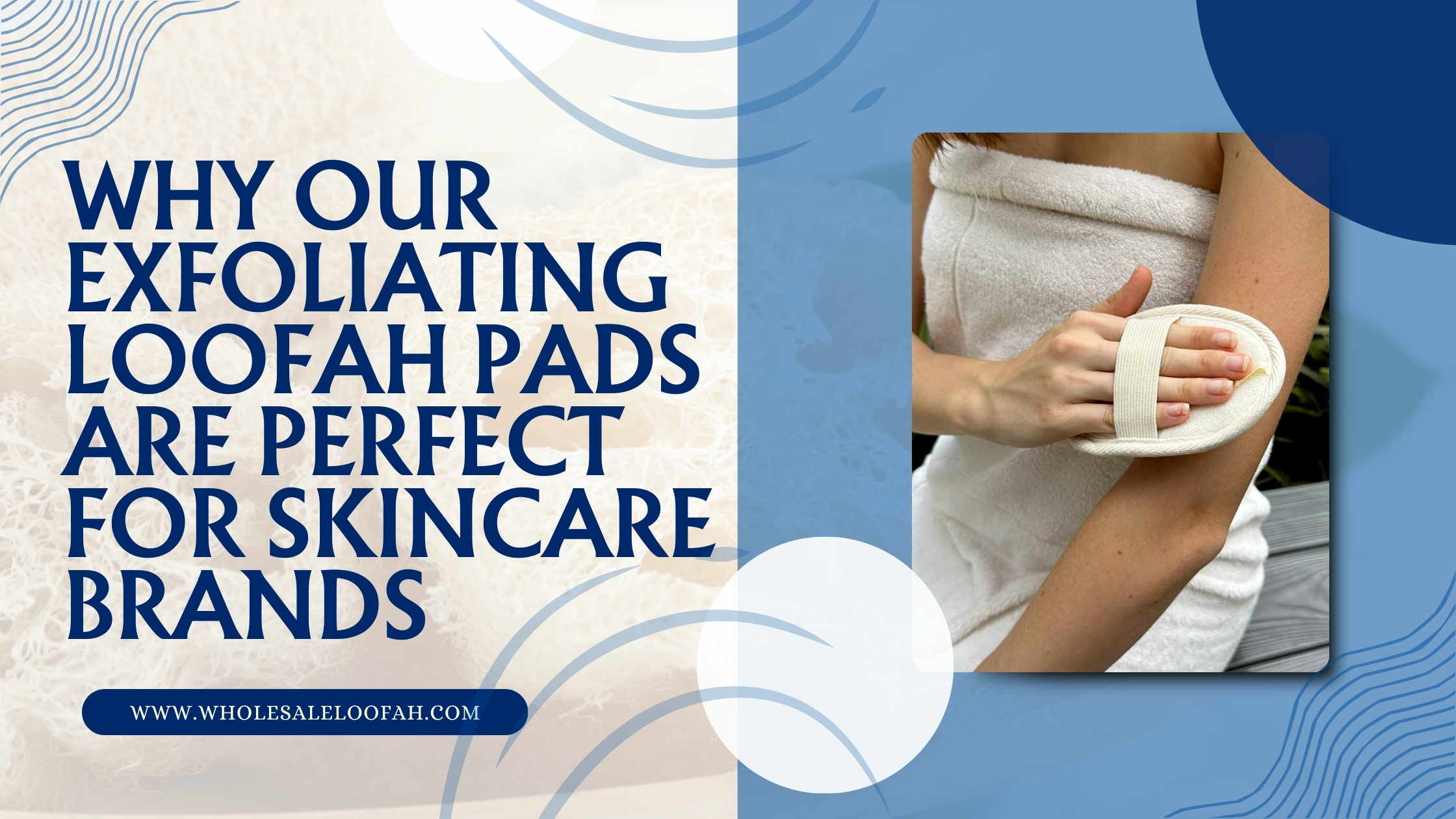
Skincare brands constantly search for products that combine genuine effectiveness with authentic natural appeal. Exfoliating loofah pads have emerged as one of the most requested items among consumers seeking plant-based skincare solutions, with market research indicating that natural exfoliation products experienced a 34 percent growth in consumer preference between 2023 and 2025. Understanding why our exfoliating loofah pads are perfect for skincare brands requires examining both the product characteristics that consumers demand and the business advantages that wholesale partnerships deliver.
Egyptian loofah cultivation represents the gold standard in this industry, with the Nile Delta region producing fibers renowned for their optimal texture, durability, and consistent quality. EGEXO has been exporting Egyptian loofah since 2015. Whether you operate a boutique skincare label seeking small batch quantities or manage procurement for a major retail chain requiring container shipments, the right loofah pad supplier becomes a cornerstone of product success.
This comprehensive guide explores everything from fiber science and quality grading to private label opportunities and consumer education strategies. You will discover how to evaluate suppliers, understand what sets Egyptian loofah apart from alternatives, and learn practical approaches for integrating these versatile pads into your product offerings.
The Science Behind Superior Exfoliating Loofah Pads
Natural loofah fibers possess a unique cellular structure that synthetic alternatives cannot replicate. The Luffa aegyptiaca plant produces a network of interconnected fibers with microscopic channels that create gentle yet effective exfoliation. This natural architecture removes dead skin cells without causing microtears or irritation that plastic scrubbers often produce.
Fiber Composition and Skin Compatibility
Egyptian loofah fibers contain cellulose, hemicellulose, and lignin in proportions that create ideal flexibility combined with adequate firmness. When moistened, these fibers soften to approximately 60 percent of their dry rigidity, allowing the pad to conform to body contours while maintaining exfoliating capability. This moisture-responsive behavior makes loofah pads suitable across various skin types, from sensitive to normal skin profiles.
The pH neutrality of properly processed loofah fibers ensures compatibility with skincare formulations. Brands can confidently pair loofah pads with their cleansers, body washes, and treatment products without concern about chemical interactions that might compromise product performance or skin safety.
Why Premium Sourcing Matters for Brand Reputation
Skincare consumers have become increasingly sophisticated about ingredient sourcing and supply chain transparency. They research product origins, read labels carefully, and make purchasing decisions based on authenticity. Brands that source exfoliating loofah pads from reputable Egyptian suppliers gain a compelling story to share with their customers.
The farm to export process that distinguished suppliers maintain ensures traceability from seed to finished product. This transparency satisfies consumer curiosity while providing brands with marketing content that resonates with environmentally conscious shoppers.
Quality Grades and Selection Criteria for Skincare Applications
Not all loofah pads meet the standards required for skincare brand applications. Understanding quality grades helps both wholesale buyers making bulk purchasing decisions and individual consumers selecting products for personal use.
Comprehensive Quality Grading Table
| Grade | Fiber Density | Color Consistency | Texture Rating | Best Applications | Typical Use |
|---|---|---|---|---|---|
| Premium A | 95 to 100 percent | Uniform natural cream | Extra fine | Luxury skincare lines | Facial and sensitive areas |
| Standard B | 85 to 94 percent | Minor variation allowed | Fine to medium | Mid-market brands | Body exfoliation |
| Commercial C | 75 to 84 percent | Moderate variation | Medium | Value brands | General body scrubbing |
| Industrial D | Below 75 percent | Variable | Coarse | Non-cosmetic uses | Cleaning applications |
For skincare brand applications, Premium A and Standard B grades deliver the consistency and performance that consumers expect. The quality standards maintained by professional suppliers include laboratory testing for contaminants, moisture content verification, and visual inspection protocols.
Evaluation Checklist for Skincare Brand Buyers
When assessing loofah pads for your product line, examine these critical factors:
Fiber uniformity should appear consistent across the pad surface without thin spots or holes that would reduce product lifespan. The natural color should range from pale cream to light tan without dark spots indicating improper drying or mold exposure. Flexibility when dry should allow slight bending without fiber breakage, while wet flexibility should demonstrate significant softening within 30 seconds of water contact.
Odor testing reveals processing quality. Properly cured loofah pads emit only a mild, natural plant scent. Strong or unpleasant odors suggest inadequate processing that could transfer to finished skincare products. Size consistency matters for packaging and presentation, particularly for brands planning retail displays or subscription box inclusions.
The ability to request samples before committing to bulk orders allows thorough evaluation against these criteria. Professional suppliers welcome sample requests as an opportunity to demonstrate their quality standards.
Business Advantages of Egyptian Loofah Pad Partnerships
Skincare brands evaluating wholesale loofah pad suppliers should consider factors beyond simple product pricing. The total value proposition includes consistency, reliability, customization capabilities, and partnership support.
Supply Chain Reliability and Consistency
Egyptian loofah production follows established agricultural cycles refined over generations. Experienced cultivators in the Nile Delta region harvest mature loofahs during optimal windows, ensuring fiber development reaches peak quality before processing begins. This agricultural expertise translates into consistent product availability and predictable supply chains for brands building inventory.
Established suppliers maintain buffer stock strategies that protect brand partners from seasonal variations or unexpected demand spikes. The relationship between cultivation timing and warehouse management directly impacts your ability to fulfill customer orders without interruption.
Customization and Private Label Opportunities
Modern skincare brands differentiate through unique product presentations. Generic loofah pads sourced from commodity suppliers offer limited branding potential, while partnership with manufacturers offering private label loofah manufacturing opens extensive customization possibilities.
Private label services typically include custom shapes cut to brand specifications, branded packaging with your logo and design elements, custom sizing for specific product line requirements, and bundling options combining multiple pad types or accessories. The custom loofah product design process transforms standard loofah pads into distinctive branded products that strengthen customer recognition and loyalty.
Minimum Order Quantity Considerations
Wholesale loofah pad purchasing involves understanding minimum order quantities and how they align with your business scale. The following table outlines typical MOQ structures:
| Business Type | Typical MOQ Range | Lead Time | Best Ordering Strategy |
|---|---|---|---|
| Startup brands | Private label from 1,000 units | 7 to 25 days from payment | Sample first, then small batch |
| Established small brands | Private label from 1,000 units | 7 to 25 days from payment | Quarterly ordering cycles |
| Mid-market brands | Private label from 1,000 units | 7 to 25 days from payment | Bi-annual bulk contracts |
| Large retailers | No minimum order on standard products | 7 to 25 days from payment | Annual supply agreements |
Requesting a wholesale quotation provides clarity on pricing tiers, lead times, and any flexible arrangements available for your specific requirements.
Consumer Education and Marketing Value
Skincare brands that educate their customers build stronger relationships and reduce return rates. Understanding what consumers want to know about exfoliating loofah pads helps develop effective product descriptions, usage guides, and marketing content.
What Consumers Ask About Loofah Pads
Consumer research indicates several recurring questions dominate loofah pad inquiries. Shoppers want to understand how loofah exfoliation compares to other methods, how frequently they should use these products, and what care practices extend product lifespan.
Aligning your brand messaging with accurate information builds credibility and reduces customer service inquiries.
Positioning Natural Exfoliation in Your Product Line
Exfoliating loofah pads occupy a valuable position in comprehensive skincare routines. They serve as the mechanical exfoliation component that prepares skin for subsequent product absorption. Brands successfully position loofah pads as essential tools rather than optional accessories by emphasizing this preparatory function.
Product bundling strategies pair loofah pads with complementary items such as body washes, moisturizers, or treatment oils. This approach increases average order value while providing customers with complete skincare solutions. The body loofah category offers variety suitable for diverse bundling strategies.
Sustainability Credentials and Environmental Marketing
Environmental responsibility has shifted from marketing advantage to business requirement for skincare brands. Consumers increasingly filter purchasing decisions through sustainability considerations, making eco-friendly product attributes essential rather than optional.
Biodegradability and Plastic Replacement Value
Loofah pads offer genuine environmental credentials that withstand scrutiny. As plant-based products, they biodegrade completely within 30 days under composting conditions. This characteristic positions loofah pads as direct replacements for plastic mesh scrubbers that persist in landfills and waterways for centuries.
Skincare brands can quantify environmental impact for marketing purposes. Each loofah pad replacing a synthetic alternative prevents approximately 15 to 20 grams of plastic waste. Annual usage patterns suggest individual consumers might prevent 60 to 80 grams of plastic waste by choosing natural alternatives.
Sustainable Sourcing Verification
Authenticity matters in environmental claims. Brands must verify supplier practices before making sustainability statements to customers. Egyptian loofah cultivation typically requires minimal synthetic inputs, relying on natural irrigation from the Nile and traditional farming methods passed through generations.
The Wholesale Loofah resource provides additional context on sourcing practices and supplier evaluation. Thorough due diligence protects brand reputation from greenwashing accusations while ensuring marketing claims remain accurate and defensible.
Comparative Environmental Impact
| Product Type | Decomposition Time | Manufacturing Energy | Water Usage | Recyclability |
|---|---|---|---|---|
| Natural loofah pad | 30 days | Low | Moderate | Compostable |
| Plastic mesh scrubber | 400 plus years | High | Low | Limited |
| Synthetic sponge | 200 plus years | Moderate | Low | None |
| Bamboo alternatives | 60 to 90 days | Moderate | Moderate | Compostable |
Integration Strategies for Different Brand Types
Skincare brands operate across diverse market segments with varying customer expectations and price sensitivities. Successful loofah pad integration requires strategies aligned with specific brand positioning.
Luxury and Premium Brand Applications
Premium skincare brands emphasize exclusivity, superior quality, and elevated experiences. For these brands, loofah pads should represent the finest available quality with meticulous attention to presentation. Premium A grade Egyptian loofah with custom packaging creates differentiation that justifies higher price points.
Consider limited edition seasonal releases featuring uniquely shaped or sized loofah pads. Luxury positioning benefits from storytelling that emphasizes Egyptian heritage, traditional cultivation methods, and artisan processing techniques. The Browse collection provides inspiration for premium product presentations.
Natural and Organic Brand Applications
Brands built around natural and organic positioning find loofah pads naturally aligned with core values. Marketing emphasis should highlight plant origin, absence of synthetic processing chemicals, and biodegradability. Certification documentation and supply chain transparency strengthen these claims.
Cross-promotional opportunities emerge when loofah pads appear in content marketing featuring natural skincare routines and ingredient education.
Value and Accessible Brand Applications
Mass market brands serving price-conscious consumers can still incorporate quality loofah pads profitably. Standard B grade products offer excellent performance at price points suitable for broader market segments. Volume purchasing through wholesale arrangements improves margins while maintaining quality standards.
Multi-pack offerings and subscription models work particularly well for value-oriented brands. Consumers appreciate convenience and perceived savings from bundled purchasing, while brands benefit from predictable order patterns and reduced per-unit shipping costs.
Practical Usage Guidance for End Users
Consumers purchasing loofah pads benefit from clear usage instructions that maximize product effectiveness and longevity. Brands providing comprehensive guidance reduce customer frustration and support positive product reviews.
Optimal Exfoliation Technique
Effective loofah pad usage follows a straightforward sequence. Begin by thoroughly wetting the pad under warm running water for approximately 30 seconds to activate fiber softening. Apply preferred cleanser or body wash directly to the pad surface rather than skin, allowing the fibers to distribute product evenly.
Use gentle circular motions with light to moderate pressure, allowing the loofah texture to perform the exfoliating work without aggressive scrubbing. Focus on areas prone to roughness such as elbows, knees, and heels while using lighter pressure on sensitive areas. Rinse thoroughly after each use and squeeze excess water before storing.
Maintenance and Hygiene Best Practices
Proper care extends loofah pad lifespan from typical 3 to 4 weeks to 6 to 8 weeks while maintaining hygienic conditions. After each use, rinse completely to remove all cleanser residue and dead skin cells. Squeeze firmly to remove excess water without wringing that damages fibers.
Store in well-ventilated areas away from direct shower spray to promote drying between uses. Weekly sanitization using diluted vinegar solution or brief microwave treatment eliminates bacterial growth. Replace pads immediately if musty odors develop or fiber degradation becomes visible.
Usage Frequency Recommendations
| Skin Type | Recommended Frequency | Pressure Level | Best Time |
|---|---|---|---|
| Sensitive | 1 to 2 times weekly | Light | Evening |
| Normal | 2 to 3 times weekly | Moderate | Any time |
| Oily | 3 to 4 times weekly | Moderate | Morning |
| Combination | 2 to 3 times weekly | Variable by area | Evening |
Supplier Evaluation Framework
Both wholesale buyers assessing potential partnerships and consumers evaluating retail sources benefit from structured supplier evaluation. Quality indicators and business practices reveal supplier reliability and product consistency.
Essential Evaluation Criteria
Experience and track record provide foundational assessment starting points. Suppliers with extended operational histories demonstrate stability and accumulated expertise.
Communication responsiveness indicates partnership quality. Suppliers who answer inquiries promptly, provide detailed information willingly, and accommodate reasonable requests demonstrate customer-focused operations. Sample availability and quality consistency between samples and bulk orders reveal manufacturing reliability.
Documentation capabilities matter for brands requiring certification, origin verification, or customs compliance support. Professional suppliers maintain comprehensive records and provide required documentation efficiently. The complete product catalog exemplifies professional documentation standards.
Red Flags to Avoid
Certain warning signs suggest supplier relationships that may prove problematic. Reluctance to provide samples, vague quality specifications, or inconsistent communication often precede fulfillment problems. Pricing significantly below market standards may indicate quality compromises or unreliable supply chains.
Claims that cannot be verified through documentation or third-party confirmation deserve skepticism. Reputable suppliers welcome scrutiny and provide evidence supporting their quality and sustainability claims.
FAQ Section
Q1: How long do exfoliating loofah pads typically last with regular use?
A: Quality exfoliating loofah pads from Egyptian sources typically last 4 to 8 weeks with proper care and regular use 2 to 3 times weekly. Longevity depends on usage frequency, maintenance practices, and storage conditions. Replacing pads when fibers begin deteriorating or odors develop ensures optimal hygiene and exfoliation effectiveness.
Q2: What minimum order quantities should skincare brands expect for wholesale loofah pads?
A: Wholesale minimum order quantities vary by supplier and product type, typically ranging from 100 units for startup brands to 10,000 plus units for large retailers. Many suppliers offer flexible arrangements for new partnerships, and requesting a quotation provides clarity on specific requirements and pricing tiers for your business scale.
Q3: Are exfoliating loofah pads suitable for sensitive skin types?
A: Egyptian loofah pads suit most skin types including sensitive skin when used correctly. The key factors include selecting premium grade pads with finer fiber density, using light pressure during exfoliation, limiting use to 1 to 2 times weekly, and ensuring adequate moistening before contact with skin.
Q4: Can skincare brands create private label loofah pad products?
A: Yes, established suppliers offer comprehensive private label services including custom shapes, branded packaging, specific sizing, and bundling options. Private label manufacturing transforms standard loofah pads into distinctive branded products that strengthen customer recognition and support premium pricing strategies.
Q5: How do Egyptian loofah pads compare to synthetic exfoliating products?
A: Egyptian loofah pads offer several advantages over synthetic alternatives including natural biodegradability within 30 days, gentle yet effective exfoliation without microtears, moisture-responsive fiber softening, and authentic sustainability credentials. These characteristics align with growing consumer demand for plant-based skincare tools.
Q6: What certifications should brands look for when sourcing wholesale loofah pads?
Professional suppliers maintain comprehensive documentation and provide certification upon request.
Q7: How should loofah pads be stored before retail sale?
A: Store loofah pads in cool, dry conditions away from direct sunlight and moisture. Maintain temperatures between 15 and 25 degrees Celsius with humidity below 60 percent. Proper storage preserves fiber integrity and prevents mold development that would render products unsaleable.
Q8: What makes Egyptian loofah superior to loofah from other regions?
A: Egyptian loofah benefits from ideal growing conditions in the Nile Delta region including optimal soil composition, consistent water supply, and established cultivation expertise spanning generations. These factors produce fibers with superior density, texture consistency, and durability compared to loofah grown elsewhere.
Expert Insight from EGEXO
Selecting the right loofah pad grade for your skincare brand requires understanding your target customer expectations and price positioning. Many brands initially assume they need the highest grade available, but our experience across thousands of wholesale partnerships reveals that Standard B grade often delivers optimal value for most applications. Premium A grade makes sense for luxury positioning or facial products where customers expect exceptional refinement, but body exfoliation products perform excellently with Standard B while allowing more competitive pricing. We recommend ordering samples of multiple grades to evaluate firsthand before committing to bulk purchases. This approach lets you make decisions based on actual product experience rather than grade descriptions alone. Our cultivation team monitors each harvest for consistency, and we maintain detailed records that help brands understand exactly what they receive with each order.
To discuss your order, request a quote from EGEXO.
Conclusion
Understanding why our exfoliating loofah pads are perfect for skincare brands comes down to the combination of genuine product effectiveness, sustainable credentials, and business partnership value. Egyptian loofah represents the premium standard in natural exfoliation, offering fiber quality that consumers recognize and appreciate. For brands building product lines around authenticity and environmental responsibility, these pads deliver both performance and story.
The wholesale partnership model provides skincare brands with reliable supply, customization capabilities, and pricing structures that support profitable operations. From startup brands testing market reception to established retailers requiring consistent high-volume fulfillment, structured supplier relationships enable growth without quality compromise.
Key Takeaways:
Egyptian loofah pads offer superior fiber quality backed by centuries of cultivation expertise in the Nile Delta region
Private label and customization services transform standard products into distinctive branded offerings
Sustainable credentials provide authentic environmental marketing advantages that resonate with modern consumers
Proper supplier evaluation protects brand reputation while ensuring reliable product availability
Ready to explore Egyptian loofah quality for your skincare brand?
For Wholesale Buyers: Request a quotation or download the complete product catalog
For Individual Orders: Browse the collection or request samples