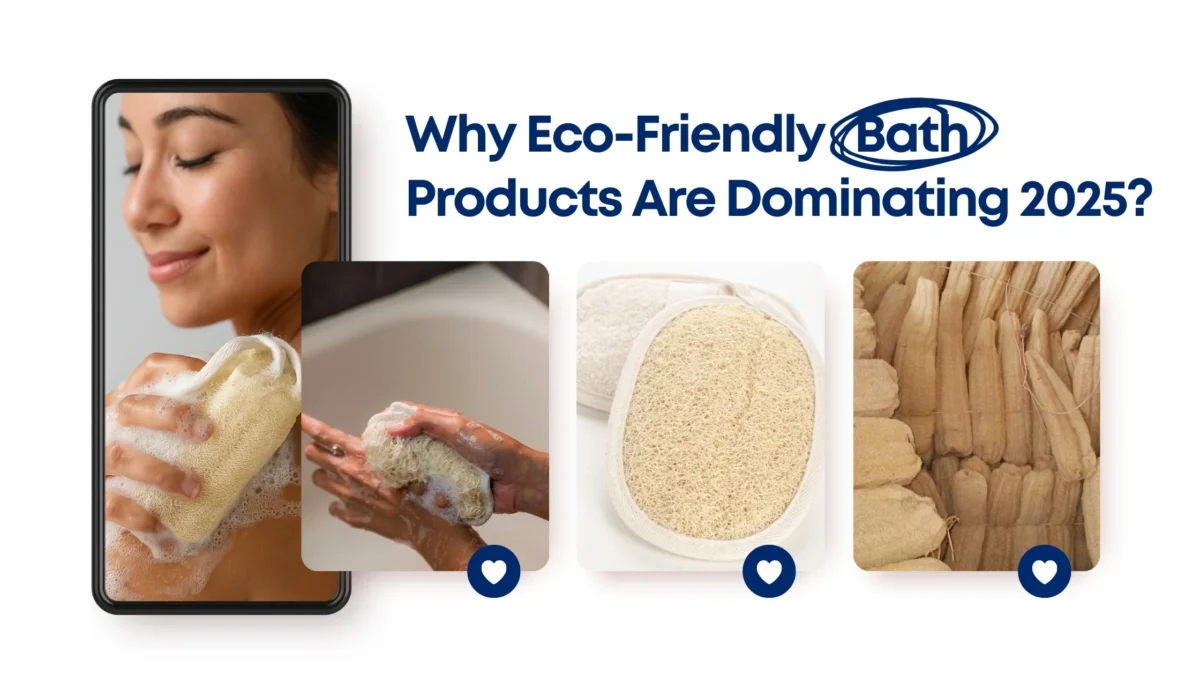
If you are reading this, you have probably already visited a health food store looking for natural loofah sponges in quantity. Maybe you manage a spa and needed 200 units. Maybe you are launching a natural products brand and tried to figure out where your competitors source their loofah. Or perhaps you are simply a household buyer who uses loofah consistently and wanted to stop paying retail pricing for a product you go through every few weeks.
Whatever brought you here, the central question has the same practical answer: health food stores sell loofah, but not in bulk. Not by any definition of bulk that serves a real purchasing need beyond occasional personal use.
This guide is built for buyers who need more than a retail shelf can offer. It covers the structural reasons why health food stores cannot serve bulk loofah needs, maps out where the genuine wholesale market operates, explains what separates premium loofah from commodity product, and gives you the specific information needed to evaluate suppliers and make purchasing decisions at any volume.
The natural loofah market has grown significantly over the past decade. Global demand for plant-based, biodegradable personal care and household products has driven loofah from a niche specialty item to a mainstream wellness product. Understanding the supply chain behind that growth is the first step to sourcing it intelligently.
For wholesale-specific resources and market context, wholesaleloofah.com is dedicated to helping buyers navigate this market. To explore product options directly, visit Egexo’s full products page.
Why Health Food Stores Are Not Built for Bulk Loofah Sales
The Economics of Retail Shelf Space
Health food stores are retail businesses optimized around consumer purchase frequency and margin per square foot. A loofah sponge occupies shelf space like any other product, and that space must generate adequate revenue per month to justify the allocation.
Natural loofahs are a specialty item. They sell consistently, but not rapidly. A health food store might sell 20 to 40 loofah units per month across its bath and body section. That velocity does not support stocking bulk case quantities, because case stock ties up space and working capital without proportionally increasing revenue.
The store’s buying team therefore orders from a distributor in case quantities, receives product every few weeks, and stocks the shelf with individual or multipack units at retail pricing. The entire model is built around single-consumer purchases, not wholesale volume.
What You Actually Find on Health Food Store Shelves
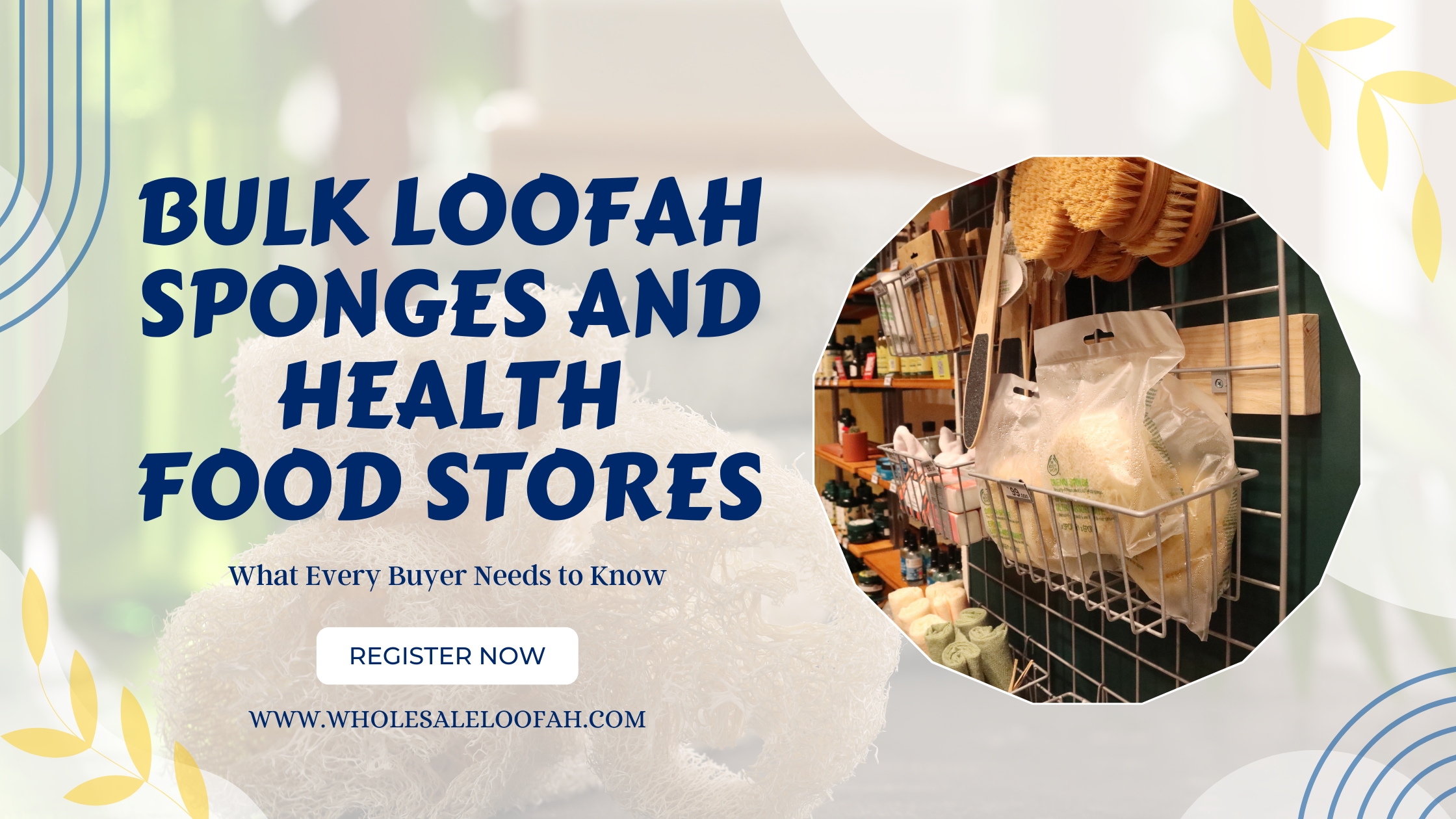
In practice, health food store loofah sections typically include:
Single cylinder loofahs, individually packaged, at pricing that reflects retail markup through at least two distribution layers. Multipack options of two to five units presented as a “value bundle” at a modest per-unit discount. Occasionally, compressed loofah discs, loofah-infused soap bars, or loofah back scrubbers. Sometimes, a small selection of loofah kitchen scrubbers alongside other natural cleaning products.
What you will not find: case packs, wholesale carton quantities, unpackaged bulk product, custom sizes, origin documentation, quality grade specifications, or pricing that reflects anything close to wholesale rates.
The Price Premium Problem
Retail health food store pricing for natural loofah typically runs 3 to 5 times the per-unit cost available through direct wholesale sourcing. This markup reflects the distributor margin, the store’s margin, packaging designed for retail display, and the inefficiency of moving product through multiple intermediaries.
For a spa owner buying 200 units per month, sourcing from a health food store at retail pricing is not a business decision; it is an expensive gap-filler. For a brand owner building a product line, retail sourcing at retail cost eliminates any viable margin. Direct wholesale access fundamentally changes the economics.
The Wholesale Loofah Market: Structure and Access Points
How the Supply Chain Actually Flows
The loofah supply chain runs from growing regions through processing facilities to exporters, then to importers or regional distributors, and finally to retail or direct-to-consumer channels. Each stage adds cost and reduces origin transparency.
| Stage | Operator Type | Volume Handled | Role |
|---|---|---|---|
| Growing | Farmers, agricultural cooperatives | Field scale, tonnage | Cultivation and harvest |
| Processing | Dedicated facilities | Thousands of units | Cleaning, cutting, grading |
| Exporting | Farm-affiliated exporters | Container loads | Quality control, documentation |
| Importing | Country-level importers | Pallet to container | Customs, regional distribution |
| Wholesale distribution | Regional distributors | Case to pallet | Local supply to retailers |
| Retail | Health food stores, online | Individual units | Consumer sales |
The further you can reach toward the source of this chain, the better your pricing and quality control. Egexo operates at the exporter stage, combining cultivation, processing, grading, and export management into a single integrated operation. Their farm to export documentation explains how this integration benefits wholesale buyers.
Accessing the Wholesale Market
For buyers ready to engage the genuine bulk loofah market, the main access channels are:
Direct farm exporters are the highest-quality, lowest-cost option for serious wholesale buyers. Egypt is the global benchmark for loofah quality, and Egexo is one of its most established exporters. EGEXO has been exporting Egyptian loofah since 2015.
B2B sourcing platforms like Alibaba list hundreds of loofah suppliers with widely varying quality and reliability. The key discipline with these platforms is always ordering samples before committing to any volume. Price-only selection on these platforms frequently results in quality disappointment.
Specialty natural product distributors serve regional markets with natural loofah in case quantities. These distributors buy from exporters and resell to retailers and smaller businesses that prefer domestic purchasing relationships.
Industry trade shows allow in-person product evaluation and direct supplier contact. For buyers who have not yet established international supplier relationships, trade shows provide a lower-risk entry point into the wholesale market.
Understanding Loofah Quality: What Bulk Buyers Must Know
Quality Grades and What They Mean
Not all natural loofah sold in bulk is equivalent. Quality grading at the wholesale level reflects several measurable characteristics that directly affect product performance, customer satisfaction, and resale value.
| Quality Parameter | Premium Grade | Standard Grade | Economy Grade |
|---|---|---|---|
| Fiber density | High, uniform mesh | Medium density | Low, uneven |
| Color (natural) | Golden-cream | Light tan | Variable, patchy |
| Chemical processing | Minimal to none | Light treatment | Bleached |
| Fiber uniformity | Consistent end to end | Minor variation | Significant variation |
| Durability (weeks) | 6 to 8 | 4 to 6 | 2 to 4 |
| Seed removal | Complete | Mostly complete | Incomplete |
| Moisture content | Below 12 percent | 12 to 16 percent | Above 16 percent |
| Certification eligibility | – | Standard export | Basic only |
Premium grade loofah commands higher per-unit pricing but returns that investment through longer usable life, better customer experience, and stronger brand positioning for resellers. Economy grade may appear cost-effective per unit but often generates higher rates of customer complaints and returns.
Egexo’s quality standards documentation outlines the specific criteria applied at each grading stage.
Egyptian Loofah: The Quality Benchmark
Egypt’s Nile Delta has produced premium loofah for export markets for generations. The agricultural conditions in this region, consistent temperatures, rich alluvial soil, dry harvest seasons, and the accumulated cultivation expertise of farming families and operations like Egexo, create growing conditions that other regions have not replicated at commercial scale.
Egyptian loofah is characterized by its dense fiber network, natural golden color, resistance to early fiber breakdown, and the relatively low degree of chemical processing required to produce a market-ready product. These characteristics make Egyptian loofah the preferred sourcing origin for international spa brands, hotel chains, premium personal care lines, and eco-product retailers.
For wholesale buyers making origin comparisons, the durability advantage alone is significant. A loofah that lasts 6 to 8 weeks instead of 3 to 4 weeks is effectively a 50 to 100 percent longer usable life, which affects how customers perceive value and how frequently they repurchase.
Loofah Product Range Available for Bulk Purchase
Body and Spa Products
The bath and body loofah category covers the widest range of product formats and represents the largest segment of wholesale demand.
Full cylinder loofahs (18 to 25 cm length, 7 to 10 cm diameter) are the classic format used across spa, hotel, and retail settings. Loofah slices in 3 to 5 cm thickness are preferred in spa environments for their easier handling and more controlled exfoliation. Loofah mitts, back scrubbers, and foot pads extend the range for wellness retailers.
Egexo’s body loofah category covers all these formats with wholesale pricing and quality specifications available on request.
Kitchen and Household Applications
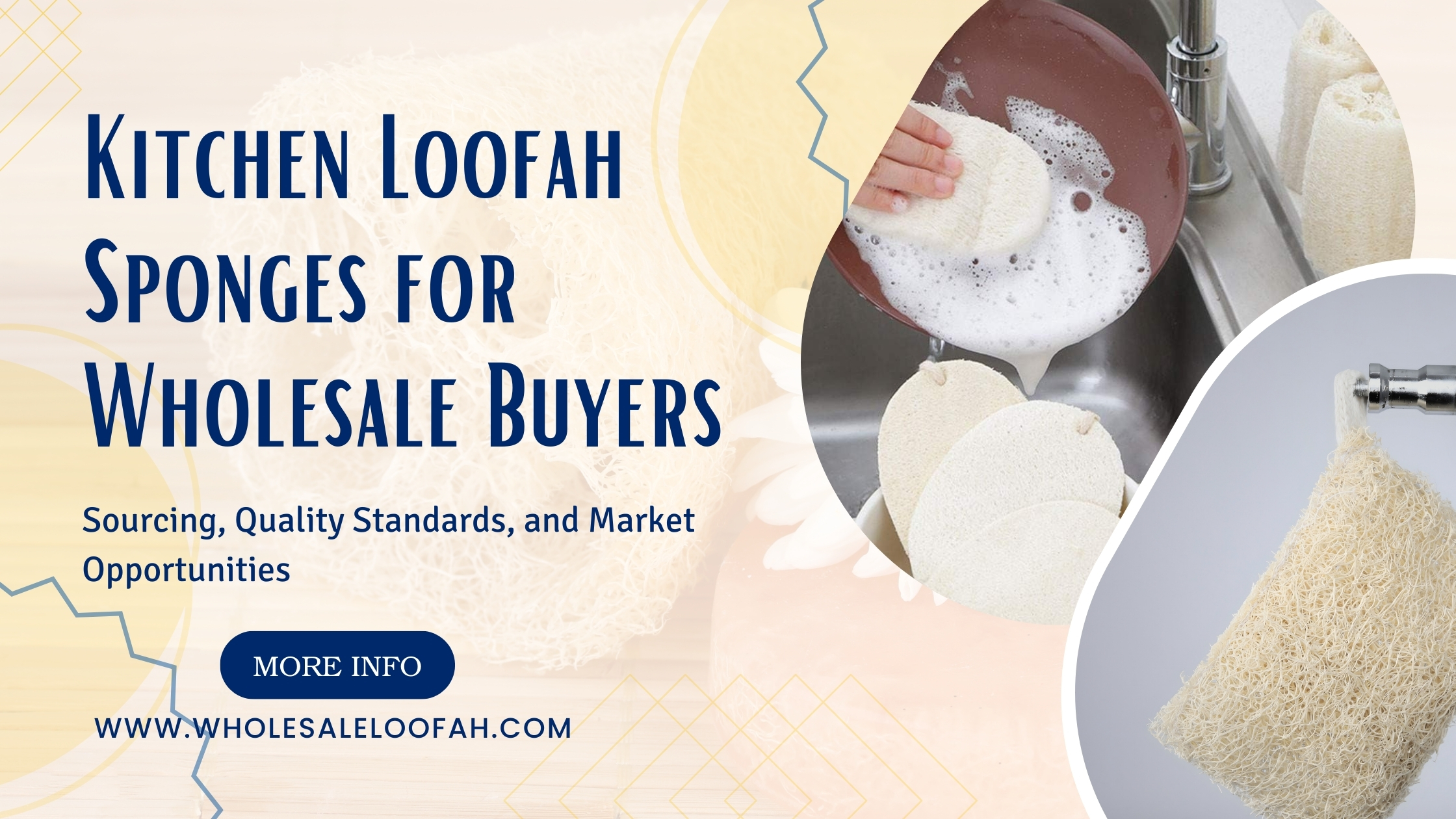
The kitchen loofah segment has emerged as a high-growth category as consumers commit to eliminating plastic scrubbers from their households. Natural loofah dish scrubbers are biodegradable, compostable, effective on cookware without scratching, and increasingly demanded by zero-waste consumers and plastic-free retailers.
Wholesale buyers serving eco-product retailers, food co-ops, or zero-waste stores have found kitchen loofah to be a reliable high-margin SKU. Egexo’s kitchen loofah range is specifically designed for retail-ready packaging in bulk configurations.
Raw Fiber and Specialty Products
Raw loofah fiber, in unprocessed or minimally processed form, serves manufacturers of natural cosmetic products, artisan soap makers, packaging material developers, and DIY wellness brands. This category also includes raw scrubbers used in industrial and agricultural applications.
The raw loofah scrubber category at Egexo covers the range of fiber-level products available for manufacturing and production use.
Pet and Grooming Products
Natural loofah has gained traction in the pet care segment as pet owners seek natural alternatives to synthetic grooming accessories. Loofah is gentle on animal skin and fur, biodegradable, and positions well in the premium natural pet care market.
Egexo’s pet and spa loofah products serve pet retailers, grooming salons, and specialty pet wellness brands in wholesale quantities.
Private Label Loofah: Building Your Own Brand on Egyptian Quality
One of the strongest commercial applications of bulk loofah purchasing is private label product development. Wellness brands, spa chains, hotel groups, and natural product retailers increasingly want loofah under their own brand name rather than as a generic supplier product.
Egexo’s private label loofah manufacturing service handles the complete process: product selection, specification agreement, sample approval, packaging and label design, production, and export. The service is accessible to buyers with no prior import experience, because Egexo’s EGEXO manages documentation, compliance, and logistics.
For brands that want to go further with product differentiation, the custom product design service allows complete product development from a concept brief through to production-ready specifications.
Supplier Evaluation Framework for Wholesale Loofah Buyers
Choosing a wholesale loofah supplier is a consequential decision. The wrong choice means inconsistent product quality, unreliable fulfillment, hidden costs, and ultimately dissatisfied customers. This framework helps buyers evaluate suppliers systematically.
| Evaluation Criterion | What to Assess | Positive Signal | Concern Signal |
|---|---|---|---|
| Ownership of growing operations | Do they farm or just trade? | Owns or directly manages farms | Trading company only |
| Quality documentation | Can they provide grade specs? | Written grading standards | Verbal claims only |
| Sample availability | Will they provide pre-order samples? | Yes, with product specification sheet | Samples unavailable or limited |
| Export certifications | Phytosanitary compliance? | Documented certifications | No certifications available |
| Communication quality | Technical knowledge of product? | Informed, specific responses | Generic sales responses |
| Minimum order flexibility | Can they work with your volume? | Flexible MOQ discussion | Rigid, inflexible terms |
| References available | Existing clients who can be contacted? | Verifiable references | No references provided |
| Packaging capabilities | Custom packaging options? | Full custom and standard options | Generic only |
Egexo meets every criterion in this framework. Additional due diligence information is available on the why choose Egexo page.
FAQ Section
Q1: Where are loofah sponges actually sold in bulk if not at health food stores?
Loofah sponges in genuine bulk quantities are sold through wholesale suppliers, direct farm exporters, B2B sourcing platforms, and natural product distributors. Health food stores carry only retail quantities of 1 to 5 units. For commercial volumes, direct engagement with a farm exporter like Egexo is the most effective sourcing approach, offering the best combination of quality, pricing, and supply chain transparency.
Q2: What is the typical lead time for a bulk loofah order from an Egyptian exporter?
For standard products in stock grades, lead times typically range from 2 to 4 weeks from order confirmation to shipment. Custom orders, private label production, or specialty products may require 4 to 8 weeks depending on production scheduling. Shipping transit time from Egypt to North America is typically 3 to 5 weeks by sea freight, with faster options available by air for smaller quantities.
Q3: Do wholesale loofah suppliers offer samples before large order commitments?
Reputable wholesale suppliers absolutely offer pre-order samples. Egexo provides a sample ordering program that allows buyers to evaluate product quality, texture, sizing, and finish before committing to a full order. Any supplier unwilling to provide samples before a substantial order commitment is a significant concern.
Q4: What is the environmental impact of buying natural loofah in bulk versus synthetic alternatives?
Natural loofah is a biodegradable, compostable, plant-derived fiber. It produces no microplastic waste during use, unlike synthetic bath poufs and scrubbing pads. Growing loofah requires no petroleum inputs and, when grown without synthetic pesticides, has a minimal agricultural footprint. Buying in bulk further reduces per-unit packaging waste. Synthetic scrubbers, by contrast, shed microplastic particles with every use and persist in landfills for centuries after disposal.
Q5: Can a small business or startup brand order loofah in bulk from an Egyptian supplier?
Yes. While minimum order quantities apply, they are not prohibitively large for most small businesses. No minimum order on standard products. Private label from 1,000 units. The private label service supports even early-stage brands with guidance through the import and customization process. Requesting a consultation through the quotation page is the recommended first step.
Q6: How does loofah quality affect my customer satisfaction and return rates?
Product quality directly determines customer satisfaction. A premium Egyptian loofah that maintains its texture for 6 to 8 weeks generates positive reviews, repeat purchases, and word-of-mouth recommendations. A low-quality loofah that breaks down in 2 to 3 weeks generates complaints and returns, damages brand reputation, and costs more in customer service time than the per-unit savings on cheap sourcing. Quality investment at the purchasing stage pays returns at the customer satisfaction stage.
Q7: Is there a difference between loofah sponges sold at health food stores and those available from Egyptian wholesalers in terms of sustainability?
The sustainability profile differs in several ways. Wholesale Egyptian loofah sourced directly from a cultivator has a documented and traceable supply chain, making sustainability claims verifiable. Retail loofah from health food stores often lacks origin documentation, making sustainability marketing claims difficult to substantiate. Additionally, per-unit packaging waste is substantially higher for individually packaged retail products than for bulk wholesale quantities, which use less packaging per unit. Egexo’s cultivation practices are aligned with natural growing methods, and certification documentation is available for buyers with sustainability reporting requirements.
Expert Insight from EGEXO
Most buyers who contact us have already spent time trying to solve their loofah sourcing problem through channels that were never designed to solve it. They have ordered from health food stores, tried retail distributors, experimented with Alibaba vendors, and encountered the same recurring problems: inconsistent quality, unknown origin, limited volume capacity, and pricing that makes their business model unworkable.
What those buyers consistently discover is that the solution is simpler than they expected. Engage a supplier who grows the product, controls the processing, manages the grading, and handles the export. Eliminate every unnecessary layer between the field and your warehouse.
That is not a marketing claim; it is a verifiable quality reality that every new wholesale client confirms when their first sample order arrives.
Visit the request a sample page and let the product speak for itself.
Conclusion
The question of whether loofah sponges are sold in bulk at health food stores has a clear answer: not in any meaningful sense. Health food stores are retail operations that serve individual consumers buying one or two units at a time. They are structurally, economically, and operationally unsuited to serve bulk purchasing needs at any commercial scale.
The bulk loofah market exists at the wholesale supplier and farm exporter level. Egyptian loofah from suppliers like Egexo represents the quality and operational standard that the global wellness, spa, and natural products industries have recognized as best in class. Whether you are building a private label brand, stocking a spa operation, supplying a retail chain, or simply making a personal commitment to buying natural loofah consistently and economically, the sourcing path leads through wholesale, not through the health food store aisle.
Key Takeaways:
- Health food stores are retail channels, not bulk sourcing solutions
- The genuine wholesale loofah market operates at the exporter and distributor level
- Egyptian loofah is the quality standard based on demonstrable agricultural advantages
- Quality grade directly affects customer satisfaction and business profitability
- Direct wholesale sourcing offers 40 to 70 percent lower per-unit cost than retail
- Private label and custom product options are accessible even for early-stage brands
Ready to experience Egyptian loofah quality?
- For Wholesale Buyers: Request a quote or download our catalog
- For Individual Orders: Browse our collection or order samples