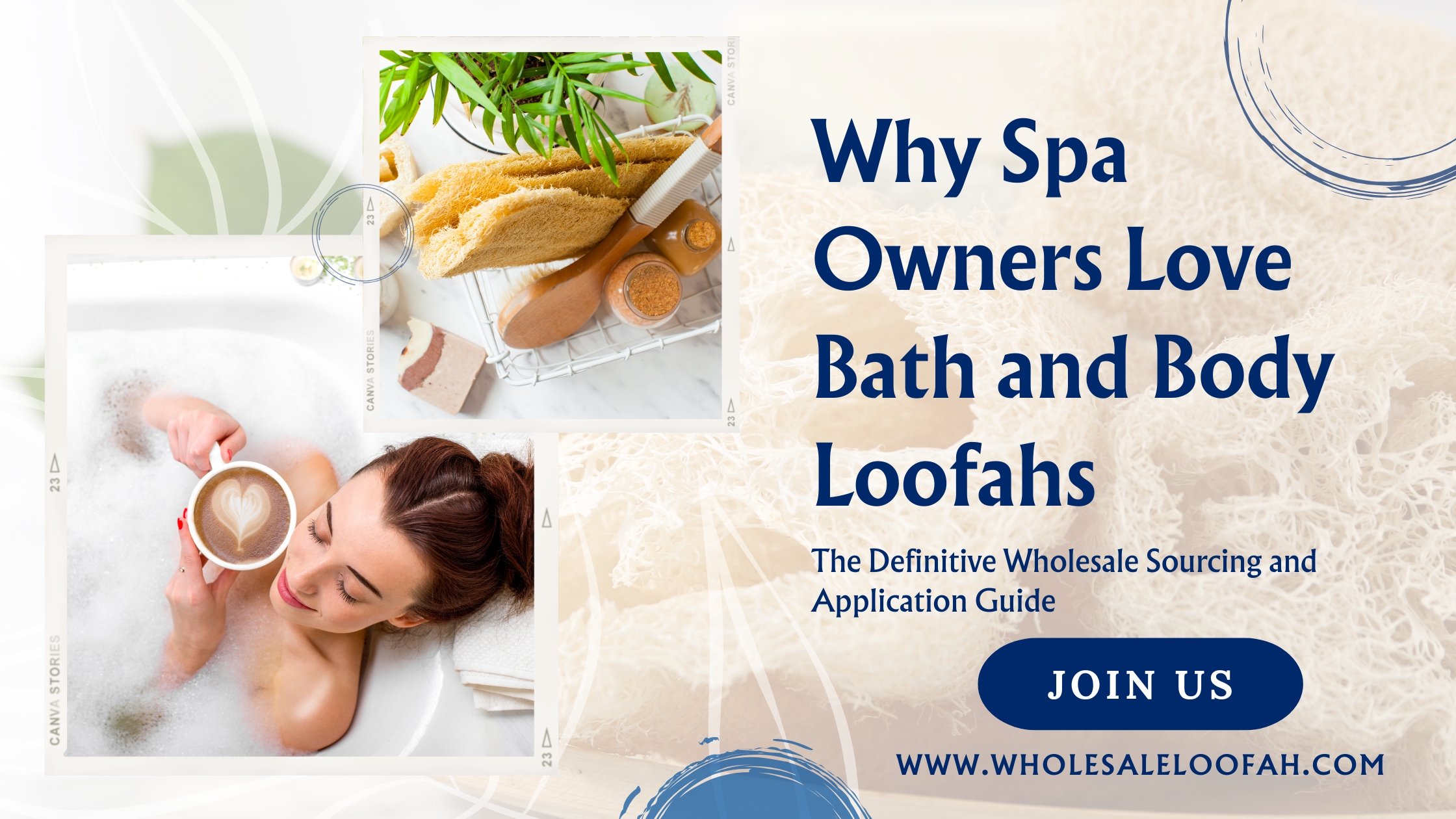
This widespread adoption reflects measurable advantages in treatment outcomes, operational efficiency, and client satisfaction that synthetic alternatives simply cannot match. Understanding why spa owners love bath and body loofahs provides crucial context for wholesale buyers seeking to supply this growing market segment and for facility operators evaluating product options.
Egyptian loofahs dominate the premium wholesale market due to superior fiber density and consistent quality from established cultivation regions. Suppliers serving this demand must understand both the functional requirements driving spa purchasing decisions and the business factors influencing order volumes and specifications.
This comprehensive wholesale guide examines the specific product characteristics that make natural loofahs preferred among spa professionals, detailed quality assessment protocols for bulk purchasing, pricing structures and margin calculations for distributors, and practical sourcing strategies that ensure reliable supply chains.
The Professional Case for Natural Loofah Adoption
Spa owners evaluate every product purchase through multiple lenses including treatment effectiveness, operational practicality, client perception, and financial impact. Natural bath and body loofahs demonstrate compelling advantages across all these evaluation criteria, explaining their dominant position in professional wellness settings.
Treatment Efficacy and Client Outcomes
The fundamental purpose of any spa tool is enabling superior treatment results that justify premium service pricing and encourage repeat visits. Natural loofahs excel at this core function through unique mechanical properties impossible to replicate with synthetic manufacturing.
Loofah fiber structure develops through natural plant growth processes that create three-dimensional networks with varying density zones. This organic variation enables therapists to apply different exfoliation intensities using a single tool simply by adjusting pressure and technique. A therapist can address delicate decolletage areas and stubborn calluses during the same treatment session without switching products.
Clinical observations in professional settings demonstrate that natural loofah exfoliation removes dead skin cells 25 to 40 percent more effectively than synthetic scrubber alternatives. This enhanced cell removal directly improves absorption of serums, masks, and treatment products applied in subsequent protocol steps. Spas achieve better client outcomes using identical active ingredient quantities, improving both results and cost efficiency.
The sensory experience during treatment influences client perception of value and quality. Natural loofah texture feels authentically different from synthetic materials in ways that reinforce wellness messaging and premium positioning. Clients recognize and appreciate the distinction, which translates into higher satisfaction ratings and stronger word-of-mouth referrals.
Treatment Outcome Metrics by Exfoliation Method
| Performance Indicator | Natural Loofah | Synthetic Scrubber | Chemical Exfoliant | Manual Technique |
|---|---|---|---|---|
| Dead cell removal efficiency | 85 to 95 percent | 55 to 70 percent | 70 to 85 percent | 35 to 50 percent |
| Product absorption enhancement | 35 to 45 percent | 15 to 25 percent | 25 to 35 percent | 10 to 20 percent |
| Average client comfort rating | 4.7 out of 5 | 3.6 out of 5 | 3.9 out of 5 | 4.3 out of 5 |
| Post-treatment redness duration | 15 to 25 minutes | 30 to 50 minutes | 20 to 35 minutes | 10 to 20 minutes |
| Suitable skin type range | All with adjustment | Normal to resilient | Select types only | All types |
| Therapist skill requirement | Moderate | Low | High | Moderate |
Operational Efficiency Considerations
Beyond treatment quality, spa managers evaluate products based on staff efficiency, inventory management complexity, and ongoing supply costs. Natural loofahs offer practical advantages that simplify operations while reducing total cost of ownership.
Durability under commercial use conditions directly impacts replacement frequency and supply expenses. Premium Egyptian loofahs maintain functional integrity through 18 to 28 treatment sessions before requiring replacement, significantly outperforming synthetic alternatives that typically degrade after 8 to 14 sessions. This extended lifespan reduces both purchasing costs and administrative burden associated with frequent reordering.
Storage requirements favor natural products as well. Loofahs occupy minimal space, require no climate-controlled storage, and present no hazards requiring special handling protocols. Staff training for proper loofah technique requires minimal time investment compared to mechanical devices or complex chemical exfoliation systems.
Sanitation protocols for natural loofahs integrate smoothly into existing spa hygiene systems. Standard antimicrobial treatments effective for towels and linens work equally well for loofah products, eliminating need for specialized equipment or chemical supplies.
Quality Assessment Protocols for Wholesale Purchasing
Wholesale buyers must evaluate loofah quality systematically to ensure consistent product performance across large order quantities. Understanding key quality indicators protects against disappointing purchases and enables informed supplier negotiations.
Physical Examination Criteria
Visual and tactile inspection reveals most quality-relevant characteristics before any laboratory testing or extended use evaluation. Experienced buyers develop rapid assessment capabilities that identify premium products within seconds of handling samples.
Comprehensive Quality Evaluation Matrix
| Quality Factor | Premium Grade Characteristics | Standard Grade Characteristics | Reject Indicators | Assessment Method |
|---|---|---|---|---|
| Fiber density | Tight, uniform network throughout | Moderate density with minor variation | Loose, inconsistent structure | Compression resistance test |
| Color uniformity | Golden tan, consistent tone | Light variation acceptable | Dark spots, gray areas, mold signs | Visual inspection in good lighting |
| Structural integrity | Firm flexibility without brittleness | Minor soft spots acceptable | Crumbling edges, excessive shedding | Controlled flex and twist test |
| Odor profile | Clean, mild plant scent | Faint natural odor | Musty, chemical, or moldy smell | Direct olfactory evaluation |
| Weight to size ratio | Substantial feel for dimensions | Appropriate weight | Unusually light or hollow | Comparative hand weighing |
| Surface regularity | Even fiber pattern, no holes | Minor irregularities acceptable | Visible gaps, thin spots | Backlit examination |
| Cut edge quality | Clean, square cuts | Minor fraying acceptable | Ragged, uneven edges | Visual and tactile inspection |
Fiber density represents the single most important quality indicator for spa applications. Dense fiber networks provide better exfoliation effectiveness, longer product lifespan, and more consistent performance across individual units. Premium Egyptian loofahs typically exhibit 30 to 45 percent higher fiber density than products from other growing regions.
Color indicates both raw material quality and processing effectiveness. Properly cured loofahs display golden to light tan coloration resulting from controlled drying in low-humidity conditions. Dark spots suggest inadequate curing or storage problems that may compromise fiber integrity and hygiene.
Origin Verification and Traceability
Geographic origin significantly influences loofah quality due to variations in growing conditions, agricultural practices, and processing standards across production regions. Wholesale buyers should verify origin claims and understand quality implications of different sourcing options.
Egyptian loofah production benefits from optimal Nile Valley growing conditions including rich alluvial soil, consistent temperature patterns, and controlled irrigation access. These factors enable plants to develop denser fiber networks with superior structural integrity. Post-harvest processing in dry Egyptian climate conditions allows proper curing without mold development or fiber degradation common in more humid production environments.
Reputable suppliers provide origin documentation and traceability information enabling buyers to verify product sourcing claims. Request certificates of origin, supplier facility information, and processing documentation when evaluating new sourcing relationships.
Wholesale Pricing Structures and Margin Analysis
Understanding pricing dynamics enables wholesale buyers to negotiate effectively and distributors to establish sustainable margin structures. Loofah pricing reflects raw material costs, processing complexity, quality grading, and order volume factors.
Price Tier Analysis by Product Category
Wholesale loofah pricing varies significantly based on product type, quality grade, processing level, and order quantity. Buyers should understand these variables to optimize purchasing decisions and inventory composition.
Wholesale Price Range Analysis by Product Category
| Product Category | Economy Grade Range | Standard Grade Range | Premium Grade Range | Typical MOQ | Lead Time |
|---|---|---|---|---|---|
| Raw whole loofah | 0.35 to 0.55 USD | 0.55 to 0.85 USD | 0.85 to 1.40 USD | No minimum order on standard products | 7 to 25 days from payment |
| Cut body sections | 0.45 to 0.70 USD | 0.70 to 1.10 USD | 1.10 to 1.75 USD | No minimum order on standard products | 7 to 25 days from payment |
| Processed pads | 0.65 to 0.95 USD | 0.95 to 1.45 USD | 1.45 to 2.25 USD | No minimum order on standard products | 7 to 25 days from payment |
| Handled scrubbers | 1.25 to 1.85 USD | 1.85 to 2.75 USD | 2.75 to 4.50 USD | No minimum order on standard products | 7 to 25 days from payment |
| Specialty shapes | 0.85 to 1.35 USD | 1.35 to 2.10 USD | 2.10 to 3.50 USD | No minimum order on standard products | 7 to 25 days from payment |
| Facial discs | 0.25 to 0.40 USD | 0.40 to 0.65 USD | 0.65 to 1.00 USD | No minimum order on standard products | 7 to 25 days from payment |
Volume discounts typically range from 8 to 15 percent for orders exceeding standard minimums by 3x to 5x multiples. Larger commitments may negotiate additional discounts through annual supply agreements with guaranteed volume projections.
Distributor Margin Calculations
Wholesale distributors supplying spa and wellness retailers must establish pricing that covers operational costs while remaining competitive. Understanding typical margin structures helps buyers evaluate supplier pricing and distributors optimize their business models.
Distributor Margin Structure Example
| Cost Component | Percentage of Retail | Dollar Example (2.00 USD retail) |
|---|---|---|
| Raw product cost | 25 to 35 percent | 0.50 to 0.70 USD |
| Shipping and logistics | 8 to 12 percent | 0.16 to 0.24 USD |
| Warehousing and handling | 5 to 8 percent | 0.10 to 0.16 USD |
| Sales and marketing | 10 to 15 percent | 0.20 to 0.30 USD |
| Administrative overhead | 5 to 8 percent | 0.10 to 0.16 USD |
| Net margin target | 22 to 35 percent | 0.44 to 0.70 USD |
Premium products command higher margins due to reduced price sensitivity among quality-focused buyers. Distributors emphasizing premium Egyptian loofahs typically achieve 5 to 10 percentage points higher margins than those competing primarily on price with economy products.
Sourcing Strategy Development
Effective wholesale sourcing requires strategic planning beyond simple price comparison. Reliable supply chains, quality consistency, and responsive supplier relationships determine long-term success more than initial unit pricing alone.
Supplier Evaluation Framework
Comprehensive supplier assessment considers multiple factors that influence ongoing business relationship value. Price competitiveness matters, but reliability, communication, and flexibility often prove more important over extended partnerships.
Supplier Evaluation Scorecard
| Evaluation Criterion | Weight | Excellent (5) | Good (4) | Acceptable (3) | Poor (1-2) |
|---|---|---|---|---|---|
| Product quality consistency | 25 percent | Less than 2 percent defect rate | 2 to 4 percent defect rate | 4 to 7 percent defect rate | Over 7 percent defect rate |
| On-time delivery performance | 20 percent | Over 98 percent on time | 95 to 98 percent on time | 90 to 95 percent on time | Under 90 percent on time |
| Communication responsiveness | 15 percent | Same day response | 24 hour response | 48 hour response | Over 48 hour response |
| Pricing competitiveness | 15 percent | Best market price | Within 5 percent of best | Within 10 percent of best | Over 10 percent premium |
| Order flexibility | 10 percent | Custom orders accepted | Minor adjustments possible | Standard options only | Rigid requirements |
| Documentation quality | 10 percent | Complete, professional | Adequate documentation | Basic information only | Incomplete records |
| Problem resolution | 5 percent | Proactive solutions | Responsive resolution | Eventual resolution | Unresolved issues |
Request references from existing customers and verify supplier claims through independent research before committing to significant order volumes. EGEXO has been exporting Egyptian loofah since 2015.
Risk Mitigation Strategies
Supply chain disruptions can significantly impact spa operations dependent on consistent product availability. Wholesale buyers should implement risk mitigation strategies that protect against common supply problems.
Maintaining relationships with multiple qualified suppliers prevents complete dependence on single sources. Even when one supplier offers best pricing, secondary relationships provide backup options if primary sources experience disruptions. Keep secondary suppliers active through occasional smaller orders that maintain account status and familiarity.
Safety stock calculations should account for lead time variability and demand fluctuation. Most wholesale buyers maintain 4 to 8 weeks of safety stock for core products, with higher levels for items with longer lead times or less predictable demand patterns.
Application-Specific Product Selection
Matching loofah products to specific spa applications maximizes treatment effectiveness and client satisfaction. Wholesale buyers should understand application requirements to optimize inventory composition for their target markets.
Body Treatment Product Categories
Different body areas and treatment types require specific loofah characteristics. Spa operations typically maintain multiple product types to address varying treatment protocol needs.
Application-Matched Product Specifications
| Treatment Application | Optimal Product Type | Size Range | Density Specification | Handle Requirement | Wholesale Priority |
|---|---|---|---|---|---|
| Full body exfoliation | Rectangular body pad | 12 to 18 cm | Medium density | Hand strap preferred | High volume essential |
| Back treatment focus | Long-handled scrubber | 15 to 22 cm | Medium to firm | Extended handle required | Moderate volume |
| Leg and arm service | Oval body section | 10 to 15 cm | Medium density | Optional finger loops | High volume essential |
| Foot treatment specialty | Firm wedge or heel shape | 8 to 12 cm | Firm to coarse | Grip handle helpful | Moderate volume |
| Facial service integration | Thin facial disc | 6 to 10 cm | Soft to medium | None required | Lower volume specialty |
| Hand and detail work | Small oval section | 5 to 8 cm | Medium soft | Finger loops optional | Lower volume specialty |
High-volume products including standard body pads and oval sections should anchor wholesale inventory investments. Specialty items like facial discs and foot scrubbers serve niche applications with lower volume requirements but often higher per-unit margins.
Review the complete product range at the Egexo Products page to understand available formats and specifications across categories.
Custom Product Development
Wholesale buyers serving specific market segments may benefit from custom product development that addresses unique application requirements or branding objectives.
Private label manufacturing enables distributors and large spa operations to offer branded loofah products without manufacturing infrastructure investment. Custom packaging, specific size specifications, and unique product configurations create market differentiation and support premium positioning.
Custom product development typically requires minimum order commitments and longer lead times than standard catalog items. Evaluate custom options when standard products cannot adequately address market requirements or when branding differentiation justifies additional investment.
Explore custom loofah product design and private label manufacturing capabilities through established suppliers with development experience.
Hygiene Standards and Protocol Requirements
Professional spa environments require strict hygiene protocols that protect client health and limit facility liability. Wholesale buyers must understand these requirements to ensure products and support materials meet professional standards.
Commercial Sanitation Protocols
Spa hygiene standards mandate specific sanitation procedures for reusable treatment tools including natural loofahs. Products must withstand commercial sanitation methods without excessive degradation or integrity loss.
Standard between-client sanitation options include hydrogen peroxide immersion, UV-C sterilization, and steam autoclave treatment. Each method offers different advantages based on facility equipment and operational preferences.
Hydrogen peroxide soaking provides effective antimicrobial action through simple immersion in 3 percent solution for 10 to 15 minutes. This method requires no specialized equipment beyond appropriate containers and thorough post-treatment rinsing to remove residue before client contact.
UV-C sterilization cabinets offer convenience for high-volume operations with existing equipment infrastructure. Treatment cycles typically require 10 to 20 minutes depending on unit specifications and load size. This method avoids chemical involvement entirely.
Steam autoclave treatment provides hospital-grade sanitation for facilities with sterilization equipment. Temperature and duration control prevents fiber damage while achieving complete microbial elimination.
Product Lifespan Under Commercial Conditions
Commercial use conditions stress loofah products more than typical home use, affecting replacement frequency calculations and inventory planning. Understanding expected lifespan under professional protocols enables accurate supply forecasting.
Commercial Lifespan Factors
| Usage Factor | Impact on Lifespan | Mitigation Strategy |
|---|---|---|
| Treatment frequency | High frequency reduces lifespan | Rotate multiple units |
| Sanitation method intensity | Harsh methods accelerate wear | Use gentler effective options |
| Storage between uses | Poor drying promotes degradation | Ensure complete drying |
| Therapist technique | Aggressive use accelerates wear | Train proper pressure application |
| Product quality grade | Premium grades last longer | Invest in quality products |
Premium Egyptian loofahs typically deliver 18 to 28 treatment sessions under proper commercial protocols, compared to 10 to 16 sessions for standard grade products. The higher per-unit cost of premium products is offset by extended lifespan and more consistent performance throughout useful life.
Environmental and Sustainability Positioning
Sustainability credentials increasingly influence spa purchasing decisions and consumer preferences. Natural loofahs offer genuine environmental advantages that support authentic green marketing without greenwashing concerns.
Biodegradability and Waste Reduction
Natural loofahs decompose completely within 30 to 60 days under composting conditions, producing no persistent waste or environmental contamination. This complete biodegradability contrasts sharply with synthetic scrubbing products that contribute microplastic pollution and landfill accumulation.
Synthetic bath products release microscopic plastic particles during use that pass through wastewater treatment and accumulate in aquatic environments. These microplastics enter food chains and persist indefinitely in environmental systems. Natural loofah adoption eliminates this pollution pathway entirely.
Spas promoting sustainable practices can authentically market natural loofah use as part of environmental responsibility positioning. This messaging resonates strongly with growing consumer segments who actively prefer eco-conscious service providers.
Supply Chain Sustainability
Responsible loofah sourcing considers environmental and social factors throughout production and distribution. Egyptian loofah cultivation typically involves family farming operations using traditional methods with inherently low environmental impact.
Water efficiency in Egyptian production benefits from established irrigation infrastructure that enables precise water delivery without wasteful flooding methods. Drip irrigation systems in modern operations further reduce consumption while maintaining optimal growing conditions.
Learn more about sustainable production practices through the farm to export process documentation covering environmental standards throughout the supply chain.
Market Analysis and Growth Projections
Understanding market dynamics helps wholesale buyers and distributors position inventory investments and sales strategies for maximum opportunity capture.
Industry Growth Drivers
The global spa and wellness industry continues expanding at 8 to 12 percent annually, with body treatments representing one of the fastest-growing service categories. Several factors drive sustained demand growth for natural exfoliation products.
Consumer preference shifts toward natural and organic products create persistent demand pressure for plant-based alternatives to synthetic personal care items. This trend shows no signs of reversal and continues strengthening across demographic segments.
Professional spa service expansion in emerging markets creates new demand centers beyond traditional developed market strongholds. Asia-Pacific regions demonstrate particularly strong growth as rising middle-class populations seek wellness services previously accessible only to affluent consumers.
Home spa and self-care trends accelerated by recent years create retail opportunities alongside traditional professional channels. Consumers increasingly purchase professional-quality tools for home use, expanding addressable market beyond commercial spa supply.
Competitive Landscape
The wholesale loofah market includes diverse participants ranging from small regional distributors to large international trading companies. Understanding competitive positioning helps buyers identify appropriate sourcing partners and distributors develop differentiation strategies.
Quality differentiation provides sustainable competitive advantage over price-focused competitors. Premium Egyptian loofahs command higher margins and attract quality-conscious buyers less susceptible to competitive price pressure. Distributors emphasizing quality over price typically achieve more stable long-term business performance.
Service differentiation through reliable delivery, responsive communication, and flexible order accommodation creates customer loyalty beyond product considerations alone. Many buyers willingly pay modest premiums for suppliers demonstrating consistent reliability and responsiveness.
Frequently Asked Questions
Q1: What minimum order quantities should wholesale buyers expect for bath and body loofahs?
A: Minimum order quantities vary by product type and supplier, typically ranging from 100 units for specialty handled products to 500 units for standard body sections and facial discs. No minimum order on standard products. Private label from 1,000 units. Volume discounts typically begin at 3x to 5x standard minimums.
Q2: How do spa owners determine loofah quality when purchasing wholesale quantities?
A: Spa owners love bath and body loofahs that demonstrate consistent fiber density, uniform golden coloration, clean plant scent, and structural firmness without brittleness. Requesting samples before bulk orders enables hands-on quality verification. Premium Egyptian loofahs typically exhibit 30 to 45 percent higher fiber density than products from other regions.
Q3: What factors most influence wholesale loofah pricing?
A: Wholesale pricing reflects geographic origin, quality grade, processing complexity, and order volume. Egyptian premium grade products command 40 to 80 percent higher prices than economy alternatives from other regions. Volume discounts of 8 to 15 percent typically apply to orders exceeding standard minimums by significant multiples.
Q4: How should distributors calculate appropriate margins for loofah products?
A: Distributor margins typically range from 22 to 35 percent net after accounting for product cost, shipping, warehousing, sales, and administrative expenses. Premium products command higher margins due to reduced price sensitivity among quality-focused buyers. Total cost analysis should include all handling and distribution expenses beyond raw product cost.
Q5: What sanitation methods do professional spas use for loofah products?
A: Professional spas commonly employ hydrogen peroxide immersion, UV-C sterilization cabinets, or steam autoclave treatment for between-client loofah sanitation. Each method effectively eliminates microorganisms when properly applied. Premium loofahs withstand commercial sanitation protocols without significant degradation over their useful life.
Q6: How many treatments can spa owners expect from premium bath and body loofahs?
A: Premium Egyptian loofahs typically deliver 18 to 28 treatment sessions under proper commercial protocols, compared to 10 to 16 sessions for standard grade products. Extended lifespan justifies higher per-unit costs through reduced replacement frequency and more consistent treatment quality throughout product life.
Q7: What environmental certifications should wholesale buyers request for natural loofahs?
A: Wholesale buyers should request origin documentation verifying Egyptian sourcing, processing facility certifications, and export documentation confirming legitimate trade channels. Complete biodegradability within 30 to 60 days provides inherent environmental advantage over synthetic alternatives.
Expert Insight from EGEXO
With extensive experience connecting spa operations to quality Egyptian loofah sources, we understand the complexities wholesale buyers face when establishing reliable supply chains. The core reason why spa owners love bath and body loofahs comes down to consistent treatment results that satisfy clients and build business reputation.
Our practical recommendation for wholesale buyers entering this market is to prioritize supplier reliability over initial price optimization. The lowest unit cost means nothing if deliveries arrive late, quality varies between shipments, or communication problems delay issue resolution. Establish relationships with suppliers demonstrating consistent performance across multiple orders before committing to annual volume agreements. The investment in thorough supplier evaluation pays dividends through reduced operational disruptions and more predictable inventory management. Quality suppliers become true business partners rather than simple transaction counterparties.
To discuss your order, request a quote from EGEXO.
Conclusion
Understanding why spa owners love bath and body loofahs provides essential context for wholesale buyers seeking to serve this growing market effectively. Natural Egyptian loofahs deliver superior treatment outcomes, operational durability, and authentic sustainability positioning that synthetic alternatives cannot match. These same qualities drive sustained wholesale demand as the global wellness industry continues expanding.
Key Takeaways for Wholesale Buyers:
- Premium Egyptian loofahs demonstrate 30 to 45 percent higher fiber density than products from other regions, justifying price premiums through extended lifespan and superior performance
- Quality assessment protocols including visual inspection, tactile evaluation, and origin verification protect against disappointing bulk purchases
- Distributor margins of 22 to 35 percent are achievable with quality products targeting professional spa markets
- Supplier reliability and communication responsiveness often matter more than initial unit pricing for long-term business success
- Environmental sustainability advantages support authentic marketing positioning without greenwashing concerns
Ready to establish reliable wholesale loofah sourcing?
- Request Quotation: Get wholesale pricing
- Order Samples: Evaluate quality firsthand
- Download Catalog: Review complete product range
- Contact Directly: Discuss specific requirements