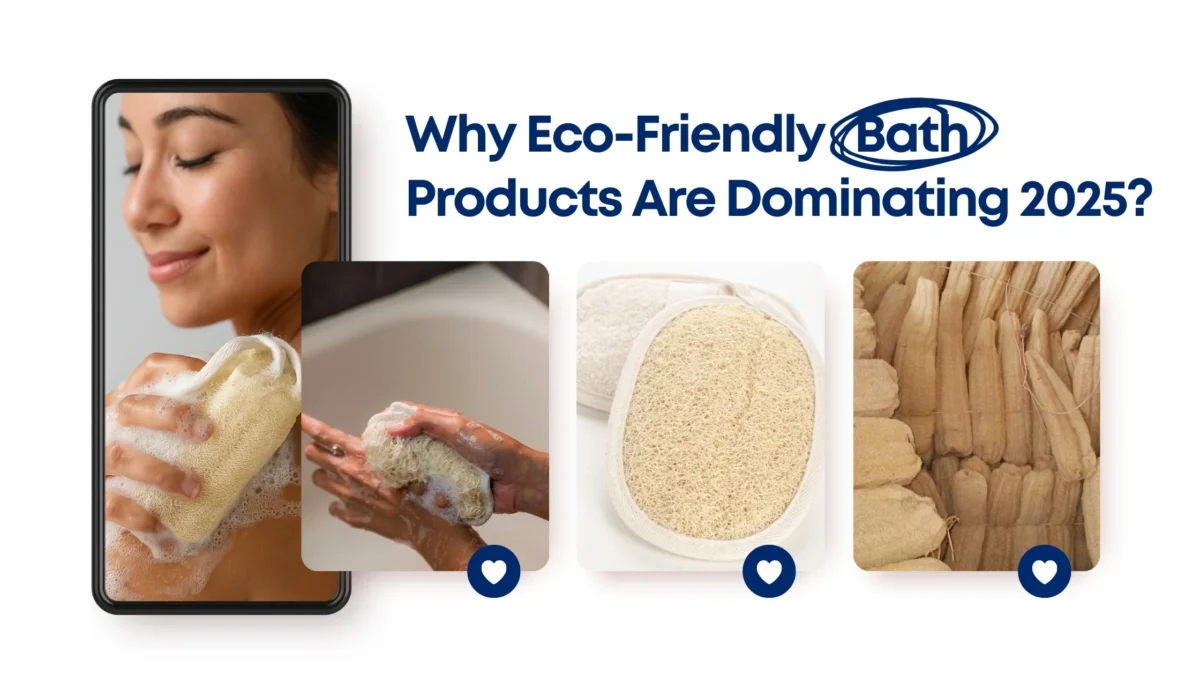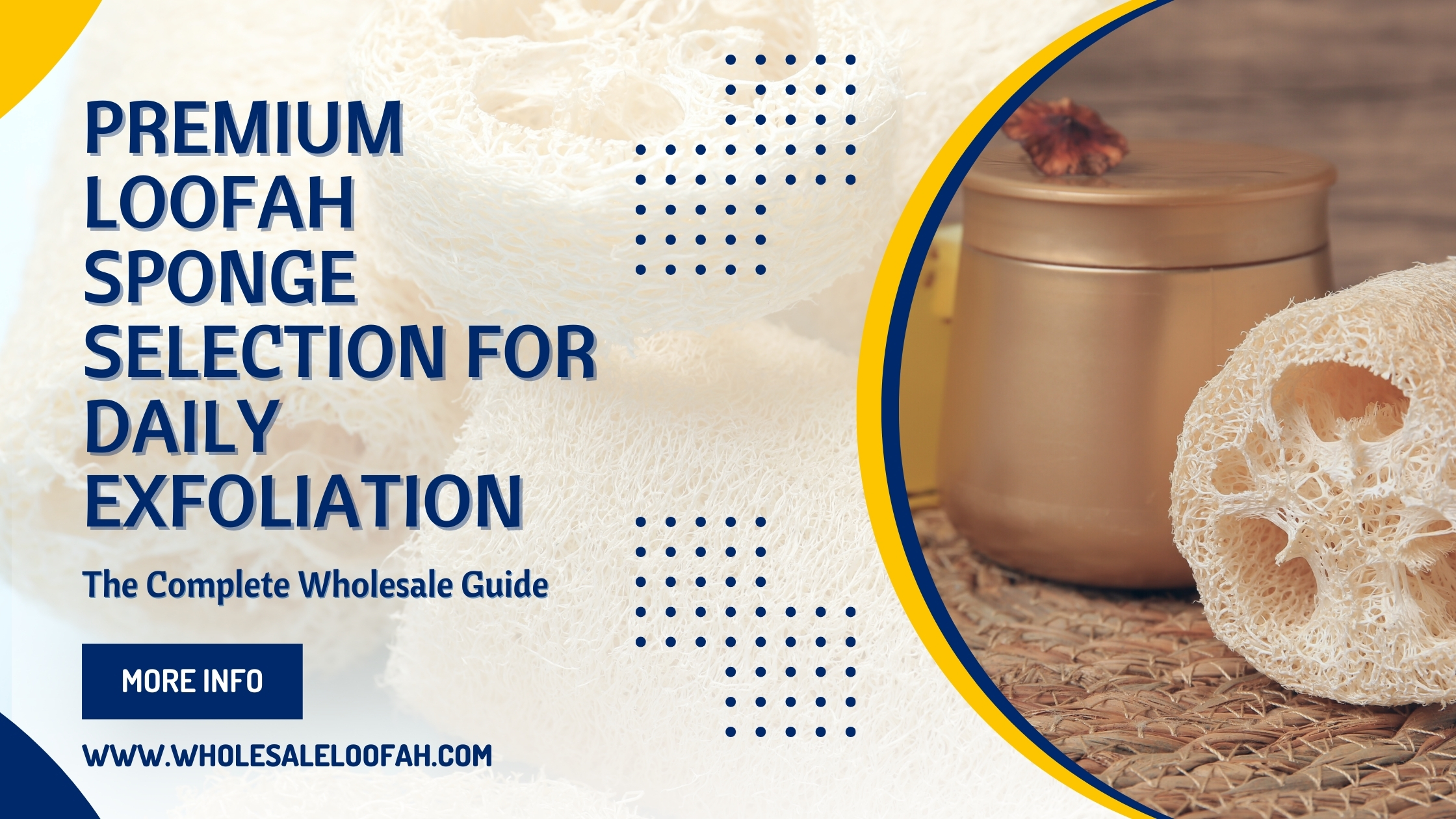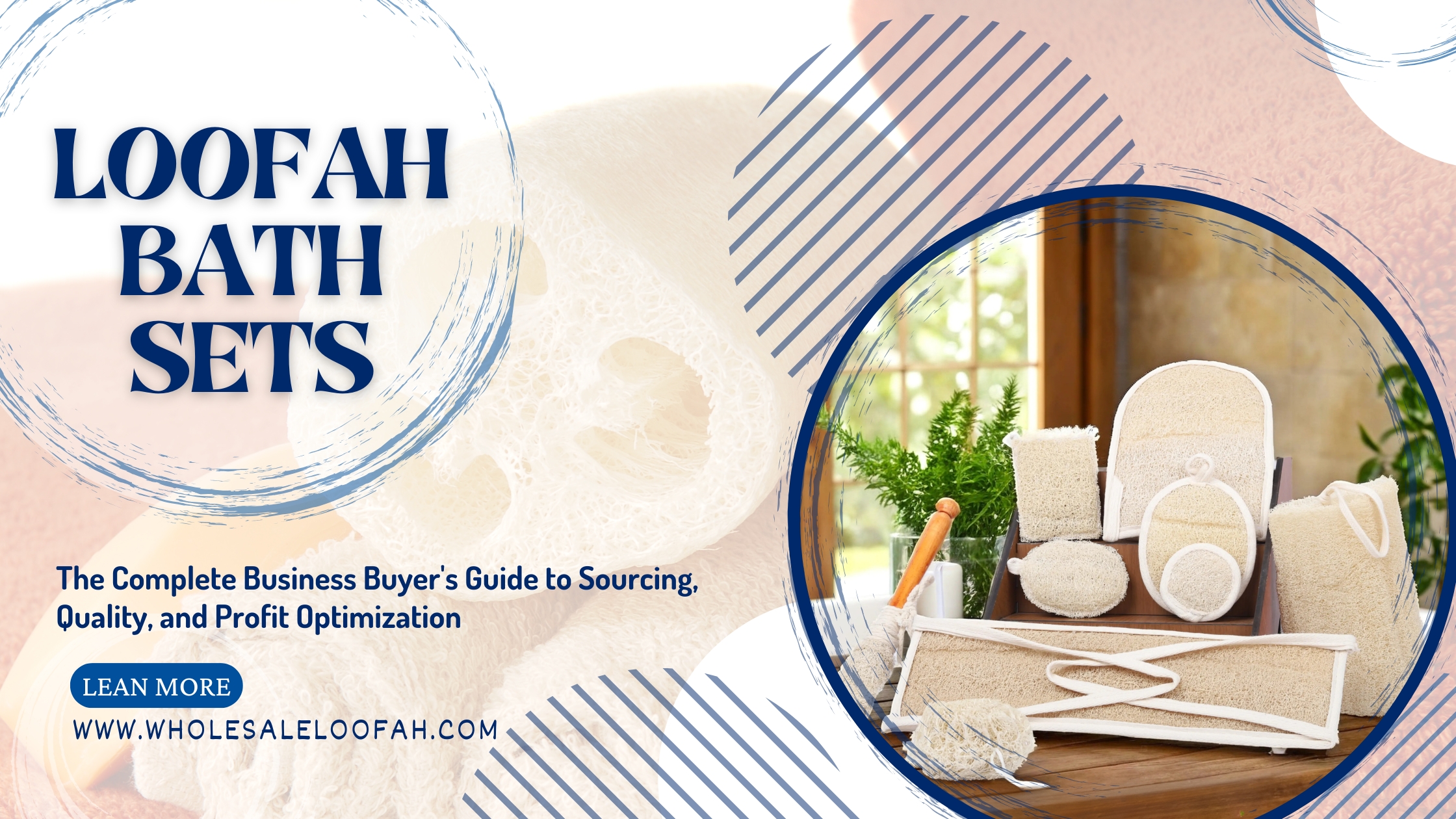
The natural bath products wholesale market has undergone substantial transformation as consumer preferences shift decisively toward sustainable alternatives. Industry analysis indicates that wholesale loofah bath sets now represent one of the fastest-growing segments within natural personal care distribution, with B2B order volumes increasing approximately 23 percent annually since 2021. This growth trajectory reflects broader retail and hospitality industry recognition that natural products command premium positioning and stronger customer loyalty.
Wholesale loofah bath sets present compelling business opportunities across multiple channels. Spa and wellness facilities incorporate these products into treatment offerings and retail programs. Gift retailers build seasonal inventory around attractively packaged natural bath collections. Hotel properties differentiate guest experiences through premium amenity programs. Health-focused retailers expand natural product offerings to meet demonstrated customer demand. Each channel requires distinct sourcing approaches, quality specifications, and inventory strategies.
This guide addresses the specific information needs of business buyers evaluating wholesale loofah bath set opportunities. You will learn supplier evaluation criteria that protect against quality inconsistencies, understand pricing structures and margin calculations, discover inventory management strategies suited to natural product characteristics, and gain practical frameworks for building profitable loofah bath set programs. Whether you operate a single spa location or manage purchasing for a retail chain, the commercial insights here apply directly to your business decisions.
Understanding the Wholesale Loofah Bath Set Market
Successful wholesale purchasing requires understanding market dynamics, product categories, and the factors that influence both availability and pricing throughout the supply chain.
Market Structure and Supply Chain Overview
The wholesale loofah bath set market operates through several distinct supply chain configurations. Direct manufacturer relationships offer the best pricing but typically require substantial minimum orders and involve international logistics complexity. Regional distributors provide domestic inventory with lower minimums but reduced margins. Hybrid suppliers maintain relationships with source manufacturers while offering distribution services, balancing cost efficiency with operational convenience.
Geographic supply concentration characterizes loofah production. Egypt dominates premium loofah cultivation, with the Nile Delta region producing an estimated 60 percent of commercial-grade loofah entering international markets. China and India contribute significant volume at lower price points, while Central American production serves regional markets. Understanding these geographic dynamics helps buyers evaluate supplier claims and anticipate supply chain factors affecting availability and pricing.
Seasonal production cycles influence wholesale market conditions. Loofah harvesting occurs primarily between September and December in major growing regions. Post-harvest processing and export preparation extend through the following months. Buyers placing orders during peak availability periods typically secure better pricing and selection than those purchasing during supply-constrained periods later in the annual cycle.
The supply chain comparison below outlines key characteristics of different sourcing approaches.
| Sourcing Approach | Typical Minimums | Lead Time | Price Advantage | Complexity Level | Best For |
|---|---|---|---|---|---|
| Direct Manufacturer | No minimum order on standard products | 7 to 25 days from payment | 30 to 45 percent savings | High | Large retailers, distributors |
| Regional Distributor | No minimum order on standard products | 7 to 25 days from payment | Baseline pricing | Low | Small retailers, single locations |
| Hybrid Supplier | No minimum order on standard products | 7 to 25 days from payment | 15 to 25 percent savings | Medium | Mid-size businesses, growing operations |
| Import Agent | No minimum order on standard products | 7 to 25 days from payment | 25 to 40 percent savings | Medium-High | Businesses with import experience |
Product Categories and Set Configurations
Wholesale loofah bath sets come in standardized configurations that have emerged through market evolution to match common retail and hospitality applications. Understanding these categories helps buyers specify orders accurately and evaluate supplier offerings efficiently.
Entry-level wholesale sets typically contain two to three items, commonly a body loofah paired with a facial pad or small accessory. These configurations suit price-sensitive retail environments and introductory hospitality amenity programs.
Standard wholesale sets include four to five coordinated items providing comprehensive bath care coverage. Body loofah, facial pad, back scrubber or strap, and bath mitt represent typical compositions. These sets balance perceived value with manageable cost, making them popular for gift retail and mid-tier spa programs.
Premium and deluxe wholesale sets expand to six or more items, often incorporating accessories beyond loofah products themselves. Natural soap dishes, cotton accessories, wooden implements, and decorative packaging elevate presentation for luxury retail and upscale hospitality applications.
Custom configuration capability distinguishes sophisticated suppliers from basic vendors. Businesses with specific requirements benefit from suppliers willing to assemble custom sets matching their exact specifications rather than forcing selection from predetermined options.
The set category reference below details typical configurations and applications.
See our wholesale prices on egexo.com.
Evaluating Wholesale Loofah Suppliers
Supplier selection represents the most consequential decision in wholesale loofah bath set purchasing. Quality inconsistency, fulfillment reliability, and communication effectiveness vary dramatically across the supplier landscape.
Essential Supplier Qualification Criteria
Production source verification should precede any significant purchase commitment. Suppliers should clearly identify where their loofah products originate and provide documentation supporting origin claims. Vague responses about sourcing or inability to trace products to specific growing regions raise legitimate concerns. Established suppliers like Egexo maintain transparent farm to export documentation demonstrating direct cultivation relationships.
Quality control processes distinguish professional operations from opportunistic traders. Ask potential suppliers to describe their quality assessment procedures, grading standards, and defect handling policies. Suppliers maintaining documented quality standards demonstrate commitment to consistency that translates into reliable product for your business.
Business credentials provide additional qualification signals. Established companies with verifiable track records, proper business registration, and industry certifications present lower risk than newer or undocumented operations. Export certifications, trade association memberships, and customer references all contribute to supplier qualification assessment.
Communication responsiveness during the inquiry phase predicts ongoing relationship quality. Suppliers who respond promptly, answer questions thoroughly, and provide requested information efficiently typically maintain similar service standards throughout business relationships. Delayed responses, incomplete answers, or defensive reactions to reasonable questions suggest potential difficulties ahead.
The supplier evaluation framework below provides systematic assessment structure.
| Evaluation Criterion | Questions to Ask | Positive Indicators | Warning Signs | Weight |
|---|---|---|---|---|
| Source Verification | Where specifically are products grown? | Named regions, farm relationships | Vague answers, unclear origin | High |
| Quality Control | How do you ensure consistent quality? | Documented standards, grading systems | No formal process described | High |
| Business Credentials | What certifications do you hold? | Export licenses, trade memberships | Unable to verify claims | Medium |
| Communication Quality | Response time and thoroughness | Prompt, complete, professional | Delayed, incomplete, defensive | Medium |
| Sample Availability | Can I evaluate products before ordering? | Readily available samples | Reluctance to provide samples | High |
| Reference Customers | Who are your existing customers? | Verifiable references provided | No references available | Medium |
| Customization Capability | Can you accommodate custom requirements? | Flexibility, solution orientation | Rigid, predetermined options only | Medium |
The Critical Role of Sample Evaluation
Pre-purchase sampling represents non-negotiable due diligence for wholesale loofah bath set sourcing. Product photographs and descriptions cannot adequately convey quality characteristics that determine customer satisfaction and repeat purchasing. Physical evaluation reveals fiber density, color consistency, construction quality, and aromatic characteristics impossible to assess remotely.
Professional suppliers facilitate sample evaluation through established processes. Sample request procedures should be straightforward and reasonably priced, recognizing that samples represent investment in potential business relationships rather than profit centers. Suppliers resistant to providing samples or charging excessive fees for evaluation products may be concealing quality issues.
Sample evaluation should follow systematic assessment covering all quality dimensions. Examine multiple pieces from proposed order quantities, as individual item variation reveals manufacturing consistency. Compare samples against any existing inventory to assess relative quality positioning. Consider conducting small-scale customer testing before committing to larger orders, gathering feedback that informs purchase decisions.
Document sample evaluation findings for future reference. Photography, written notes, and retained physical samples create comparison baselines for subsequent deliveries. Quality drift over time represents common supplier issue that documented baselines help identify and address.
Pricing Structures and Negotiation Considerations
Wholesale loofah bath set pricing follows predictable patterns that inform realistic negotiation expectations. Understanding cost drivers helps buyers distinguish genuinely competitive pricing from artificially inflated quotes or suspiciously low offers suggesting quality compromises.
Volume-based pricing tiers characterize standard wholesale structures. Initial tier pricing applies to minimum orders, with progressive discounts at increasing volume thresholds. Typical discount progression offers 8 to 12 percent reduction at double minimum quantities, with additional 5 to 8 percent reductions at subsequent thresholds. Maximum discounts for large volume commitments can reach 25 to 35 percent below initial tier pricing.
Origin significantly influences pricing. Egyptian loofah commands 20 to 40 percent premiums over Chinese or Indian alternatives, reflecting genuine quality differences that justify higher costs for appropriate applications. Buyers should evaluate whether origin premiums align with their market positioning and customer expectations.
Set composition affects per-unit costs substantially. Simpler sets with fewer components cost less per unit but may generate lower retail margins. Premium sets with more items and enhanced packaging cost more but support higher retail prices and potentially stronger margins. Analysis should consider margin percentages alongside absolute dollar returns.
Payment terms represent negotiable elements beyond unit pricing. Standard terms range from full prepayment for new relationships to net-30 or net-60 arrangements for established accounts. Early payment discounts of 2 to 3 percent can meaningfully impact costs for buyers with available capital. Wholesale quotation processes typically address both pricing and terms.
The pricing factor analysis below outlines key cost influences.
| Pricing Factor | Impact Range | Negotiability | Considerations |
|---|---|---|---|
| Order Volume | 15 to 35 percent | High | Balance inventory costs against unit savings |
| Product Origin | 20 to 40 percent | Low | Quality differences often justify premiums |
| Set Composition | 40 to 60 percent | Medium | Analyze margin dollars not just percentages |
| Seasonal Timing | 5 to 15 percent | Medium | Order during peak availability periods |
| Payment Terms | 2 to 5 percent | Medium | Early payment discounts available |
| Relationship Tenure | 5 to 10 percent | Builds over time | Long-term relationships earn better terms |
| Customization | 10 to 25 percent premium | Medium | Custom requirements add costs |
Quality Standards for Wholesale Loofah Products
Establishing clear quality specifications protects wholesale buyers from inconsistent deliveries and the customer satisfaction issues that follow. Professional purchasing requires defined standards against which received products can be evaluated.
Physical Quality Specifications
Fiber density represents the primary quality determinant for loofah products. Dense fibers provide effective exfoliation, maintain shape during use, and deliver extended product life that satisfies end customers. Sparse, loosely structured loofahs compress quickly and deteriorate rapidly, generating complaints and returns.
Color consistency indicates processing quality and source material condition. Premium loofah displays uniform golden to light tan coloration throughout. Significant color variation within individual pieces or across set components suggests inconsistent processing or mixed source batches. Dark spots, excessive browning, or greenish tinges indicate quality issues ranging from delayed processing to mold exposure.
Structural integrity affects both immediate presentation and usage durability. Quality loofahs maintain shape when handled without sections separating or excessive fiber shedding. Seams and construction on assembled items like back scrubbers should appear secure and professionally finished. Loose construction indicates quality control failures that predict premature product failure.
Size and weight specifications enable consistent inventory management. Professional suppliers provide dimensional ranges and weight specifications for each product type. Excessive variation makes retail presentation challenging and can trigger customer perception of inconsistent quality even when individual items meet standards.
The quality specification reference below establishes professional standards.
| Quality Attribute | Premium Grade | Standard Grade | Minimum Acceptable | Reject Criteria |
|---|---|---|---|---|
| Fiber Density | Firm, highly resistant | Moderate resistance | Light resistance | Soft, compresses easily |
| Color | Uniform golden tan | Minor variation acceptable | Moderate variation | Dark spots, green tinge, mold signs |
| Structural Integrity | Excellent shape retention | Good shape retention | Adequate integrity | Separating sections, loose fibers |
| Size Consistency | Within 5 percent of spec | Within 10 percent of spec | Within 15 percent of spec | Exceeds 15 percent variation |
| Aroma | Neutral to faint earth | Neutral | Faint odor acceptable | Musty, moldy, chemical |
| Visual Appearance | Uniform, professional | Minor irregularities | Some irregularities | Obvious defects, poor finish |
Establishing Quality Agreements with Suppliers
Formal quality agreements protect both buyers and suppliers by establishing shared expectations before transactions occur. Professional wholesale relationships benefit from documented standards that reduce disputes and enable efficient issue resolution.
Specification documents should detail acceptable ranges for all relevant quality attributes. Reference samples retained by both parties provide physical standards against which deliveries can be evaluated. Photography of acceptable and unacceptable examples creates visual reference supporting consistent interpretation.
Inspection procedures should be defined, including who inspects, what percentage of shipments undergo evaluation, and what tools or methods apply. Pre-shipment inspection at origin can prevent quality issues from reaching destination, though this adds cost and requires trusted inspection resources.
Defect handling procedures establish how quality issues are addressed when they occur. Replacement, credit, and return policies should be agreed before problems arise rather than negotiated under dispute pressure. Reasonable defect thresholds acknowledge that natural products exhibit some variation while protecting buyers from unacceptable quality levels.
Documentation and communication protocols ensure quality information flows effectively. Regular quality reports, issue notifications, and improvement discussions maintain standards over time. Suppliers committed to quality welcome such structures as tools for continuous improvement.
Inventory Management for Natural Bath Products
Wholesale loofah bath sets present inventory management considerations distinct from synthetic products or non-perishable goods. Natural product characteristics require adapted storage, handling, and rotation practices.
Storage Requirements and Shelf Life Considerations
Proper storage maintains loofah quality from receipt through sale or use. Temperature stability matters, with ideal storage between 15 and 25 degrees Celsius. Temperature extremes can affect natural fiber condition, while temperature fluctuations promote moisture condensation that creates quality risks.
Humidity control represents the most critical storage factor. Excess humidity supports mold growth that destroys loofah products entirely. Storage areas should maintain relative humidity below 60 percent, with 40 to 50 percent representing optimal range. Dehumidification equipment may be necessary in humid climates or seasons.
Air circulation prevents moisture accumulation in stored products. Avoid fully enclosed containers that trap humidity. Breathable packaging, shelving that allows airflow beneath products, and periodic package opening all support appropriate air exchange.
Light exposure causes gradual bleaching and fiber degradation in natural loofah. Storage areas should minimize direct sunlight and strong artificial light exposure. Original packaging generally provides adequate light protection during normal storage periods.
Shelf life for properly stored loofah products extends 18 to 24 months from production. Products approaching age limits may show subtle quality degradation even with proper storage. First-in-first-out inventory rotation ensures older stock sells before quality decline becomes noticeable.
The storage specification table below summarizes requirements.
| Storage Factor | Optimal Condition | Acceptable Range | Risk Threshold | Consequences of Violation |
|---|---|---|---|---|
| Temperature | 18 to 22 degrees C | 15 to 25 degrees C | Below 10 or above 30 C | Fiber degradation, condensation |
| Relative Humidity | 40 to 50 percent | 35 to 60 percent | Above 65 percent | Mold growth, product loss |
| Air Circulation | Good airflow | Moderate airflow | Sealed containers | Moisture accumulation |
| Light Exposure | Dark storage | Minimal light | Direct sunlight | Bleaching, fiber breakdown |
| Maximum Storage | 12 months ideal | Up to 18 months | Beyond 24 months | Quality deterioration |
Inventory Planning and Order Timing
Effective inventory planning balances stock availability against carrying costs and quality degradation risks. Natural products reward lean inventory approaches more than synthetic alternatives where extended storage presents fewer risks.
Demand forecasting should account for seasonal patterns affecting loofah bath set sales. Gift-giving seasons drive significant volume spikes, with November through January representing peak demand periods for most retailers. Spa and hospitality channels show more stable year-round demand with moderate seasonal variation.
Lead time awareness prevents stockouts while avoiding excessive inventory accumulation. International sourcing typically requires 6 to 12 weeks from order to delivery, while domestic distributors may fulfill within 1 to 3 weeks. Building appropriate lead time into reorder triggers ensures continuous availability.
Safety stock levels should reflect demand variability and supply chain reliability. Products with stable demand and reliable suppliers require lower safety stock than those with variable demand or less predictable supply. Natural products’ storage limitations argue for conservative safety stock levels supplemented by responsive supplier relationships.
Minimum order quantities influence ordering frequency and inventory levels. Lower minimums enable more frequent smaller orders that reduce inventory carrying but increase per-unit costs and administrative burden. Higher minimums offer better pricing but require larger inventory commitments. Analysis should consider total costs including carrying costs, not just unit pricing.
Profit Optimization Strategies
Wholesale loofah bath set purchasing ultimately serves profit generation. Strategic approaches to sourcing, positioning, and program development maximize return on inventory investment.
Margin Analysis and Pricing Strategy
Wholesale loofah bath sets typically support retail margins between 50 and 70 percent, varying by market positioning and competitive environment. Premium positioning with quality Egyptian loofah products often achieves higher margins than commodity positioning with lower-cost alternatives, as customers perceiving genuine quality differences show reduced price sensitivity.
Cost structure analysis should capture all relevant expenses beyond unit purchase price. Shipping and customs costs for international sourcing typically add 8 to 15 percent to landed costs. Storage, handling, and inventory carrying costs contribute additional expense. Marketing and sales costs vary by channel but affect true profitability.
Pricing strategy should reflect market positioning and customer value perception. Premium pricing requires supporting quality and presentation that justify higher prices in customer minds. Value pricing approaches can succeed with appropriate cost structures but risk commoditization and margin pressure. Most successful programs establish clear positioning and price accordingly rather than attempting to serve all market segments.
Bundle and set strategies can enhance margins by combining products in ways that obscure individual item pricing while delivering perceived value. Custom set configurations exclusive to your business prevent direct price comparison with competitors selling identical items.
The margin analysis framework below illustrates calculation approaches.
| Cost/Revenue Element | Entry Level Set | Standard Set | Premium Set |
|---|---|---|---|
| Wholesale Unit Cost | 4.50 USD | 10.00 USD | 22.00 USD |
| Shipping/Landed Cost Add | 0.50 USD | 1.00 USD | 2.00 USD |
| Total Landed Cost | 5.00 USD | 11.00 USD | 24.00 USD |
| Suggested Retail Price | 15.00 USD | 35.00 USD | 65.00 USD |
| Gross Margin Dollars | 10.00 USD | 24.00 USD | 41.00 USD |
| Gross Margin Percent | 67 percent | 69 percent | 63 percent |
| Net Margin (est.) | 45 to 50 percent | 50 to 55 percent | 45 to 50 percent |
Channel-Specific Optimization
Different sales channels present distinct optimization opportunities requiring adapted strategies.
Retail environments benefit from visual merchandising that communicates natural product quality and sustainability benefits. Point-of-sale education materials help staff explain loofah benefits and usage, supporting conversion and reducing returns. Seasonal promotional timing aligned with gift-giving occasions maximizes volume during high-demand periods.
Spa and wellness facilities can integrate loofah products into service offerings as well as retail programs. Treatment incorporation introduces products to guests who may then purchase for home use. Staff training ensures consistent product recommendation that drives retail attachment to services.
Hospitality applications focus on guest experience enhancement and potential retail attachment. Amenity programs position properties as environmentally conscious and guest-focused. In-room retail options can capture purchase interest generated by amenity use.
E-commerce channels require compelling product photography, detailed descriptions, and review generation strategies. Natural product benefits messaging resonates with environmentally conscious online shoppers. Subscription and replenishment programs can build recurring revenue from consumable product nature.
Building Long-Term Supplier Relationships
Sustainable wholesale loofah bath set programs depend on reliable supplier relationships that deliver consistent quality and responsive service over time. Investment in relationship development generates returns through preferential treatment, better terms, and collaborative problem-solving.
Communication regularity maintains relationship strength between transactions. Periodic check-ins, feedback sharing, and market information exchange build mutual understanding and partnership orientation. Suppliers value customers who communicate professionally and consistently.
Volume commitment in exchange for improved terms benefits both parties when structured appropriately. Annual volume agreements can secure pricing advantages while providing suppliers with planning certainty. Graduated commitments that increase with demonstrated supplier performance reduce buyer risk.
Problem resolution approaches reveal true relationship quality. Partners work together to resolve issues fairly rather than extracting maximum concession from difficulties. Reasonable accommodation of occasional supplier challenges builds goodwill that returns value during buyer difficulties.
Growth partnership orientation serves long-term interests. Suppliers who help customers succeed through market intelligence, product development input, and business support become valuable strategic resources beyond their transaction role. Seek suppliers interested in mutual growth rather than simply fulfilling orders.
Navigating International Sourcing
Many wholesale loofah bath set buyers source internationally to access premium Egyptian products or achieve cost advantages. International purchasing introduces considerations beyond domestic transactions.
Import Process Fundamentals
Import documentation requirements vary by country but typically include commercial invoices, packing lists, certificates of origin, and potentially phytosanitary certificates for plant-based products. Suppliers experienced in export should provide required documentation; request confirmation of documentation capabilities before committing to orders.
Customs classification determines duty rates applicable to imported loofah products. Proper classification ensures accurate duty assessment while avoiding penalties for misclassification. Customs brokers can provide classification guidance for buyers unfamiliar with import procedures.
Shipping method selection balances cost against transit time and product care. Ocean freight offers lowest cost for larger shipments but requires 4 to 8 weeks transit plus port processing time. Air freight provides faster delivery at significantly higher cost, typically justified only for urgent needs or high-value products. Consolidated shipping through freight forwarders can reduce costs for smaller orders below full container quantities.
Incoterms specification clarifies responsibility allocation between buyers and sellers for shipping, insurance, and customs clearance. Common arrangements include FOB (seller delivers to port, buyer handles shipping), CIF (seller handles shipping and insurance to destination port), and DDP (seller handles all logistics to final destination). Terms affect both costs and risk allocation.
Quality Control for International Orders
Distance complicates quality assurance for international sourcing, making proactive approaches essential. Pre-shipment inspection at origin catches quality issues before products travel across oceans, avoiding return shipping costs and delays.
Third-party inspection services provide independent quality verification when direct inspection is impractical. Professional inspection companies operate in major exporting regions and can evaluate products against specified standards before shipment authorization.
Supplier quality track record indicates likely consistency of future deliveries. Request references from other international buyers and inquire about quality consistency over multiple orders. Established suppliers like Egexo build reputations through consistent quality that references can verify.
Contingency planning addresses what happens when quality issues occur despite precautions. Clear agreements on replacement, credit, or refund procedures for quality failures protect buyer interests. Document agreements in writing before transactions rather than relying on assumptions.
Frequently Asked Questions About Wholesale Loofah Bath Sets
Q: What minimum order quantities should I expect for wholesale loofah bath sets?
A: Minimum order quantities vary significantly by supplier type and sourcing approach. Direct manufacturer relationships typically require 500 to 2000 units minimum. Hybrid suppliers serving mid-size buyers often set minimums at 100 to 500 units. Regional distributors may offer minimums as low as 50 to 200 units but at higher per-unit costs. Evaluate total cost including shipping and handling rather than unit price alone when comparing options at different volume levels.
Q: How do I verify that loofah products actually come from Egypt as claimed?
A: Request documentation including certificates of origin, export documentation showing Egyptian customs clearance, and information about specific growing regions or farms. Reputable suppliers maintain transparent supply chain documentation and willingly provide verification materials. Physical product characteristics also indicate origin, as Egyptian loofah typically displays distinctive golden coloration and superior fiber density compared to alternatives. Sample evaluation helps verify quality claims match actual products.
Q: What profit margins can I realistically expect from loofah bath set retail?
A: Wholesale loofah bath sets typically support retail gross margins between 50 and 70 percent depending on market positioning, competitive environment, and sourcing costs. Premium positioning with quality Egyptian products often achieves margins at the higher end of this range. Net margins after all costs typically range from 35 to 50 percent for well-managed programs. Actual results depend on pricing strategy, operational efficiency, and sales volume achieving adequate fixed cost coverage.
Q: How long can I store wholesale loofah inventory before quality degradation becomes problematic?
A: Properly stored loofah products maintain quality for 18 to 24 months from production. Optimal storage requires temperature stability between 15 and 25 degrees Celsius, relative humidity below 60 percent, adequate air circulation, and minimal light exposure. First-in-first-out inventory rotation ensures older stock sells before extended storage affects quality. Plan inventory levels to turn stock within 12 months for optimal quality maintenance.
Q: Should I source from Egypt directly or use domestic distributors?
A: The optimal approach depends on your order volumes, logistics capabilities, and quality requirements. Direct Egyptian sourcing offers 30 to 45 percent cost advantages but requires larger minimums, longer lead times, and international logistics management. Domestic distributors provide convenience and lower minimums at higher per-unit costs. Many mid-size buyers find hybrid suppliers offering Egyptian products with domestic distribution services provide optimal balance. Evaluate total landed costs and operational requirements rather than unit price alone.
Q: What quality issues should I watch for when receiving wholesale loofah shipments?
A: Priority inspection points include fiber density, color consistency, structural integrity, and accurate quantities. Check that loofahs feel firm and resistant to compression rather than soft and spongy. Verify uniform golden-tan coloration without dark spots, excessive browning, or greenish tinges. Ensure items maintain shape without separating sections or loose fibers. Confirm quantities match orders and that set components are properly matched. Document any issues with photography and notify suppliers promptly.
Q: How do seasonal factors affect wholesale loofah purchasing?
A: Seasonal factors influence both supply availability and demand patterns. Loofah harvesting occurs September through December in major growing regions, with best selection and pricing available in subsequent months when fresh inventory enters markets. Retail demand peaks during gift-giving seasons, particularly November through January. Strategic buyers order during peak supply periods to build inventory for peak demand periods, capturing both favorable purchasing terms and sales opportunity.
Wholesale Buyer Insight from EGEXO
EGEXO has been exporting Egyptian loofah since 2015. The buyers who build sustainable, profitable loofah bath set programs approach sourcing as strategic function rather than transactional purchasing.
Quality consistency matters more than initial price for long-term program success. Buyers who select suppliers based solely on lowest quotes frequently experience quality issues that damage customer relationships and generate costs exceeding initial savings. Investment in proper supplier qualification, sample evaluation, and quality agreements protects against problems that undermine program viability.
Equally important is realistic demand planning that avoids both stockouts and excessive inventory accumulation. Natural products’ storage characteristics reward lean inventory approaches with responsive supplier relationships rather than heavy stocking strategies appropriate for non-perishable goods. Buyers who understand their demand patterns and build appropriate supplier partnerships achieve better results than those treating inventory as simple buffer stock.
We encourage prospective wholesale buyers to approach supplier relationships with partnership orientation. The best business outcomes emerge from collaborative relationships where both parties invest in mutual success. Quality feedback, reasonable problem resolution, and long-term commitment orientation serve buyer interests better than adversarial approaches focused on extracting maximum short-term advantage.
To discuss your order, request a quote from EGEXO.
Conclusion
Wholesale loofah bath sets represent genuine business opportunity within the expanding natural products market. Consumer preference shifts toward sustainable alternatives show no signs of reversal, creating durable demand for quality natural bath products across retail, spa, and hospitality channels. Businesses establishing strong sourcing foundations now position themselves to serve this growing market profitably.
Success in wholesale loofah bath set purchasing requires attention to supplier qualification, quality specification, and inventory management practices suited to natural product characteristics. Shortcuts in any of these areas create risks that can undermine otherwise promising programs. Investment in proper due diligence, sample evaluation, and supplier relationship development protects against quality inconsistency and supply disruption.
Margin optimization depends on strategic positioning, appropriate sourcing approaches for business scale, and operational efficiency in inventory management and sales execution. Premium positioning with quality Egyptian loofah products can support stronger margins than commodity approaches, though both strategies can succeed with appropriate execution.
Key Takeaways for Wholesale Buyers:
- Supplier qualification through documented processes and sample evaluation prevents costly quality issues
- Egyptian loofah commands premiums justified by measurable quality advantages for appropriate applications
- Storage requirements for natural products differ from synthetic alternatives and require adapted practices
- Wholesale margins of 50 to 70 percent are achievable with proper sourcing and positioning strategies
- Long-term supplier relationships generate value beyond transactional purchasing approaches
Ready to explore wholesale loofah bath set sourcing?
For Quotation Requests: Submit wholesale inquiry for pricing on specific quantities and configurations matching your business needs.
For Sample Evaluation: Request product samples to assess quality before committing to wholesale orders.
For Product Selection: Browse available wholesale loofah products and body loofah options to identify items suited to your market.
For Additional Resources: Explore quality standards documentation and sourcing process information to support purchasing decisions.