A primary driver of that growth is consumer migration away from plastic foam sponges toward plant-based alternatives, with natural loofah emerging as the leading product in multiple retail markets across the USA, Europe, Canada, Australia, the Gulf and every other country we can ship to.
The loofah for pots and pans represents a significant commercial opportunity for wholesale buyers, distributors, and private label brands, but only when the product sourced meets the quality standards that actually drive consumer satisfaction and repeat purchasing. A low-grade kitchen loofah that sheds fiber within the first week, develops odor within days, or fails to clean effectively will not build customer loyalty. A Premium Grade Egyptian kitchen loofah that performs exactly as advertised will.
This guide serves two purposes simultaneously. Consumers get the practical information they need to choose, use, and maintain a kitchen loofah correctly. Wholesale buyers get specifications, sourcing criteria, market data, and supplier evaluation guidance to build a profitable kitchen loofah product line.
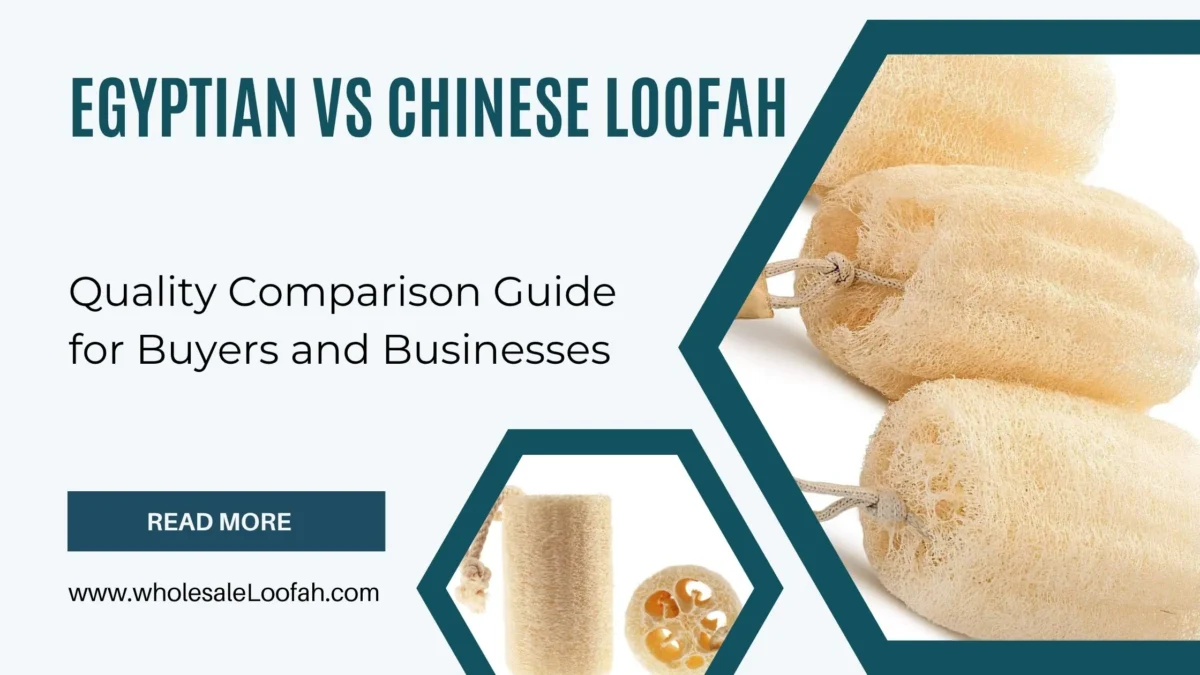
Egyptian kitchen loofah, specifically the Luffa aegyptiaca variety cultivated in the Nile Delta region and exported by specialists like Egexo, represents the global quality benchmark in this category. Every recommendation in this guide is built around that standard.
Market Context: Why Kitchen Loofah Is a Growth Category
Before examining the product itself, the market dynamics that make kitchen loofah a worthwhile business investment deserve attention.
Consumer awareness of microplastic contamination from synthetic kitchen sponges increased dramatically between 2020 and 2024 following several high-profile studies and media coverage.
This awareness has translated into measurable sales growth in natural kitchen cleaning tools across all major retail channels. Natural food and household retailers reported kitchen loofah sales growth of 18 to 24% annually between 2021 and 2024. Online direct-to-consumer channels, where eco-product positioning drives organic search traffic, showed even stronger growth at 28 to 35% annually in the same period.
For wholesale buyers, this market trend creates a clear product expansion opportunity. For consumers, it reflects a genuine shift in available product quality and variety that makes the switch from plastic sponges easier than it has ever been.
Kitchen Loofah Market Data
What Makes a Quality Kitchen Loofah: Technical Specifications
For any buyer sourcing kitchen loofah for retail or distribution, understanding the technical specifications that determine product performance is the foundation of sound purchasing decisions.
Kitchen Loofah Technical Specifications by Grade
| Specification | Premium Grade | Standard Grade | Economy Grade |
|---|---|---|---|
| Fiber Density (per cm2) | 130-150 | 110-130 | Below 110 |
| Typical Dimensions | 10×10 cm to 12×12 cm | 8×8 cm to 10×10 cm | Varies |
| Product Thickness | 3-5 cm | 2-3 cm | 1.5-2.5 cm |
| Moisture at Export | Below 10% | Below 12% | Below 15% |
| Color Grade | Pale ivory | Light yellow-tan | Medium brown |
| Fiber Shedding (first 3 uses) | Minimal | Low | Moderate-High |
| Usable Lifespan (daily use) | 5-6 weeks | 3-4 weeks | 2-3 weeks |
| Scrubbing Abrasiveness | Medium-firm | Medium | Variable |
| Odor Resistance (maintained) | High | Moderate | Low |
| MOQ (pieces) | 500 | 1,000 | 2,000 |
| Private Label Compatible | Yes | Yes | No |
| Custom Sizing Available | Yes | Yes | No |
The specifications above illustrate why Premium Grade Egyptian kitchen loofah commands a higher wholesale cost. The lifespan difference between Premium and Economy grades, 5 to 6 weeks versus 2 to 3 weeks, means that consumers will experience roughly twice the product value from Premium before replacement. That value difference directly influences repeat purchase rate and brand loyalty.
Egexo produces kitchen loofah to Premium and Standard grade specifications from verified Nile Delta Egyptian luffa. Their quality standards documentation provides the complete technical reference for buyers evaluating sourcing options.
How Egyptian Kitchen Loofah Compares to Alternative Origins
The country of origin is the strongest single predictor of kitchen loofah quality. This is not a marketing statement. It is a function of plant biology and agricultural conditions that are objectively measurable.
Origin Comparison for Kitchen Loofah
| Quality Factor | Egyptian Nile Delta | Southeast Asian Origin | Latin American Origin | Chinese Origin |
|---|---|---|---|---|
| Fiber Density (per cm2) | 120-150 | 65-95 | 75-105 | 70-100 |
| Fiber Wall Thickness | High | Low-Moderate | Moderate | Moderate |
| Growing Season | 9-10 months | 5-7 months | 6-8 months | 5-7 months |
| Soil Mineral Content | Very High (Nile alluvial) | Moderate | Moderate-High | Variable |
| Premium Grade Availability | Consistent | Limited | Limited | Limited |
| Export Documentation Quality | High | Variable | Variable | Variable |
| Average Product Lifespan | 5-6 weeks | 2-3 weeks | 3-4 weeks | 2-3 weeks |
| Consistent Batch Quality | High | Low-Moderate | Moderate | Low-Moderate |
The Nile Delta’s mineral-rich alluvial soil, deposited over millennia by the annual Nile flood cycle, creates growing conditions that produce Luffa aegyptiaca plants with significantly thicker fiber walls and denser fiber networks than any other region. The longer Egyptian growing season allows fibers to mature fully before harvest, which is what produces the structural resilience that translates into a 5 to 6 week kitchen lifespan versus 2 to 3 weeks for lower-grade alternatives.
Egexo operates direct cultivation farms in this region and controls the entire supply chain from seed to export container. This vertical integration is what allows consistent batch quality that buyers in more than 40 countries rely on. Learn more at Why Choose Egexo and review the farm-to-export process for full supply chain detail.
Using Loofah for Pots and Pans: The Consumer Guide
The technical product story only matters if end consumers know how to use the product effectively. For wholesale buyers, understanding the consumer usage experience is essential for product positioning, retail merchandising, and deciding what care information to include in packaging.
Essential Consumer Technique Guide
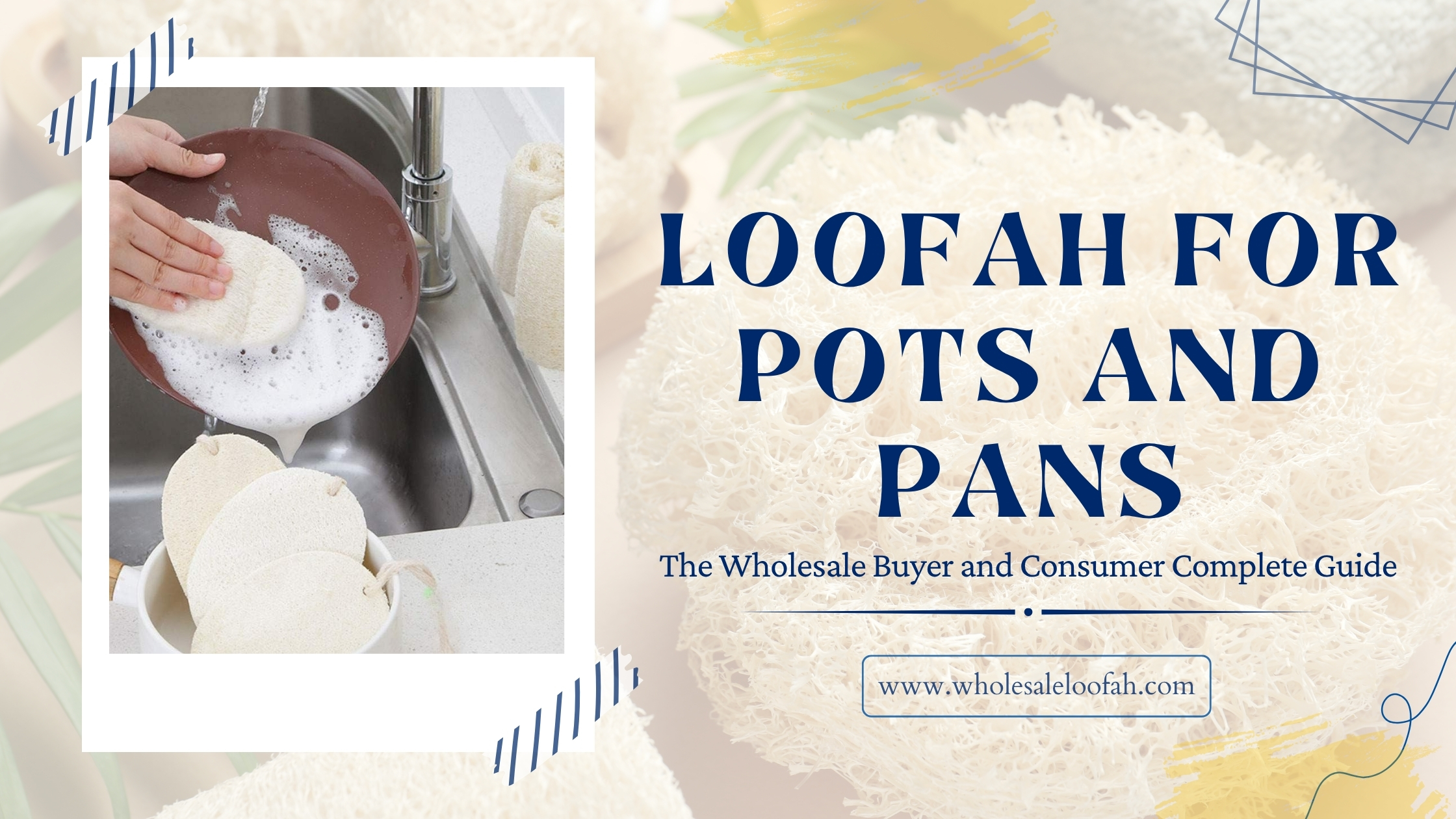
The most important thing a new kitchen loofah user needs to understand is the soaking step. Unlike a sponge, which is used in its current state, a kitchen loofah must be fully saturated before use. Dry loofah fiber is significantly more abrasive than saturated fiber. Using it dry on stainless steel or ceramic creates unnecessary friction and risks scratching surfaces that the product should clean without damage.
The saturation process takes 30 to 60 seconds. Hold the loofah under warm running water and squeeze and release it repeatedly until you feel the resistance decrease as fibers fully absorb water. Then apply dish soap and begin scrubbing.
The second critical habit is post-use drying. A loofah stored in any position where water pools at the bottom will begin bacterial growth within hours. Hanging it vertically, where gravity pulls moisture downward and through the open fiber network, is the minimum acceptable storage approach.
Consumer Usage Process Table
| Phase | Step | Action | Time Required |
|---|---|---|---|
| Pre-cleaning | 1 | Rinse loofah under warm water | 60 seconds |
| Pre-cleaning | 2 | Squeeze and release until fully saturated | 30 seconds |
| Pre-cleaning | 3 | Pre-soak pan if heavily soiled | 5-10 minutes |
| Cleaning | 4 | Apply dish soap to loofah | 5 seconds |
| Cleaning | 5 | Scrub with circular motion, starting on least soiled areas | Variable |
| Cleaning | 6 | Focus circular pressure on baked-on areas | Variable |
| Post-cleaning | 7 | Rinse pan and loofah simultaneously | 20-30 seconds |
| Post-cleaning | 8 | Squeeze loofah until water runs clear | 30 seconds |
| Post-cleaning | 9 | Shake off excess water | 5 seconds |
| Storage | 10 | Hang vertically in ventilated position | Ongoing |
| Weekly | 11 | Boil 5 minutes or microwave damp 90 seconds | Weekly |
| Replacement | 12 | Replace every 4-6 weeks | Monthly planning |
For consumers and retailers who want more depth on individual product options, Egexo’s kitchen loofah collection covers multiple sizes and grades with detailed specifications.
Building a Kitchen Loofah Product Line: Business Opportunities
For distributors, eco-retailers, food service suppliers, and private label brands, the kitchen loofah category offers several distinct product line configurations, each with different margin profiles and target channels.
Retail Channel Analysis for Kitchen Loofah
| Retail Channel | Best Product Grade | Key Consumer Message | Estimated Retail Margin | Growth Trend |
|---|---|---|---|---|
| Natural and health food retail | Premium | Plastic-free, biodegradable, superior hygiene | 55-68% | High growth |
| Eco-specialty stores | Premium | Zero microplastics, compostable, sustainable origin | 58-70% | High growth |
| Online DTC (own brand) | Premium or Standard | Sustainability plus performance story | 60-75% | Very high growth |
| Mass market grocery | Standard | Natural alternative, better lifespan than sponge | 40-52% | Moderate growth |
| Food service supply | Standard or Economy | Bulk pricing, performance consistency | 30-45% | Moderate growth |
| Hotel and hospitality | Premium | Guest experience, brand sustainability positioning | 50-62% | Growing |
| Corporate gifting / zero-waste kits | Premium | Curated sustainable product sets | 60-70% | Emerging |
The online direct-to-consumer channel deserves particular attention for kitchen loofah. Product stories that combine authentic sustainability credentials (Egyptian farm origin, zero microplastics, compostable) with genuine performance claims (outlasts standard sponges by 2 to 3 times, safe for all cookware) perform strongly in organic search and social media-driven discovery.
Private Label Kitchen Loofah Opportunity
For brands looking to differentiate from commodity kitchen cleaning products, Egyptian kitchen loofah under a private label provides an immediately defensible market position. The combination of genuine performance, verifiable sustainability, and authentic origin story creates marketing content that resonates with eco-conscious consumers.
Egexo’s private label loofah manufacturing service covers product specification, packaging design, custom shape options, and branded labeling. For brands requiring specific shapes, sizes, or configurations not in the standard catalog, the custom loofah product design service extends these options further.
Buyers ready to begin the sourcing process can request a wholesale quotation or download the complete Egexo product catalog for specifications, MOQs, and pricing guidance.
Supplier Evaluation: Choosing the Right Kitchen Loofah Source
The kitchen loofah category is populated with suppliers offering products at very different quality levels under similar marketing language. Evaluating suppliers rigorously before committing to volume is essential for any buyer whose brand reputation depends on product performance.
Wholesale Supplier Evaluation Checklist
| Evaluation Category | Key Questions | Green Flag | Red Flag |
|---|---|---|---|
| Production Control | Does the supplier grow or just trade? | Direct farm ownership | No farm access, pure trading |
| Origin Verification | Can they document Egyptian Nile Delta origin? | Farm location documentation | Vague “natural” claims only |
| Grade Specifications | Do they publish technical specifications? | Detailed grade specs available | Grade names only, no data |
| Sample Quality | Does physical sample match published specs? | Color, texture, density match | Significantly darker or rougher |
| Moisture Control | Can they confirm moisture content at export? | Below 12% verified | No moisture data available |
| MOQ Flexibility | Can new buyers start with smaller volumes? | From 500 units | 10,000+ minimum only |
| Private Label Capability | Is branding and packaging customization available? | Full service offered | Product only, no branding |
| Export Experience | How many countries do they serve? | 40+ countries, verified | Limited export history |
| Communication Quality | Are responses specific and technically informed? | Same-day, detailed answers | Slow, generic replies |
| Sample Policy | Can samples be ordered before volume commitment? | Yes, easy process | No sample option |
Egexo meets every green flag criterion on this checklist. EGEXO has been exporting Egyptian loofah since 2015.
The Egexo products page provides direct access to available products, and the raw loofah scrubbers category offers bulk unprocessed luffa options for buyers who prefer to conduct final processing domestically.
Expert Insight from EGEXO
The most consistent feedback we receive from wholesale clients who switch from a lower-cost supplier to Egyptian Premium Grade kitchen loofah is that their return rate drops and their reorder frequency increases. These two metrics together tell the complete business story.
A kitchen loofah that lasts 5 to 6 weeks and performs well for that entire period generates consumer loyalty. A product that degrades in 2 weeks, develops odor in the first week, or scratches cookware generates returns, negative reviews, and lost shelf space. The per-unit cost difference between these two experiences is typically 20 to 35 percent. The revenue impact of the loyalty difference is typically 3 to 5 times that.
Our recommendation for any buyer new to the Egyptian kitchen loofah category is to begin with a sample order of Premium Grade product and conduct a 4-week household or pilot retail trial. The performance difference relative to what you are currently stocking will be immediately apparent, and the business case for the transition will be self-evident.
FAQ Section
Q1: What wholesale volume of kitchen loofah can I start with from Egexo? A: Egexo accepts new wholesale buyers starting from 500 pieces for Premium Grade kitchen loofah and 1,000 pieces for Standard Grade. This entry point is designed to allow new buyers to conduct retail trials or test market response before committing to container-level volumes. Custom kitchen loofah orders involving private label packaging, specific dimensions, or handle configurations may have different MOQ requirements based on production setup. A wholesale quotation will confirm exact terms for your specific requirements.
Q2: How does a kitchen loofah handle greasy cookware like woks or frying pans? A: Natural kitchen loofah handles greasy residue effectively when used with a grease-cutting dish soap. The open fiber network works with the soap’s surfactant action, distributing detergent across the full surface while the mechanical friction of the fibers dislodges emulsified grease. For heavily greased pans, apply dish soap directly to the pan surface before introducing the soaked loofah, and use focused circular motion on any remaining residue after the initial soap contact has had 30 to 60 seconds to begin breaking down the grease film.
Q3: What certifications or documentation can Egexo provide for Egyptian kitchen loofah imports? A: Egexo provides standard export documentation including phytosanitary certificates, certificate of origin, commercial invoice, and packing lists for all export shipments. For buyers in regulated markets, additional documentation including material safety data, product specifications, and farm origin documentation is available on request. Buyers pursuing eco-certifications for their product line can request the traceability documentation needed to support certification applications. Contact EGEXO via the quotation request form for specific documentation requirements.
Q4: Can kitchen loofah be composted at end of life? A: Yes. A natural kitchen loofah made from Luffa aegyptiaca plant fiber with no synthetic additives is fully compostable. It will begin visibly breaking down within 2 to 4 weeks in a functioning compost environment and will fully decompose within 30 to 60 days under active composting conditions. This compostability claim is a significant marketing advantage in eco-product positioning, as it applies to the entire product lifecycle rather than just the material origin. Ensure the loofah sourced contains no synthetic dyes, polymer binders, or synthetic handle attachments if compostability labeling is required.
Q5: What is the best retail pack size for kitchen loofah? A: Consumer research in eco-kitchen product categories suggests that single-unit packaging drives initial trial purchases, while 2-pack and 3-pack formats drive higher average order values in online channels. For grocery retail, single units at accessible price points perform best in the impulse and trial purchase context. For eco-specialty and online DTC, subscription packs of 3 to 6 units appeal to eco-committed consumers who have already adopted the product and want to maintain their supply. Egexo can accommodate custom pack quantities and configurations through the private label manufacturing service.
Q6: Does using a loofah for pots and pans require more effort than a conventional sponge? A: The initial learning curve requires two habit adjustments: soaking the loofah for 60 seconds before use and hanging it to dry after. Beyond those two changes, the technique is comparable in effort to sponge washing for most cookware. For baked-on residue, soaking the pan first for 5 to 10 minutes before applying the loofah replaces the repeated hard-scrubbing approach that sponges require and often fail at. Most consumers report that within one week the new habits are automatic and the cleaning results feel noticeably better than their previous sponge experience.
Q7: How should kitchen loofah be packaged for retail to maximize appeal? A: Kitchen loofah packaging should communicate three things clearly and quickly: natural origin (Egyptian luffa plant, biodegradable), functional benefit (effective on baked-on food, safe for all cookware), and sustainability impact (zero microplastics, replaces X sponges per year). Transparent or minimally packaged products in recycled or compostable packaging perform best in eco-retail channels, as consumers in this segment respond negatively to excessive plastic packaging around a sustainable product. Egexo’s custom product design team can provide guidance on packaging approaches that align with specific retail channel requirements.
Q8: Is there a meaningful performance difference between kitchen loofah and loofah used for bathing? A: Yes. Kitchen loofah is produced from denser, more rigid sections of the luffa gourd and is cut into shapes suited for flat or curved cookware surfaces rather than body contours. Bath loofah is produced from softer sections and is shaped for full-body coverage. Using a bath loofah in the kitchen will often result in insufficient abrasiveness for food residue, and using a kitchen loofah for bathing risks irritation due to its higher fiber density. Retailers should stock and merchandise these as distinct product categories with clear use-case labeling to prevent cross-use returns.
Conclusion
The kitchen loofah category represents one of the most compelling intersections of genuine consumer demand, proven product performance, and strong sustainability credentials available in household products today. For wholesale buyers, the market data is clear: growth is consistent, margins are strong in premium channels, and consumer loyalty follows product quality directly.
The quality of the Egyptian luffa sourced through a supplier like Egexo is what separates a kitchen loofah line that builds a brand from one that generates complaints.
For consumers, the message is equally clear. A natural kitchen loofah from a verified Egyptian source cleans better, lasts longer, and leaves the kitchen and the planet better off than any synthetic sponge alternative.
Key Takeaways:
- Egyptian Luffa aegyptiaca produces fiber densities of 120 to 150 per square centimeter, far above Southeast Asian alternatives
- Premium Grade kitchen loofah supports retail margins of 55 to 70 percent in eco-specialty and online DTC channels
- Consumer adoption of kitchen loofah is driven by sustainable sourcing combined with genuine superior performance versus sponges
- Private label Egyptian kitchen loofah represents a differentiated product opportunity with a defensible origin and sustainability story
Ready to experience Egyptian loofah quality?
- For Wholesale Buyers: Request a quote or download our catalog
- For Individual Orders: Browse our collection or order samples