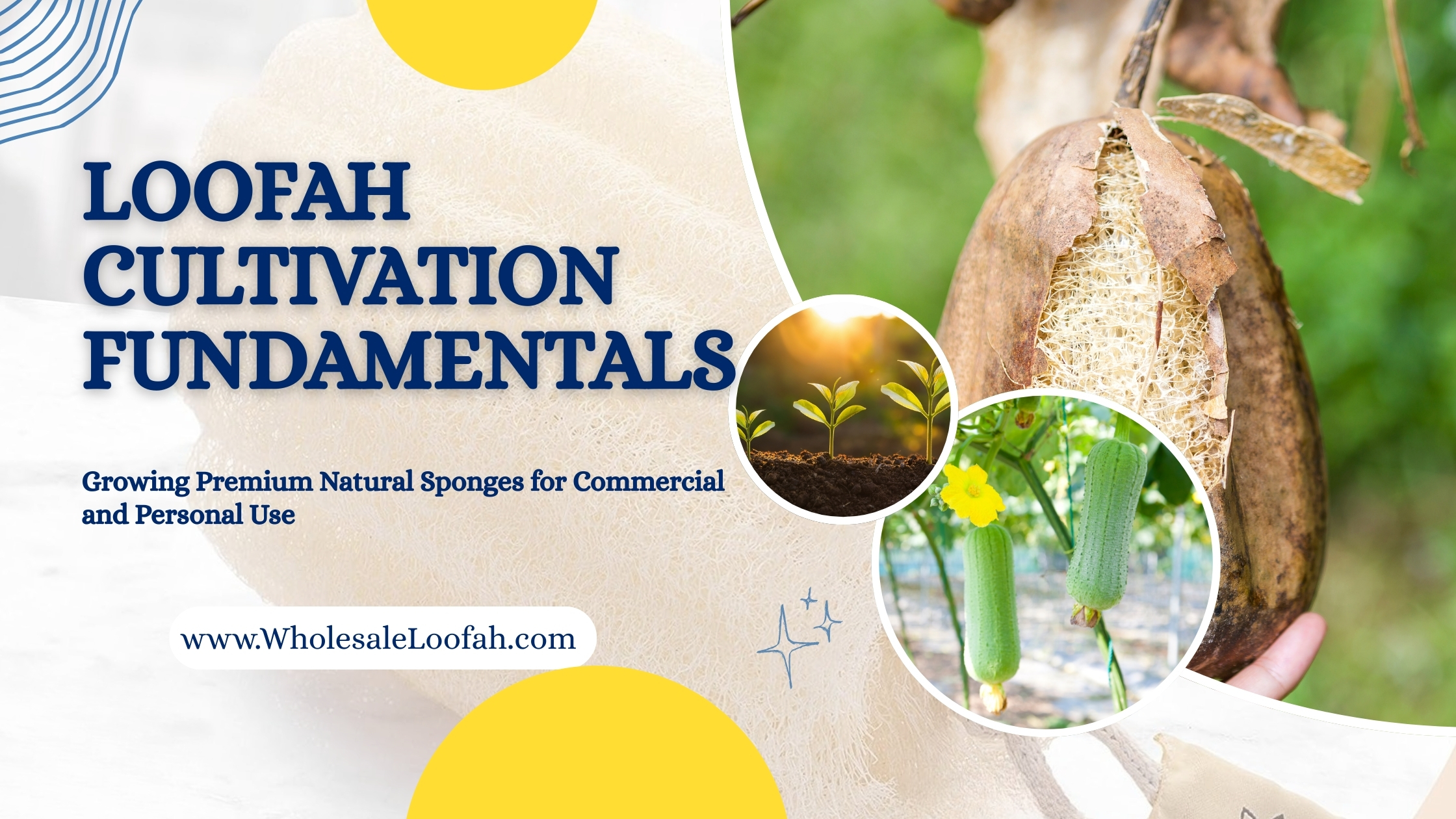
Professional loofah cultivation represents a specialized agricultural sector supplying natural sponge products to global markets worth hundreds of millions of dollars annually. Understanding how experts grow loofah provides valuable context for wholesale buyers evaluating supplier quality, retailers seeking product knowledge, and individuals interested in small-scale production. The cultivation techniques that yield premium Egyptian loofah differ significantly from casual home gardening approaches, though fundamental principles apply across all scales.
Natural loofah demand continues expanding as consumers prioritize sustainable alternatives to synthetic bath and cleaning products. Market analysis indicates approximately 12 percent annual growth in natural loofah sectors, driven by environmental awareness and preference for renewable personal care options. This expansion creates opportunities for businesses throughout the supply chain, from agricultural producers to specialty retailers and spa operators.
Loofah growth follows biological patterns common to the Cucurbitaceae family, requiring extended warm seasons, abundant water, and specific post-harvest processing to produce marketable sponges. Egyptian cultivation operations benefit from ideal climate conditions, established expertise, and efficient export infrastructure that maintains their dominant position in wholesale markets. Recognizing how these factors influence quality helps buyers make informed sourcing decisions and communicate product value to end customers.
Whether evaluating potential suppliers, considering small-scale cultivation ventures, or simply wanting to understand the products you purchase, this comprehensive guide covers loofah growth from agricultural fundamentals through harvest and quality assessment.
Agricultural Requirements for Quality Loofah Production
Commercial loofah cultivation demands specific environmental conditions and agricultural inputs that directly influence final product quality. Professional growers manipulate these variables to achieve consistent results meeting market specifications. Understanding these requirements helps wholesale buyers evaluate supplier claims and recognize quality indicators in finished products.
Climate and Geographic Considerations
Loofah plants require extended frost-free growing seasons of 150 to 200 days with consistent warmth throughout the development period. Optimal growth occurs at temperatures between 75 and 95 degrees Fahrenheit, with soil temperatures above 70 degrees Fahrenheit necessary for successful germination. These requirements restrict commercial cultivation to tropical and subtropical regions or demand significant protected growing infrastructure in cooler climates.
Egypt’s Nile Delta region exemplifies ideal loofah growing conditions, combining Mediterranean warmth with reliable irrigation from the river system and fertile alluvial soils. Generations of cultivation experience have refined production techniques specific to regional conditions, establishing quality standards that distinguish Egyptian loofah in global wholesale markets.
| Climate Factor | Commercial Minimum | Optimal Range | Egyptian Nile Delta |
|---|---|---|---|
| Growing season length | 150 days | 180 to 200 days | 200 plus days |
| Average growing temperature | 70F | 80 to 90F | 85F average |
| Annual rainfall or irrigation | 25 inches | 35 to 45 inches | Controlled irrigation |
| Humidity range | 40 percent | 50 to 65 percent | 55 percent average |
| Frost risk | None acceptable | None | Zero frost days |
Other significant production regions include China, India, and various Central American countries, each producing loofahs with characteristics reflecting local growing conditions. Buyers seeking specific quality attributes should understand how regional factors influence the products available from different sources.
Soil Requirements and Field Preparation
Quality loofah production demands well-drained soils rich in organic matter with pH levels between 6.0 and 7.0. Heavy clay soils restrict root development and increase disease risk, while excessively sandy soils require frequent irrigation and supplemental nutrition. Professional operations conduct detailed soil analysis before planting, amending as necessary to achieve optimal growing conditions.
Field preparation typically begins months before planting, incorporating organic matter and adjusting soil chemistry to target parameters. Large-scale operations may utilize cover cropping, controlled composting, and precise fertilizer applications guided by soil testing results. These investments in soil quality translate directly to fiber density and texture characteristics that determine market value.
Commercial growers in Egypt’s established loofah districts benefit from generations of soil development and crop rotation practices that maintain productivity without degradation. This agricultural heritage contributes to consistent quality that newer production regions struggle to match initially.
Propagation Methods in Commercial Loofah Production
Professional loofah cultivation employs refined propagation techniques that maximize germination rates, produce uniform seedlings, and establish predictable production timelines. Understanding these methods provides context for evaluating supplier capacity and production reliability.
Seed Selection and Treatment
Commercial operations source seeds from certified suppliers or maintain seed production programs ensuring genetic consistency and quality traits. Seed viability testing before each planting season identifies lots requiring supplemental treatment or replacement. This quality control step prevents germination failures that disrupt production schedules and reduce yields.
Standard commercial seed treatment includes scarification and soaking protocols that improve germination rates from baseline 50 percent to over 90 percent. Mechanized scarification using calibrated equipment produces consistent results at scale, while controlled soaking in temperature-regulated water baths ensures uniform hydration across large seed quantities.
| Seed Treatment Level | Expected Germination | Days to Emergence | Commercial Viability |
|---|---|---|---|
| Untreated seed | 40 to 55 percent | 14 to 21 days | Not recommended |
| Basic soaking | 65 to 75 percent | 10 to 14 days | Acceptable small scale |
| Scarification plus soaking | 85 to 92 percent | 7 to 10 days | Standard commercial |
| Pre-sprouting with selection | 95 percent plus | 5 to 7 days | Premium operations |
Professional seed handling includes proper storage conditions maintaining cool, dry environments that preserve viability between seasons. Temperature and humidity fluctuations degrade seed quality rapidly, making storage facility quality an indicator of operational sophistication.
Nursery Operations and Transplant Production
Large-scale loofah production typically utilizes nursery transplant systems rather than direct field seeding. Controlled nursery environments optimize germination conditions, allow early problem identification, and produce transplants ready for rapid field establishment. This approach maximizes land utilization by reducing the time fields remain occupied by slowly developing seedlings.
Commercial nurseries employ specialized growing media, precision irrigation, and climate-controlled structures to produce uniform transplants meeting specific size and development standards. Quality control protocols cull weak or off-type seedlings before field transplanting, ensuring consistent plant populations that facilitate mechanized maintenance and harvesting operations.
Transplant timing coordinates with field preparation schedules and expected weather patterns to minimize establishment stress. Professional operations maintain flexibility to adjust timing based on conditions, demonstrating the production management sophistication that supports reliable wholesale supply commitments.
Field Production and Crop Management
Commercial loofah cultivation involves systematic management of field operations from transplanting through harvest. Understanding these production practices helps wholesale buyers evaluate supplier capabilities and recognize quality indicators reflecting cultivation methods.
Planting Systems and Plant Spacing
Commercial operations utilize various planting configurations optimized for local conditions, equipment availability, and labor economics. Row spacing typically ranges from six to ten feet depending on trellis systems employed, with in-row plant spacing of three to five feet accommodating expected vine spread.
Trellis systems represent significant capital investments in commercial operations, with construction designed for multiple seasons of use. Heavy-gauge wire systems, permanent arbor structures, and engineered support frameworks support substantial plant loads while facilitating harvest access and maintenance operations.
| Production System | Plant Density | Trellis Investment | Expected Yield | Best Application |
|---|---|---|---|---|
| Ground cultivation | Low | None | 5 to 8 fruits per plant | Limited resources |
| Basic trellis | Medium | Moderate | 8 to 12 fruits per plant | Small commercial |
| Professional trellis | High | Significant | 12 to 18 fruits per plant | Established operations |
| Intensive arbor | Very high | Major | 15 to 25 fruits per plant | Premium production |
Egyptian production facilities commonly utilize intensive systems developed over decades of operational refinement. These established infrastructure investments contribute to consistent quality and reliable supply capacity that newer production regions cannot immediately replicate.
Irrigation and Nutrition Management
Water management significantly influences loofah quality, with inconsistent moisture causing fiber development problems that reduce market value. Commercial operations employ irrigation systems ensuring uniform water delivery across production areas, typically using drip or micro-sprinkler configurations that maximize efficiency while minimizing disease pressure from wet foliage.
Irrigation scheduling follows plant development stages, with increasing water requirements during flowering and fruit development. Professional operations may utilize soil moisture monitoring, weather-based scheduling systems, or plant stress indicators to optimize irrigation timing and quantities.
Fertility programs in commercial production follow established protocols correlating nutrient applications with crop development stages. Baseline soil amendments provide foundation nutrition, while supplemental applications address specific stage requirements. Nitrogen management during reproductive development requires particular attention, as excessive nitrogen promotes vegetative growth at the expense of fruit production and fiber quality.
Pest and Disease Management
Integrated pest management approaches dominate professional loofah production, combining cultural practices, biological controls, and targeted interventions to minimize crop losses while meeting market expectations for residue-free products. Common challenges include powdery mildew, aphid populations, and various fruit rots that require monitoring and management throughout the growing season.
Commercial operations maintain detailed records of pest pressures and management interventions, information that supports continuous improvement and demonstrates due diligence to quality-conscious buyers. Export-oriented production particularly emphasizes management approaches meeting importing country standards for pesticide residues and organic certification requirements.
Harvest Timing and Quality Determination
Harvest decisions significantly impact final loofah quality, with timing affecting fiber development, durability, and market value. Commercial operations employ standardized assessment criteria ensuring consistent quality across production lots.
Maturity Assessment Methods
Professional harvesters evaluate multiple indicators before removing individual fruits from vines. Color transition from green through yellow to brown signals internal maturity progression. Weight reduction as moisture content decreases provides tactile confirmation of drying progress. Skin attachment loosening indicates readiness for processing without excessive effort.
| Maturity Indicator | Immature | Approaching Ready | Harvest Ready | Over-mature |
|---|---|---|---|---|
| Exterior color | Green | Yellow-green | Brown | Dark brown |
| Skin attachment | Tight | Loosening | Paper-like | Deteriorating |
| Weight relative to size | Heavy | Medium | Light | Very light |
| Seed sound when shaken | None | Faint | Distinct rattle | Loose rattle |
| Stem condition | Green | Yellowing | Dry | Brittle |
Harvest timing varies across production areas based on climate conditions, variety characteristics, and market requirements. Some buyers prefer slightly earlier harvest for particular applications, while others specifically require fully vine-dried product for maximum fiber development.
Harvest Methods and Handling
Commercial harvest employs trained crews following standardized procedures that maximize product quality while meeting production schedule requirements. Cutting rather than pulling fruits prevents plant damage that reduces subsequent production. Gentle handling during collection preserves fiber integrity throughout the harvest and processing chain.
Quality sorting begins at harvest, with obvious defects identified and segregated before transport to processing facilities. This early sorting improves processing efficiency and ensures substandard product does not contaminate premium lots. Professional operations maintain separation between quality grades throughout harvest and processing operations.
Post-Harvest Processing and Quality Grading
Processing transforms harvested loofahs into marketable products through skin removal, seed extraction, cleaning, and quality classification. Professional processing facilities employ standardized methods producing consistent results meeting wholesale buyer specifications.
Processing Steps and Methods
Commercial processing begins with controlled conditioning that optimizes skin removal efficiency without fiber damage. Water soaking, steam treatment, or controlled temperature exposure softens skin attachment, facilitating clean separation from underlying fiber structures. Processing method selection depends on facility capabilities, volume requirements, and target quality specifications.
Skin removal in professional operations may utilize mechanized equipment or trained manual labor depending on scale and market positioning. Mechanized processing offers consistency and throughput advantages, while skilled manual processing enables quality-selective handling that maximizes premium grade yields.
Seed extraction follows skin removal, with extracted seeds either saved for replanting or sold as byproducts for culinary or agricultural applications. Thorough seed removal prevents germination issues during storage and ensures clean final product presentation.
Final cleaning removes residual debris, plant material, and surface contamination before products enter grading and packaging operations. Washing, brushing, and inspection processes verify cleanliness standards meeting buyer expectations and regulatory requirements for products contacting human skin.
Quality Grading Standards
Professional loofah production utilizes grading systems classifying products by multiple quality attributes. Fiber density, texture uniformity, color consistency, structural integrity, and size dimensions all contribute to grade assignments determining market value and appropriate applications.
| Grade Level | Fiber Characteristics | Typical Applications | Wholesale Value |
|---|---|---|---|
| Premium Grade A | Dense, uniform, excellent color | Facial care, spa products | Highest |
| Standard Grade B | Good density, minor variations | Body care, bath products | Moderate |
| Commercial Grade C | Adequate structure, visible variations | Kitchen, household cleaning | Lower |
| Industrial Grade | Variable quality, structural issues | Craft supplies, pet products | Lowest |
Egyptian loofah production particularly emphasizes Grade A and B production suitable for premium personal care markets. The established quality standards maintained by professional Egyptian exporters provide assurance to wholesale buyers seeking consistent supply of graded products meeting specific requirements.
Buyers evaluating potential suppliers should request sample products representing offered grades, allowing direct quality assessment before commitment to purchase volumes. The Egexo quality standards documentation details specific criteria applied to each grade level, enabling informed purchasing decisions. Sample ordering facilitates this evaluation process efficiently.
Supply Chain Considerations for Wholesale Buyers
Understanding loofah production fundamentals enables informed evaluation of wholesale supply options. Buyers should assess potential suppliers across multiple dimensions beyond simple price comparison.
Supplier Evaluation Criteria
Production capability assessment considers cultivation scale, processing capacity, quality control systems, and historical supply reliability. Established suppliers with integrated production demonstrate advantages over intermediary traders in quality consistency and supply security.
| Evaluation Factor | Key Questions | Quality Indicators |
|---|---|---|
| Production integration | Direct cultivation or trading? | Farm-to-export documentation |
| Processing capabilities | In-house or contracted? | Facility certifications |
| Quality control | Documented standards? | Grade specifications available |
| Export experience | Years in business? | Reference customers |
| Communication | Responsive and clear? | Sample and quote turnaround |
Geographic origin significantly influences quality characteristics, with Egyptian-sourced product commanding premium positioning based on established quality reputation. Buyers should verify origin claims through documentation review and physical sample evaluation.
Certification status including organic verification, fair trade designation, and export compliance documentation demonstrates operational sophistication and market awareness. These credentials simplify downstream compliance requirements for buyers serving certified markets.
Building Supplier Relationships
Long-term wholesale relationships with quality suppliers provide advantages in supply priority, pricing stability, and collaborative product development. Investing time in supplier evaluation and relationship building yields ongoing returns through reliable access to quality products meeting market requirements.
Initial engagement should include facility information review, sample evaluation, and clear communication of quality requirements and volume expectations. Professional suppliers welcome this due diligence as it establishes foundations for productive ongoing relationships.
Egexo provides comprehensive supplier evaluation support including detailed quality standards documentation, farm to export process transparency, and responsive communication supporting informed buyer decisions. Private label loofah manufacturing services enable qualified buyers to develop differentiated product offerings with custom specifications.
Small-Scale Cultivation Opportunities
Commercial loofah production fundamentals apply at various scales, from professional agricultural operations to supplemental production ventures and serious hobby cultivation. Understanding market requirements helps small-scale producers position their output effectively.
Market Entry Considerations
Small-scale loofah production can supply local markets, specialty retailers, direct-to-consumer channels, or wholesale aggregators collecting production from multiple growers. Each channel presents different requirements for volume, quality consistency, and business infrastructure.
Local and direct sales offer simplest market entry with minimal regulatory complexity, though volume limitations constrain growth potential. Specialty retailers may source from smaller producers demonstrating exceptional quality or unique positioning, though consistency expectations require production discipline matching professional operations.
Production Planning for Small Operations
Production planning begins with realistic assessment of available resources including suitable land area, growing season length, labor availability, and market access. Starting conservatively allows skill development before scale expansion commits resources to larger production.
| Production Scale | Estimated Plants | Expected Yield | Market Options |
|---|---|---|---|
| Trial cultivation | 5 to 10 plants | 25 to 75 loofahs | Personal use, gifts |
| Hobby production | 10 to 25 plants | 50 to 200 loofahs | Local sales, craft markets |
| Market garden | 25 to 100 plants | 150 to 800 loofahs | Specialty retail, farmers markets |
| Commercial entry | 100 to 500 plants | 500 to 4000 loofahs | Wholesale, distribution |
Quality should take precedence over quantity in early production seasons, as developing skills and establishing reputation requires consistent output meeting customer expectations. Techniques refined at smaller scale translate to expanded production as markets and capabilities develop.
Choosing Loofah Products for Specific Applications
Both cultivation knowledge and product selection expertise contribute to successful outcomes for businesses and individuals seeking quality loofah products. Matching product characteristics to intended applications ensures customer satisfaction and appropriate value positioning.
Application-Based Selection Guide
| Application | Recommended Grade | Key Characteristics | Replacement Frequency |
|---|---|---|---|
| Facial exfoliation | Premium Grade A | Fine, dense fibers | Every 2 to 3 weeks |
| Body bathing | Grade A or B | Medium density | Every 3 to 4 weeks |
| Back scrubbing | Grade B | Firmer texture | Monthly |
| Kitchen cleaning | Grade C | Durable structure | As needed |
| Pet grooming | Grade B or C | Gentle yet effective | Monthly |
| Craft and decoration | Any grade | Visual characteristics | Not applicable |
Wholesale buyers stocking multiple product lines benefit from understanding application requirements to guide inventory decisions and customer recommendations. Product education supports retail staff effectiveness and customer satisfaction.
Individual consumers selecting personal use products should consider skin sensitivity, exfoliation goals, and usage frequency when choosing appropriate loofah grades. Natural loofah from quality sources provides effective exfoliation without the environmental concerns associated with synthetic alternatives.
FAQ Section
Q1: What factors most significantly influence wholesale loofah quality?
A: Three primary factors determine wholesale loofah quality: growing conditions including climate, soil, and water management; harvest timing allowing complete fiber maturation; and processing methods preserving fiber integrity through skin removal and cleaning. Egyptian production benefits from optimal conditions in the Nile Delta combined with established expertise developed over generations. Buyers should evaluate suppliers based on documented quality control systems, grade specifications, and sample product assessment.
Q2: How do minimum order quantities work for wholesale loofah purchasing?
A: Wholesale MOQ structures vary by supplier, product type, and buyer relationship status. Initial orders typically require higher minimums as suppliers evaluate buyer reliability, with reduced thresholds for established accounts demonstrating consistent purchase patterns. Egexo offers flexible MOQ options accommodating various buyer scales, from sample quantities for quality evaluation through container-volume orders for large distributors. Contact supplier sales teams to discuss specific requirements and negotiate appropriate terms.
Q3: What certifications should wholesale buyers look for when sourcing loofah?
A: Relevant certifications depend on target markets and buyer requirements. Organic certification verifies production methods meeting established standards for markets prioritizing organic products. Export documentation confirms compliance with importing country requirements. Fair trade certification appeals to socially conscious market segments. Quality management system certifications demonstrate operational sophistication. Buyers should identify certifications relevant to their specific market requirements and verify supplier credentials accordingly.
Q4: How does Egyptian loofah compare to product from other growing regions?
A: Egyptian loofah maintains premium market positioning based on consistently superior fiber characteristics attributed to ideal Nile Delta growing conditions, established cultivation expertise, and professional processing infrastructure. Climate conditions in the growing region provide optimal temperature, moisture, and season length for fiber development. Generations of cultivation refinement have optimized production techniques specific to regional conditions. Buyers seeking premium quality for demanding applications consistently select Egyptian-origin product.
Q5: What is the typical shelf life for properly stored wholesale loofah inventory?
A: Properly dried and stored natural loofah maintains quality for multiple years under appropriate conditions. Storage requirements include cool temperatures, low humidity, protection from direct sunlight, and adequate air circulation preventing moisture accumulation. These conditions preserve fiber integrity and prevent mold or degradation that reduces product quality. Professional warehousing meeting these requirements enables inventory management flexibility without quality concerns.
Q6: Can small-scale cultivation produce commercially viable loofah?
A: Small-scale loofah production can achieve commercial viability serving appropriate market channels. Local sales, specialty retailers, farmers markets, and direct-to-consumer channels offer outlets for limited production volumes. Success requires consistent quality meeting customer expectations, business infrastructure supporting sales and delivery, and pricing covering production costs while remaining competitive. Starting conservatively allows skill development before committing resources to larger production scale.
Q7: What quality issues should buyers watch for when evaluating loofah samples?
A: Common quality issues include incomplete fiber development from premature harvest, fiber damage from rough processing, residual debris indicating inadequate cleaning, mold or moisture damage from improper drying or storage, and inconsistency within lots suggesting poor quality control. Sample evaluation should assess fiber density, texture uniformity, structural integrity, cleanliness, and color consistency. Request samples from actual production lots rather than specially prepared demonstration products.
Q8: How do private label loofah programs work for wholesale buyers?
A: Private label programs enable wholesale buyers to sell loofah products under their own branding rather than supplier brands. Services typically include custom packaging, labeling, and potentially product specifications meeting buyer requirements. Minimum quantities apply to custom programs, with thresholds depending on customization extent. The Egexo custom loofah product design services support qualified buyers developing differentiated product lines with specifications tailored to target market requirements.
Expert Insight from WholesaleLoofah
Wholesale buyers evaluating loofah suppliers should prioritize three factors above others: supply consistency, quality documentation, and communication responsiveness. Price variations between suppliers typically reflect genuine quality differences rather than simple margin variations. The cheapest option rarely represents best value when quality issues damage customer relationships or require product replacement. Request samples from multiple potential suppliers and evaluate them side-by-side using consistent criteria. Assess fiber density by feeling compression resistance, check structural integrity by gentle stretching, and verify cleanliness through close visual inspection. Suppliers providing detailed quality specifications, transparent production information, and responsive communication demonstrate the operational sophistication supporting reliable long-term partnerships. Investing time in thorough supplier evaluation prevents costly problems and establishes relationships supporting business growth.
Conclusion
Understanding loofah cultivation fundamentals benefits participants throughout the supply chain, from agricultural producers through wholesale buyers to end consumers. The knowledge that distinguishes quality production from inferior alternatives enables informed decisions supporting successful outcomes at every level.
Egyptian loofah maintains premium positioning in global markets through a combination of optimal growing conditions, established expertise, and professional infrastructure that ensures consistent quality meeting demanding specifications. Wholesale buyers seeking reliable supply of graded products benefit from understanding how these factors translate to the finished goods they purchase.
Small-scale cultivation opportunities exist for individuals and businesses willing to invest in production skill development and appropriate market positioning. The same fundamentals driving commercial success apply at reduced scale, though realistic expectations and quality focus remain essential for viable ventures.
Key Takeaways:
- Loofah quality correlates directly with growing conditions, harvest timing, and processing methods
- Egyptian production benefits from ideal climate, established expertise, and professional infrastructure
- Wholesale buyers should evaluate suppliers based on quality documentation, sample assessment, and communication
- Small-scale cultivation can serve appropriate market channels with consistent quality focus
- Natural loofah demand continues growing as consumers seek sustainable personal care alternatives
Ready to source premium wholesale loofah?
- For Wholesale Inquiries: Request a quotation or download the product catalog
- For Quality Evaluation: Order samples to assess product firsthand
- For Custom Products: Explore private label manufacturing options