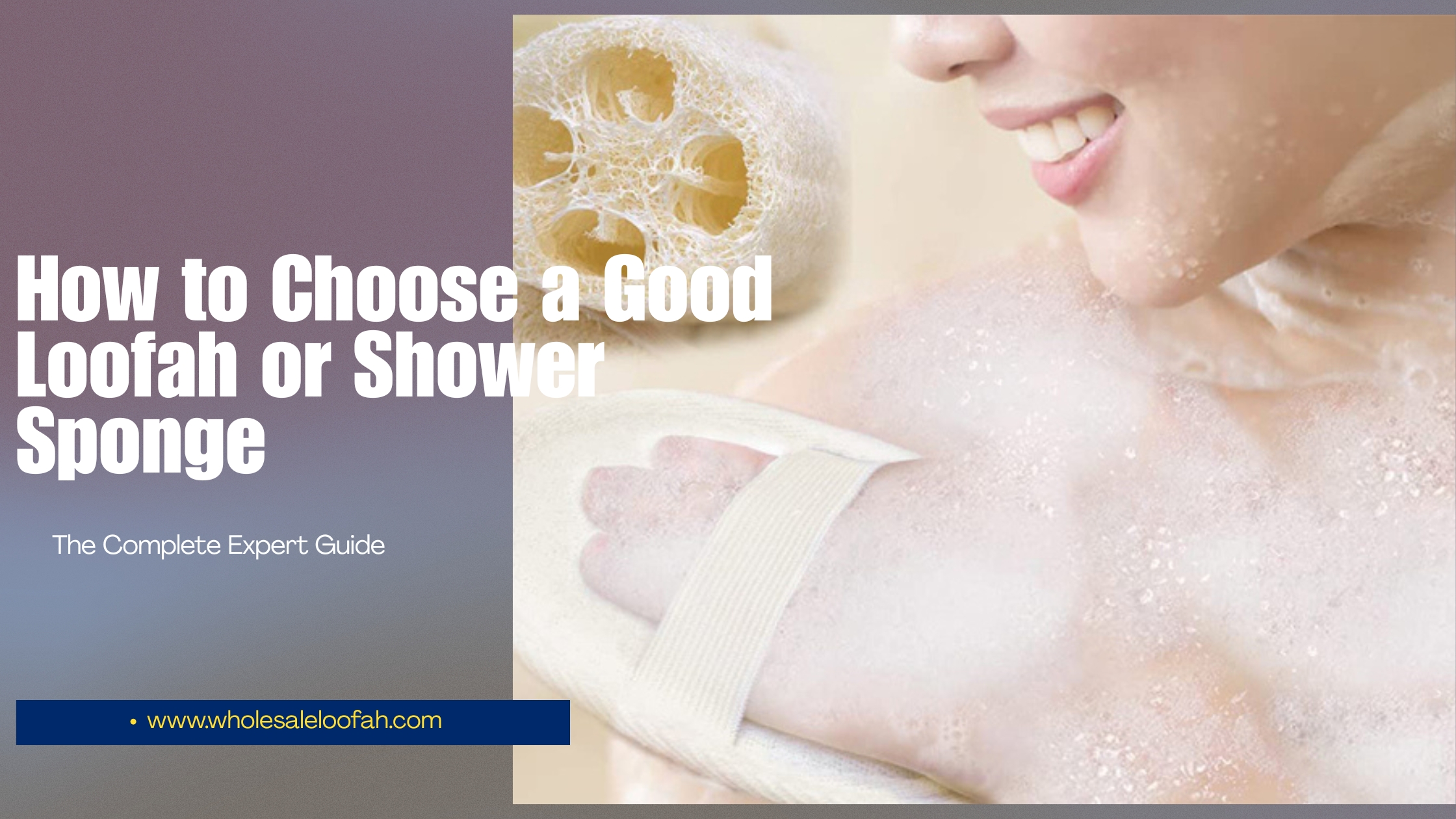
Business buyers searching for a good loofah or shower sponge supplier face challenges that individual consumers never encounter. Quality consistency across thousands of units, documentation requirements for international shipping, minimum order thresholds, and supplier reliability all factor into purchasing decisions that directly impact profitability and customer satisfaction.
The natural personal care products market reached 890 million USD in 2024 for loofahs and natural sponges alone, with annual growth projections of 7.2 percent through the end of the decade. This expansion reflects consumer shifts toward sustainable alternatives and growing awareness that synthetic shower poufs contribute significantly to microplastic pollution. Retailers, spas, hotels, and distributors positioning themselves in this market require reliable supply chains delivering consistent quality.
This wholesale-focused guide answers the procurement question every buyer eventually asks: any suggestions for a good loofah or shower sponge that meets commercial requirements? You will learn evaluation frameworks used by major retailers, understand quality grading systems that standardize expectations, and discover why Egyptian origin represents the gold standard for natural loofah products.
Whether sourcing initial inventory for a new retail venture or expanding product lines for an established distribution operation, the principles of quality assessment and supplier evaluation apply universally. Egexo has supplied businesses across 40 countries for over 25 years, providing the expertise behind the guidance in this comprehensive resource.
Wholesale Quality Evaluation Fundamentals
Successful wholesale purchasing requires systematic assessment methods that scale beyond individual product inspection. Professional buyers develop frameworks ensuring consistent quality across orders ranging from hundreds to tens of thousands of units.
Visual Assessment Standards
Wholesale evaluation begins with visual inspection of representative samples. Request samples from any potential supplier before committing to volume purchases. Professional exporters expect this practice and accommodate reasonable sample requests as standard business practice.
Examine sample loofahs for fiber uniformity across the entire surface. Premium products display tight, consistent webbing patterns without large holes, thin spots, or irregular density zones. Hold samples against light sources to reveal structural characteristics not visible under normal viewing conditions.
Color consistency indicates proper processing and storage. Quality loofahs exhibit cream to light tan coloring throughout without dark spots suggesting mold exposure or bleached areas indicating chemical treatment. Batch consistency matters for retail presentation, where mixed coloring creates unprofessional display appearances.
| Quality Grade | Visual Characteristics | Typical Applications | Relative Pricing |
|---|---|---|---|
| Premium Grade A | Perfect uniformity, consistent color, no defects | High-end spas, luxury retail | Highest tier |
| Standard Grade B | Minor variations acceptable, slight color range | General retail, mid-market spas | Mid-range |
| Economy Grade C | Visible irregularities, broader color range | Budget retail, promotional items | Lowest tier |
| Reject | Mold, excessive damage, foreign material | Not saleable | None |
Understanding grade distinctions allows appropriate product selection for target markets. Premium grade commands higher retail prices but requires customers willing to pay. Economy grade serves price-sensitive segments effectively when quality expectations align with positioning.
Physical Testing Protocols
Beyond visual assessment, physical testing reveals quality characteristics affecting product performance and longevity. These tests require minimal equipment and provide reliable quality indicators.
The water absorption test measures processing quality. Submerge a dry sample in room temperature water and time how long full saturation requires. Premium loofahs absorb completely within 30 to 60 seconds. Products requiring longer indicate overly dense processing or residual contamination. Note the volume increase during saturation, typically 15 to 20 percent expansion for quality products.
Compression recovery testing evaluates fiber integrity. Squeeze the dry loofah firmly in your palm for five seconds, then release. Quality products spring back immediately to original shape. Products remaining compressed or returning slowly suffered processing damage or storage degradation compromising durability.
Conduct the durability squeeze test by compressing a wet loofah firmly 50 consecutive times. Examine for fiber separation, permanent shape change, or structural breakdown. Products showing deterioration under this test will disappoint customers before expected replacement periods.
Lather production testing uses standardized soap amounts applied to wet samples. Quality loofahs produce abundant, fine-textured lather that releases easily onto skin. Poor lather production suggests overly dense fibers trapping soap rather than distributing it effectively, reducing customer satisfaction and product reviews.
Documentation Requirements
International wholesale transactions require documentation that amateur suppliers cannot provide. Professional exporters maintain comprehensive records facilitating customs clearance and regulatory compliance.
Certificates of origin verify product source and enable preferential tariff treatment under applicable trade agreements. Egyptian origin certificates access favorable rates in numerous markets where natural product preferences exist.
Phytosanitary certificates confirm products meet plant health requirements for destination countries. Natural loofahs as plant materials require these documents for legal importation in most jurisdictions.
Quality inspection reports from recognized testing bodies provide independent verification of product specifications. These reports protect buyers against misrepresentation and support any disputes requiring documentation.
Egexo’s quality standards documentation demonstrates the transparency professional buyers should expect from any potential supplier. Request similar documentation from alternatives to ensure adequate support for your import requirements.
Product Categories for Commercial Applications
Different market segments require specific product types optimized for intended uses. Understanding category characteristics enables appropriate inventory planning and customer targeting.
Body Care Loofah Varieties
Standard body loofahs represent the largest volume category for most retailers. These products serve general exfoliation needs during bathing, appealing to broad consumer demographics. Typical dimensions range from 10 to 15 centimeters after processing, with variations in thickness affecting firmness and exfoliation intensity.
Stocking multiple firmness levels within the body category accommodates diverse customer preferences. Softer options suit sensitive skin users and those new to loofah exfoliation. Firmer varieties appeal to experienced users seeking intense exfoliation or addressing specific skin concerns.
The body loofah collection demonstrates product range possibilities within this category. Consider customer demographics and positioning when selecting firmness mix for inventory.
Facial loofahs constitute a smaller but higher-margin subcategory. These products undergo additional softening for gentler texture appropriate for delicate facial skin. Smaller dimensions of 5 to 8 centimeters suit hand-held facial use while reducing material costs per unit.
Kitchen and Household Products
Kitchen loofahs attract environmentally conscious consumers seeking plastic-free alternatives to synthetic dish scrubbers. These products feature denser fiber construction than body care variants, providing durability for household cleaning applications.
The sustainability marketing angle differentiates kitchen loofahs from commodity dish sponges. Positioning emphasizes plastic replacement, biodegradability, and natural material credentials that resonate with target demographics willing to pay premiums for environmental benefits.
Bulk purchasing for the kitchen loofah category supports retailers targeting eco-conscious households and businesses implementing sustainability initiatives.
Specialty and Niche Applications
Raw loofah products serve crafters, DIY enthusiasts, and specialty product manufacturers. These minimally processed items retain seeds and membrane remnants that some customers prefer for authenticity. Soap makers embed loofah slices in handcrafted bars creating dual-function exfoliating products.
The raw loofah scrubber category addresses this niche market with products unsuitable for direct consumer bathing use but valuable for creative applications.
Pet grooming represents another specialty application with growing demand. Natural loofah texture provides gentle grooming for dogs, cats, and horses while offering sustainability credentials pet owners increasingly value. The pet and spa grooming category serves professional groomers and pet retailers.
Supplier Evaluation and Selection Criteria
Choosing reliable suppliers determines long-term business success more than any individual order decision. Systematic evaluation protects against quality inconsistencies, fulfillment failures, and communication breakdowns that damage customer relationships.
Essential Supplier Qualifications
Experience duration indicates operational stability and accumulated expertise. Suppliers operating for 10 or more years have weathered market fluctuations and demonstrated sustainable business practices. Egexo’s 25 plus years in Egyptian loofah cultivation and export exemplifies the track record buyers should seek.
Production capacity must match your current and projected order volumes. Suppliers unable to scale with your growth create bottlenecks during peak seasons or expansion phases. Inquire about maximum monthly output and typical lead times for various order sizes.
Quality control systems separate professional operations from informal sellers. Ask about inspection procedures, rejection rates, and quality documentation. Suppliers reporting 10 to 20 percent rejection rates demonstrate selective standards rather than shipping everything harvested.
Export expertise matters for international transactions. Experienced exporters navigate documentation requirements, shipping logistics, and customs procedures smoothly. Newcomers to export markets often create delays and complications that experienced suppliers avoid.
| Evaluation Criterion | Key Questions | Red Flags |
|---|---|---|
| Experience | How many years in operation? Export history? | Less than 5 years, vague answers |
| Capacity | Maximum monthly output? Lead times? | Cannot quantify, excessive delays |
| Quality Control | Rejection rates? Inspection procedures? | No documented process, zero rejections |
| Documentation | Certificates available? Inspection reports? | Missing documents, reluctance to provide |
| Communication | Response time? English proficiency? | Slow replies, unclear communication |
| References | Customer names? Contact information? | No references, resistance to sharing |
Sample Evaluation Process
Never commit to volume orders without evaluating physical samples. Professional suppliers expect and facilitate sample requests as standard practice. Reluctance to provide samples signals potential quality concerns or operational immaturity.
Request samples representing each product type and grade you intend to purchase. Evaluate samples using the testing protocols described earlier: water absorption, compression recovery, durability squeeze, and lather production. Document results for comparison across suppliers.
Order additional samples from your top candidates to verify consistency. Quality suppliers produce consistent products across different sample shipments. Significant variation between samples suggests production control issues that will manifest in commercial orders.
Order samples through Egexo to establish baseline quality expectations before evaluating alternatives. Sample programs demonstrate supplier commitment to earning business through demonstrated quality rather than just pricing.
Building Long-term Partnerships
Successful wholesale purchasing prioritizes relationships over transactions. Reliable suppliers provide value beyond product fulfillment including market insights, quality consistency, priority allocation during shortages, and flexibility for special requirements.
Initial orders should test supplier performance across multiple dimensions. Evaluate order accuracy, packaging quality, shipping timeliness, and communication responsiveness. Problems with first orders often indicate systemic issues that persist or worsen.
Communicate expectations clearly and provide feedback on both positive and negative experiences. Suppliers invested in long-term relationships appreciate constructive input that helps them serve you better. Those dismissive of feedback demonstrate attitudes that eventually cause problems.
Egexo’s commitment to wholesale partnerships reflects the approach buyers should expect from professional suppliers. The foundation of 25 years serving global markets demonstrates sustained dedication to buyer success.
Business Development Opportunities
The growing natural personal care market creates opportunities for new market entrants and existing businesses seeking product line expansion. Loofahs offer accessible entry points with established consumer demand.
Market Entry Strategies
New retailers can test market response with modest initial orders before significant inventory investment. Start with bestselling categories like standard body loofahs in medium firmness before expanding into specialty products.
Online sales channels reduce overhead for new entrants while accessing broader customer bases. Sustainability-focused positioning differentiates natural loofah offerings from mass-market synthetic alternatives. Emphasize environmental benefits, biodegradability, and natural material credentials in marketing content.
Physical retail locations benefit from prominent natural product sections that attract eco-conscious shoppers. Loofah displays generate impulse purchases when positioned near checkout areas or within bath product departments.
Private Label and Branding Options
Building proprietary brands requires products that competitors cannot easily replicate. Private label manufacturing enables branded product lines using quality Egyptian loofahs with custom packaging, labeling, and presentation.
Custom branding transforms commodity products into differentiated offerings supporting higher margins. Branded loofahs also build customer loyalty and repeat purchasing that unbranded products cannot achieve.
Custom product design services support unique product development matching specific market positioning. Custom shapes, sizes, and processing specifications create exclusive products unavailable from competitors sourcing standard inventory.
Pricing and Margin Considerations
Wholesale loofah pricing varies based on grade, processing level, order volume, and supplier relationships. Understanding cost structures enables realistic margin calculations and competitive retail pricing.
| Order Volume | Typical Discount | Notes |
|---|---|---|
| 500 to 1,000 units | Base price | Entry level MOQ |
| 1,001 to 5,000 units | 5 to 10 percent | Small volume discount |
| 5,001 to 10,000 units | 10 to 15 percent | Medium volume pricing |
| 10,001 to 25,000 units | 15 to 20 percent | Large order advantage |
| 25,001 plus units | 20 to 25 percent | Major buyer rates |
Retail margins typically range from 100 to 200 percent markup on wholesale costs depending on positioning and competition. Premium brands achieve higher margins while economy positioning accepts lower markup on higher volume.
Request detailed quotations specifying your volume requirements, target products, and delivery preferences. Formal quotes enable accurate business planning and supplier comparison.
Download the complete product catalog for comprehensive product specifications, available sizes, and grade options. The catalog provides foundation for inventory planning and order specification.
Import and Logistics Considerations
International sourcing introduces complexity beyond domestic purchasing. Understanding import procedures and logistics options prevents delays and unexpected costs.
Documentation and Compliance
Natural plant products require specific documentation for legal importation. Phytosanitary certificates verify products meet destination country plant health standards. Certificates of origin establish eligibility for preferential tariff rates under applicable trade agreements.
Commercial invoices must accurately describe products, quantities, values, and trade terms. Inconsistencies between invoices and physical shipments create customs delays and potential penalties.
Quality inspection certificates from recognized bodies provide independent verification supporting customs declarations. These documents also establish standards for resolving disputes about product specifications.
Professional exporters prepare documentation packages meeting destination requirements without buyer intervention. Inexperienced suppliers often create documentation problems that delay shipments and increase costs.
Shipping Options and Timing
Ocean freight suits large orders where shipping costs per unit matter more than delivery speed. Container shipments offer lowest per-unit transport costs but require 4 to 8 weeks depending on destination.
Air freight accelerates delivery to days rather than weeks but at significantly higher cost. This option suits urgent restocking, sample shipments, or low-volume specialty orders where speed justifies expense.
Lead time planning should account for production, quality inspection, documentation preparation, shipping transit, and customs clearance. Professional suppliers provide realistic timelines based on order specifics rather than optimistic estimates.
The farm to export process documentation illustrates supply chain stages affecting delivery timelines. Understanding these processes supports realistic expectations and planning.
Quality Maintenance and End User Education
Wholesale success depends on customer satisfaction, which requires products performing as expected throughout their useful life. Educating retailers and end users about proper care extends product value and generates positive reviews.
Retail Staff Training Materials
Retail staff who understand products sell more effectively and handle customer questions confidently. Provide training materials covering quality indicators, usage recommendations, and care instructions.
Key points for staff training include proper storage displaying loofahs in dry conditions, customer matching based on skin type and exfoliation preferences, and care instruction communication that extends product satisfaction.
Consumer Care Instruction Integration
Including care instructions with products demonstrates commitment to customer success while reducing complaints from avoidable misuse. Care cards or packaging inserts provide guidance that extends product satisfaction.
Essential consumer care points cover post-use rinsing and drying, weekly sanitization methods, storage location recommendations, and replacement timing indicators. These instructions prevent the premature failure and bacterial issues that generate negative reviews.
For comprehensive consumer education resources, Loofah Guide provides detailed information supporting end user success with natural loofah products.
Frequently Asked Questions
Q: What minimum order quantities do wholesale loofah suppliers typically require?
A: Minimum order quantities vary by supplier and product type, with most professional exporters starting at 500 to 1,000 units for standard body loofahs. Specialty products like facial or pet-specific loofahs may have different minimums. Private label and custom orders generally require higher minimums of 2,000 to 5,000 units due to setup costs. Many suppliers accommodate mixed orders combining different products to reach minimum thresholds, providing flexibility for buyers testing market response across categories.
Q: How do I evaluate loofah quality when purchasing wholesale?
A: Systematic evaluation includes visual inspection for fiber uniformity, color consistency, and absence of defects. Physical testing covers water absorption timing, compression recovery, durability under repeated squeezing, and lather production quality. Request samples from potential suppliers and test each using standardized methods. Document results for comparison across suppliers. Professional buyers reject products showing mold indicators, chemical odors, excessive variation, or structural weakness revealed through testing.
Q: What documentation should suppliers provide for international loofah orders?
A: Professional exporters provide certificates of origin verifying product source, phytosanitary certificates confirming plant health compliance, commercial invoices with accurate product descriptions, packing lists detailing shipment contents, and quality inspection reports from recognized testing bodies. These documents facilitate customs clearance and regulatory compliance in destination countries. Suppliers unable to provide complete documentation create import complications that experienced exporters avoid.
Q: What makes Egyptian loofahs preferred for wholesale purchasing?
A: Egyptian loofahs dominate global markets because Nile Delta growing conditions produce superior products. The combination of mineral-rich soil, controlled irrigation, and Mediterranean climate creates fiber density 40 percent higher than alternatives from other regions. Established Egyptian suppliers like Egexo combine traditional cultivation expertise with modern quality control systems ensuring consistent products across orders. Egyptian origin also provides marketing credibility supporting premium retail positioning.
Q: How should I price retail loofahs for healthy profit margins?
A: Typical retail margins range from 100 to 200 percent markup on wholesale costs depending on positioning strategy. Premium brands in specialty retail achieve higher margins through differentiation and customer targeting. Economy positioning accepts lower margins on higher volumes. Calculate landed costs including shipping, customs duties, and handling before establishing retail prices. Compare competitor pricing to ensure market viability while maintaining target margins.
Q: What shipping methods work best for wholesale loofah orders?
A: Ocean freight provides lowest per-unit costs for large orders but requires 4 to 8 weeks transit depending on destination. This method suits planned inventory replenishment where speed is less critical than cost efficiency. Air freight delivers in days rather than weeks but at significantly higher expense, appropriate for urgent restocking or sample shipments. Consider lead time requirements, carrying costs, and minimum inventory levels when selecting shipping methods for different order types.
Q: How can I differentiate my loofah offerings from competitors?
A: Differentiation strategies include private label branding with custom packaging, exclusive product specifications through custom design services, sustainability-focused marketing emphasizing environmental benefits, bundled product offerings combining loofahs with complementary items, and premium quality positioning justified by Egyptian origin credentials. Building brand recognition requires consistent quality, distinctive presentation, and marketing that communicates value beyond commodity product comparisons.
Expert Insight from Egexo
Wholesale buyers frequently ask what single factor most influences their success with loofah products. After 25 years supplying businesses across 40 countries, our answer remains consistent: supplier relationship investment outweighs any other consideration.
The buyers achieving greatest success treat suppliers as partners rather than interchangeable vendors. They communicate clearly, provide feedback, and work collaboratively to resolve issues. In return, they receive priority allocation during shortages, flexibility for special requirements, and early access to new product developments.
Price-focused buyers constantly seeking the lowest quotation often experience quality inconsistencies, fulfillment problems, and communication frustrations that erode savings. The difference between wholesale costs rarely exceeds 10 to 15 percent across comparable suppliers, but the difference in reliability and support spans orders of magnitude.
We encourage prospective buyers to invest time in supplier evaluation before committing to relationships. Request samples, ask questions, verify credentials, and assess communication quality. The supplier selection process deserves the same attention as any other major business decision, because it affects outcomes for years beyond initial orders.
Conclusion
Sourcing a good loofah or shower sponge for wholesale operations requires systematic evaluation methods that scale beyond individual product assessment. Quality consistency, documentation compliance, and supplier reliability determine long-term success more than initial pricing alone.
Egyptian loofahs maintain market dominance through genuine quality advantages rooted in unique growing conditions. Professional exporters like Egexo combine traditional cultivation expertise with modern quality systems ensuring consistent products meeting commercial requirements.
Business opportunities in natural personal care products continue expanding as consumer preferences shift toward sustainable alternatives. New entrants and established businesses alike can capitalize through careful supplier selection, appropriate product positioning, and commitment to customer education.
Key Takeaways:
- Systematic sample evaluation prevents costly quality inconsistencies
- Documentation requirements distinguish professional exporters from amateur suppliers
- Egyptian origin provides both quality assurance and marketing credibility
- Long-term supplier relationships outperform transaction-focused purchasing
- Consumer education extends product satisfaction and generates positive reviews
Ready to source quality Egyptian loofahs for your business?
For Wholesale Quotes: Request a quotation or download our catalog
For Sample Evaluation: Order samples or explore our shop