Most people never think twice about the sponge sitting next to their kitchen sink. They grab whatever is cheapest at the store, use it until it falls apart or starts to smell, and toss it in the trash. That discarded sponge then sits in a landfill for the next 200 to 500 years, slowly releasing microplastic particles into the soil and groundwater.
There is a better way to clean every surface in your home, and it has been growing on farms along the Nile Delta for centuries.
Natural loofah is the best choice for kitchen and household cleaning because it combines scrubbing power, hygiene advantages, surface versatility, and complete biodegradability in a single plant-based tool. The fibrous skeleton of the Luffa aegyptiaca gourd naturally forms a dense, interlocking network of cellulose strands that outperform synthetic foam on virtually every metric that matters to people who clean for a living and people who clean because they live.
This guide walks through the science behind that performance, the practical applications across every room in your home, the care routines that maximize lifespan, and the environmental data that makes the sustainability case irrefutable. Whether you are a consumer looking for a smarter cleaning tool, a retailer building an eco-conscious product line, or a wholesale buyer evaluating supply partnerships, the information here will equip you to make confident decisions.
For those ready to source premium Egyptian loofah at wholesale volume, Wholesale Loofah connects buyers directly with graded, export-ready inventory from Egypt’s top-producing region.
Why Natural Loofah Outperforms Synthetic Cleaning Sponges
The Biology Behind the Scrub
The cleaning power of natural loofah is not a marketing claim. It is a structural reality. When a Luffa aegyptiaca gourd reaches full maturity, the soft fruit flesh decomposes naturally, leaving behind a rigid lattice of cellulose fibers arranged in three distinct directional layers. This triaxial fiber architecture means that every point of contact between the loofah and a dirty surface creates scrubbing action from multiple angles simultaneously.
Synthetic polyurethane sponges, by contrast, rely on a uniform open-cell foam structure. The bubbles in this foam are all roughly the same size and orientation, which means the sponge contacts surfaces along a single flat plane. The result is a sliding action that pushes grime around rather than lifting it away. Users compensate by applying more pressure and using more soap, both of which accelerate wear on the sponge and on the surface being cleaned.
Cellulose sponge blends attempt to bridge this gap by incorporating plant-derived fibers into a manufactured matrix, but most commercial cellulose sponges still contain 20 to 40 percent synthetic binding agents that prevent full biodegradation and reduce the natural scrubbing texture of the cellulose.
Natural loofah requires no binding agents, no chemical foaming processes, and no synthetic additives. The fiber network is complete and functional the moment it is harvested and dried.
Moisture Management and Hygiene
Beyond scrubbing mechanics, natural loofah manages moisture in a fundamentally different way than synthetic sponges. The open lattice structure allows air to circulate through the entire volume of the material, which means a thoroughly squeezed loofah can dry completely in a matter of hours, even in moderate humidity.
Synthetic foam sponges trap moisture in their closed-cell pockets. Even after aggressive squeezing, a standard kitchen sponge retains enough internal moisture to support rapid bacterial colonization. Research published in Scientific Reports identified up to 362 distinct bacterial species in used kitchen sponges, with concentrations reaching levels comparable to human fecal samples. Regular sanitizing methods like microwaving and boiling have been shown to reduce bacterial populations only temporarily, with recolonization occurring within 24 to 48 hours in foam-based materials.
Loofah’s rapid drying cycle disrupts this colonization process. Bacteria require sustained moisture to establish colonies, and the airflow characteristics of natural loofah fibers deny them that environment. This does not make loofah permanently sterile, but it does make it significantly more hygienic than synthetic alternatives over the course of a normal use cycle.
For wholesale buyers evaluating products for the food service, hospitality, or healthcare sectors, this hygiene advantage is a meaningful selling point. Wholesale Loofah’s product catalog includes detailed specifications on drying rates and fiber density for every product grade.
Complete Surface Compatibility Reference
One of the most frequent questions from first-time loofah users is whether the fibrous texture will damage their cookware, countertops, or fixtures. The answer is nuanced and depends on the specific surface, the moisture level of the loofah, and the pressure applied. The chart below provides a definitive reference.
Surface Safety and Technique Guide
| Surface Material | Safe for Loofah Use | Recommended Approach | Performance Notes |
|---|---|---|---|
| Stainless Steel Cookware | Yes | Wet loofah, scrub along the grain | Removes grease and water spots without scratching |
| Cast Iron Skillets | Yes | Lightly dampened loofah, minimal soap | Cleans without stripping seasoning |
| Non-Stick Coated Pans | Yes | Fully soaked loofah, gentle circular motion | Wet fibers soften enough to protect PTFE and ceramic coatings |
| Enameled Cookware | Yes | Wet loofah, moderate pressure | Excellent for removing stuck food from Dutch ovens |
| Ceramic Tile and Grout | Yes | Wet or dry loofah depending on buildup | Cut into strips for precision grout cleaning |
| Porcelain Sinks and Tubs | Yes | Standard wet scrubbing | Handles soap scum and mineral deposits effectively |
| Granite Countertops | Yes | Damp loofah, pH-neutral cleaner | Safe for sealed and unsealed stone |
| Marble Surfaces | Yes | Damp loofah, no acidic agents | Gentle enough for polished marble with proper technique |
| Glass Cooktops | Caution | Very wet loofah, light pressure, test first | May leave micro-scratches on some flat glass surfaces |
| Wooden Cutting Boards | Yes | Quick wet scrub, dry board immediately after | Fibers reach into wood grain to remove trapped particles |
| Plastic Storage Containers | Yes | Standard wet scrubbing | Better stain removal than cloth or foam |
| Copper and Brass Fixtures | Yes | Wet loofah with baking soda paste | Natural polish without chemical tarnish removers |
| Gilded China or Crystal | No | Too abrasive for decorative finishes | Use soft cloth for these items |
| Acrylic or Fiberglass Showers | Yes | Wet loofah, gentle pressure | Removes soap film without dulling the finish |
This versatility across surface types is a core reason why natural loofah is the best choice for kitchen and household cleaning. A single tool handles the vast majority of cleaning tasks in a typical home or commercial facility, reducing the need for multiple specialized products.
Retailers can leverage this compatibility data as educational material for customers. Wholesale Loofah provides product information sheets that can be customized for retail packaging and point-of-sale displays.
Room-by-Room Applications for Natural Loofah
Kitchen
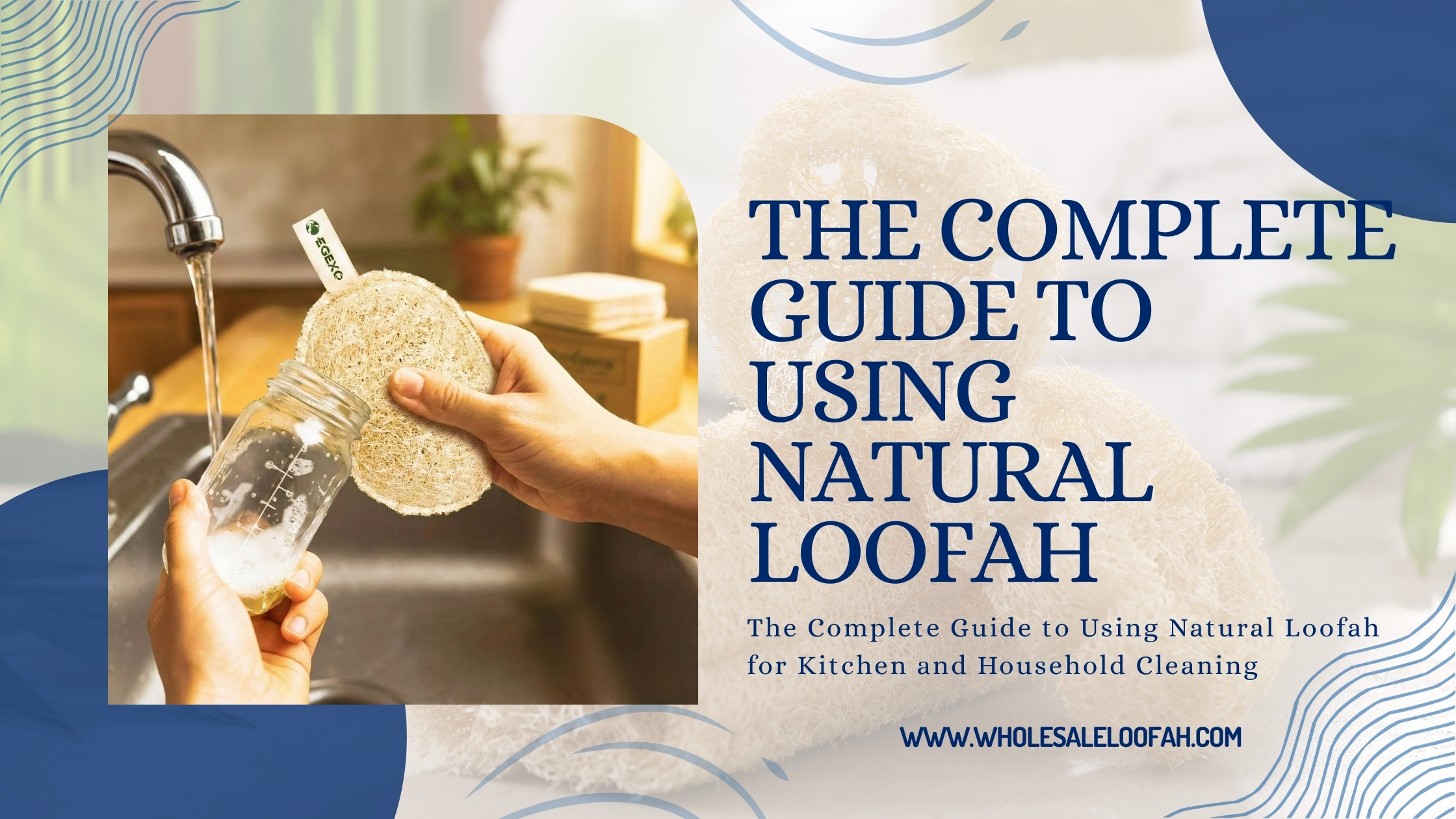
The kitchen remains the primary battleground for any cleaning sponge, and it is where natural loofah demonstrates its greatest advantages. Daily dishwashing is the obvious starting point, but the applications extend much further.
Loofah excels at removing baked-on residue from sheet pans and casserole dishes, an area where synthetic sponges often fail without heavy chemical assistance. The fibrous texture grips burned food particles and lifts them mechanically, reducing the need for extended soaking or abrasive chemical cleaners. For stovetop cleaning, a damp loofah removes grease splatter from gas grate surfaces and stainless steel range hoods with minimal effort. Around the sink, loofah handles hard water deposits on faucet bases and drain rims that sponges tend to slide over without cleaning.
Coffee and tea stains inside mugs respond particularly well to loofah scrubbing. The fine fibers reach into the microscopic texture of ceramic glazes where tannin compounds accumulate, restoring cups to their original color without bleach.
For food service operations purchasing in volume, Wholesale Loofah’s kitchen-grade products are sized and graded specifically for commercial kitchen workflows.
Bathroom
Bathrooms present a different cleaning challenge from kitchens, with soap scum, mineral scale, and mildew as the primary targets. Natural loofah addresses all three.
For shower walls and glass doors, a wet loofah with a small amount of dish soap removes soap film more thoroughly than spray-and-wipe products. The mechanical action of the fibers breaks through the waxy residue that soap leaves behind on tile and glass surfaces. On faucets and showerheads, loofah removes calcium and lime buildup that dulls chrome and brushed nickel finishes. For toilet bowl exteriors and bathroom countertops, a dedicated loofah piece provides scrubbing power that microfiber cloths lack while remaining gentle enough for porcelain and stone surfaces.
The rapid drying characteristic of loofah is particularly valuable in bathrooms, where high ambient humidity accelerates bacterial and mold growth in synthetic sponges. A loofah stored on an open hook or ventilated holder in a bathroom will dry completely between uses even without forced airflow.
Living Spaces, Utility Areas, and Outdoors
Beyond the kitchen and bathroom, loofah finds practical applications throughout the home. It removes scuff marks from baseboards and door frames, cleans textured lamp shades and wicker furniture where dust embeds in the weave, and scrubs stains from upholstered furniture when used with appropriate cleaning solutions. A dry loofah also works as a gentle surface cleaner for suede and nubuck leather.
Outdoor applications include cleaning garden tools, scrubbing planters and pots, removing algae from patio furniture, and detailing car interiors. For all of these tasks, the loofah performs comparably to or better than purpose-built cleaning tools, and at end of life it returns to the earth as compost rather than occupying landfill space.
Retailers targeting the home and garden lifestyle market will find strong consumer interest in multipurpose cleaning loofah products. Raw loofah scrubber options appeal to the natural living demographic, while finished body and spa loofah create cross-selling opportunities within the same product family.
How to Select, Prepare, and Care for Cleaning Loofah
Getting the best performance and longest life from a natural loofah requires some basic knowledge about selection and maintenance. This section provides a practical lifecycle guide from purchase to composting.
Choosing Quality Loofah
Not all loofah is equal. Quality varies significantly based on growing region, harvest timing, and post-harvest processing. When evaluating a loofah for cleaning use, assess the following characteristics.
Hold the dry loofah up to light and examine the fiber network. Premium loofah displays a tight, uniform lattice with no large gaps, thin patches, or collapsed sections. The color should be consistent cream to light tan, indicating proper sun curing. Squeeze the loofah firmly between your fingers. High-quality fibers resist compression and spring back immediately. If the fibers feel soft, crumbly, or fail to recover their shape, the loofah will not deliver adequate scrubbing performance or durability.
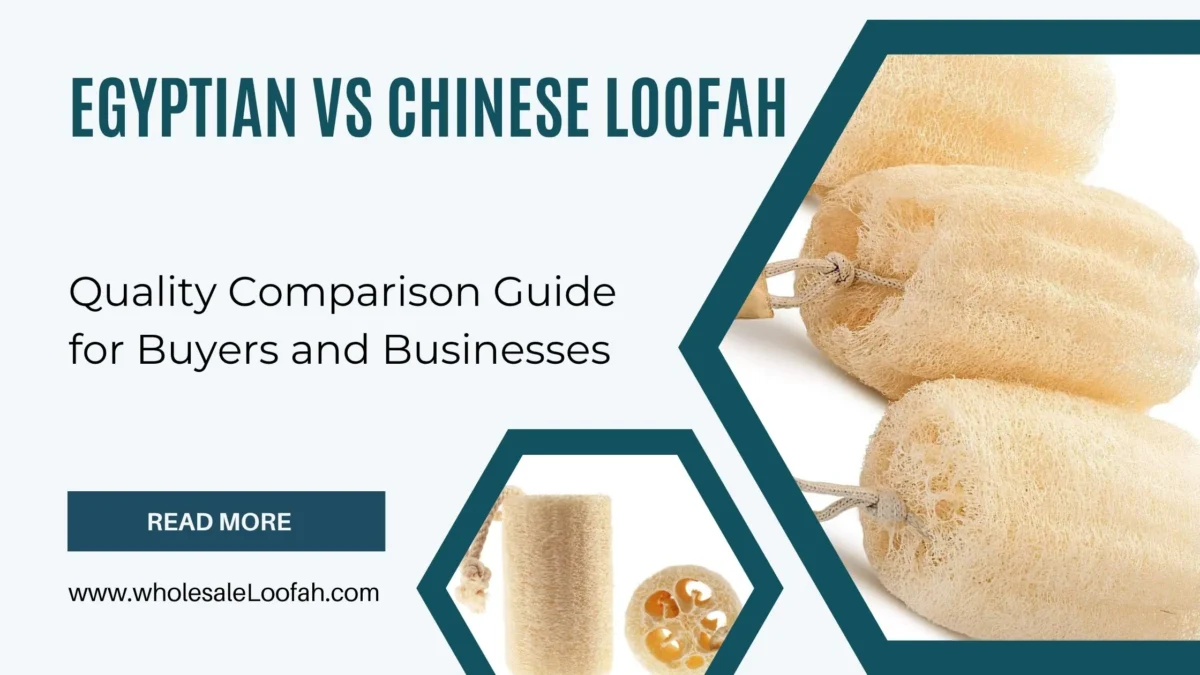
Egyptian loofah from the Nile Delta consistently ranks highest in global quality assessments because the region’s alluvial soil, long growing season, and centuries of cultivation expertise produce fibers with superior density and resilience. Wholesale Loofah sources exclusively from this region and applies rigorous grading standards at every stage of processing.
First Use Preparation
Before first use, submerge the loofah in warm water for 5 to 10 minutes. This hydrates the cellulose fibers to their optimal cleaning flexibility and flushes away any residual plant dust from processing. Squeeze and release the loofah several times while submerged to ensure water penetrates the full fiber network. After this initial soak, the loofah is ready for immediate use.
Ongoing Maintenance Schedule
Proper care dramatically extends the useful life of a cleaning loofah and maintains hygienic conditions throughout its service period. The following schedule represents best practice for kitchen and household use.
| Frequency | Action | Method |
|---|---|---|
| After every use | Rinse and air dry | Rinse thoroughly under running water, squeeze firmly to remove moisture, place on ventilated holder or hook |
| Every 3 to 4 days | Sanitizing rinse | Submerge in boiling water for 1 to 2 minutes, then squeeze and air dry completely |
| Weekly | Deep clean soak | Soak for 15 minutes in a solution of 2 tablespoons white vinegar per 2 cups warm water, rinse and air dry |
| Every 3 to 5 weeks | Replace (heavy kitchen use) | Evaluate for fiber thinning, persistent odor, or reduced scrubbing effectiveness |
| Every 6 to 8 weeks | Replace (light household use) | Same evaluation criteria as above |
| At end of life | Compost | Tear into small pieces and add to compost bin or garden bed |
Avoid using bleach or harsh chemical sanitizers on natural loofah. These agents break down cellulose fibers prematurely and can leave chemical residues that transfer to surfaces during subsequent cleaning. Vinegar and boiling water provide effective sanitization without fiber degradation.
For businesses managing loofah inventory at scale, incorporating this replacement cycle into procurement planning ensures consistent cleaning performance and hygiene compliance. Wholesale Loofah’s bulk ordering options support scheduled replenishment programs for commercial accounts.
Environmental Impact: Natural Loofah Versus Synthetic Alternatives
The environmental argument for natural loofah is comprehensive and supported by data across every stage of the product lifecycle. The following comparison table summarizes the key differentiators.
Lifecycle Environmental Comparison
| Impact Category | Natural Loofah | Polyurethane Foam Sponge | Melamine Foam Sponge | Cellulose Blend Sponge |
|---|---|---|---|---|
| Raw Material Origin | Renewable annual crop | Petroleum-based chemicals | Formaldehyde-melamine resin | Wood pulp with synthetic binders |
| Manufacturing Energy | Very low (sun drying, manual processing) | High (chemical synthesis, molding) | High (resin production, forming) | Moderate (pulp processing, blending) |
| Water Consumption in Production | Minimal (primarily rain-fed cultivation) | Significant (industrial cooling and processing) | Moderate | Moderate to high |
| Microplastic Shedding During Use | Zero | Yes, every wash cycle | Yes, particles detach with use | Partial, from synthetic fiber content |
| Chemical Leaching Risk | None | Possible release of isocyanates and other compounds | Formaldehyde trace presence | Low but not zero |
| Biodegradability | Complete within approximately 30 days | None, persists 200 to 500 years | None, persists indefinitely | Partial, synthetic components remain |
| Home Compostable | Yes | No | No | No (in most formulations) |
| Carbon Footprint | Net negative (plant absorbs CO2 during growth) | Significant positive footprint | Significant positive footprint | Moderate positive footprint |
| End of Life Destination | Compost or garden soil | Landfill | Landfill | Landfill (partial decomposition) |
The data in this table tells a straightforward story. Natural loofah is the only mainstream cleaning sponge material that leaves no lasting environmental footprint. It grows using sunlight and rainwater, requires no synthetic inputs during processing, sheds no microplastics during its useful life, and returns completely to the soil at end of life.
For retailers positioning products within the sustainability category, this environmental profile provides a compelling and verifiable narrative. Wholesale Loofah can supply documentation on sourcing practices, farming methods, and processing standards to support environmental marketing claims.
Market Context for Wholesale Buyers and Retailers
The commercial opportunity in natural loofah is grounded in measurable market trends. Plant-based cleaning tools represent one of the fastest-accelerating segments within this market, fueled by consumer awareness of microplastic contamination and growing regulatory scrutiny of single-use plastic products.
Natural loofah occupies a unique position within this landscape. It is simultaneously a premium product, with consumers willing to pay significantly more for a plant-based sponge than a conventional one, and an affordable commodity at wholesale pricing. This margin structure makes loofah attractive for retailers across every channel from specialty natural goods stores to mainstream grocery chains.
For businesses evaluating a loofah product line, Wholesale Loofah offers flexible entry points. Minimum order quantities start at accessible levels for new market entrants, with volume pricing that scales for larger operations. Private label and custom product development options are available for brands that want to differentiate their offering. The Wholesale Loofah blog publishes regular market insights and product development guidance for business buyers.
Expert Perspective: What Separates Premium Loofah from the Rest
Industry professionals who have worked with natural loofah for decades consistently point to one factor above all others as the determinant of cleaning quality: harvest timing. A loofah fruit harvested before full maturity produces soft, loosely woven fibers that compress easily and wear out quickly. These underripe loofahs may look acceptable to an untrained eye, but they deliver noticeably inferior scrubbing performance and shorter usable lifespans.
Conversely, a loofah left on the vine past its optimal window becomes excessively rigid. The fibers lose their ability to flex with moisture, making the loofah uncomfortable to grip and prone to cracking under pressure.
The ideal harvest point occurs when the fruit has fully matured, the outer skin has begun to naturally separate from the internal fiber network, and the fibers have reached their maximum density without becoming brittle. In Egypt’s Nile Delta growing region, experienced farming families with generational expertise identify this window through visual and tactile assessment of each individual fruit. This level of care in the field is what separates the premium Egyptian loofah available through Wholesale Loofah from commodity product sourced from less established growing regions.
To discuss your order, request a quote from EGEXO.
Frequently Asked Questions
Q1: Why is natural loofah better than a synthetic sponge for kitchen cleaning?
Natural loofah is the best choice for kitchen and household cleaning because its triaxial cellulose fiber network scrubs from multiple angles simultaneously, lifting grease and food residue more efficiently per stroke than flat foam sponges. It also dries significantly faster, which inhibits bacterial colonization between uses, and produces zero microplastic particles during its entire lifespan.
Q2: Can I use natural loofah on non-stick cookware without causing damage?
Yes. When fully soaked in water, natural loofah fibers soften to a texture that is firm enough to clean effectively but gentle enough to protect non-stick coatings including PTFE and ceramic. Use a circular scrubbing motion with moderate pressure for best results.
Q3: How long does a natural loofah last in regular kitchen use?
Under heavy daily use including dishwashing, pot scrubbing, and stovetop cleaning, expect to replace your loofah every 3 to 5 weeks. For lighter household tasks, a single loofah can remain effective for 6 to 8 weeks. Replace when you notice persistent odor, visible fiber thinning, or reduced scrubbing texture despite proper maintenance.
Q4: What is the best way to keep a kitchen loofah clean and sanitary?
Rinse thoroughly and air dry after every use. Every 3 to 4 days, sanitize by submerging in boiling water for 1 to 2 minutes. Once per week, soak for 15 minutes in a solution of 2 tablespoons white vinegar per 2 cups warm water. Avoid bleach and chemical disinfectants, which degrade cellulose fibers.
Q5: Is natural loofah safe for stone countertops like granite and marble?
Yes. Natural loofah is safe for both sealed and unsealed stone surfaces when used damp with a pH-neutral cleaning solution. It provides better scrubbing power than microfiber cloths without the risk of scratching that abrasive pads carry.
Q6: Where does the best quality cleaning loofah come from?
Egypt’s Nile Delta region produces the highest quality loofah globally. The combination of nutrient-rich alluvial soil, ideal climate, and centuries of farming expertise results in fibers with superior density, uniformity, and durability. Wholesale Loofah sources exclusively from verified Nile Delta farms.
Q7: Can I compost my used loofah when it wears out?
Absolutely. Natural loofah is 100 percent home compostable. Tear or cut the worn loofah into smaller pieces and add them to your compost bin or directly to garden soil. The cellulose fibers break down completely within approximately 30 days under normal composting conditions, leaving no synthetic residue of any kind.
Q8: How can I buy natural loofah in wholesale quantities for my business?
Wholesale Loofah specializes in bulk supply of premium Egyptian loofah for retailers, distributors, hospitality companies, and private label brands. Visit wholesaleloofah.com to browse the product catalog, request samples, or submit a wholesale inquiry with your volume requirements and specifications.
Conclusion
The case for switching from synthetic sponges to natural loofah is built on evidence, not aspiration. The triaxial cellulose fiber network scrubs more effectively per stroke than any foam product on the market. The rapid-drying open lattice structure resists bacterial colonization at a level that synthetic sponges cannot approach. The surface compatibility spans nearly every material found in modern kitchens, bathrooms, and commercial facilities. And the environmental profile is unmatched: zero microplastics, zero chemical residue, zero landfill contribution, and complete return to the soil within a month of composting.
For consumers, the switch is simple and immediate. Replace the synthetic sponge next to your kitchen sink with a natural loofah, follow the basic maintenance schedule, and compost it when it reaches end of life. You will clean more efficiently, maintain better hygiene, and eliminate a persistent source of household microplastic pollution.
For retailers and wholesale buyers, natural loofah represents a product category with accelerating consumer demand, strong margin potential, and an authentic sustainability story that withstands scrutiny. Egyptian Nile Delta loofah remains the benchmark for quality, and access to verified premium supply is the foundation of a successful product offering.
Key Takeaways:
- Natural loofah is the best choice for kitchen and household cleaning across scrubbing performance, hygiene, surface safety, and environmental impact
- Triaxial cellulose fiber architecture delivers superior mechanical cleaning action compared to uniform foam structures
- Rapid drying inhibits bacterial growth far more effectively than moisture-trapping synthetic sponges
- Compatible with virtually all common household surfaces when used with proper technique
- Fully biodegradable and home compostable within approximately 30 days
- Egyptian Nile Delta loofah represents the global quality standard for density, uniformity, and durability
Ready to Source Premium Natural Loofah?
- Browse Products: Wholesale Loofah Product Catalog
- Kitchen Cleaning Loofah: Kitchen Loofah Collection
- Raw and Unprocessed Loofah: Raw Loofah Scrubbers
- Bulk Orders: Wholesale Loofah Bulk Purchasing
- All Products: Wholesale Loofah Shop
- Industry Insights: Wholesale Loofah Blog