Why Drying Protocol Defines Commercial Loofah ROI
For wholesale buyers managing loofah inventory across spa facilities, hotel properties, retail operations, or distribution networks, product longevity directly impacts profitability. The single variable that most dramatically affects loofah lifespan and performance is neither brand selection nor storage conditions—it is drying protocol. Understanding how to dry a loofah properly after each use separates operations achieving four to six months of product life from those replacing inventory every few weeks.
Industry analysis of commercial loofah users reveals a stark pattern: facilities implementing systematic drying protocols report sixty percent lower replacement frequency compared to facilities without standardized procedures. This translates to substantial annual savings for operations purchasing loofahs in bulk quantities, while simultaneously improving hygiene outcomes and customer satisfaction scores.
The business case extends beyond direct cost savings. Properly maintained loofahs deliver consistent exfoliation performance throughout their lifespan, supporting service quality in spa environments. Retailers selling loofahs with proper care guidance experience fewer returns and complaints. Hospitality operations maintain hygiene compliance more easily when staff follow established drying procedures.
This guide provides wholesale buyers and commercial operators with comprehensive information for implementing effective drying protocols at scale. From the science underlying moisture management to staff training frameworks and quality benchmarking, every section addresses the specific needs of business purchasers rather than individual consumers.
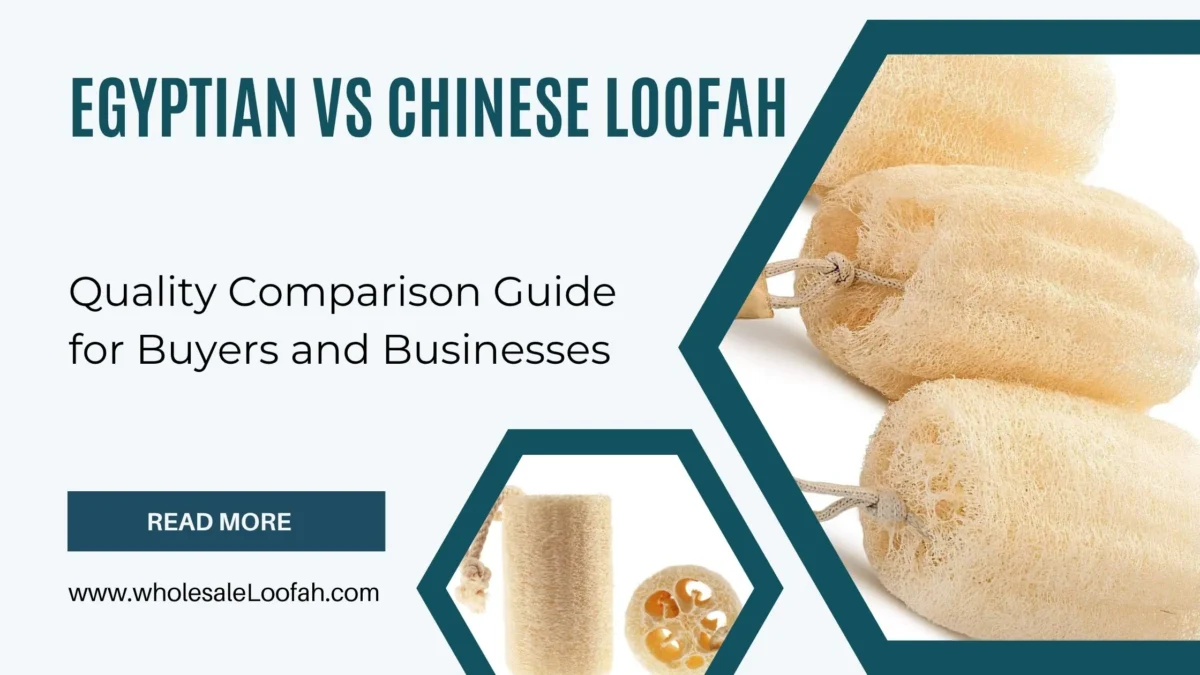
Egyptian loofahs, particularly those from established Nile Delta cultivators, demonstrate superior response to proper drying care due to their dense fiber structures. EGEXO has been exporting Egyptian loofah since 2015.
The Business Impact of Loofah Drying Practices
Before examining techniques, commercial buyers benefit from understanding the quantifiable business impact of drying practices. These metrics inform procurement decisions and justify investment in proper care infrastructure.
Cost Analysis: Proper vs Improper Drying
Commercial facilities typically purchase loofahs at wholesale pricing ranging from bulk economy grades to premium export quality. Regardless of purchase price point, the cost-per-use calculation depends entirely on achieved lifespan.
Consider a mid-range spa purchasing loofahs at three dollars per unit wholesale. With improper drying leading to four-week replacement cycles, annual cost per treatment room using one loofah equals thirty-nine dollars. The same loofah properly maintained for five months drops annual cost to just over seven dollars per room. Across a twenty-room facility, this represents over six hundred dollars annual savings from drying practice alone.
These calculations compound for larger operations. Hotel chains managing hundreds of properties, spa networks with multiple locations, and distributors advising downstream customers all benefit from propagating effective drying knowledge throughout their operations.
Hygiene Compliance Considerations
Commercial facilities face regulatory and liability considerations absent from home use scenarios. Health department inspections, insurance requirements, and brand standards often specify hygiene protocols for personal care implements including loofahs.
Improperly dried loofahs develop bacterial concentrations that may violate hygiene standards within twenty-four to forty-eight hours of use. Facilities discovered using contaminated loofahs risk inspection failures, insurance complications, and reputation damage. Proper drying protocols provide documented compliance with hygiene best practices.
Customer Experience Metrics
Spa and hospitality operations track customer satisfaction closely. Loofah condition directly affects guest experience during treatments and amenity use. Fresh, properly maintained loofahs deliver the pleasant texture and effective exfoliation guests expect. Degraded loofahs create negative impressions that surface in reviews and feedback.
Operations implementing systematic loofah care consistently report improved satisfaction scores in treatment categories involving exfoliation products. This correlation reflects guest sensitivity to product quality and condition.
Commercial Drying Protocol: Step-by-Step Implementation
Effective commercial protocols require standardization, documentation, and accountability. The following framework adapts residential best practices for business environments.
Phase One: Immediate Post-Use Processing
Staff must process loofahs immediately after each use rather than accumulating items for batch handling. Delayed processing allows bacterial multiplication during the waiting period, compromising outcomes regardless of subsequent care quality.
Standard Operating Procedure:
- Remove loofah from treatment area immediately upon service completion
- Transport to designated processing station
- Rinse under running water for minimum forty-five seconds
- Apply repeated squeezing during rinse to flush interior fibers
- Continue until water runs clear without soap residue
This immediate processing adds approximately ninety seconds per loofah to service turnover time. Facilities should factor this requirement into scheduling and staffing calculations.
Phase Two: Water Extraction
Thorough water removal before drying dramatically accelerates the drying process and improves outcomes. Commercial operations benefit from standardizing extraction technique to ensure consistency across staff members.
Extraction Sequence:
- Hold loofah firmly with both hands
- Twist in wringing motion to expel water
- Reposition grip ninety degrees
- Repeat wringing motion
- Continue for four to five complete wringing cycles
- Shake vigorously ten to twelve times to dislodge trapped moisture
Training staff on proper extraction technique yields measurable improvement in drying times. Facilities report twenty to thirty percent faster drying after implementing standardized extraction training.
Phase Three: Drying Station Placement
Commercial facilities require dedicated drying infrastructure rather than ad-hoc placement. Purpose-designed drying stations ensure consistent conditions and simplify staff compliance.
Drying Station Requirements:
- Located outside high-humidity service areas
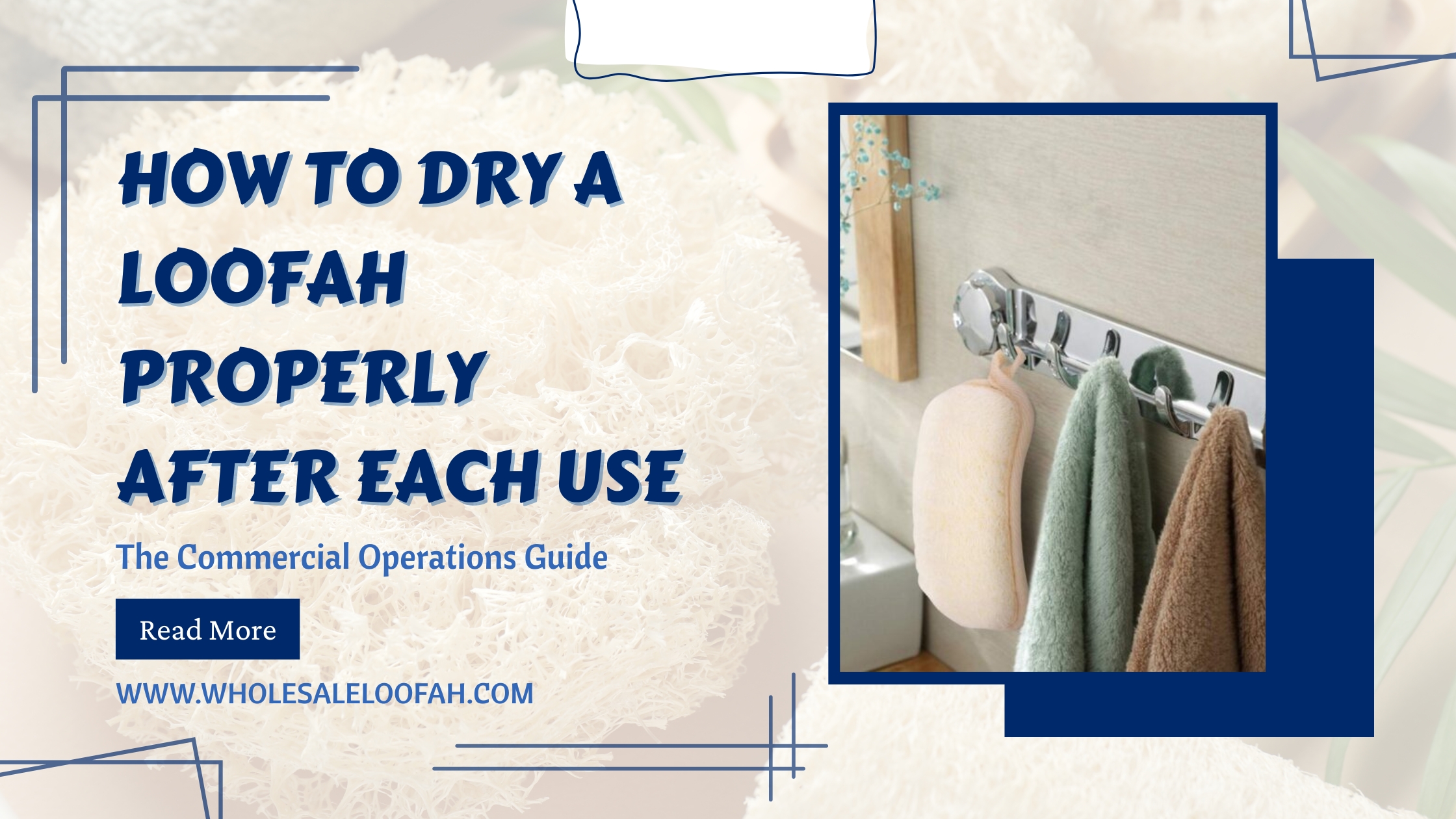
- Equipped with adequate hooks or hanging hardware
- Positioned near air circulation sources
- Sized for peak volume plus buffer capacity
- Easy staff access for placement and retrieval
- Cleanable surfaces meeting hygiene standards
Many facilities position drying stations in back-of-house areas with climate control and dedicated ventilation. This approach keeps processing invisible to guests while optimizing drying conditions.
Phase Four: Drying Duration Management
Commercial operations must track drying duration to ensure loofahs achieve complete dryness before reuse. Minimum drying time varies by environmental conditions but typically ranges from four to eight hours.
Duration Management Options:
- Rotation systems ensuring minimum rest periods
- Time-stamped placement logs
- Color-coded day-of-week designation
- Digital tracking for larger operations
The most reliable approach involves maintaining sufficient inventory for twenty-four-hour minimum drying periods. This buffer accommodates variable conditions and prevents pressure to reuse insufficiently dried products.
Facility Drying Infrastructure Comparison
| Infrastructure Type | Initial Investment | Capacity | Drying Speed | Staff Convenience | Recommended For |
|---|---|---|---|---|---|
| Wall-mounted hook arrays | Low | Moderate | Depends on location | High | Small spas, retail back rooms |
| Ventilated drying cabinets | Moderate | High | Fast | High | Mid-size spa operations |
| Climate-controlled drying rooms | High | Very High | Very Fast | Moderate | Large spas, hotel central processing |
| Portable drying racks | Low | Low to Moderate | Moderate | Very High | Mobile operations, overflow capacity |
| Integrated HVAC drying zones | Moderate to High | Scalable | Fast | High | New construction, major renovations |
Infrastructure investment scales with operation size and volume requirements. Smaller facilities achieve excellent results with simple hook systems in well-ventilated areas. Larger operations processing dozens or hundreds of loofahs daily benefit from dedicated drying infrastructure investments.
When consulting with Egexo’s wholesale team, buyers can discuss volume requirements and receive guidance on appropriate infrastructure for their operational scale.
Quality Factors Affecting Commercial Drying Performance
Procurement decisions directly impact drying performance and overall cost efficiency. Understanding quality indicators helps wholesale buyers select products optimized for commercial care protocols.
Fiber Density and Drainage
Premium loofahs feature dense, uniform fiber networks that create efficient drainage channels. Water exits these structures rapidly during extraction and drying. Lower-quality products with sparse or irregular fibers trap moisture in pockets that resist both extraction and evaporation.
Egyptian loofahs from the Nile Delta region develop approximately forty percent greater fiber density than alternatives grown in less optimal conditions. This density advantage translates directly to faster drying times and superior response to commercial care protocols.
Processing Quality Impact
Post-harvest processing affects loofah performance throughout product life. Properly processed loofahs maintain open fiber channels that facilitate water movement. Poorly processed products may have compressed, damaged, or contaminated fibers that impede drying.
Quality-focused suppliers document their processing methods and provide specifications supporting commercial procurement decisions. Egexo’s quality standards documentation details the processing protocols that ensure consistent commercial-grade performance.
Grade Selection for Commercial Use
Commercial buyers face grade selection decisions balancing cost and performance. While economy grades offer lower per-unit pricing, premium grades often deliver superior total value through extended lifespan and better drying characteristics.
See our wholesale prices on egexo.com.
Total cost of ownership analysis typically favors premium grades for applications involving repeated use and care. Economy grades remain appropriate for single-use or limited-use scenarios where drying protocols are impractical.
Browse Egexo’s complete product range to evaluate options across grade levels and application types.
Staff Training Framework for Drying Compliance
Commercial drying protocols succeed only when staff consistently execute procedures correctly. Developing effective training ensures protocol adoption across teams and shifts.
Training Module Components
Comprehensive loofah care training should address these elements:
Understanding Module: Explain why drying matters using business-relevant framing. Staff who understand the hygiene and cost implications demonstrate better compliance than those simply following unexplained rules.
Demonstration Module: Show correct technique for each protocol phase. Visual demonstration significantly improves skill transfer compared to written instructions alone.
Practice Module: Allow hands-on practice with feedback. Correct technique errors during training rather than discovering them through poor outcomes later.
Assessment Module: Verify competency through practical evaluation. Document training completion for compliance records.
Reinforcement Module: Provide ongoing reminders and refresher content. Initial training impact fades without periodic reinforcement.
Training Documentation
Maintain training records demonstrating staff competency in loofah care protocols. These records support hygiene compliance documentation and provide accountability structure.
Standard documentation includes:
- Training completion dates
- Competency assessment results
- Refresher training schedule
- Protocol acknowledgment signatures
Common Staff Errors and Corrections
Training should specifically address frequent errors observed in commercial settings:
Error: Abbreviated rinsing — Staff rushing through rinse phase leave residue that feeds bacterial growth
Correction: Time rinse phase during training, establish minimum duration standards
Error: Insufficient extraction — Incomplete wringing leaves excess water that extends drying time
Correction: Demonstrate proper technique, verify through observation
Error: Improper placement — Staff placing loofahs flat or in enclosed spaces rather than hanging
Correction: Design drying stations that make correct placement the easiest option
Error: Premature reuse — Using loofahs before complete drying due to inventory pressure
Correction: Maintain adequate inventory buffer, implement tracking systems
For operations seeking customized training materials, Egexo’s private label services can include branded care guides and staff training resources.
Rotation Systems for Commercial Operations
The most effective commercial approach to loofah drying involves rotation systems ensuring adequate rest periods between uses. These systems guarantee complete drying regardless of environmental variables.
Basic Two-Set Rotation
The simplest rotation assigns two loofahs per use point, alternating daily. While one loofah is in service, its partner completes a twenty-four-hour drying period. This approach guarantees minimum drying time without complex tracking.
Implementation Requirements:
- Double standard inventory quantity
- Clear labeling distinguishing rotation sets
- Staff training on alternation procedure
- Visual or physical systems preventing same-day reuse
Day-of-Week Systems
Larger operations may implement day-of-week rotation using color-coded or labeled loofahs. Each day draws from designated inventory while previous days’ loofahs complete extended drying cycles.
Seven-Day Rotation Example:
- Monday: Use blue-tagged loofahs
- Tuesday: Use green-tagged loofahs
- Wednesday through Sunday: Continue color rotation
- Each loofah receives six full days between uses
This extended rotation provides substantial drying buffer and reduces wear through decreased use frequency, potentially extending individual loofah lifespan.
Inventory Calculation for Rotation Systems
Calculate rotation inventory requirements using this formula:
Required Inventory = (Daily Use Quantity) × (Rotation Days + 1)
The additional day provides buffer for processing and accounts for items in cleaning or inspection.
Example Calculation:
- Facility uses 20 loofahs daily
- Implementing 2-day rotation (48-hour minimum rest)
- Required inventory: 20 × 3 = 60 loofahs
Contact Egexo’s wholesale team to discuss volume requirements for rotation system implementation.
Environmental Optimization for Commercial Drying
Facility environment significantly impacts drying performance. Commercial operations can optimize conditions through infrastructure and operational adjustments.
Humidity Management
Ambient humidity directly affects evaporation rates. Commercial facilities should target relative humidity below fifty percent in drying areas when possible. Strategies include:
- Dedicated dehumidification equipment in drying areas
- Routing HVAC to provide dry air to drying stations
- Locating drying areas away from moisture sources
- Ensuring adequate ventilation exchange rates
Monitor humidity levels in drying areas to identify and address problematic conditions. Inexpensive digital hygrometers provide continuous readings supporting environmental management.
Air Circulation Enhancement
Moving air dramatically accelerates evaporation compared to still conditions. Commercial facilities should ensure drying areas receive adequate airflow through:
- Ceiling fans positioned to create movement across drying stations
- Directional fans aimed at loofah drying areas
- HVAC vent positioning directing airflow toward drying infrastructure
- Natural ventilation through windows or vents when climate permits
Even modest air movement reduces drying time significantly. Facilities report thirty to fifty percent faster drying with dedicated airflow compared to still-air conditions.
Temperature Considerations
Warmer temperatures accelerate evaporation. Maintaining drying areas in the seventy to eighty degree Fahrenheit range optimizes drying speed without risking heat damage to loofah fibers.
Avoid placing loofahs directly on or adjacent to heat sources such as radiators or heating vents. Direct heat contact can damage fibers and create fire risks. Ambient warmth rather than direct heat provides the ideal drying environment.
Climate Zone Adaptations
Commercial facilities in different climate zones require adapted approaches:
Humid Tropical Climates: Aggressive dehumidification and air circulation essential. Consider extended rotation periods accounting for slower drying conditions.
Arid Climates: Natural conditions favor rapid drying. Basic protocols often suffice without environmental enhancement.
Temperate Climates: Seasonal variation requires protocol flexibility. Winter heating creates favorable conditions while humid summers may require supplemental measures.
Coastal Climates: Salt air and humidity create challenging conditions. Enclosed drying areas with climate control often necessary.
Integrating Drying Protocols with Quality Assurance
Commercial operations benefit from integrating loofah care into broader quality assurance frameworks. This integration ensures consistent standards and supports continuous improvement.
Inspection Checkpoints
Establish regular inspection of loofah inventory to identify issues before they affect service delivery or customer experience:
Daily Checks:
- Verify loofahs achieve complete dryness before service use
- Confirm staff following placement protocols
- Remove any items showing contamination or damage
Weekly Checks:
- Deep clean all inventory following sanitization protocols
- Inspect for early degradation signs
- Verify rotation systems functioning correctly
- Review drying time logs if maintained
Monthly Checks:
- Comprehensive condition assessment of all inventory
- Replace items approaching end of service life
- Evaluate environmental conditions in drying areas
- Review and update protocols as needed
Documentation Standards
Maintain records supporting quality assurance and compliance verification:
- Protocol documentation with version control
- Training records for all staff handling loofahs
- Inspection logs with findings and corrective actions
- Inventory tracking including purchase dates and replacement schedules
- Environmental monitoring data for drying areas
This documentation demonstrates due diligence in maintaining hygiene standards and supports continuous improvement through data analysis.
Supplier Quality Coordination
Work with suppliers to ensure incoming inventory meets specifications supporting commercial care protocols. Quality-focused suppliers provide:
- Product specifications documenting fiber density and processing standards
- Certificates of quality for commercial-grade products
- Guidance on optimal care protocols for their specific products
- Responsive support addressing quality concerns
Egexo’s farm to export process documentation provides transparency supporting commercial buyer confidence in product quality and care response.
Sector-Specific Protocol Adaptations
Different commercial sectors face unique requirements affecting drying protocol implementation. These adaptations address sector-specific needs.
Spa and Wellness Facilities
Spa operations typically use loofahs in controlled treatment environments with trained staff. Key considerations include:
- Integration with treatment room turnover procedures
- Matching loofah quality to service positioning and pricing
- Guest perception of product freshness and quality
- Therapist training on proper handling techniques
High-end spas may implement individual loofah assignment, providing each guest their own loofah for the duration of their visit or treatment series. This approach eliminates cross-contamination concerns while requiring expanded inventory and tracking systems.
Explore Egexo’s body loofah collection for spa-appropriate options across quality grades.
Hotel and Hospitality
Hotels face scale challenges with loofahs deployed across numerous rooms and public facilities. Key considerations include:
- Centralized versus distributed processing approaches
- Housekeeping integration for room amenity loofahs
- Pool and fitness facility loofah management
- Guest education on proper use and care
Many hotels treat loofahs as consumable amenities replaced after each guest stay, eliminating drying protocol requirements but increasing product costs. Properties seeking sustainability improvements may transition to washable, properly maintained loofahs with appropriate hygiene protocols.
Retail Operations
Retailers selling loofahs face different considerations focused on customer education rather than direct product care:
- Point-of-sale care guidance materials
- Staff training to answer customer care questions
- Display product maintenance for demonstration items
- Returns handling for products damaged by improper care
Retailers partnering with quality suppliers gain access to customer education resources supporting successful product use. Egexo’s private label program includes customizable care guidance for retail partners.
Distribution Networks
Distributors must communicate drying protocols throughout their downstream customer networks:
- Developing care guidance for various customer segments
- Training materials for customer staff
- Technical support for customer protocol questions
- Quality feedback loops identifying care-related issues
Distributors selecting quality suppliers position themselves to provide value-added guidance that differentiates their service offering.
Measuring Protocol Effectiveness
Commercial operations should track metrics demonstrating drying protocol effectiveness. These measurements support continuous improvement and justify care investments.
Key Performance Indicators
Product Lifespan: Track average service life from deployment to replacement. Effective protocols should achieve manufacturer specifications for properly maintained products.
Replacement Frequency: Monitor replacement rates over time. Decreasing frequency indicates protocol improvement; increasing frequency signals problems requiring investigation.
Inspection Pass Rates: Track proportion of loofahs passing quality checks. Target ninety-five percent or higher pass rates for well-implemented protocols.
Staff Compliance: Monitor protocol adherence through observation and audit. Address compliance gaps through training reinforcement.
Customer Feedback: Track complaints or comments related to loofah condition. Decreasing negative feedback correlates with protocol effectiveness.
Benchmarking Standards
Compare facility performance against industry benchmarks:
| Metric | Poor Performance | Acceptable | Good | Excellent |
|---|---|---|---|---|
| Average lifespan (premium grade) | Under 6 weeks | 6 to 10 weeks | 10 to 16 weeks | 16 plus weeks |
| Inspection pass rate | Under 80% | 80 to 90% | 90 to 95% | Above 95% |
| Same-day reuse incidents | Frequent | Occasional | Rare | Never |
| Customer complaints (loofah-related) | Multiple monthly | Monthly | Quarterly | Rare or never |
Facilities consistently achieving “Good” or “Excellent” benchmarks demonstrate mature protocol implementation delivering strong return on care investment.
Expert Perspective from EGEXO
The difference between facilities with systematic care approaches and those without extends beyond cost metrics to fundamental service quality and customer satisfaction.
We consistently advise wholesale buyers that product selection and product care represent equally important success factors. Premium Egyptian loofahs deliver exceptional performance potential, but realizing that potential requires organizational commitment to proper handling including drying protocols. Facilities implementing comprehensive care programs report the highest satisfaction with their loofah investments.
Our wholesale team supports commercial buyers not only with quality products but with implementation guidance for care protocols suited to specific operational contexts. Whether you operate a single spa location or manage procurement for a multinational hospitality brand, we can provide relevant guidance based on extensive experience serving businesses across scales and sectors.
Request a wholesale consultation to discuss your specific requirements and receive customized recommendations for products and protocols optimized for your operation.
FAQ Section
Q1: How does proper drying affect commercial loofah replacement budgets?
A: Proper drying protocols typically reduce replacement frequency by fifty to sixty percent compared to facilities without systematic care approaches. For operations purchasing hundreds or thousands of loofahs annually, this translates to substantial budget savings. A facility spending five thousand dollars annually on loofah replacement might reduce this to two thousand dollars through effective protocol implementation while simultaneously improving hygiene outcomes.
Q2: What minimum drying time should commercial protocols specify?
A: Commercial protocols should specify minimum eight-hour drying periods under standard conditions, with twenty-four hours preferred when rotation inventory permits. Environmental factors including humidity and air circulation affect actual drying completion time. Facilities in humid climates or with limited ventilation may require extended minimum periods. When uncertain, physical verification of complete dryness should supplement time-based standards.
Q3: How should commercial facilities handle loofahs that did not fully dry before scheduled reuse?
A: Establish clear protocols prohibiting use of incompletely dried loofahs. Maintain buffer inventory allowing substitution when items fail to meet dryness standards. Document incidents to identify patterns requiring protocol adjustment. Never pressure staff to use insufficiently dried products as this compromises hygiene standards and may create liability exposure.
Q4: What staff-to-loofah ratio supports effective commercial drying protocols?
A: Staffing requirements depend on volume and protocol complexity. As a general guideline, properly trained staff can process approximately twenty to thirty loofahs per hour through complete rinse, extraction, and placement procedures. High-volume facilities may benefit from designated loofah care staff during peak periods rather than distributing responsibility across service providers.
Q5: How do quality grades affect commercial drying protocol requirements?
A: Premium and export-grade loofahs with dense fiber structures dry more efficiently than economy grades, often requiring twenty to thirty percent less drying time to reach complete dryness. However, all grades benefit from proper protocols, and no grade eliminates the need for systematic care. Premium grades simply respond better to good care, amplifying the return on protocol investment.
Q6: Should commercial facilities implement different protocols for different loofah applications?
A: Yes, protocol adaptation based on application improves efficiency without compromising outcomes. Body treatment loofahs in spa settings may warrant more rigorous protocols than kitchen cleaning loofahs in hospitality back-of-house applications. Develop tiered protocols matching care intensity to application hygiene requirements and customer contact levels.
Q7: What documentation should commercial facilities maintain regarding loofah drying protocols?
A: Maintain written protocols with version control, staff training records including competency verification, inspection logs documenting compliance and condition findings, and inventory records tracking product lifespan. This documentation supports hygiene compliance verification, enables continuous improvement analysis, and provides liability protection demonstrating due diligence in product care.
Q8: How can distributors help downstream customers implement effective drying protocols?
A: Distributors add value by providing protocol templates adapted for various customer types, training materials suitable for customer staff education, technical support for protocol questions, and feedback channels identifying common implementation challenges. This support differentiates distributor offerings beyond product supply and strengthens customer relationships through improved outcomes.
Conclusion
For commercial operations, understanding how to dry a loofah properly after each use represents essential operational knowledge with direct bottom-line impact. The protocols detailed in this guide enable wholesale buyers, facility managers, and business operators to maximize return on loofah investments while maintaining hygiene standards that protect customers and organizational reputation.
Effective commercial drying protocols combine systematic procedures, appropriate infrastructure, staff training, environmental optimization, and quality assurance integration. Each element contributes to overall success, and neglecting any component undermines results regardless of excellence in other areas.
Product quality and care protocol quality function as multiplicative factors. Premium Egyptian loofahs respond exceptionally well to proper care, amplifying returns on protocol investment. Economy products provide limited improvement potential regardless of care quality. Strategic procurement decisions should consider this interaction when evaluating total cost of ownership.
The measurements and benchmarks provided enable continuous improvement tracking. Facilities achieving “Excellent” performance demonstrate the full potential of systematic loofah care programs, while those in lower categories can identify specific improvement opportunities through targeted protocol enhancement.
Key Commercial Takeaways:
- Implement standardized protocols with staff training and accountability
- Invest in appropriate drying infrastructure for operation scale
- Maintain rotation inventory ensuring minimum drying periods
- Optimize environmental conditions in drying areas
- Select product grades aligned with care protocol capabilities
- Track performance metrics supporting continuous improvement
Ready to optimize your commercial loofah program?
Request a wholesale quote to discuss volume requirements and receive customized recommendations for your operation.
Download Egexo’s complete product catalog to review the full range of commercial-grade options.
Request samples to evaluate product quality before committing to bulk orders.