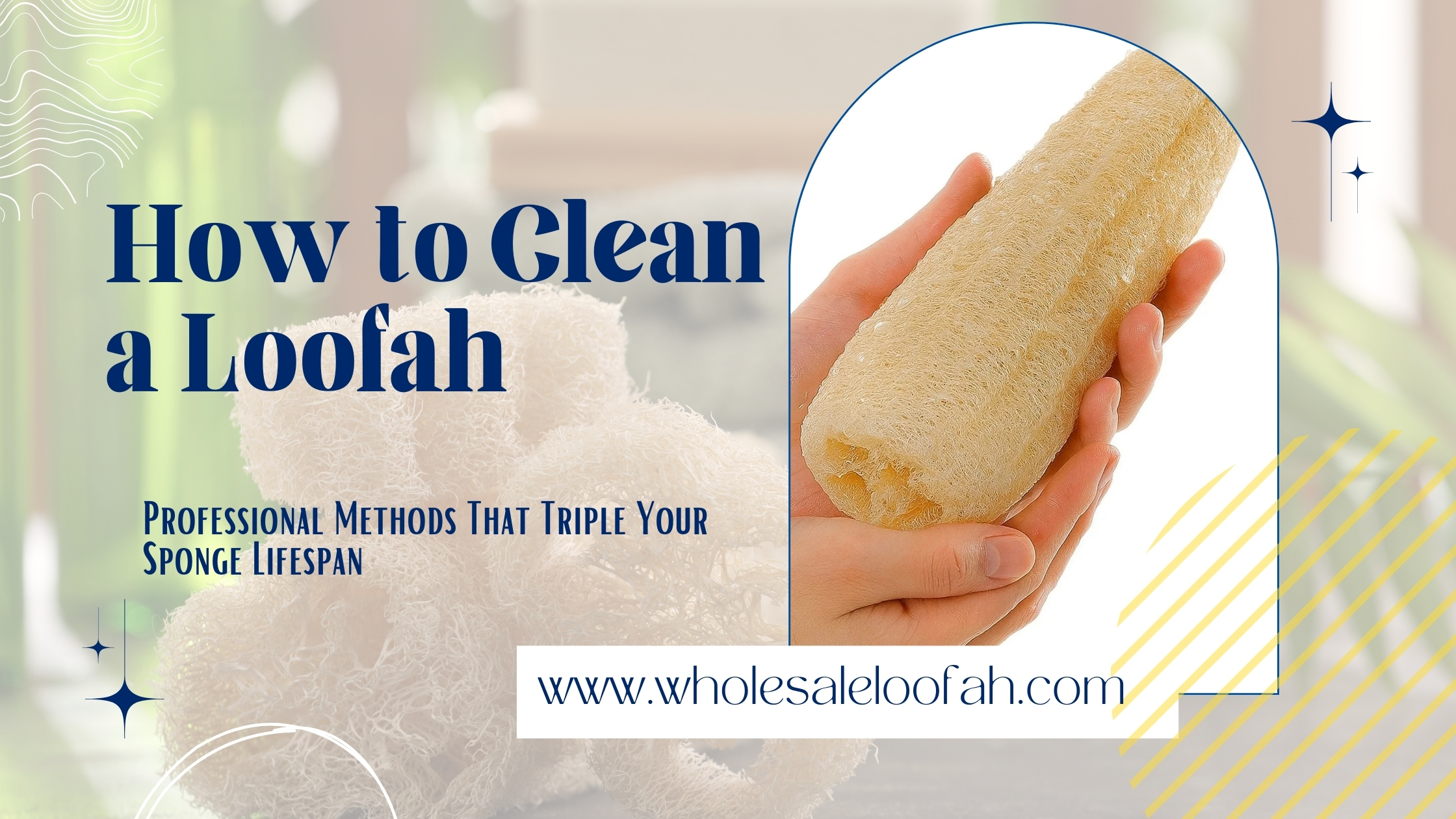
Learning how to clean a loofah correctly transforms a basic bathroom item into a long lasting skincare investment. The difference between a loofah that deteriorates in two weeks versus one that performs beautifully for six weeks comes down entirely to maintenance practices. Most people treat their loofahs as disposable afterthoughts, rinsing briefly and leaving them in perpetually damp shower environments. This approach guarantees premature breakdown, bacterial buildup, and wasted money on frequent replacements.
The natural fiber structure that makes loofahs excellent exfoliators also creates ideal conditions for microbial growth when moisture lingers. Each fiber strand contains microscopic channels that trap water, soap residue, and dead skin cells. Without proper cleaning routines, these accumulated materials become food sources for bacteria and mold, compromising both hygiene and product integrity. Understanding this biological reality motivates the specific care techniques that professionals recommend.
EGEXO has been exporting Egyptian loofah since 2015. Whether you manage spa inventory, supply retail customers, or simply want better results from personal purchases, these methods deliver measurable improvements in product longevity and hygiene. You will learn daily maintenance essentials, weekly deep cleaning techniques, and professional tips for identifying when replacement becomes necessary.
Understanding Why Loofah Cleaning Matters
Before diving into specific techniques, understanding the science behind loofah contamination helps explain why certain methods work better than others. This knowledge enables you to adapt protocols for different situations while maintaining effectiveness.
The Biology of Loofah Contamination
Natural loofahs consist primarily of cellulose fibers arranged in a complex three dimensional matrix. This structure provides excellent water retention, which benefits exfoliation but also creates persistent moisture that bacteria require to thrive. Studies examining bathroom loofah samples have consistently found diverse bacterial populations, with counts increasing dramatically when proper drying is neglected.
The most common microorganisms found in poorly maintained loofahs include Pseudomonas aeruginosa, Staphylococcus aureus, and various mold species. While healthy immune systems typically handle exposure to these organisms without issue, the accumulation becomes problematic over time. Individuals with compromised immunity, open wounds, or skin conditions face elevated risks from contaminated bathing products.
Dead skin cells removed during exfoliation become trapped in loofah fibers, providing organic material that supports bacterial growth. Soap residue adds additional nutrients while potentially creating pH environments that favor certain microbial species. This combination explains why simple rinsing proves insufficient for maintaining hygienic conditions.
Fiber Degradation Factors
Beyond hygiene concerns, improper cleaning accelerates physical breakdown of loofah fibers. Extended moisture exposure causes cellulose to weaken through a process called hydrolysis, where water molecules gradually break chemical bonds within the fiber structure. This degradation manifests as softening, loss of texture, and eventual disintegration.
Harsh cleaning chemicals pose another threat to fiber integrity. Chlorine bleach, while effective at killing bacteria, damages cellulose through oxidation. Regular bleach exposure causes fibers to become brittle and break easily. Similarly, very hot water can denature proteins within the plant material, weakening structural connections.
The goal of proper loofah cleaning balances thorough sanitization against preservation of fiber structure. The methods outlined in this guide achieve both objectives through careful selection of cleaning agents and techniques that eliminate harmful microorganisms without compromising the natural materials that make loofahs effective.
Impact on Product Performance
Clean loofahs simply work better than contaminated ones. Fiber channels clogged with residue cannot absorb water properly, reducing the softening that occurs during soaking. This leads to harsher texture and less comfortable use. The irregular surface structure that provides gentle variable exfoliation becomes compromised when coated with accumulated materials.
Lather production also suffers in dirty loofahs. Soap molecules interact differently with residue coated fibers compared to clean natural cellulose. Users often compensate by using more product, increasing costs and potentially causing skin irritation from excess soap exposure.
For businesses providing loofahs to customers, cleanliness directly affects perceived quality. A guest receiving a musty smelling or visibly degraded loofah at a spa forms negative impressions that no amount of other amenities can overcome. Understanding that maintenance determines customer experience motivates investment in proper care protocols.
Daily Cleaning Essentials
Consistent daily care prevents the accumulation that makes deep cleaning difficult. These simple practices take minimal time but deliver maximum impact on loofah longevity and hygiene.
Immediate Post Use Protocol
The moments immediately following loofah use determine much about microbial growth potential. Establishing consistent habits during this window prevents problems far more effectively than aggressive cleaning later.
Rinse your loofah under running water for a minimum of thirty seconds after every use. This duration surprises many people who typically spend only a few seconds on this step. Thirty seconds allows water to penetrate interior fiber channels, flushing soap and debris from areas that brief rinsing misses. Work the loofah gently with your hands during rinsing, compressing and releasing to create pumping action that expels trapped materials.
Water temperature for daily rinsing should be warm but not hot. Temperatures around 100 to 105 degrees Fahrenheit effectively dissolve soap residue without stressing fiber structure. Extremely hot water can actually set certain residues rather than removing them, similar to how hot water sets protein stains in laundry.
After thorough rinsing, squeeze excess water from the loofah using firm but gentle pressure. Avoid twisting or wringing motions that stress fibers unevenly and can cause internal damage. The goal is removing bulk water while preserving structural integrity. Several firm squeezes from different angles removes most free moisture.
Optimal Drying Practices
Drying represents the single most critical daily maintenance factor. Bacteria require moisture to reproduce, and thoroughly dried loofahs resist colonization far better than those remaining damp between uses.
Shake the loofah vigorously after squeezing to remove additional water from interior channels. This mechanical action forces out moisture that squeezing alone cannot reach. Ten to fifteen seconds of vigorous shaking significantly accelerates subsequent drying time.
Hang the loofah in a location with excellent air circulation, ideally outside the immediate shower area. The humid environment inside shower enclosures maintains elevated moisture levels that slow drying dramatically. Bathroom exhaust fans, window proximity, or dedicated hooks near air vents provide optimal conditions.
Never store loofahs in enclosed spaces regardless of how dry they seem. Shower caddies, medicine cabinets, and plastic containers all trap residual moisture while blocking airflow. Even thoroughly squeezed loofahs retain enough internal moisture to support bacterial growth in sealed environments.
| Drying Location | Drying Time | Effectiveness | Recommendation |
|---|---|---|---|
| Inside shower on hook | 6 to 10 hours | Poor | Avoid |
| Bathroom counter | 4 to 6 hours | Fair | Acceptable if ventilated |
| Near bathroom vent | 2 to 4 hours | Good | Recommended |
| Near open window | 2 to 3 hours | Very good | Highly recommended |
| Outside bathroom in air flow | 1 to 2 hours | Excellent | Optimal choice |
Between Use Storage
How you store your loofah between uses affects both drying efficiency and contamination exposure. Thoughtful placement prevents problems while requiring no additional effort once established.
Avoid contact with wet surfaces or other damp items. Loofahs resting on wet counters or touching damp towels absorb moisture through capillary action, reversing the drying you achieved. Hanging remains superior to any horizontal placement.
Keep loofahs away from toilet spray zones. Flushing toilets create aerosol plumes that spread bacteria throughout bathrooms. Placement at least six feet from toilets, or in separate areas entirely, reduces exposure to these contaminants.
Consider UV exposure opportunities when selecting storage locations. Natural sunlight provides germicidal benefits that supplement other cleaning efforts. Bathroom windows that receive direct sunlight offer excellent hanging locations where UV rays contribute to ongoing sanitization.
Weekly Deep Cleaning Methods
Daily care maintains baseline hygiene, but weekly deep cleaning addresses accumulation that routine rinsing cannot eliminate. Several effective methods exist, each with specific advantages depending on your situation and preferences.
Vinegar Soak Method
White vinegar provides safe and effective loofah sanitization through acetic acid action against bacteria and mold. This method preserves fiber integrity while delivering thorough disinfection, making it the preferred choice for premium natural loofahs.
Prepare a solution using one part white distilled vinegar to four parts warm water. Standard white vinegar at five percent acidity provides sufficient antimicrobial action without requiring stronger concentrations that might stress fibers. Use enough solution volume to completely submerge the loofah with room for circulation.
Submerge the loofah completely in the vinegar solution, pressing out air bubbles to ensure interior contact. Allow soaking for fifteen to twenty minutes. This duration provides adequate time for acetic acid to penetrate fiber channels and neutralize bacterial populations without extended exposure that could affect fiber condition.
After soaking, remove the loofah and rinse thoroughly under running water for at least one minute. The extended rinse removes vinegar residue that could cause skin irritation during subsequent use. The loofah may retain slight vinegar scent immediately after treatment, but this dissipates completely during drying.
Dry the loofah completely using the enhanced drying techniques described earlier. Deep cleaning temporarily increases moisture penetration into fibers, making thorough drying especially important following treatment.
Hydrogen Peroxide Method
Hydrogen peroxide offers an alternative sanitization approach with different antimicrobial properties than vinegar. The oxidizing action kills bacteria through a different mechanism, making peroxide rotation useful for comprehensive disinfection.
Use standard three percent hydrogen peroxide available at pharmacies and grocery stores. Higher concentrations designed for industrial use can damage loofah fibers and are unnecessary for this application. Prepare a solution using equal parts hydrogen peroxide and warm water for effective sanitization.
Submerge the loofah in the peroxide solution for ten to fifteen minutes. Hydrogen peroxide works faster than vinegar due to its oxidizing mechanism, but shorter contact time is advisable to prevent fiber stress. You may notice slight bubbling as the peroxide reacts with organic materials trapped in the loofah.
Rinse thoroughly after treatment and dry completely. Hydrogen peroxide breaks down into water and oxygen, leaving no residue concerns, but rinsing ensures removal of any released organic materials.
Microwave Sanitization
Microwave treatment uses heat to kill bacteria and represents the fastest deep cleaning method available. However, this approach requires careful attention to prevent fiber damage from overheating.
Ensure the loofah is thoroughly wet before microwaving. Dry loofahs can scorch or catch fire in microwave ovens. Saturate the loofah completely under running water, then squeeze to remove excess while retaining thorough dampness.
Place the wet loofah on a microwave safe plate and heat on high power for fifteen to twenty seconds. Timing varies based on microwave wattage, so start conservatively with fifteen seconds for standard household units. The loofah should steam but not smoke.
Allow cooling before handling, as the loofah will be hot immediately after treatment. Once cool enough to touch, rinse briefly and dry thoroughly. Microwave treatment can accelerate fiber degradation with repeated use, so consider alternating with gentler chemical methods.
Boiling Water Treatment
Boiling provides chemical free sanitization through heat exposure, suitable for those avoiding any cleaning additives. This traditional method requires more time than alternatives but uses no special materials.
Bring a pot of water to rolling boil with sufficient volume to completely submerge the loofah. Remove the pot from heat source before adding the loofah, as direct heat exposure on pot bottom can scorch fibers.
Submerge the loofah in the just boiled water using tongs or a spoon. Allow soaking for two to three minutes as water temperature drops from boiling. Extended exposure at high temperatures damages cellulose structure, so timing matters for this method.
Remove the loofah and allow cooling before rinsing with cool water. The temperature contrast between hot treatment and cool rinse does not harm loofahs when boiling time remains brief. Dry completely following standard protocols.
Deep Cleaning Method Comparison
| Method | Time Required | Effectiveness | Fiber Safety | Best For |
|---|---|---|---|---|
| Vinegar soak | 20 to 25 minutes | Excellent | Very safe | Regular weekly use |
| Hydrogen peroxide | 15 to 20 minutes | Excellent | Safe | Alternating with vinegar |
| Microwave | 2 to 3 minutes | Very good | Moderate | Quick sanitization needs |
| Boiling water | 5 to 8 minutes | Good | Safe if timed | Chemical free preference |
| Bleach solution | 10 to 15 minutes | Excellent | Poor | Not recommended |
Professional Maintenance for Commercial Settings
Businesses providing loofahs to customers face different challenges than individual users. Higher turnover, liability considerations, and customer expectations require adapted protocols that ensure consistent quality and safety.
Spa and Hotel Standards
Hospitality environments demand exceptional hygiene standards that protect both customers and business reputation. Loofahs provided to guests require treatment beyond what individual home users might implement.
Single use policies represent the gold standard for high end establishments. Providing fresh loofahs to each guest eliminates contamination concerns entirely while communicating commitment to quality. The cost premium compared to reusable approaches is often justified through enhanced customer perception and eliminated liability exposure.
When reuse occurs between customers, commercial grade sanitization becomes essential. Quaternary ammonium compound solutions designed for spa equipment provide professional level disinfection. These products are formulated for organic materials and kill a broader spectrum of microorganisms than home methods.
Documentation of cleaning procedures protects businesses from liability claims. Maintain logs recording when loofahs entered service, cleaning dates, and disposal dates. This documentation demonstrates due diligence should any customer health concerns arise.
Inventory Rotation Systems
Managing loofah inventory requires systematic approaches that ensure no products remain in service beyond appropriate timeframes. Proper rotation prevents the accumulation of old stock that might develop quality issues.
First in first out principles apply to loofah inventory management. Date stamp incoming stock and always pull from oldest available inventory for customer use or restocking. This prevents situations where some products age excessively while newer stock circulates.
Establish maximum service life standards based on usage intensity. High turnover applications like busy day spas may require weekly replacement regardless of appearance. Lower usage situations might extend to three or four weeks with proper care between uses.
Storage conditions significantly affect inventory shelf life. Loofahs waiting for deployment should remain in cool, dry environments with good air circulation. Sealed plastic packaging traps any residual moisture and should be opened before extended storage. Bulk loofah storage best practices documentation provides detailed guidance for commercial quantities.
Staff Training Essentials
Employees handling loofah care require training on proper techniques and the reasoning behind protocols. Understanding why procedures matter improves compliance compared to simply issuing instructions.
Demonstrate cleaning methods during training sessions, allowing staff to practice before assuming responsibility. Observation during initial implementation identifies technique problems before they cause issues.
Create quick reference guides that staff can consult during busy periods. Laminated cards near cleaning stations reinforce training and prevent procedural drift over time. Include timing specifications, solution concentrations, and drying requirements.
Establish accountability through designated responsibility assignments. When everyone assumes someone else handles loofah maintenance, consistency suffers. Clear ownership ensures procedures actually occur.
Recognizing When Replacement Is Necessary
Even perfect cleaning cannot extend loofah life indefinitely. Recognizing replacement indicators prevents using degraded products that compromise hygiene and performance. Timely replacement actually reduces costs by preventing negative customer experiences.
Visual Warning Signs
Physical appearance provides the most obvious replacement indicators. Learning to read these signs prevents continued use of compromised products.
Color changes beyond normal aging suggest problems requiring immediate attention. Darkening areas often indicate mold colonization within fiber structure. Green or black spots confirm active fungal growth and warrant immediate disposal regardless of other conditions. Unusual lightening or bleached appearance indicates severe fiber degradation.
Fiber integrity deterioration appears as fraying edges, loose strands, or visibly thinning sections. Once structural breakdown begins, it accelerates rapidly with continued use. Early replacement upon noticing these signs prevents fragments from separating during use.
Surface texture changes from original condition indicate fiber compression or degradation. Fresh loofahs have distinct fiber patterns with visible depth and variation. Worn loofahs appear flattened with less defined texture.
Functional Indicators
Performance changes often precede visible deterioration, providing early warning for replacement needs.
Reduced lather production compared to when new suggests fiber channels have become clogged or compressed. This affects both cleaning effectiveness and product usage economy as users add more soap to compensate.
Slower drying times indicate fiber structure changes that increase moisture retention. When loofahs that previously dried in two to three hours begin requiring four to six hours, internal degradation has likely occurred.
Diminished exfoliation sensation despite similar usage technique means fiber texture has softened beyond effective levels. While gentler may seem preferable, insufficient exfoliation fails to deliver the skin benefits motivating loofah use.
Odor Assessment
Smell provides perhaps the most reliable replacement indicator, detecting contamination that visual inspection might miss.
Any persistent unpleasant odor after thorough cleaning indicates bacterial colonization beyond surface levels. Deep fiber contamination resists sanitization efforts, and no amount of cleaning restores hygienic condition once this occurs.
Musty or mildew scents confirm fungal presence even when visible mold spots have not yet appeared. These odors indicate established contamination that will only worsen with continued use.
Fresh loofahs have neutral to slightly earthy scents. Any deviation toward unpleasant odors warrants replacement regardless of age or apparent visual condition.
Replacement Timeline Guidelines
| Usage Pattern | Recommended Replacement | Maximum Service Life |
|---|---|---|
| Daily personal use | 3 to 4 weeks | 6 weeks |
| Every other day use | 4 to 5 weeks | 8 weeks |
| Spa single session | After each guest | Not applicable |
| Spa with sanitization | Weekly | 2 weeks |
| Kitchen cleaning | 2 to 3 weeks | 4 weeks |
| Light occasional use | 6 to 8 weeks | 12 weeks |
For businesses requiring consistent replacement inventory, establishing relationships with reliable suppliers ensures availability. Egexo wholesale options provide premium Egyptian loofahs with flexible ordering to match usage rates.
Special Situations and Troubleshooting
Certain circumstances require adapted approaches beyond standard protocols. Understanding how to handle these situations prevents problems and maintains product quality.
Recovering Neglected Loofahs
Loofahs that have been improperly stored or maintained may be salvageable depending on contamination severity. Assessment determines whether recovery attempts are worthwhile.
For loofahs with minor odor or visible residue buildup, intensive cleaning can restore usable condition. Combine methods by first soaking in vinegar solution for thirty minutes, then following with hydrogen peroxide treatment. This dual approach addresses different contamination types.
Loofahs with visible mold, strong odors persisting after cleaning, or significant structural degradation should be discarded rather than recovered. The effort and uncertainty of recovery attempts are not justified when replacement provides guaranteed clean starting condition.
After recovery cleaning, monitor the loofah closely during subsequent uses. Any return of odor or rapid condition decline indicates deeper contamination that initial cleaning masked but did not eliminate.
Hard Water Considerations
Mineral rich water common in many regions creates additional maintenance challenges. Calcium and magnesium deposits accumulate on loofah fibers, affecting texture and harboring bacteria.
White vinegar soaking addresses mineral buildup as a secondary benefit alongside sanitization. The acetic acid dissolves calcium carbonate and other common water minerals, restoring fiber flexibility.
Consider using filtered or softened water for final rinses if hard water issues persist. This prevents immediate redeposition of minerals on freshly cleaned fibers.
More frequent deep cleaning may be necessary in hard water areas. Weekly vinegar soaks might need increasing to twice weekly to prevent excessive mineral accumulation.
Travel and Storage Considerations
Maintaining loofah hygiene during travel requires adapted approaches for non ideal conditions.
Allow complete drying before packing loofahs for travel. Enclosing damp loofahs in luggage guarantees bacterial growth during transit. If time constraints prevent thorough drying, disposable alternatives may be preferable for short trips.
Mesh bags or ventilated containers provide better travel storage than sealed plastic bags. Some air circulation continues even in luggage, slowing microbial growth compared to completely sealed enclosure.
Upon arrival, immediately remove loofahs from luggage and allow air exposure. Resume normal drying protocols using available ventilation in travel accommodations.
Frequently Asked Questions
Q1: How often should I deep clean my loofah beyond daily rinsing?
Weekly deep cleaning maintains optimal hygiene for loofahs receiving regular daily use. This frequency prevents bacterial accumulation from reaching problematic levels while avoiding excessive treatment that could stress fibers. More intensive usage such as twice daily showers may warrant twice weekly deep cleaning. Less frequent use allows extending intervals to every ten days. Observe your loofah for odor development between cleanings to calibrate appropriate frequency for your situation.
Q2: Can I use bleach to clean my natural loofah?
Chlorine bleach effectively kills bacteria but significantly damages natural loofah fibers through oxidation. Regular bleach exposure causes brittleness, accelerated breakdown, and shortened product life. The fiber damage often outweighs sanitization benefits, making bleach a poor choice for ongoing maintenance. Hydrogen peroxide provides similar antimicrobial effectiveness without the destructive effects on plant cellulose. Reserve bleach for end of life sanitization before disposal if desired.
Q3: Why does my loofah smell bad even after cleaning?
Persistent odor despite proper cleaning indicates deep bacterial colonization within fiber structure that surface sanitization cannot reach. This condition develops when daily drying proves inadequate or deep cleaning occurs too infrequently. Once established, this contamination resists removal and the loofah requires replacement. Prevent recurrence by ensuring complete drying between uses and maintaining consistent weekly deep cleaning schedules. Storage location changes may also help if current placement does not allow adequate air circulation.
Q4: How do I know when my loofah needs replacement versus just cleaning?
Replacement becomes necessary when cleaning no longer restores acceptable condition. Specific indicators include persistent odor after deep cleaning, visible mold spots, significant fiber degradation such as fraying or thinning, reduced performance despite cleaning, and age beyond recommended service life. When uncertain, err toward replacement since the modest cost of new loofahs does not justify risking skin health with potentially contaminated products.
Q5: Is microwave cleaning safe for all types of loofahs?
Microwave sanitization works for natural plant loofahs when performed correctly but requires careful attention. The loofah must be thoroughly wet before microwaving to prevent scorching. Time limits of fifteen to twenty seconds prevent heat damage to fibers. Synthetic poufs and loofahs with plastic components should never be microwaved. Repeated microwave treatment accelerates fiber degradation more than chemical methods, so rotation with gentler approaches extends overall product life.
Q6: What water temperature is best for cleaning loofahs?
Daily rinsing works best with warm water around 100 to 105 degrees Fahrenheit, which dissolves soap residue effectively without stressing fibers. Very hot water can set certain residues rather than removing them. Deep cleaning methods have specific temperature requirements: vinegar and peroxide solutions work well at room temperature or slightly warm, while boiling water treatment requires careful timing to prevent heat damage. Avoid temperature extremes in either direction for routine cleaning.
Q7: How should businesses maintain loofahs provided to customers?
Commercial settings require heightened protocols beyond home use standards. Single use policies provide maximum safety and customer perception benefits for high end establishments. When loofahs are reused between customers, commercial grade sanitization with documented procedures becomes essential. Implement inventory rotation ensuring products do not exceed maximum service life. Train staff on proper techniques and establish accountability for maintenance tasks. Consider professional sanitization products formulated for spa equipment.
Q8: Can I recover a loofah that was left wet in a closed container?
Recovery possibility depends on contamination duration and severity. Brief enclosure of hours may cause no permanent damage with immediate intensive cleaning. Extended periods of days typically allow contamination levels that cleaning cannot adequately address. Assess by smell and visual inspection after thorough deep cleaning. Any persistent odor or visible mold indicates the loofah cannot be safely recovered and requires replacement. When uncertain, replacement provides the only guaranteed safe option.
Expert Perspective from EGEXO
Premium loofahs receiving poor maintenance deteriorate faster than moderate grade products with excellent care. This reality motivates our emphasis on customer education alongside quality sourcing.
The most common mistake we see involves inadequate drying. Customers invest in quality loofahs, use them properly during showers, then hang them inside shower enclosures where humidity prevents effective drying. Moving the loofah just three feet outside the shower area to a ventilated hook location can double functional lifespan.
For commercial buyers, we recommend building maintenance protocols before placing initial orders. Understanding how many loofahs you need factors in replacement frequency, which proper care dramatically affects. A spa replacing loofahs weekly due to poor maintenance requires four times the inventory of one achieving monthly cycles through proper protocols.
Questions about care practices for specific applications or volume sourcing for commercial needs can be addressed through our wholesale inquiry process. Our team provides guidance tailored to your particular situation and usage patterns.
Conclusion
Mastering how to clean a loofah properly transforms these natural sponges from short lived bathroom commodities into durable skincare tools. The investment of a few minutes daily and fifteen to twenty minutes weekly returns significant value through extended product life, better hygiene, and improved performance. Understanding the science behind contamination and degradation motivates consistent practice of techniques that deliver measurable results.
Key Takeaways:
- Thirty second minimum rinse time after each use removes trapped residue that brief rinsing misses
- Complete drying between uses prevents bacterial growth more effectively than any other single factor
- Weekly deep cleaning with vinegar or hydrogen peroxide addresses accumulation beyond daily maintenance capability
- Storage location outside humid shower environments accelerates drying and extends loofah life
- Replacement becomes necessary when cleaning no longer eliminates odor or restores performance
Ready to source premium loofahs worth maintaining?
For Commercial Buyers: Request wholesale pricing on Egyptian loofahs that reward proper care with exceptional longevity and performance.
For Quality Assessment: Download product specifications or request samples to evaluate quality before volume commitment.
For Individual Orders: Browse the complete collection of premium Egyptian loofahs and experience the difference proper sourcing makes.