Retailers across grocery, home goods, eco-specialty, and online channels report increasing customer demand for plastic-free kitchen alternatives. Samples are paid and the buyer pays shipping. The sample cost is credited to your first order of $1,000 or more, placed within 60 days. Yet many wholesale buyers struggle to identify quality suppliers, understand grading standards, and calculate realistic profit potential.
This disconnect between market opportunity and buyer knowledge creates both risk and advantage. Retailers who source poorly processed loofah face high return rates, negative reviews, and damaged brand reputation. Those who secure reliable supply chains for premium product capture growing consumer demand while building sustainable competitive positioning.
The fundamental challenge for wholesale buyers centers on quality variation. Loofah dish sponges range from exceptional kitchen tools that earn repeat customers to disappointing products that disintegrate within days. Understanding what creates this quality spectrum enables informed purchasing decisions that protect margins and build customer loyalty.
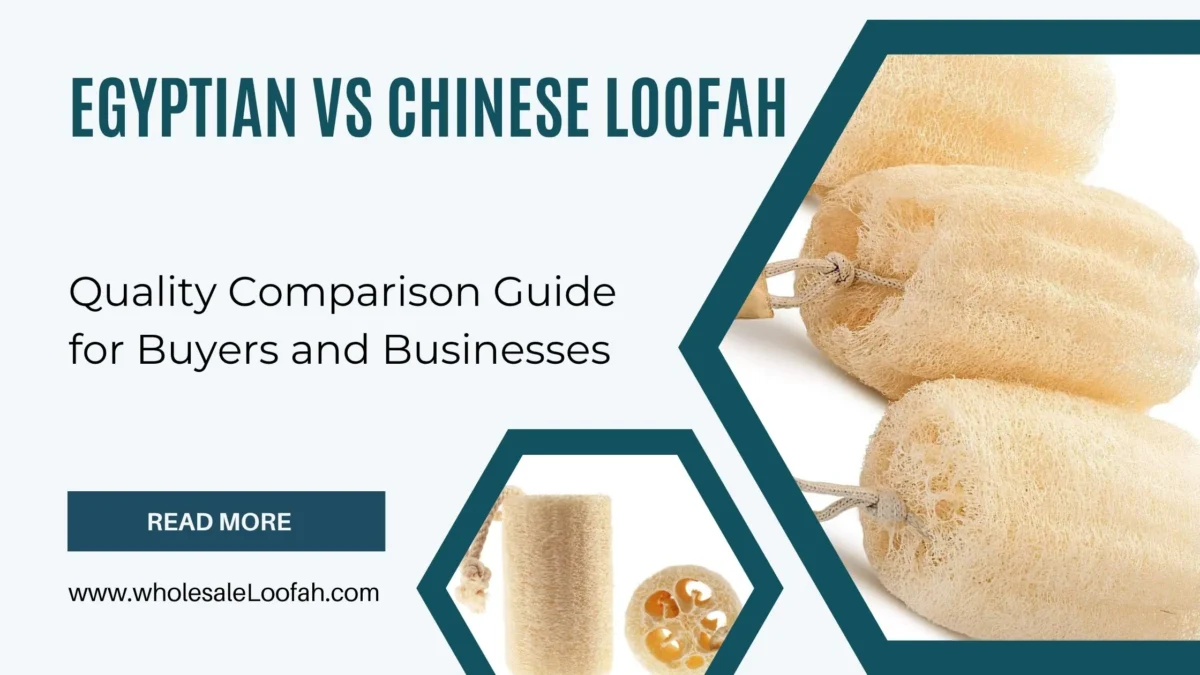
Egyptian loofah dominates the premium segment for documented reasons. The Nile Delta provides optimal growing conditions that produce measurably denser fiber structures. Established Egyptian suppliers like Egexo bring decades of cultivation expertise to international wholesale markets. Recognizing origin quality differences helps buyers navigate supplier options effectively.
This guide delivers the comprehensive information wholesale buyers need. Sourcing strategies, quality evaluation frameworks, margin calculations, and import logistics receive detailed treatment. Whether expanding existing natural product lines or entering the category for the first time, buyers gain practical knowledge applicable to immediate purchasing decisions.
Market Analysis for Wholesale Decision Making
Sound wholesale purchasing begins with understanding market dynamics. Demand patterns, competitive positioning, and consumer behavior data inform inventory decisions and supplier negotiations.
Demand Growth Drivers
Multiple converging factors sustain loofah dish sponge demand growth:
Microplastic Awareness: Consumer understanding of microplastic pollution has expanded dramatically through media coverage and educational campaigns. Research documenting thousands of plastic particles shed by synthetic sponges during each use resonates with environmentally conscious shoppers. Loofah offers a tangible solution that consumers actively seek.
Single-Use Plastic Reduction: Legislative action banning or restricting single-use plastics continues spreading across jurisdictions. While dish sponges rarely face direct regulation, the broader cultural shift away from disposable plastics benefits all reusable and biodegradable alternatives. Retailers report spillover purchasing behavior from customers seeking plastic-free households.
Natural Product Preference: Consumer preference for natural over synthetic extends across product categories. Kitchen products follow broader trends in personal care, cleaning supplies, and household goods. Customers who purchase natural soap, organic produce, and sustainable packaging demonstrate high receptivity to natural dish scrubbers.
This willingness enables healthy margins on quality loofah that cheaper synthetic alternatives cannot support.
Competitive Landscape Assessment
| Retail Channel | Current Penetration | Growth Potential | Margin Environment |
|---|---|---|---|
| Natural food stores | High | Moderate | Strong margins established |
| Mainstream grocery | Low to moderate | High | Building acceptance |
| Home goods retailers | Moderate | High | Premium positioning works |
| Online marketplaces | Moderate | Very high | Price competition varies |
| Eco-specialty shops | Very high | Moderate | Brand differentiation key |
| Dollar and discount | Very low | Limited | Quality concerns dominate |
The table reveals significant untapped opportunity in mainstream grocery and home goods channels where natural sponge penetration remains limited despite strong consumer interest. Online channels offer growth potential but require careful attention to product quality given the impact of reviews on sales velocity.
For detailed market positioning guidance, Egexo’s wholesale resources provide insights applicable across retail channels.
Understanding Loofah Quality Grading Systems
Quality grading determines both wholesale pricing and retail performance. Buyers unfamiliar with grading standards risk overpaying for inferior product or missing value opportunities on premium grades.
Industry Standard Grade Definitions
Professional loofah suppliers utilize consistent grading terminology that buyers should understand:
Grade A Premium: The highest classification representing the top 15 to 20 percent of production. Grade A loofah exhibits uniform fiber density of 85 or more fibers per square centimeter, consistent natural coloring without blemishes, excellent structural integrity that withstands aggressive use, and optimal thickness of 1.5 inches or greater. This grade commands top wholesale pricing and supports premium retail positioning.
Grade B Standard: Representing approximately 40 to 50 percent of production, Grade B loofah meets quality standards for effective kitchen use while showing minor variations in density, color consistency, or thickness. Fiber counts typically range from 70 to 85 per square centimeter. Grade B offers excellent value for mid-market retail positioning and price-sensitive channels.
Grade C Economy: The remaining 30 to 40 percent of production falls into economy classification. Grade C loofah may have uneven density, minor structural imperfections, or color variations that affect appearance without compromising basic function. This grade suits price-focused retail channels where customers prioritize affordability over premium attributes.
Processing Rejects: Responsible suppliers remove products with significant defects, mold damage, or severe structural problems from commercial grading entirely. Buyers should verify that suppliers maintain reject removal processes rather than blending substandard product into lower grades.
Quality Verification Methods
| Assessment Factor | Grade A Indicators | Warning Signs |
|---|---|---|
| Fiber density | Tight, uniform matrix | Visible gaps, sparse areas |
| Color | Consistent cream to tan | Dark spots, bright white bleaching |
| Structural integrity | Firm, returns to shape | Brittle, crumbles with pressure |
| Thickness | 1.5 inches or greater | Thin spots, uneven profile |
| Aroma | Neutral, slightly earthy | Chemical, musty, or moldy |
| Surface texture | Even, consistent feel | Rough and smooth patches mixed |
| Weight | Dense, substantial | Lightweight relative to size |
Buyers should request samples across multiple grades before committing to volume purchases. Physical inspection reveals quality characteristics that photographs and descriptions cannot convey. Reputable suppliers welcome sample requests and provide representative products rather than cherry-picked specimens.
Comprehensive quality standards documentation helps buyers establish evaluation benchmarks appropriate for their market positioning.
Supplier Evaluation Framework for Wholesale Buyers
Selecting reliable suppliers ranks among the most consequential decisions wholesale buyers make. Poor supplier relationships result in inconsistent quality, fulfillment problems, and ultimately damaged retail performance. Systematic evaluation reduces risk while identifying partners capable of supporting long-term growth.
Essential Supplier Assessment Criteria
Production Capacity and Consistency: Suppliers must demonstrate ability to fulfill ongoing orders at consistent quality levels. Request documentation of annual production volumes, peak capacity, and quality control procedures. Suppliers should explain how they maintain consistency across harvest seasons and production batches.
Quality Control Infrastructure: Professional suppliers maintain systematic quality processes including trained grading personnel, documented standards, defect tracking, and customer feedback integration. Ask suppliers to describe their quality control workflow from harvest through packaging. Vague answers indicate informal processes likely to produce inconsistent results.
Export Experience and Documentation: International shipping requires familiarity with customs requirements, phytosanitary certificates, export documentation, and logistics coordination. Suppliers lacking export experience often create delays, documentation problems, and unexpected costs. Request references from buyers in your destination country.
Communication Responsiveness: Evaluate suppliers through the inquiry process itself. Professional wholesale suppliers respond promptly with accurate information, provide requested documentation without excessive delays, and demonstrate understanding of buyer needs. Communication problems during evaluation typically worsen after orders are placed.
Financial Stability: Established suppliers with multi-year operating history offer lower risk than new market entrants. Request business registration documentation and, where available, financial references. Suppliers should maintain inventory investment capability to fulfill orders without requiring advance payment for raw materials.
Supplier Comparison Matrix
| Evaluation Area | Weight | Questions to Ask |
|---|---|---|
| Quality consistency | 25% | How do you ensure batch-to-batch uniformity? |
| Production capacity | 20% | What is your maximum monthly fulfillment capability? |
| Export competence | 15% | Which documentation do you provide for customs clearance? |
| Communication | 15% | What is your typical response time for inquiries? |
| Pricing transparency | 10% | Are all costs included in quoted prices? |
| Flexibility | 10% | Can you accommodate custom specifications? |
| References | 5% | May I contact current wholesale customers? |
Experienced suppliers like Egexo provide transparent information across all evaluation areas. The farm to export process documentation demonstrates the production transparency wholesale buyers should expect from professional suppliers.
Pricing Structures and Margin Calculations
Understanding wholesale pricing dynamics enables realistic profit projections and informed supplier negotiations. Loofah dish sponge economics differ from synthetic alternatives in ways that affect margin calculations.
Wholesale Price Factors
Multiple variables influence wholesale pricing for loofah dish sponges:
Quality Grade: Premium Grade A product typically costs 40 to 60 percent more than Grade C economy product at wholesale. This price difference reflects genuine quality variation rather than arbitrary markup. Buyers should match grade selection to target market positioning rather than defaulting to lowest available price.
Order Volume: Quantity-based pricing tiers reward larger commitments. Standard volume breaks typically occur at 500, 1000, 2500, and 5000 unit thresholds, with discounts ranging from 5 to 25 percent depending on supplier pricing structure. Larger buyers gain significant per-unit cost advantages.
Processing and Packaging: Raw loofah costs less than processed and packaged product. Buyers with in-house packaging capabilities can reduce costs by purchasing unpackaged product. Those requiring retail-ready packaging pay premium for supplier handling.
Shipping and Import Costs: International shipping, customs duties, and import handling add costs that vary by destination country and shipping method. Buyers should calculate landed cost including all logistics expenses rather than comparing FOB prices alone.
Currency and Payment Terms: Exchange rate fluctuation affects USD-equivalent pricing for Egyptian suppliers. Payment terms ranging from advance payment to letter of credit options carry different risk profiles and sometimes different pricing.
Margin Analysis Framework
See our wholesale prices on egexo.com.
These margin ranges compare favorably to synthetic sponge alternatives, which typically generate 40 to 50 percent gross margins due to commoditized pricing pressure. Natural loofah supports premium positioning that synthetic products cannot achieve.
For current pricing specific to your volume requirements, request a detailed quotation including all applicable costs and volume options.
Product Selection for Different Retail Channels
Optimal product mix varies by retail channel, customer demographic, and competitive environment. Understanding channel-specific requirements guides purchasing decisions that maximize sell-through rates.
Channel-Specific Recommendations
Natural and Organic Food Stores: Customers in this channel demonstrate high environmental awareness and premium product acceptance. Grade A loofah with eco-focused packaging performs best. Emphasize unbleached, chemical-free processing and compostability messaging. Multi-pack options work well as customers often purchase for multiple household locations.
Mainstream Grocery: Price sensitivity increases in conventional grocery while sustainability interest remains strong. Grade B product offers optimal value balance. Clear usage instructions reduce customer confusion. Single-unit packaging at accessible price points encourages trial purchases.
Home Goods and Housewares: Visual presentation matters significantly in home goods retail. Grade A product with attractive packaging supports merchandising requirements. Bundle options with complementary products like dish brushes or soap bars increase basket size. Gift-oriented packaging works well for certain retailers.
Online Marketplaces: Customer reviews heavily influence online purchasing decisions, making quality consistency paramount. Grade A or strong Grade B product protects review ratings. Detailed product descriptions and high-quality images reduce return rates. Competitive pricing requires efficient fulfillment to maintain margins.
Eco-Specialty Boutiques: Brand story and sourcing transparency matter most in specialty channels. Premium Grade A product with documented origin and sustainability credentials commands highest prices. Small-batch or artisanal positioning differentiates from mass-market alternatives.
Product Configuration Options
| Configuration | Best Channels | Advantages | Considerations |
|---|---|---|---|
| Single sponge | Grocery, trial | Low entry price | Higher per-unit cost |
| Two-pack | Home goods, online | Value perception | Moderate commitment |
| Three-pack | Natural stores, online | Strong value | Storage visibility |
| Five-pack | Eco-specialty, bulk | Best per-unit price | Higher purchase barrier |
| Variety pack | Gift, specialty | Sampling opportunity | Inventory complexity |
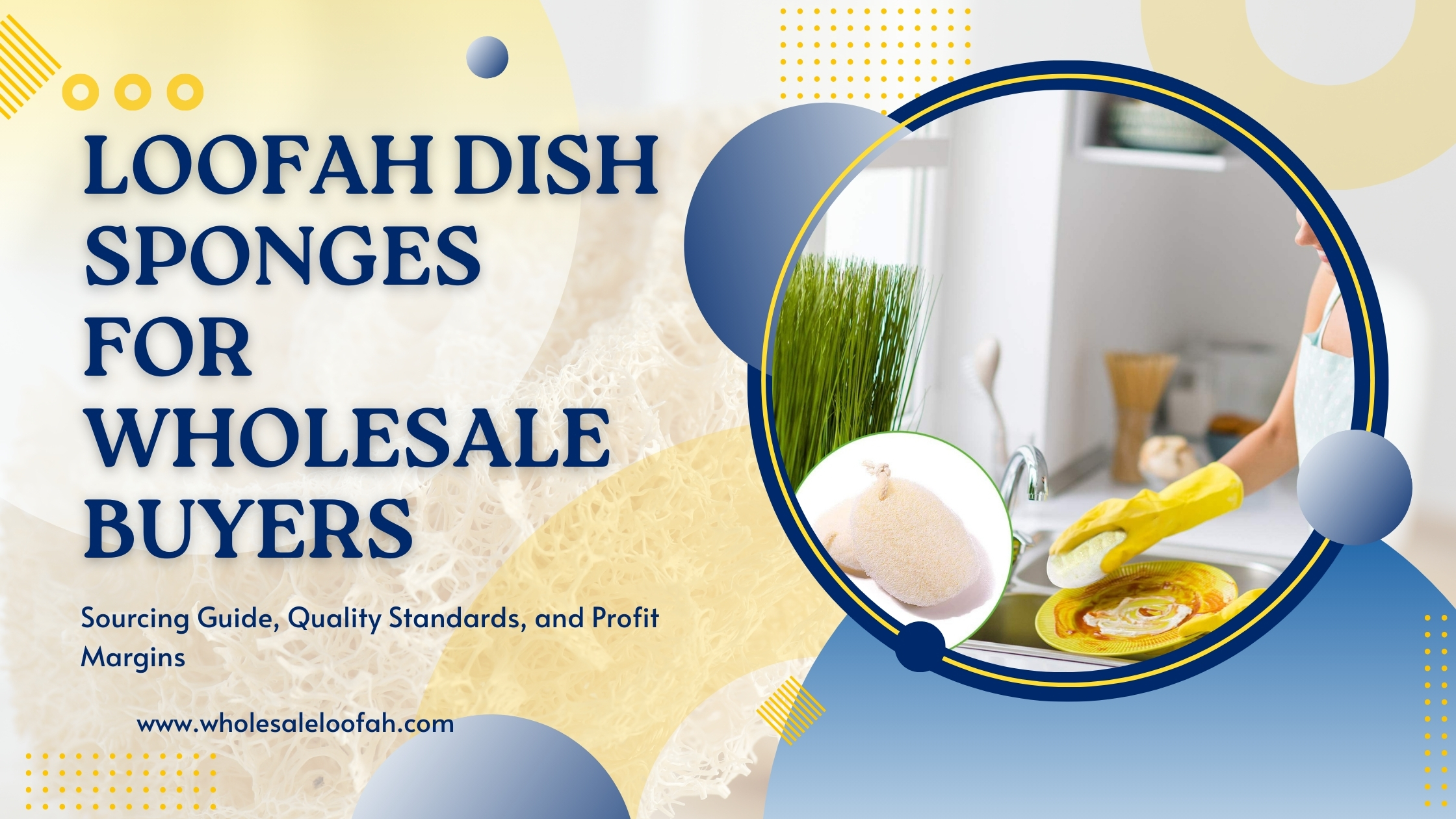
The kitchen loofah product category displays configuration options available through wholesale channels.
Import Logistics and Documentation Requirements
International sourcing requires navigation of shipping logistics, customs procedures, and documentation requirements. Understanding these processes prevents delays, unexpected costs, and compliance problems.
Standard Documentation Package
Professional Egyptian suppliers provide documentation packages supporting smooth customs clearance:
Commercial Invoice: Detailed description of goods, quantities, unit prices, total value, and transaction terms. Invoice accuracy directly impacts customs processing speed and duty calculation.
Packing List: Itemized breakdown of shipment contents including carton counts, individual unit quantities, weights, and dimensions. Customs agents use packing lists to verify shipment contents against invoices.
Certificate of Origin: Official documentation confirming Egyptian origin of goods. Required for preferential duty treatment under applicable trade agreements and for customs classification purposes.
Phytosanitary Certificate: Plant health documentation issued by Egyptian agricultural authorities confirming products are free from plant pests and diseases. Required for agricultural products entering most destination countries.
Bill of Lading or Airway Bill: Transportation documentation serving as receipt of goods, contract of carriage, and document of title. Original bills of lading typically required for ocean shipments.
Fumigation Certificate: Documentation of pest treatment where required by destination country regulations. Some countries require fumigation for plant-derived products regardless of pest inspection results.
Shipping Method Comparison
Full container load ocean freight offers best economics for established wholesale programs. Less than container load consolidation works for buyers not yet purchasing full container quantities. Air freight makes sense for initial orders where speed to market justifies premium cost.
Experienced suppliers guide buyers through documentation and logistics requirements. The Egexo export process demonstrates comprehensive export handling that reduces buyer administrative burden.
Private Label and Custom Product Development
Retailers seeking differentiated product offerings can develop exclusive loofah products through private label manufacturing. Custom programs enable brand building without agricultural or manufacturing investment.
Private Label Program Components
Custom Branding: Products carry retailer branding rather than supplier identification. Packaging design, logo placement, and brand messaging follow retailer specifications. This approach builds retail brand equity rather than promoting supplier brands.
Specification Control: Buyers define product specifications including size, shape, thickness, and grade requirements. Specifications can differentiate from commodity alternatives while maintaining cost efficiency. Suppliers manufacture to specification rather than offering only standard products.
Packaging Customization: Retail packaging follows buyer requirements for materials, dimensions, graphics, and sustainability attributes. Options range from simple label application to fully custom packaging development. Minimum order requirements typically increase with customization complexity.
Exclusive Arrangements: Some retailers negotiate exclusive product configurations or territory exclusivity. Exclusivity typically requires volume commitments and may affect pricing. Established supplier relationships support more favorable exclusivity terms.
Custom Development Process
| Phase | Duration | Activities | Buyer Requirements |
|---|---|---|---|
| Specification | 2 to 4 weeks | Define requirements, request quotation | Clear specification document |
| Sampling | 3 to 6 weeks | Produce samples, evaluate, refine | Sample approval process |
| Production | 4 to 8 weeks | Manufacture order quantity | Purchase order, payment terms |
| Shipping | 3 to 6 weeks | Export, transit, customs clearance | Import handling capability |
| Total | 12 to 24 weeks | Concept to inventory | Planning timeline awareness |
Detailed information about custom manufacturing options is available through private label loofah manufacturing services and custom product design capabilities.
Inventory Management and Reorder Planning
Effective inventory management balances stock availability against carrying costs and obsolescence risk. Loofah products have characteristics that influence optimal inventory strategies.
Product Shelf Life Considerations
Properly stored natural loofah maintains quality for 18 to 24 months from production. Storage requirements include dry conditions with humidity below 60 percent, protection from direct sunlight that can cause fiber degradation, adequate ventilation preventing moisture accumulation, and cool temperatures avoiding heat exposure above 85 degrees Fahrenheit.
Retailers should implement first-in-first-out inventory rotation to ensure oldest stock sells before newer arrivals. Date coding on cases facilitates rotation management. Products stored improperly may develop mold, become brittle, or lose structural integrity before reaching customers.
Reorder Point Calculation
| Factor | Measurement | Application |
|---|---|---|
| Average weekly sales | Units per week | Base demand rate |
| Lead time | Weeks from order to receipt | Replenishment duration |
| Safety stock | Weeks of buffer inventory | Demand variability protection |
| Reorder point | Sales rate multiplied by lead time plus safety | Trigger for new order |
For products with 12-week lead time from Egyptian suppliers, buyers typically maintain 4 to 6 weeks safety stock, creating reorder points at approximately 16 to 18 weeks of inventory. Faster-moving items may warrant higher safety stock percentages.
Suppliers with consistent production capacity enable reliable lead time planning. Sample requests help buyers evaluate supplier reliability before committing to inventory programs requiring predictable replenishment.
Building Long-Term Supplier Partnerships
Successful wholesale programs depend on supplier relationships that extend beyond transactional purchasing. Partnership approaches yield benefits including quality consistency, favorable pricing, supply priority, and collaborative problem solving.
Partnership Development Stages
Initial Evaluation: Sample orders and small volume purchases enable quality assessment and operational testing without major commitment. This phase typically spans two to four orders over three to six months.
Relationship Building: Regular orders, consistent communication, and mutual reliability establish working relationships. Suppliers recognize committed buyers with improved responsiveness and occasional flexibility. This phase continues through the first year of regular purchasing.
Strategic Partnership: Established relationships evolve toward collaboration on product development, market intelligence sharing, and preferential treatment during supply constraints. Partners receive early access to new products and priority fulfillment during high-demand periods.
Partnership Value Creation
| Partnership Benefit | How Achieved | Buyer Value |
|---|---|---|
| Price optimization | Volume commitment, relationship tenure | Improved margins |
| Quality priority | Consistent ordering, fair dealing | Best available product |
| Supply assurance | Partnership status, advance planning | Reliable inventory |
| Custom development | Collaborative relationship | Differentiated products |
| Market intelligence | Information sharing culture | Competitive advantage |
| Problem resolution | Established communication | Faster issue handling |
Professional suppliers value long-term partnerships and invest in buyer success. The Egexo supplier profile describes partnership approaches that benefit wholesale buyers seeking reliable supply relationships.
Frequently Asked Questions for Wholesale Buyers
Q1: What minimum order quantities should I expect for wholesale loofah dish sponges?
Minimum order quantities vary by supplier and product configuration. Established suppliers typically offer minimums ranging from 500 to 2000 units for standard products, with lower minimums sometimes available for sample or trial orders. Custom and private label products generally require higher minimums of 2500 to 5000 units to justify setup costs. Volume discounts become significant at quantities above 5000 units, with meaningful price breaks continuing through 10000 and 25000 unit thresholds.
Q2: How do I verify loofah quality before placing large wholesale orders?
Request samples from prospective suppliers before committing to volume purchases. Professional suppliers provide representative samples across available grades rather than cherry-picked specimens. Evaluate samples using standardized criteria including fiber density, structural integrity, color consistency, and aroma. If possible, test samples in actual kitchen use to assess real-world performance. Compare samples from multiple suppliers using consistent evaluation methodology to identify quality differences that may not appear obvious initially.
Q3: What documentation do I need to import loofah products from Egypt?
Standard import documentation includes commercial invoice, packing list, certificate of origin, phytosanitary certificate, and bill of lading or airway bill. Some destination countries require additional documentation such as fumigation certificates or import permits for plant-derived products. Work with a customs broker familiar with your country’s requirements to ensure documentation completeness. Professional Egyptian suppliers provide export documentation packages and can advise on destination country requirements based on their experience with similar shipments.
Q4: How long does shipping take from Egypt to North America or Europe?
Ocean freight from Egypt to North American or European ports typically requires 25 to 40 days transit time depending on specific origin and destination ports and shipping line schedules. Add 5 to 10 days for customs clearance and inland delivery to reach final destination. Total lead time from order placement to warehouse receipt commonly spans 8 to 12 weeks including production, documentation, and shipping. Air freight reduces transit to 5 to 10 days but significantly increases shipping cost per unit.
Q5: What profit margins can I expect selling loofah dish sponges at retail?
Gross margins for loofah dish sponges typically range from 50 to 70 percent depending on grade, retail channel, and market positioning. Premium Grade A product positioned in eco-specialty channels supports margins at the upper end of this range. Economy grade product in price-sensitive channels generates margins at the lower end. These margins compare favorably to synthetic sponge alternatives which face commoditized pricing pressure limiting margins to 40 to 50 percent.
Q6: Can I develop private label loofah products with my own branding?
Yes, established suppliers offer private label manufacturing programs enabling custom branded products. Private label options include custom packaging with retailer branding, product specifications tailored to market positioning, and exclusive configurations unavailable to competitors. Minimum orders for private label typically exceed standard product minimums due to custom packaging and setup requirements. Lead times for custom programs run 12 to 24 weeks from specification to delivered inventory.
Q7: How do I get started evaluating Egexo as a potential loofah supplier?
Begin by requesting product samples to evaluate quality firsthand. Submit inquiries through the sample request form specifying products of interest and intended retail application. Review the product catalog to understand available configurations and specifications. Request pricing quotations through the wholesale inquiry portal including volume requirements and destination country for accurate landed cost estimation.
Expert Perspective from EGEXO
Wholesale buyers frequently focus initial supplier discussions on price, which is understandable given margin pressures across retail channels. EGEXO has been exporting Egyptian loofah since 2015. Low-priced loofah from unestablished suppliers often creates hidden costs including quality inspection failures requiring return shipping, customer complaints generating support costs and refund expenses, damaged brand reputation reducing future sales velocity, and inconsistent supply creating stockout situations that lose customers permanently. Premium Egyptian loofah costs more per unit but eliminates these downstream costs while building the customer loyalty that drives sustainable retail profitability. Sophisticated wholesale buyers evaluate supplier relationships based on total program economics rather than isolated unit pricing. We encourage prospective partners to calculate all costs including quality assurance, logistics reliability, and brand impact when comparing supplier options.
To discuss your order, request a quote from EGEXO.
Conclusion
The wholesale loofah dish sponge market presents genuine opportunity for retailers positioned to serve growing consumer demand for sustainable kitchen products.
Quality variation remains the central challenge for wholesale buyers. The difference between premium Egyptian loofah and poorly processed alternatives determines retail performance, customer satisfaction, and program profitability. Investing time in supplier evaluation and sample testing pays dividends throughout the wholesale relationship.
Partnership approaches to supplier relationships yield benefits beyond transactional purchasing. Consistent ordering, fair dealing, and collaborative communication create value for both parties while improving quality consistency, supply reliability, and problem resolution.
Key Takeaways for Wholesale Buyers:
- Natural sponge market growing at 9.2 percent annually with loofah dish sponges leading segment growth
- Quality grading significantly impacts both wholesale cost and retail performance across all channels
- Egyptian origin loofah demonstrates measurably superior fiber density and product longevity
- Gross margins of 50 to 70 percent exceed synthetic sponge alternatives facing commoditized pricing
- Private label programs enable differentiated products building retail brand equity
- Lead times of 8 to 12 weeks require advance planning for inventory management
Ready to explore wholesale loofah purchasing?
- Evaluate Quality: Request product samples for hands-on assessment
- Review Options: Download the complete product catalog
- Get Pricing: Submit a quotation request with your volume requirements
- Browse Products: Visit the products page for available inventory