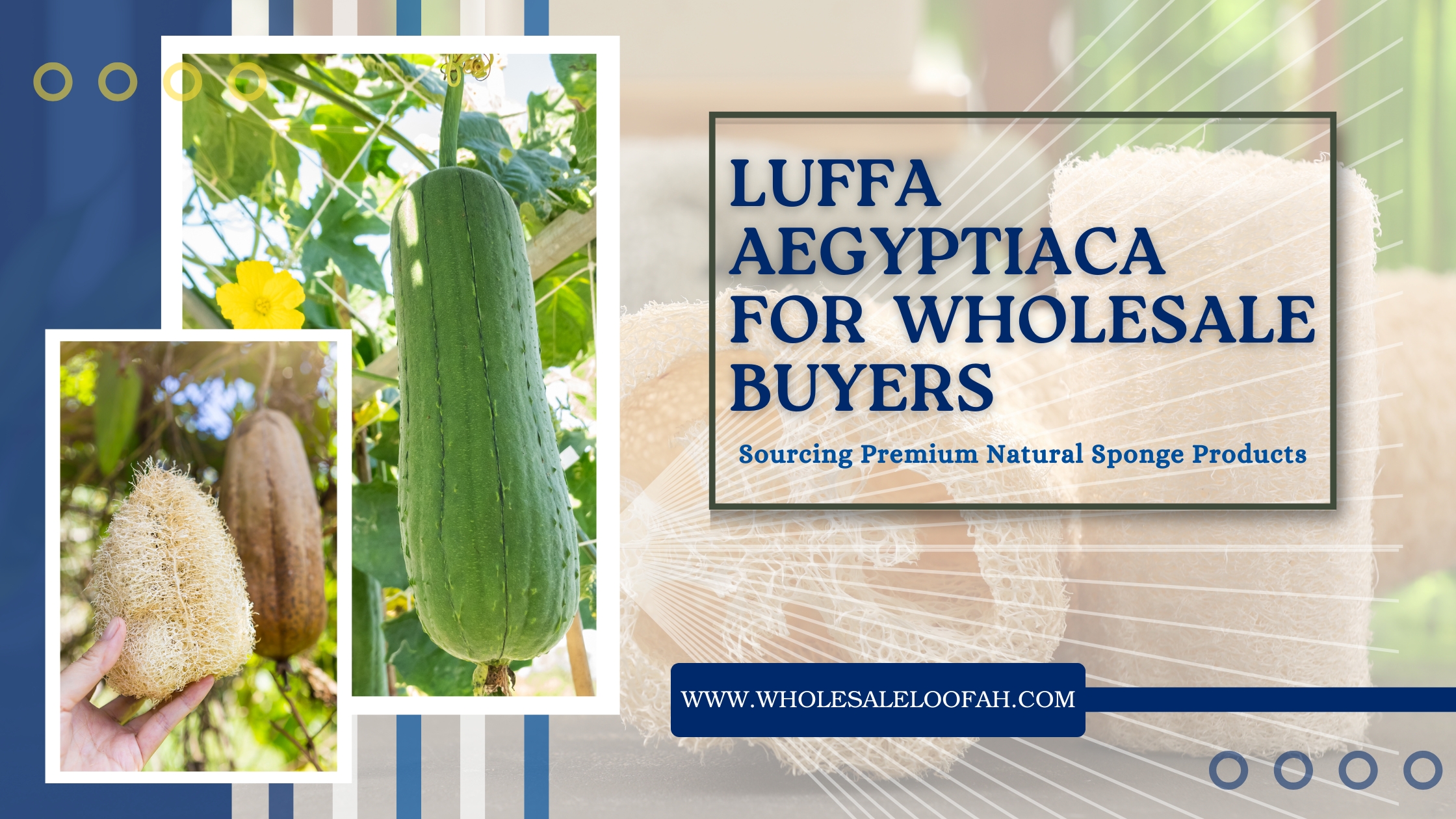
The global natural sponge market has experienced remarkable growth as retailers, spa operators, and distributors seek sustainable alternatives to synthetic bath products. At the center of this expanding market sits Luffa aegyptiaca, the botanical source of loofah sponges that wholesale buyers increasingly recognize as essential inventory for environmentally conscious consumers. Understanding the cultivation, processing, and quality standards of this versatile plant positions buyers to make informed sourcing decisions that impact both profitability and customer satisfaction.
Wholesale purchasing of Luffa aegyptiaca products requires knowledge beyond basic product familiarity. Successful buyers evaluate fiber density, processing methods, supplier reliability, and origin-specific quality variations that directly affect retail performance. Egyptian loofah has established dominance in premium market segments due to superior growing conditions and generations of cultivation expertise in the Nile Delta region. Buyers who understand these distinctions secure products that command higher margins and generate repeat customer purchases.
This comprehensive wholesale guide examines Luffa aegyptiaca from seed to shipment, providing the technical specifications, quality assessment frameworks, and supplier evaluation criteria that professional buyers require. Whether you operate a spa seeking consistent exfoliation products, a retailer building eco-friendly inventory, or a distributor expanding natural product offerings, this resource delivers actionable intelligence for optimizing your loofah sourcing strategy.
EGEXO has been exporting Egyptian loofah since 2015. Established suppliers like Egexo have developed quality standards and business processes specifically designed for wholesale buyer requirements, from sample evaluation through bulk shipment logistics.
Understanding Luffa aegyptiaca as a Commercial Crop
Commercial Luffa aegyptiaca cultivation represents a specialized agricultural sector concentrated in tropical and subtropical regions with ideal growing conditions. The plant belongs to the Cucurbitaceae family and requires 150 to 200 days of warm temperatures to produce harvestable gourds with fully developed fiber networks. These extended growing requirements limit commercial production to specific geographic zones where climate supports consistent quality output.
Egypt has emerged as the premier source for wholesale-grade natural sponge products due to unique advantages in the Nile Delta growing region. Mineral-rich alluvial soil deposited over millennia provides optimal nutrition for fiber development. Consistent warm temperatures averaging 28 to 32 degrees Celsius during the growing season promote dense fiber formation. Perhaps most significantly, Egyptian farming families have refined cultivation techniques across generations, developing proprietary knowledge about harvest timing, processing methods, and quality optimization.
Agricultural Production Cycle and Harvest Timing
Professional buyers benefit from understanding the production cycle that determines product availability and quality. Luffa aegyptiaca follows a predictable agricultural calendar that influences ordering timelines and inventory planning for wholesale operations.
| Production Phase | Timing | Wholesale Implications |
|---|---|---|
| Planting Season | March to April | Determines harvest availability |
| Vegetative Growth | April to June | Farm capacity commitments established |
| Flowering Period | June to July | Crop yield estimates available |
| Fruit Development | July to September | Quality projections possible |
| Harvest Window | September to November | Peak ordering period for fresh stock |
| Processing Period | October to December | Product grading and inventory building |
| Export Season | Year-round | Continuous availability from processed inventory |
Harvest timing critically affects fiber quality in the finished natural sponge. Farmers monitor gourds for specific maturation indicators including skin color changes, weight reduction as internal moisture decreases, and sound changes when tapped. Harvesting at optimal maturity produces the dense, resilient fiber networks that wholesale buyers require for premium product lines.
The farm to export process involves multiple quality checkpoints from field selection through final packaging. Understanding this journey helps buyers evaluate supplier claims and identify partners committed to genuine quality control rather than superficial sorting before shipment.
Processing Methods and Quality Impact
Post-harvest processing significantly influences the final product quality that reaches wholesale buyers. Traditional methods refined over generations produce superior results compared to accelerated industrial approaches that sacrifice fiber integrity for processing speed.
Proper processing begins with controlled drying of harvested gourds. Rushing this phase through artificial heat application damages fiber structure and reduces product lifespan. Egyptian processors typically allow 7 to 14 days of natural sun drying, turning gourds regularly to ensure even moisture removal without fiber degradation.
Skin removal follows drying, with traditional water soaking methods producing cleaner results than mechanical peeling. The fibrous interior must be thoroughly cleaned of seeds and residual plant material without damaging the delicate fiber network. Final washing and secondary drying complete the basic processing before grading begins.
Premium suppliers implement additional quality enhancement steps including fiber conditioning treatments, selective bleaching for color consistency, and precision cutting for standardized product dimensions. These value-added processes justify premium pricing while delivering products that meet stringent retail and spa requirements.
Quality Grading Systems for Wholesale Buyers
Standardized quality grading enables wholesale buyers to specify requirements accurately and evaluate supplier offerings objectively.
Fiber Density and Structure Assessment
Fiber density represents the primary quality determinant for Luffa aegyptiaca products. Dense fiber networks provide superior exfoliation performance, greater durability, and longer product lifespan. Buyers can assess density through visual inspection and physical handling of samples before committing to bulk orders.
| Grade | Fiber Density | Visual Characteristics | Typical Applications |
|---|---|---|---|
| Premium A | Very dense, tight network | No visible gaps, uniform cream color | Luxury spas, premium retail |
| Premium B | Dense with minor variation | Minimal gaps, consistent coloring | Mid-range spas, quality retail |
| Standard A | Moderate density | Occasional thin spots, slight color variation | Value retail, hospitality |
| Standard B | Acceptable density | Visible gaps present, moderate variation | Economy retail, promotional |
| Economy | Sparse fiber development | Significant gaps, inconsistent quality | Bulk promotional, industrial |
The quality standards maintained by professional suppliers provide detailed specifications for each grade level. Requesting grade-specific samples before bulk ordering protects buyers from quality discrepancies between sales representations and actual shipments.
Size and Dimension Standards
Wholesale buyers require consistent sizing for inventory management, pricing structures, and retail display planning. Professional suppliers offer standardized size categories that simplify ordering while accommodating diverse market requirements.
| Size Category | Length Range | Diameter Range | Primary Markets |
|---|---|---|---|
| Extra Large | 35 to 45 cm | 10 to 12 cm | Spa body treatments |
| Large | 25 to 35 cm | 8 to 10 cm | Premium bath retail |
| Medium | 15 to 25 cm | 6 to 8 cm | Standard bath retail |
| Small | 10 to 15 cm | 4 to 6 cm | Facial, travel size |
| Slices | 2 to 5 cm thick | Various diameters | Soap embedding, craft |
Beyond whole natural sponge products, suppliers offer processed formats including cut pieces, shaped products, and specialty items. The body loofah category demonstrates product variety available for bath and personal care applications, while kitchen loofah products address household cleaning market segments.
Quality Certification and Documentation
Professional wholesale relationships require documentation supporting quality claims and enabling regulatory compliance in destination markets. Established suppliers provide certificates of origin, phytosanitary documentation, and quality inspection reports with bulk shipments.
Buyers importing natural sponge products should verify supplier capacity to provide documentation including certificates of origin for customs processing, phytosanitary certificates confirming pest-free status, quality grade certificates specifying product classification, and material safety data sheets for retail compliance. These documents protect buyers from customs delays and support marketing claims about product origin and quality.
Supplier Evaluation Framework for Wholesale Purchasing
Selecting reliable Luffa aegyptiaca suppliers requires systematic evaluation beyond initial pricing comparisons. Long-term wholesale relationships depend on consistent quality, reliable delivery, and responsive communication that only established suppliers provide.
Critical Evaluation Criteria
| Evaluation Factor | Key Questions | Red Flags |
|---|---|---|
| Production Capacity | Annual output volume and peak season capability | Vague capacity claims, no farm verification |
| Quality Control | Inspection processes and rejection rates | No documented QC procedures |
| Export Experience | Years in business and market coverage | Limited shipping history, no references |
| Communication | Response time and language capability | Delayed responses, unclear information |
| Customization | Private label and custom product capability | Rigid product offerings only |
| Documentation | Certificate provision and compliance support | Missing or incomplete paperwork |
| Sample Process | Sample availability and shipping | No samples or excessive sample fees |
Requesting samples before bulk commitment remains essential for quality verification. Reputable suppliers offer sample ordering processes that enable buyers to physically evaluate products before significant purchasing decisions. Sample quality should match or exceed bulk shipment quality from professional operations.
Supplier Capability Assessment
Beyond product quality, wholesale buyers must evaluate supplier capabilities that affect ongoing business relationships. Production capacity determines whether suppliers can fulfill growing order volumes as buyer businesses expand. Export experience indicates familiarity with international shipping logistics, documentation requirements, and customs procedures.
Communication quality often predicts overall relationship satisfaction. Suppliers responding promptly to inquiries with clear, detailed information typically maintain similar standards throughout business relationships. Language barriers, timezone challenges, and communication delays create ongoing friction that affects order accuracy and problem resolution.
The consultation and quotation process reveals supplier professionalism through response quality, pricing transparency, and willingness to address buyer-specific requirements. Professional suppliers provide detailed quotations specifying product grades, quantities, pricing tiers, payment terms, and shipping arrangements.
Business Opportunities in Natural Sponge Markets
The Luffa aegyptiaca wholesale market presents significant opportunities for buyers positioned to serve growing consumer demand for sustainable products. Market analysis reveals expanding segments across retail, hospitality, and specialty channels that reward quality-focused sourcing strategies.
Market Segment Analysis
Consumer preferences increasingly favor natural, biodegradable alternatives to plastic bath products. This shift creates demand across multiple market channels, each with distinct requirements and margin potential.
The pet and spa grooming category represents an emerging segment with limited competition and growing consumer interest. Early market entrants establishing quality product lines capture customer loyalty before market saturation occurs.
Private Label and Custom Product Opportunities
Differentiation through private labeling and custom products creates competitive advantages unavailable through generic product sourcing. Established suppliers offer private label manufacturing services that enable buyers to build branded product lines without manufacturing investment.
Private label programs typically include custom packaging design and production, brand-specific labeling and inserts, exclusive product configurations, and minimum order quantities accessible for growing businesses. These services transform commodity natural sponge products into branded offerings commanding premium pricing and building customer loyalty.
Beyond packaging customization, custom product design services enable buyers to develop unique products for specific market applications. Custom shapes, sizes, and product combinations differentiate offerings in crowded marketplaces while addressing unmet customer needs identified through market research.
Margin Optimization Strategies
Wholesale buyers maximize profitability through strategic sourcing decisions that balance quality requirements against cost considerations. Understanding the factors affecting landed cost enables informed supplier selection and negotiation.
Volume commitments typically unlock preferential pricing tiers that significantly impact margins. Suppliers offer graduated pricing based on order quantities, with meaningful discounts at established thresholds. Consolidating purchases with fewer suppliers rather than fragmenting orders across multiple sources often achieves better pricing while simplifying logistics.
Shipping method selection affects both cost and product condition. Ocean freight provides the lowest per-unit cost for large orders but extends delivery timelines. Air freight accelerates delivery at premium cost, appropriate for urgent replenishment or small orders. Understanding seasonal shipping rate variations and booking early during peak seasons controls logistics costs.
Quality grade selection should align with market positioning rather than defaulting to lowest available pricing. Premium grades commanding higher acquisition costs often deliver superior margins through increased retail pricing acceptance and reduced customer returns. Economy grades appropriate for promotional applications may erode brand perception if used for standard product lines.
Import Considerations and Logistics Planning
International sourcing of Luffa aegyptiaca products requires attention to import regulations, documentation requirements, and logistics planning that domestic purchasing avoids. Successful wholesale importers develop systems for managing these complexities efficiently.
Documentation and Compliance Requirements
Natural plant products face regulatory scrutiny in most importing countries. Phytosanitary certification confirms products are free from pests and diseases that could threaten domestic agriculture. Origin documentation supports customs classification and may be required for preferential duty treatment under trade agreements.
Wholesale buyers should establish clear documentation expectations with suppliers before ordering. Required documents typically include commercial invoice with accurate product descriptions and values, packing list detailing carton contents and weights, certificate of origin issued by exporting country authorities, phytosanitary certificate from agricultural inspection services, and bill of lading or airway bill for shipment tracking.
The comprehensive product catalog provides detailed product specifications supporting accurate customs declarations and compliance documentation.
Logistics and Shipping Considerations
| Shipping Factor | Ocean Freight | Air Freight |
|---|---|---|
| Transit Time | 25 to 45 days | 3 to 7 days |
| Cost per Unit | Lowest | Highest |
| Minimum Viable Order | 1 to 2 pallets | Any quantity |
| Best For | Large regular orders | Urgent replenishment, samples |
| Risk Factors | Extended transit, port delays | Cost sensitivity |
| Storage Requirements | Dry container, moisture protection | Standard packaging |
Moisture protection during ocean transit requires attention to packaging specifications. Luffa aegyptiaca products must remain dry to prevent mold development during extended shipping periods. Professional suppliers use appropriate moisture barrier packaging and desiccants for ocean shipments.
Inventory planning must account for extended lead times in international sourcing. Order cycles including production scheduling, quality inspection, documentation preparation, ocean transit, customs clearance, and domestic distribution typically span 60 to 90 days. Maintaining safety stock buffers protects against supply chain disruptions while avoiding costly air freight for routine replenishment.
Building Long-Term Supplier Partnerships
Transactional purchasing approaches limit the benefits available through strategic supplier relationships. Buyers committing to ongoing partnerships access advantages including priority production allocation, customization flexibility, market intelligence, and collaborative problem solving.
Partnership Development Stages
Initial engagement should focus on quality verification and capability assessment rather than immediate large-scale commitment. Order progression from samples through trial orders to regular purchasing allows relationship building while managing risk.
| Relationship Stage | Typical Duration | Key Activities |
|---|---|---|
| Evaluation | 1 to 3 months | Sample review, supplier research |
| Trial | 3 to 6 months | Small orders, quality monitoring |
| Establishment | 6 to 12 months | Regular ordering, process refinement |
| Partnership | Ongoing | Strategic collaboration, exclusive arrangements |
Professional suppliers value reliable buyers who provide consistent order volumes and clear communication. Demonstrating partnership potential through professional conduct, timely payments, and growth trajectory encourages suppliers to prioritize your requirements and invest in relationship development.
Communication Best Practices
Effective supplier communication prevents problems and accelerates resolution when issues arise. Establishing clear communication channels and expectations during relationship initiation sets appropriate standards.
Specify preferred communication methods and expected response times during initial discussions. Confirm understanding of order confirmation processes, shipping notification procedures, and quality concern escalation paths. Document agreed processes to prevent misunderstandings during subsequent transactions.
Providing advance notice of significant order changes, seasonal volume variations, or new product requirements enables suppliers to plan production accordingly. Sudden large orders or specification changes strain supplier relationships and may result in quality compromises or delivery delays.
The direct contact options with established suppliers facilitate communication during initial evaluation and ongoing business relationships. Contact info@egexo.com.
FAQ Section
Q1: What minimum order quantities should wholesale buyers expect for Luffa aegyptiaca products?
A: Minimum order quantities vary by supplier and product type but typically range from 500 to 2000 pieces for standard products. Premium grades and custom specifications may require higher minimums to justify production setup. Established suppliers often offer lower MOQs for initial trial orders, increasing requirements for ongoing purchasing. Discussing MOQ flexibility during supplier evaluation helps identify partners aligned with your business scale.
Q2: How do wholesale buyers verify natural sponge quality before committing to bulk orders?
A: Quality verification begins with sample evaluation before any bulk commitment. Request samples across the grade range you intend to purchase and assess fiber density, color consistency, structural integrity, and odor. Compare samples against supplier grade specifications and your market requirements. Professional suppliers provide samples representing actual production quality rather than specially selected pieces. Ongoing quality monitoring through inspection of each shipment maintains standards throughout the business relationship.
Q3: What factors most significantly affect Luffa aegyptiaca wholesale pricing?
A: Quality grade represents the primary pricing determinant, with premium grades commanding significantly higher prices than economy classifications. Order volume affects per-unit pricing through tiered discount structures. Product format impacts cost as processed items like cut pieces and shaped products carry premiums over whole natural sponges. Shipping method selection between ocean and air freight substantially affects landed cost. Seasonal availability and currency fluctuations create additional pricing variability.
Q4: How long does international shipping take for wholesale loofah orders from Egypt?
A: Ocean freight shipping from Egypt to North American ports typically requires 25 to 35 days transit time, while European destinations average 15 to 25 days. Asian markets require 20 to 30 days depending on specific port. These transit times exclude documentation preparation, customs clearance, and domestic distribution. Total order cycle from placement to warehouse delivery commonly spans 60 to 90 days. Air freight reduces transit to 3 to 7 days at significantly higher cost.
Q5: What documentation do wholesale importers need for customs clearance of natural sponge products?
A: Essential documentation includes commercial invoice, packing list, certificate of origin, phytosanitary certificate, and bill of lading or airway bill. Established suppliers familiar with destination market requirements provide appropriate documentation with shipments. Consulting customs brokers in your country confirms specific requirements before ordering.
Q6: Can wholesale buyers request private label packaging for Luffa aegyptiaca products?
A: Yes, established suppliers offer private label services including custom packaging, branded labeling, and product inserts. Private label programs typically require higher minimum orders than standard products to justify packaging production costs. Lead times extend for initial orders requiring packaging development. Buyers provide artwork and specifications while suppliers manage production. Private label programs enable brand building and competitive differentiation in retail markets.
Q7: How should wholesale buyers evaluate different quality grades for their market positioning?
A: Grade selection should align with target customer expectations and pricing strategy rather than defaulting to lowest acquisition cost. Premium spa and wellness markets require top grades that justify premium retail pricing. Value-oriented retail channels may achieve better margins with standard grades priced accessibly. Request samples across grades to assess quality differences relative to price variations. Customer feedback on trial orders provides market validation before committing to grade selections for ongoing inventory.
Q8: What are the primary risks in international Luffa aegyptiaca sourcing and how are they mitigated?
A: Key risks include quality inconsistency, shipping delays, documentation problems, and supplier reliability issues. Quality risk mitigation requires sample verification, clear specifications, and ongoing inspection. Shipping risks decrease through adequate lead time planning, safety stock maintenance, and reliable logistics partners. Documentation risks reduce by working with experienced exporters familiar with destination requirements. Supplier reliability assessment through references, facility verification, and graduated order commitment protects against partner failures.
Expert Insight from EGEXO
Success in wholesale Luffa aegyptiaca sourcing depends on viewing supplier relationships as strategic partnerships rather than transactional commodity purchasing. The most profitable wholesale operations invest time in supplier evaluation, establish clear quality expectations, and build relationships that survive occasional challenges.
Quality consistency matters more than lowest pricing for sustainable business growth. Buyers chasing minimal acquisition costs frequently experience quality problems, customer complaints, and brand damage that erase initial savings. Paying appropriate premiums for verified quality from established suppliers protects margins through reduced returns and builds customer loyalty that increases lifetime value.
Egyptian loofah maintains quality leadership in global markets due to agricultural advantages that competing regions cannot replicate. The Nile Delta growing conditions and generational expertise produce fiber density and consistency that justify origin-specific sourcing strategies. Buyers establishing relationships with professional Egyptian exporters access quality levels supporting premium market positioning and sustainable competitive advantage.
To discuss your order, request a quote from EGEXO.
Conclusion
Wholesale sourcing of Luffa aegyptiaca natural sponge products presents significant opportunity for buyers prepared to develop supplier relationships and quality management systems supporting growing market demand. Understanding the agricultural production cycle, quality grading frameworks, and import logistics enables informed decisions that optimize both product quality and business profitability.
The natural sponge market continues expanding as consumer preference shifts toward sustainable alternatives accelerate. Wholesale buyers establishing reliable supply chains and quality-focused product offerings capture market share while building competitive positions that later entrants struggle to challenge. Egyptian loofah provides the quality foundation for premium market positioning across spa, retail, and specialty channels.
Key Takeaways:
- Quality grade selection should align with market positioning rather than defaulting to lowest pricing
- Sample verification before bulk commitment protects against quality discrepancies
- International shipping lead times require 60 to 90 day inventory planning cycles
- Private label and custom product services enable competitive differentiation
- Supplier relationships built on partnership principles outperform transactional purchasing approaches
Ready to explore wholesale Luffa aegyptiaca sourcing opportunities?
- For Wholesale Buyers: Request a detailed quotation or download the complete product catalog
- For Quality Evaluation: Order samples to assess product quality before bulk commitment