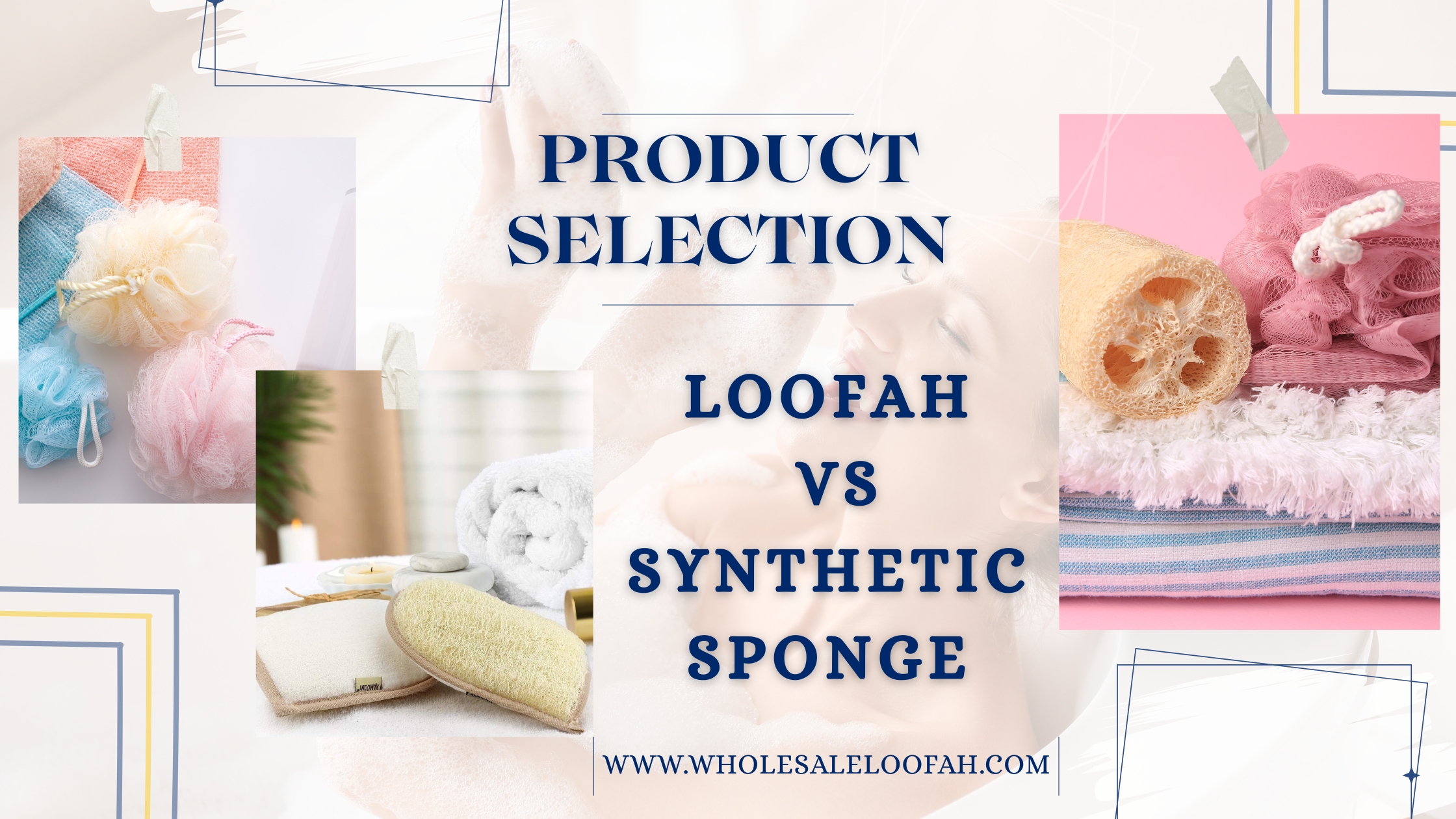
Wholesale buyers face decisions that ripple through entire business operations. The choice between stocking natural loofah versus synthetic sponge affects inventory turnover, profit margins, customer satisfaction rates, and brand positioning. Understanding which product cleans better matters because informed customers increasingly research before purchasing, and retailers stocking inferior options lose sales to competitors who understand market dynamics.
Synthetic sponge sales remain flat or declining in developed markets while natural alternatives capture expanding market share. Wholesale buyers aligning inventory with these trends position their businesses for sustained growth rather than fighting declining demand curves.
This guide delivers actionable intelligence for wholesale purchasing decisions. Retailers evaluating product line additions will find margin analysis and demand projections. Distributors assessing supplier relationships will discover quality benchmarks and partnership criteria. Spa and hospitality operators planning procurement will understand total cost of ownership beyond unit pricing.
Egyptian loofah represents the premium tier within natural alternatives, offering quality characteristics that command price premiums while delivering customer satisfaction that drives repeat purchasing. Understanding why Egyptian origin matters helps wholesale buyers differentiate their offerings in competitive markets.
The comparison framework ahead enables confident decision-making backed by market data rather than speculation. Whether expanding existing natural product lines or entering this category for the first time, the information provided supports strategic inventory investment.
Market Analysis: Consumer Demand Trajectories
Successful wholesale purchasing requires understanding where markets are heading rather than where they have been. Current demand data combined with trend analysis reveals clear direction favoring natural alternatives.
Consumer Preference Research Findings
Market research firms tracking personal care purchasing behavior report consistent findings across methodologies. This percentage increases to 78 percent among consumers under age 40 and reaches 84 percent among consumers identifying as environmentally conscious.
Purchase behavior data confirms stated preferences translate to actual buying decisions. Retailers offering both natural loofah and synthetic sponge options report natural products outselling synthetics by ratios ranging from 1.8:1 to 3.2:1 depending on price positioning and merchandising approach. Premium positioning with educational signage achieves ratios at the higher end of this range.
Customer retention metrics favor natural products significantly. Repeat purchase rates for natural loofah average 71 percent compared to 43 percent for synthetic sponge among tracked retail cohorts. Higher retention reduces customer acquisition costs and improves lifetime value calculations that sophisticated retailers monitor.
Category Growth Projections
Natural loofah participates directly in this growth as a foundational product category.
Synthetic sponge demand shows flat to negative growth trajectories in mature markets. Price competition intensifies as commodity manufacturers pursue volume strategies despite stagnant demand. Margin compression affects the entire synthetic supply chain from manufacturer through retailer.
Geographic expansion offers growth opportunities for natural products as developing markets adopt sustainable consumption patterns. Retailers establishing natural product expertise now position themselves to capture international opportunities as they emerge.
Demand Comparison Summary
These indicators collectively support strategic inventory allocation favoring natural loofah over synthetic alternatives for retailers pursuing growth rather than managing decline.
Product Performance Comparison for Retail Context
Understanding which product cleans better serves wholesale buyers because customer satisfaction drives the retention metrics that determine long-term profitability. Products that disappoint generate returns, negative reviews, and lost future sales.
Cleaning Effectiveness Research
Independent testing comparing natural loofah versus synthetic sponge cleaning performance yields consistent results favoring natural alternatives. Dead skin cell removal rates measured under controlled conditions show natural loofah achieving 28 to 41 percent superior results compared to synthetic foam sponges.
The performance gap reflects fundamental structural differences. Natural loofah fiber networks create thousands of contact points at varying angles, mechanically engaging debris that smoother synthetic surfaces simply glide over. This multi-directional action delivers noticeable cleaning improvement that customers perceive during use.
Customer satisfaction surveys correlate with laboratory findings. Blind testing where participants used both product types without visual identification showed 73 percent preference for natural loofah texture and cleaning sensation. This preference translates directly to the purchase behavior data showing natural products outselling synthetics when both are available.
Durability and Replacement Cycle Impact
Product lifespan affects customer perception of value regardless of unit price. Natural loofah maintains functional performance for four to six weeks under typical use patterns. Synthetic sponge degrades noticeably within two to three weeks, requiring more frequent replacement.
Extended natural loofah lifespan creates perceived value that supports premium pricing. Customers calculating cost per use recognize the economic advantage even when unit prices exceed synthetic alternatives. This value perception reduces price resistance during purchasing decisions.
Replacement cycle differences affect inventory planning for retailers. Natural loofah customers return less frequently for repurchase but demonstrate higher loyalty when they do return. Synthetic sponge customers require more frequent repurchase but show lower brand loyalty and higher price sensitivity.
Performance Metrics for Wholesale Decision-Making
| Performance Factor | Natural Loofah | Synthetic Sponge | Retail Implication |
|---|---|---|---|
| Cleaning Effectiveness | 28-41 percent superior | Baseline standard | Higher customer satisfaction |
| Functional Lifespan | 4-6 weeks | 2-3 weeks | Better perceived value |
| Customer Preference Rate | 73 percent in blind testing | 27 percent | Natural products outsell |
| Return/Complaint Rate | 2.3 percent average | 6.8 percent average | Lower service costs |
| Review Sentiment | 4.4 average star rating | 3.7 average star rating | Better online reputation |
These performance differences translate directly to business outcomes that wholesale buyers should weight heavily in purchasing decisions.
Margin Analysis and Profitability Comparison
Wholesale purchasing decisions ultimately serve profitability objectives. Understanding margin structures across product categories enables strategic inventory allocation maximizing return on investment.
Cost Structure Breakdown
Natural loofah wholesale pricing reflects agricultural production economics. Raw material costs depend on growing conditions, labor for harvest and processing, and quality grading that separates premium products from standard grades. Egyptian origin loofah commands premium positioning due to superior quality characteristics developed through ideal growing conditions and generations of cultivation expertise.
Premium Egyptian loofah from established suppliers occupies the upper portion of this range while delivering quality that justifies retail price premiums.
Synthetic sponge wholesale pricing reflects petroleum commodity markets and manufacturing efficiency optimization. The commodity nature of synthetic production creates price volatility tied to oil markets and manufacturing capacity utilization.
Retail Margin Comparison
Natural loofah supports retail pricing from 8 to 18 USD depending on quality tier and retail channel positioning. Premium Egyptian loofah in upscale retail environments achieves the upper end of this range. Standard quality natural loofah in mass market channels prices at the lower end while still delivering acceptable margins.
Calculating gross margin percentages reveals natural loofah advantage. A synthetic sponge purchased at 1.50 USD and retailed at 4 USD generates 62.5 percent gross margin, appearing comparable until volume and velocity factors enter the analysis.
Natural loofah higher unit margins compound with superior sales velocity when both products are available. The combination of better per-unit profitability and higher sales volume creates substantial total margin advantage for retailers allocating shelf space to natural alternatives.
Profitability Projection Model
See our wholesale prices on egexo.com.
The model demonstrates how natural loofah categories generate substantially higher total gross profit despite comparable or lower margin percentages. Sales velocity differences driven by consumer preference create this advantage.
For detailed wholesale pricing and volume discount structures, request a customized quotation based on specific business requirements.
Quality Differentiation and Supplier Selection
Not all natural loofah delivers equivalent quality, and wholesale buyers must understand differentiation factors to source products that satisfy customers and protect business reputation.
Quality Indicators for Wholesale Assessment
Fiber density represents the primary quality indicator visible during product inspection. Premium loofah exhibits uniform fiber distribution throughout the product without thin spots or gaps. Holding the product toward light reveals fiber concentration patterns that distinguish quality grades.
Flexibility testing identifies structural integrity issues. Quality loofah compresses smoothly under moderate pressure and rebounds completely without permanent deformation or crackling sounds. Brittle fibers indicate age, improper storage, or inferior genetic stock that will disappoint end customers.
Color provides quality information when properly interpreted. Premium natural loofah ranges from cream to light golden tan. Darker brown coloration suggests over-maturity during harvest or improper curing during processing. Bleached white appearance indicates chemical treatment that may compromise fiber integrity and raises authenticity questions.
Seed removal completeness indicates processing care. Quality processed loofah contains no seeds or seed fragments in interior channels. Remaining seeds suggest rushed processing that correlates with other quality shortcuts throughout the production chain.
Origin Impact on Quality Characteristics
Geographic origin significantly affects loofah quality due to growing condition variations. Egyptian loofah from the Nile Delta benefits from mineral-rich alluvial soil deposited over millennia, consistent Mediterranean climate patterns, and cultivation expertise refined across generations.
Comparative testing consistently shows Egyptian origin loofah outperforming products from alternative growing regions on durability, fiber density, and cleaning effectiveness metrics. The quality difference justifies price premiums that protect retailer margins while satisfying customer expectations.
Alternative origins including China, Vietnam, and Central American sources produce acceptable quality at lower price points for budget-focused market segments. However, quality consistency varies significantly between suppliers and even between shipments from the same supplier. This inconsistency creates inventory management challenges and customer satisfaction risks.
Supplier Evaluation Framework
Wholesale buyers should evaluate potential suppliers against established criteria before committing to purchasing relationships. This framework protects business interests while identifying partners capable of supporting growth objectives.
Experience and Expertise Assessment:
Suppliers with decades of cultivation experience understand variables affecting product quality that newer operations may overlook. Ask potential suppliers about their history, growing practices, and quality control processes. Vague or inconsistent answers suggest limited expertise.
Vertical Integration Evaluation:
Suppliers controlling production from farm through finished product maintain quality oversight throughout the process. Those purchasing from third-party farms cannot guarantee consistent standards. Inquire about supply chain structure and quality control points.
Capacity and Reliability Verification:
Consistent supply matters for business planning. Assess supplier capacity relative to your volume requirements and inquire about seasonal availability patterns. Request references from existing customers operating at similar volumes.
Documentation and Compliance Readiness:
International purchasing requires proper documentation. Quality suppliers maintain certificates of origin, phytosanitary certificates, and product specifications ready for customer requirements. Difficulty providing standard documentation suggests operational limitations.
Communication and Responsiveness:
Supplier relationships require ongoing communication. Evaluate response times and communication quality during initial inquiries as indicators of future partnership experience.
Explore why experienced suppliers matter for wholesale success and understand the complete production process supporting quality outcomes.
Inventory Management Considerations
Effective inventory management maximizes working capital efficiency while ensuring product availability. Natural loofah and synthetic sponge present different inventory management profiles that wholesale buyers should understand.
Shelf Life and Storage Requirements
Natural loofah properly processed and stored maintains quality for 18 to 24 months from production date. Storage requirements include cool, dry conditions away from direct sunlight and humidity. Proper packaging protects against moisture absorption that accelerates degradation.
Synthetic sponge shelf life extends longer theoretically but practical considerations limit advantage. Foam compression during storage creates permanent deformation affecting customer perception even when functional performance remains acceptable. Packaging bulk relative to product value increases storage costs per revenue dollar.
Natural loofah compact shipping density provides logistics advantages. More units fit per shipping container compared to bulky synthetic foam, reducing per-unit freight costs for international sourcing. This density advantage partially offsets higher unit costs.
Inventory Turnover Optimization
Natural loofah inventory turns faster than synthetic alternatives when both product types are available, reflecting consumer preference patterns documented in market research. Higher velocity reduces working capital tied up in inventory and decreases risk of quality degradation during storage.
Seasonal demand patterns affect both product categories similarly, with gift-giving seasons creating demand spikes. Planning inventory builds ahead of peak seasons requires understanding supplier lead times and production schedules.
Minimum order quantities for quality natural loofah typically begin around 500 pieces for international orders, varying by supplier and product type. Sample programs allow quality evaluation before volume commitment, reducing risk for buyers entering the category.
Inventory Planning Comparison
| Planning Factor | Natural Loofah | Synthetic Sponge |
|---|---|---|
| Shelf Life | 18-24 months properly stored | 24+ months but compression issues |
| Storage Space Efficiency | High density per dollar | Low density, bulky |
| Typical Inventory Turns | 8-12 annually | 5-7 annually |
| Minimum Order Quantity | 500+ pieces typical | 1000+ pieces typical |
| Lead Time (International) | 4-6 weeks | 3-5 weeks |
| Quality Consistency | High from established suppliers | Variable |
| Seasonal Demand Variance | Moderate, gift season peaks | Moderate, similar pattern |
Understanding these factors enables inventory investment decisions aligned with business cash flow and storage capacity constraints.
Environmental Positioning and Marketing Advantages
Sustainability positioning creates marketing advantages that extend beyond product-level benefits. Wholesale buyers stocking natural loofah gain brand positioning benefits applicable across their entire operation.
Sustainability Credential Development
Natural loofah provides authentic sustainability credentials requiring no greenwashing or exaggerated claims. The product is inherently biodegradable, derived from renewable agriculture, and represents net-negative carbon impact when lifecycle emissions are calculated properly.
Retailers stocking natural loofah can credibly communicate environmental commitment to customers increasingly prioritizing sustainability in purchasing decisions. This positioning attracts customer segments willing to pay premium prices for products aligning with their values.
Brand reputation benefits extend beyond the loofah category itself. Customers perceiving a retailer as environmentally responsible transfer that perception to other products and services offered. Natural loofah serves as a visible signal of broader sustainability commitment.
Competitive Differentiation Opportunities
Mass market retailers increasingly stock basic natural loofah options, creating baseline expectations rather than differentiation opportunity. Competitive advantage requires either superior quality or unique product variations unavailable from common sources.
Premium Egyptian loofah provides quality differentiation difficult for competitors to replicate quickly. Establishing supplier relationships and building inventory of genuinely superior products creates sustainable competitive advantage rather than easily copied feature matching.
Private label manufacturing creates brand-specific differentiation preventing direct price comparison with competitor offerings. Custom branding transforms commodity products into proprietary offerings commanding loyalty and premium pricing.
Custom product design enables unique offerings unavailable elsewhere. Distinctive shapes, sizes, or product combinations create exclusive inventory that competitors cannot source from the same suppliers.
Environmental Impact Messaging Framework
| Claim Category | Natural Loofah Evidence | Marketing Application |
|---|---|---|
| Biodegradability | Composts in 30-90 days | “Returns to earth naturally” |
| Renewable Source | Annual agricultural crop | “Grown, not manufactured” |
| Carbon Impact | Net negative lifecycle | “Climate positive product” |
| Plastic-Free | Contains zero plastic | “Zero plastic alternative” |
| Ocean Safe | No microplastic generation | “Protects marine life” |
| Compostable | Home compost compatible | “Backyard compostable” |
These evidence-based claims support marketing communications without exaggeration or greenwashing risk. Wholesale buyers can confidently communicate environmental benefits knowing claims withstand scrutiny.
Application-Specific Product Selection
Different end-use applications favor different product specifications. Understanding application requirements helps wholesale buyers curate product assortments matching customer needs.
Personal Care Product Requirements
Body care represents the highest-volume loofah application. Products for this use require moderate fiber density providing effective exfoliation without excessive abrasiveness. Standard sizing accommodates typical adult hand grip comfortably.
Premium personal care positioning favors Egyptian origin loofah with superior fiber characteristics. Quality-conscious consumers recognize and appreciate the difference, supporting retail pricing that delivers attractive margins.
Spa and hospitality applications demand consistent quality across units since professional reputation depends on reliable guest experience. Wholesale buyers serving these channels should prioritize suppliers demonstrating batch-to-batch consistency through quality control processes.
Explore body loofah product options designed for personal care applications.
Kitchen and Household Applications
Kitchen loofah requires processing optimized for wet environment durability and resistance to dish detergent exposure. Products intended for body care may degrade prematurely when used with harsher kitchen cleaning products.
Household applications including bathroom cleaning and general surface scrubbing suit natural loofah well. The adaptable texture conforms to irregular surfaces while providing consistent cleaning action throughout product life.
Kitchen loofah products appeal to environmentally conscious consumers seeking plastic-free alternatives throughout their homes. Cross-selling opportunities exist between personal care and kitchen categories for retailers serving sustainability-focused customer segments.
View kitchen loofah specifications for products designed specifically for culinary applications.
Specialty Market Applications
Pet grooming represents a growing specialty application where natural loofah provides gentle, effective cleaning. Groomers appreciate durability withstanding professional use volumes while pet owners value natural materials for animal contact.
Spa and wellness facilities increasingly specify natural loofah for treatments emphasizing authenticity. The sensory experience differs noticeably from synthetic alternatives, enhancing perceived treatment value and supporting premium service pricing.
Craft and DIY markets utilize raw loofah for creative applications beyond traditional cleaning uses. Soap makers incorporate loofah sections into handmade products. Craft retailers stock raw materials for customer projects.
Discover pet and spa grooming products and raw loofah materials for specialty applications.
Risk Assessment and Mitigation
Wholesale purchasing involves risks that informed buyers anticipate and mitigate. Understanding risk factors enables protective strategies maintaining business stability.
Supply Chain Risk Factors
Agricultural products face weather-related supply risks that manufactured products avoid. Drought, flooding, or pest issues in growing regions can affect availability and pricing. Diversifying supplier relationships across geographic regions reduces concentration risk.
International shipping introduces logistics risks including port delays, container availability issues, and transit damage. Building adequate safety stock buffers against supply disruptions. Selecting suppliers with established export operations reduces documentation and customs clearance problems.
Quality consistency risk varies significantly between suppliers. Established suppliers with vertical integration and quality control processes deliver consistent products. Newer or smaller suppliers may struggle maintaining consistency as volume increases.
Market Risk Considerations
Consumer preference trends currently favor natural products, but trends can shift. Monitoring market research and customer feedback provides early warning of changing preferences. Maintaining some inventory diversity hedges against unexpected market shifts.
Competitive dynamics may intensify as more retailers recognize natural product opportunities. Early movers establishing supplier relationships and customer loyalty create defensive positions against later entrants.
Pricing pressure from budget alternatives represents ongoing risk. Competing on price against low-quality imports undermines margin objectives. Quality differentiation and customer education strategies maintain premium positioning despite budget competition.
Risk Mitigation Strategy Summary
| Risk Category | Mitigation Approach |
|---|---|
| Supply Disruption | Diversify suppliers, maintain safety stock |
| Quality Inconsistency | Verify supplier capabilities, use samples before volume orders |
| Shipping Delays | Plan adequate lead times, use experienced exporters |
| Market Trend Shifts | Monitor research, maintain inventory flexibility |
| Price Competition | Differentiate on quality, develop private label |
| Customer Dissatisfaction | Source quality products, provide education |
Proactive risk management protects business stability while enabling confident pursuit of growth opportunities in the natural loofah category.
Frequently Asked Questions for Wholesale Buyers
Q1: What minimum order quantities apply for wholesale loofah purchasing?
Minimum order quantities typically begin around 500 pieces for international orders, varying by product type and supplier policies. Many suppliers offer flexibility for first-time buyers testing market response. Sample programs allow quality evaluation before committing to larger purchases, reducing risk for businesses entering the natural loofah category.
Q2: How does natural loofah margin compare to synthetic sponge margin?
Per-unit gross margin percentages are comparable between categories, typically ranging from 62 to 68 percent depending on specific products and pricing strategies. However, natural loofah generates substantially higher total gross profit due to superior sales velocity when both product types are available. Consumer preference for natural alternatives drives 1.8 to 3.2 times higher unit sales compared to synthetic alternatives.
Q3: What quality indicators should wholesale buyers evaluate?
Priority quality indicators include fiber density uniformity, flexibility without brittleness, appropriate coloration ranging from cream to light golden tan, and complete seed removal. Origin matters significantly, with Egyptian loofah from the Nile Delta demonstrating superior quality characteristics due to optimal growing conditions. Request samples before volume purchasing to verify quality meets expectations.
Q4: How long can natural loofah inventory be stored before quality degrades?
Properly processed natural loofah maintains quality for 18 to 24 months when stored in cool, dry conditions away from direct sunlight and humidity. Appropriate packaging protecting against moisture absorption extends shelf life. Higher inventory turnover rates for natural loofah compared to synthetic alternatives typically move product well before storage duration becomes a concern.
Q5: What documentation do international loofah shipments require?
Standard documentation includes commercial invoice, packing list, certificate of origin, and phytosanitary certificate confirming the agricultural product meets importing country requirements. Quality suppliers maintain these documents ready for customer compliance needs. Additional documentation may be required depending on specific destination country regulations and customs requirements.
Q6: Can wholesale buyers obtain private label or custom products?
Established suppliers offer private label manufacturing applying customer branding to quality products, creating differentiated inventory preventing direct price comparison with competitors. Custom product design services enable unique shapes, sizes, or product combinations unavailable elsewhere. These services typically require minimum order quantities and development lead time that vary by supplier capabilities.
Q7: How do seasonal demand patterns affect inventory planning?
Natural loofah experiences moderate seasonal demand variation with peaks during gift-giving seasons including winter holidays and Mother’s Day periods. Planning inventory builds ahead of peak seasons requires understanding supplier lead times of 4 to 6 weeks for international orders. Maintaining baseline inventory year-round while adding seasonal buffers optimizes working capital efficiency.
Q8: What makes Egyptian loofah worth premium pricing compared to other origins?
Egyptian loofah grown in the Nile Delta benefits from mineral-rich alluvial soil, consistent Mediterranean climate, and cultivation expertise developed over generations. These conditions produce denser fiber structures with superior durability and cleaning performance. Comparative testing consistently shows Egyptian origin outperforming alternatives, supporting premium retail pricing that customers accept based on quality experience.
Expert Perspective on Wholesale Partnership
Building successful wholesale relationships requires understanding supplier capabilities beyond basic pricing. The loofah industry spans from small farms selling to regional traders through vertically integrated operations controlling production from seed to export. These different supplier models create vastly different partnership experiences.
Suppliers lacking cultivation expertise depend on purchasing from third parties, creating quality control gaps they cannot fully close regardless of inspection processes. When problems occur, these suppliers have limited ability to address root causes since they do not control growing and harvesting decisions.
Vertically integrated suppliers controlling their own farms implement quality standards from planting decisions through final processing. Problems can be traced to specific growing areas or processing batches, enabling corrective action that improves future quality. This control produces the consistency that wholesale buyers require for reliable business planning.
Experience depth matters because loofah quality depends on numerous variables requiring years to fully understand. Harvest timing windows span just 10 to 14 days within six-month growing cycles. Processing decisions affect durability characteristics that only become apparent months later during use. Suppliers lacking this accumulated knowledge make decisions that compromise quality in ways invisible until customers complain.
EGEXO has been exporting Egyptian loofah since 2015. Our operations span from farm management through export documentation, providing the vertical integration and experience depth that support reliable quality.
Learn more about why supplier experience matters for wholesale success and explore our complete production capabilities.
Conclusion and Action Steps
The comparison between loofah vs synthetic sponge yields clear conclusions for wholesale buyers prioritizing profitability and growth. Natural loofah cleans better based on controlled testing, generating customer satisfaction that drives the retention rates determining long-term business success. Market trends favor natural alternatives with projected category growth rates exceeding overall market growth by substantial margins.
Margin analysis reveals natural loofah generating higher total gross profit despite similar percentage margins due to superior sales velocity. Consumer preference data consistently shows natural products outselling synthetic alternatives when both are available, making inventory allocation decisions straightforward for data-driven buyers.
Quality differentiation requires sourcing from suppliers with cultivation expertise and vertical integration ensuring consistent products. Egyptian origin loofah represents the quality benchmark within the category, commanding premium positioning while delivering customer satisfaction that protects retailer reputation.
Environmental positioning provides marketing advantages extending beyond product-level benefits. Authentic sustainability credentials attract customer segments willing to pay premium prices for products aligning with their values while building brand reputation applicable across entire operations.
Key Takeaways for Wholesale Buyers:
Natural loofah delivers 28 to 41 percent better cleaning performance than synthetic sponge, driving customer satisfaction and retention rates averaging 71 percent versus 43 percent for synthetic alternatives.
Sales velocity for natural loofah exceeds synthetic sponge by 1.8 to 3.2 times when both products are available, generating substantially higher total gross profit despite comparable margin percentages.
Egyptian origin loofah provides quality differentiation supporting premium positioning that protects margins against budget competitor pressure.
Supplier selection based on experience, vertical integration, and demonstrated quality control protects business reputation and ensures customer satisfaction.
Ready to Add Premium Natural Loofah to Your Inventory?
Request a wholesale quotation customized to your volume requirements and product specifications.
Download the complete product catalog for detailed specifications across all product categories.
Request samples to evaluate quality before committing to volume purchasing.
Explore private label options for branded inventory creating competitive differentiation.
Contact our wholesale team to discuss partnership opportunities aligned with your business objectives.