The sustainable personal care market reached $15.3 billion globally in 2025, with natural bath products representing the fastest-growing segment. Retailers who recognized this shift early now command premium shelf space and customer loyalty that late adopters struggle to capture. For wholesale buyers navigating this transformation, understanding the ultimate zero-waste bathroom guide means more than product knowledge—it requires strategic sourcing that balances quality, margin, and supply reliability.
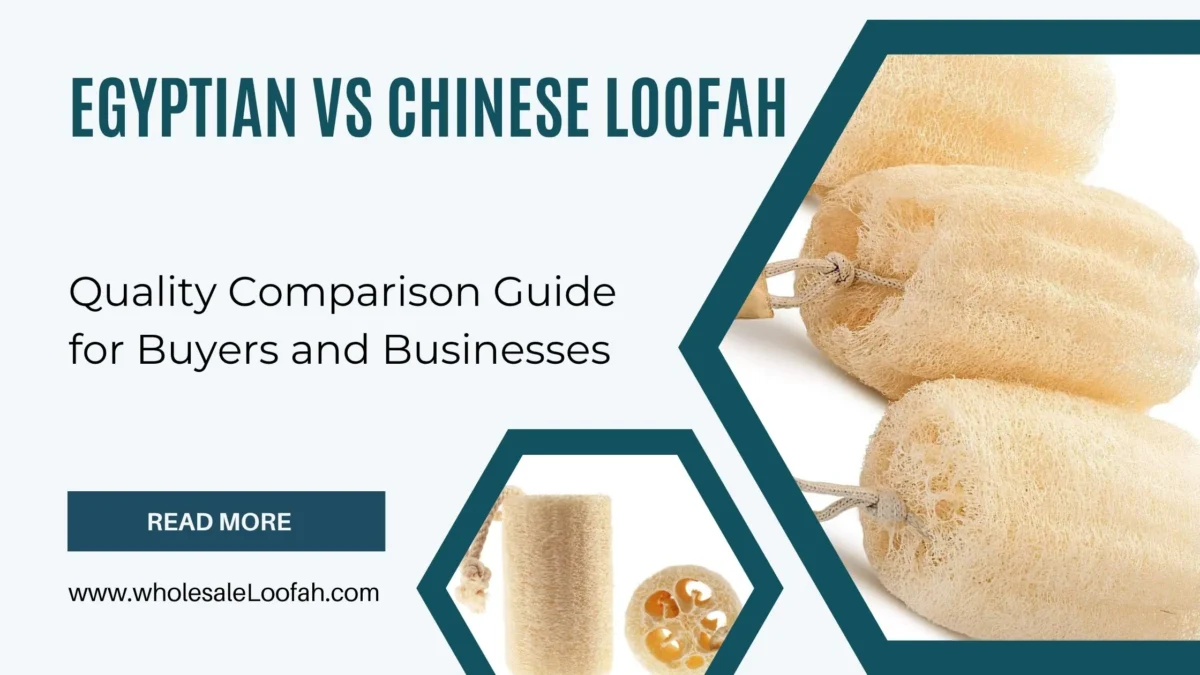
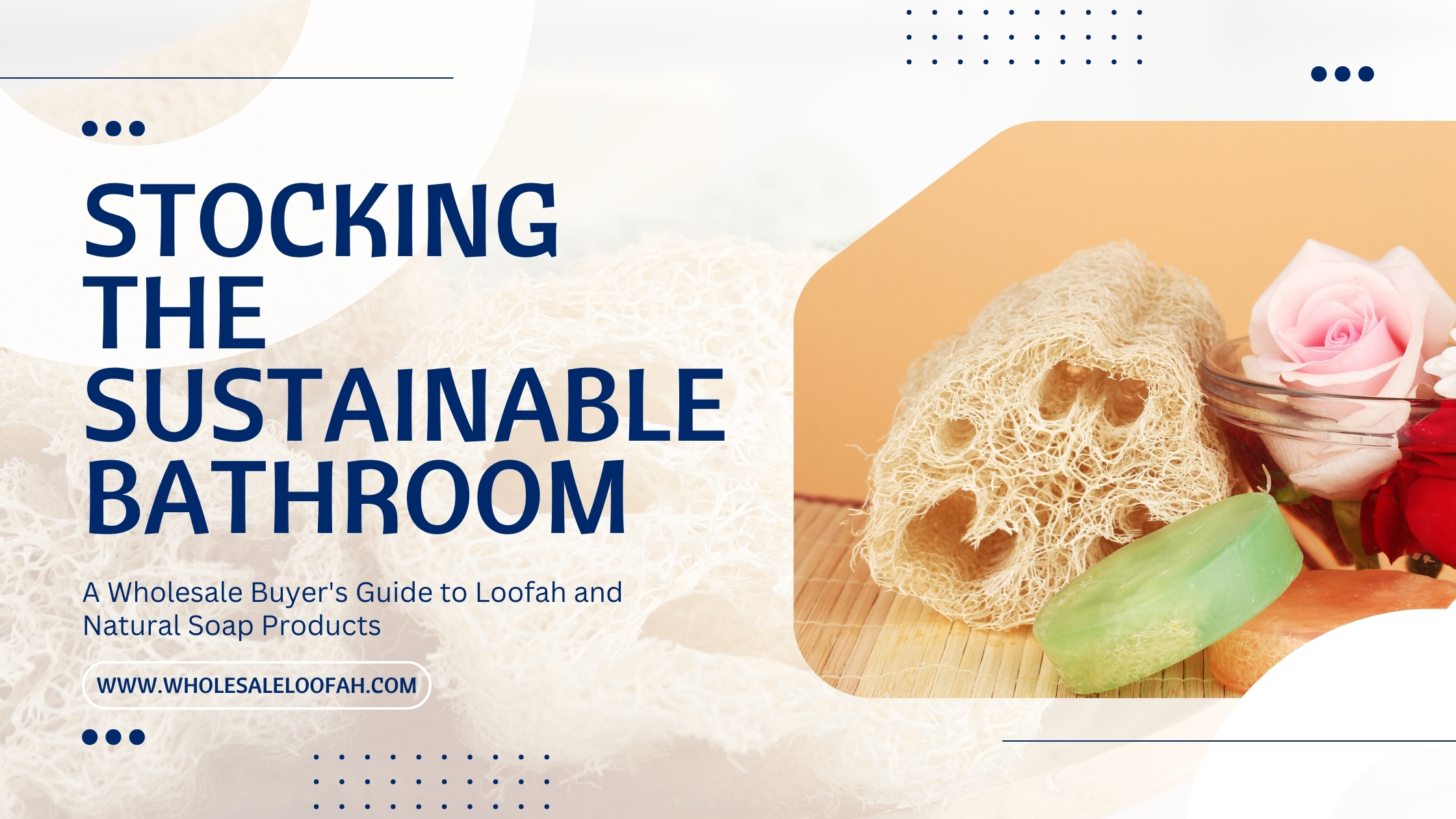
Natural loofahs anchor the zero-waste bathroom category. These plant-based scrubbers have emerged as the definitive replacement for plastic bath accessories, driven by consumer awareness of microplastic pollution and growing regulatory pressure on single-use plastics. Wholesale buyers replacing plastic with loofah and soap inventory position their businesses at the intersection of environmental responsibility and commercial opportunity.
This guide addresses the specific needs of retailers, distributors, spa operators, and hospitality purchasers seeking to build or expand natural bath product offerings. You will find procurement frameworks, supplier evaluation criteria, margin optimization strategies, and inventory management approaches developed from decades of industry experience. Egyptian loofahs, particularly from established exporters like Egexo with 25+ years of cultivation expertise, represent the quality benchmark against which wholesale buyers should measure all alternatives.
The Business Case for Natural Bath Products
Before examining specific products and sourcing strategies, wholesale buyers benefit from understanding the market forces driving sustainable bathroom demand. This context informs inventory decisions and sales positioning.
Consumer Demand Trajectory
Multiple research sources confirm accelerating consumer preference for sustainable personal care products.
Market Growth Indicators
| Metric | 2023 | 2024 | 2025 | 2026 Projected |
|---|---|---|---|---|
| Global sustainable personal care market | $12.1B | $13.6B | $15.3B | $17.2B |
| Year-over-year growth rate | 11.2% | 12.4% | 12.5% | 12.4% |
| Consumers willing to pay premium for sustainable | 64% | 68% | 73% | 77% |
| Retailers reporting increased sustainable product demand | 71% | 78% | 84% | 89% |
These figures represent aggregate market data from industry reports published through early 2025. The consistent upward trajectory across all metrics indicates sustained rather than temporary consumer preference shifts.
Regulatory Environment
Government actions increasingly favor natural alternatives over plastic products.
The European Union’s Single-Use Plastics Directive continues expanding covered categories. Several US states have enacted or proposed restrictions on plastic personal care packaging. Canada’s plastics registry requirements create compliance considerations for imported products.
Wholesale buyers stocking natural alternatives hedge against regulatory disruption while meeting current demand. Products like natural loofahs face no foreseeable regulatory restrictions, providing inventory stability that plastic alternatives cannot guarantee.
Competitive Positioning
Early movers in sustainable product categories establish customer relationships and operational expertise that create lasting competitive advantages.
Retailers reporting early adoption of natural bath products cite multiple benefits including higher average transaction values, increased customer loyalty, differentiation from mass-market competitors, and positive brand association with environmental responsibility.
Natural Loofah Product Categories for Wholesale
Understanding available product categories enables strategic inventory planning. Each category serves distinct market segments and carries different margin profiles.
Body Loofah Products
Body loofahs represent the highest-volume category for most retailers. These products directly replace synthetic scrubbers and plastic poufs in consumer bathrooms.
Body Loofah Product Types
| Product Type | Target Customer | Price Point | Margin Potential | Inventory Turnover |
|---|---|---|---|---|
| Standard body sponge | General consumer | Mid-range | Good | High |
| Premium shaped loofah | Quality-focused shopper | Higher | Excellent | Moderate |
| Loofah mitt | Convenience seeker | Mid to higher | Good | Moderate |
| Loofah on rope | Shower organizer | Mid-range | Good | High |
| Extra-large body loofah | Value shopper | Lower per unit | Moderate | High |
| Luxury spa loofah | Premium segment | Highest | Excellent | Lower |
Explore body loofah wholesale options to evaluate specific products within each type.
Kitchen and Household Loofahs
Kitchen loofahs provide category expansion opportunity beyond bathroom applications. These products appeal to consumers already committed to sustainable living who seek plastic-free solutions throughout their homes.
Kitchen Loofah Applications
| Application | Product Specification | Market Segment |
|---|---|---|
| Dishwashing | Dense fiber, reinforced | Eco-conscious households |
| Surface cleaning | Medium density, flexible | Green cleaning enthusiasts |
| Pot and pan scrubbing | Extra dense, small format | Serious home cooks |
| Vegetable cleaning | Soft texture, food-safe | Health-focused consumers |
Kitchen loofah product range offers configurations addressing each application.
Raw and Craft Loofahs
Raw loofahs serve DIY enthusiasts, craft businesses, and soap makers who create value-added products. This category offers excellent margins for retailers serving maker communities.
Soap makers embed loofah slices in bar soaps, creating combination products commanding premium prices. Craft businesses produce decorated loofahs, custom-shaped products, and specialty items for gift markets.
Raw loofah scrubber inventory provides material for these applications.
Specialty and Niche Products
Specialty loofahs address specific market segments with unique requirements.
Specialty Loofah Categories
| Category | Application | Buyer Profile |
|---|---|---|
| Pet spa loofahs | Animal grooming | Pet stores, groomers |
| Facial loofahs | Gentle exfoliation | Beauty retailers, spas |
| Industrial loofahs | Commercial cleaning | Janitorial suppliers |
| Therapeutic loofahs | Medical and wellness | Healthcare distributors |
Pet grooming loofah products demonstrate specialty category depth available from established suppliers.
Supplier Evaluation Framework
Selecting reliable suppliers determines long-term success in natural product categories. This framework provides systematic evaluation criteria for wholesale buyers.
Quality Assessment Criteria
Product quality directly impacts customer satisfaction, return rates, and repeat purchase behavior. Rigorous quality evaluation prevents costly inventory mistakes.
Quality Evaluation Matrix
| Quality Factor | Evaluation Method | Acceptable Standard | Premium Standard |
|---|---|---|---|
| Fiber density | Physical examination | Consistent throughout | Uniformly dense |
| Color consistency | Visual batch comparison | Minor variation acceptable | Near-identical coloring |
| Structural integrity | Wet stress testing | Maintains shape | Returns to original form |
| Processing cleanliness | Debris inspection | Minimal remnants | No visible debris |
| Dimensional accuracy | Measurement verification | Within 10% of specification | Within 5% of specification |
| Odor neutrality | Sensory evaluation | No off-odors | Fresh, clean scent |
Egexo quality standards demonstrate professional supplier documentation supporting quality claims.
Supply Chain Reliability
Consistent product availability enables inventory planning and customer commitment. Supply disruptions damage retailer credibility and sales momentum.
Supply Chain Evaluation Questions
| Factor | Questions to Ask | Red Flags |
|---|---|---|
| Production capacity | Annual output volume? Seasonal variations? | Vague answers, inconsistent figures |
| Lead times | Standard processing time? Rush order capability? | Unrealistic promises, no rush options |
| Inventory management | Safety stock levels? Backorder policies? | No buffer inventory, unclear policies |
| Communication | Order confirmation process? Delay notification? | Slow responses, poor tracking |
| Shipping partners | Carrier relationships? Insurance coverage? | Single carrier dependency, no insurance |
Established suppliers like Egexo maintain production capacity supporting consistent order fulfillment. The farm to export process demonstrates integrated supply chain management.
Business Practices Assessment
Professional suppliers maintain business practices supporting long-term partnerships.
Documentation Requirements
Legitimate suppliers provide comprehensive documentation including certificates of origin, phytosanitary certificates, quality grade specifications, export licenses, and insurance certificates.
Communication Standards
Professional suppliers respond promptly to inquiries, provide detailed quotations, confirm orders systematically, and proactively communicate regarding delays or issues.
Financial Stability Indicators
Established operations demonstrate financial stability through consistent pricing, standard payment terms, investment in quality control, and long-term customer relationships.
Procurement Strategies for Maximum Value
Strategic procurement maximizes value while minimizing risk. These approaches serve wholesale buyers at various scales.
Initial Supplier Engagement
First contact with potential suppliers should gather information enabling informed decisions.
Initial Inquiry Checklist
| Information Category | Specific Questions |
|---|---|
| Product range | Complete catalog? Specialty items? Custom capabilities? |
| Minimum orders | MOQ by product? First order flexibility? Sample availability? |
| Pricing structure | Volume discounts? Annual agreements? Price stability guarantees? |
| Quality assurance | Grading system? Inspection process? Rejection policies? |
| Logistics | Shipping options? Insurance? Customs documentation? |
| Terms | Payment options? Credit availability? Return policies? |
Request detailed quotations to gather comprehensive information from prospective suppliers.
Sample Evaluation Process
Never commit significant capital without evaluating physical samples. Professional suppliers expect and facilitate sample requests.
Sample Evaluation Protocol
| Evaluation Stage | Activities | Duration |
|---|---|---|
| Initial receipt | Inspect packaging condition, verify quantities | Day 1 |
| Visual assessment | Examine color, structure, cleanliness | Day 1-2 |
| Physical testing | Wet performance, durability, texture | Day 2-7 |
| Comparative analysis | Compare against competitors, existing inventory | Day 7-14 |
| Staff feedback | Gather opinions from sales team, buyers | Day 7-14 |
| Decision documentation | Record findings, communicate with supplier | Day 14-21 |
Order evaluation samples to begin systematic assessment.
Volume Optimization
Order volumes significantly impact unit economics. Understanding volume thresholds enables strategic purchasing.
Volume Discount Structures
| Order Volume | Typical Discount Range | Cash Flow Impact | Storage Requirements |
|---|---|---|---|
| Minimum order | Baseline pricing | Lowest commitment | Minimal |
| 2x minimum | 5-10% discount | Moderate investment | Light |
| 5x minimum | 10-18% discount | Significant capital | Moderate |
| 10x minimum | 18-28% discount | Major investment | Substantial |
| Container load | 25-40% discount | Large capital requirement | Warehouse capacity needed |
Optimal order volume balances discount capture against cash flow constraints and storage limitations. Many buyers find 3-5x minimum orders provide attractive discount without excessive capital commitment.
Payment and Terms Negotiation
Payment terms affect cash flow and relationship dynamics. Standard terms vary by supplier and order volume.
Common structures include deposit plus balance before shipping, letter of credit for large orders, and established customer credit terms. New relationships typically require more conservative terms, with flexibility increasing as trust develops.
Inventory Management for Natural Products
Natural loofahs require specific inventory management approaches differing from synthetic alternatives.
Storage Requirements
Proper storage maintains product quality and prevents degradation.
Storage Best Practices
| Factor | Requirement | Consequence of Failure |
|---|---|---|
| Humidity | Low to moderate, under 60% | Mold growth, musty odor |
| Temperature | Cool to moderate, avoid heat | Fiber brittleness |
| Light exposure | Minimal direct sunlight | Color fading |
| Air circulation | Good ventilation | Moisture accumulation |
| Pest control | Sealed containers or treated area | Product contamination |
| Stacking | Avoid compression | Fiber damage |
Shelf Life Considerations
Natural loofahs maintain quality for extended periods under proper storage, but inventory rotation remains important.
Inventory Age Guidelines
| Age Category | Product Condition | Recommended Action |
|---|---|---|
| 0-6 months | Optimal quality | Standard pricing |
| 6-12 months | Excellent quality | Standard pricing |
| 12-18 months | Good quality | Monitor closely |
| 18-24 months | Acceptable quality | Consider promotion |
| 24+ months | Quality may decline | Discount or donate |
First-in-first-out inventory rotation prevents quality degradation and maximizes full-price sales.
Reorder Point Calculation
Systematic reorder processes prevent stockouts while avoiding excess inventory.
Reorder Variables
| Variable | Measurement | Impact on Reorder Point |
|---|---|---|
| Average daily sales | Units per day | Higher sales = earlier reorder |
| Supplier lead time | Days from order to receipt | Longer lead = earlier reorder |
| Lead time variability | Consistency of delivery | More variability = larger buffer |
| Safety stock preference | Risk tolerance | Lower risk tolerance = larger buffer |
| Storage capacity | Available space | Limited space = smaller orders |
Calculate reorder point as: (Average daily sales × Lead time) + Safety stock
Margin Analysis and Pricing Strategy
Profitability requires understanding cost structures and pricing dynamics specific to natural bath products.
Cost Component Breakdown
Total landed cost includes multiple components beyond product price.
Cost Structure Analysis
| Cost Component | Typical Range | Optimization Opportunity |
|---|---|---|
| Product cost | 40-60% of landed cost | Volume discounts, supplier negotiation |
| International shipping | 15-25% of landed cost | Container consolidation, carrier negotiation |
| Customs and duties | 5-12% of landed cost | Classification optimization, FTA utilization |
| Domestic logistics | 5-10% of landed cost | Carrier contracts, delivery consolidation |
| Insurance | 1-3% of landed cost | Coverage optimization |
| Storage | 3-8% of landed cost | Turnover improvement, space efficiency |
Retail Pricing Benchmarks
Market research informs competitive pricing while maintaining margin targets.
Natural Loofah Retail Price Ranges
| Product Category | Budget Segment | Mid-Market | Premium Segment |
|---|---|---|---|
| Standard body loofah | $4-6 | $7-12 | $13-20 |
| Loofah mitt | $6-9 | $10-15 | $16-25 |
| Loofah on rope | $5-8 | $9-14 | $15-22 |
| Kitchen loofah set | $8-12 | $13-20 | $21-35 |
| Facial loofah | $3-5 | $6-10 | $11-18 |
| Raw whole loofah | $6-10 | $11-18 | $19-30 |
Margin Target Guidelines
Healthy margins sustain business operations and fund growth.
Margin Expectations by Channel
| Sales Channel | Target Gross Margin | Considerations |
|---|---|---|
| Direct retail | 55-70% | Higher overhead, customer acquisition costs |
| Wholesale distribution | 25-40% | Volume focus, relationship maintenance |
| E-commerce | 45-60% | Platform fees, shipping costs |
| Spa and hospitality | 50-65% | Service bundling, volume potential |
| Private label | 35-50% | Custom development costs, exclusivity value |
Private Label and Custom Manufacturing
Private label programs offer differentiation and margin enhancement for established buyers.
Private Label Benefits
Branded products create competitive advantages unavailable through commodity purchasing.
Private Label Value Proposition
| Benefit | Description | Business Impact |
|---|---|---|
| Brand building | Customer associates quality with your brand | Long-term loyalty |
| Margin enhancement | Reduced price competition | Higher profitability |
| Competitive protection | Exclusive products unavailable elsewhere | Market differentiation |
| Customer data | Direct relationship ownership | Marketing capability |
| Quality control | Specification authority | Consistency assurance |
Program Requirements
Private label programs require commitment justifying supplier investment.
Typical Private Label Parameters
| Parameter | Standard Requirement | Negotiable Elements |
|---|---|---|
| Minimum order | 1,000-5,000 units per SKU | May reduce with multi-SKU commitment |
| Lead time | 4-8 weeks initial, 2-4 weeks reorder | Rush options sometimes available |
| Packaging | Buyer-provided or supplier-designed | Cost allocation varies |
| Artwork | Buyer responsibility typically | Design services sometimes offered |
| Exclusivity | Geographic or channel specific | Terms negotiable |
Private label manufacturing services detail available customization options.
Custom Product Development
Beyond branding, custom product development creates truly unique offerings.
Custom Development Possibilities
| Customization Type | Examples | Development Complexity |
|---|---|---|
| Size and shape | Custom dimensions, unique forms | Moderate |
| Texture modification | Softened processing, enhanced density | Moderate |
| Combination products | Soap-embedded loofahs, handled versions | Higher |
| Accessory integration | Attached cords, fabric backing | Higher |
| Packaging innovation | Gift sets, display-ready formats | Variable |
Custom product design options outline development processes and requirements.
Complementary Product Strategy
Expanding beyond loofahs into complementary natural products increases average order value and customer convenience.
Natural Soap Pairing
Bar soaps naturally complement loofah purchases. Consumers replacing plastic with loofah and soap often seek both products simultaneously.
Bar Soap Category Overview
| Soap Type | Characteristics | Target Customer |
|---|---|---|
| Cold process | Glycerin-rich, natural oils | Quality-focused |
| Triple milled | Firm, long-lasting | Value-focused |
| Specialty bars | Unique ingredients, artisan | Premium segment |
| Unscented | Minimal ingredients | Sensitive skin |
| Therapeutic | Added functional ingredients | Wellness-focused |
Bamboo Product Integration
Bamboo bathroom accessories extend sustainable bathroom positioning.
Bamboo toothbrushes, combs, soap dishes, and organizers appeal to customers building comprehensive zero-waste bathrooms. These products typically carry attractive margins and face minimal quality variability.
Category Expansion Roadmap
Phased category expansion manages risk while capturing opportunity.
Expansion Timeline
| Phase | Products | Investment Level | Risk Profile |
|---|---|---|---|
| Foundation | Body loofahs, basic bar soaps | Moderate | Low |
| Extension | Kitchen loofahs, specialty soaps | Moderate | Low to moderate |
| Expansion | Bamboo accessories, facial products | Higher | Moderate |
| Diversification | Private label, custom products | Significant | Moderate to higher |
Industry Expert Perspective
With over 25 years supplying natural loofahs to wholesale buyers worldwide, we have observed consistent patterns distinguishing successful natural product programs from struggling ones.
Quality consistency proves paramount. Wholesale buyers who prioritize quality over price build sustainable businesses with loyal customers and minimal returns. Those chasing lowest prices frequently encounter quality issues damaging their reputation and customer relationships.
Supplier relationships matter enormously. Transactional purchasing focused solely on price fails to capture the value of partnership. Suppliers who know your business, understand your requirements, and prioritize your orders provide reliability worth premium investment.
Education drives sales. Retailers who train staff and provide customer education consistently outperform those treating natural products as commodity inventory. Customers new to natural loofahs need guidance on selection, use, and care. Informed staff create satisfied customers.
For wholesale buyers considering Egyptian loofah sourcing, we recommend beginning with sample evaluation across multiple quality grades. Understanding the full quality spectrum enables informed purchasing decisions and appropriate inventory positioning.
Download our comprehensive wholesale catalog for detailed product specifications supporting your evaluation process.
Frequently Asked Questions
Q: What minimum order quantities should wholesale buyers expect when sourcing natural loofahs?
A: Minimum order quantities vary significantly by supplier and product category. Established Egyptian suppliers typically require 500 to 1000 units for standard body loofahs, with specialty items sometimes requiring lower minimums. New account flexibility often exists for buyers demonstrating serious commercial intent. Container load purchases, typically 15000 to 25000 units depending on product type, offer maximum value but require substantial capital and storage capacity. Many suppliers accommodate mixed-product orders meeting aggregate minimums.
Q: How do natural loofah margins compare to synthetic bath product alternatives?
A: Natural loofahs typically deliver superior gross margins compared to synthetic alternatives. While wholesale costs may be moderately higher, retail pricing power significantly exceeds the cost differential. Premium positioning enables 55 to 70 percent gross margins for direct retail, compared to 40 to 55 percent typical for commodity synthetics. Additionally, natural products attract customers with higher lifetime value and lower price sensitivity, improving overall profitability beyond individual transaction margins.
Q: What quality documentation should wholesale buyers require from loofah suppliers?
A: Professional suppliers provide comprehensive documentation supporting quality claims and regulatory compliance. Essential documents include certificates of origin verifying Egyptian sourcing, phytosanitary certificates confirming agricultural safety standards, quality grade specifications defining product parameters, and export licenses demonstrating legal authorization. Additional valuable documentation includes production capacity verification, quality control process descriptions, and batch tracking systems. Suppliers unable or unwilling to provide documentation warrant skepticism.
Q: How should retailers educate customers about transitioning from plastic to natural loofahs?
A: Effective customer education addresses common concerns and sets appropriate expectations. Staff training should cover product benefits including superior exfoliation and environmental impact, proper use techniques emphasizing gentler initial pressure, maintenance requirements for hygiene and longevity, and replacement timing typically every four to six weeks. Point-of-sale materials reinforcing these messages support staff efforts. Some retailers provide care instruction cards with purchases, reducing return rates and building customer satisfaction.
Q: What storage conditions maintain natural loofah quality in wholesale inventory?
A: Natural loofahs require controlled storage conditions to maintain quality. Humidity should remain below 60 percent to prevent mold growth. Temperature should stay cool to moderate, avoiding heat sources that cause fiber brittleness. Minimal direct sunlight prevents color fading. Good air circulation prevents moisture accumulation. Sealed containers or treated storage areas prevent pest issues. Avoiding compression from heavy stacking prevents fiber damage. Under proper conditions, loofahs maintain quality for 18 to 24 months, though first-in-first-out rotation remains recommended.
Q: What advantages do Egyptian loofahs offer compared to products from other growing regions?
A: Egyptian loofahs consistently demonstrate superior quality due to exceptional growing conditions and established cultivation expertise. The Nile Delta provides mineral-rich alluvial soil supporting optimal plant nutrition. Mediterranean climate delivers consistent growing conditions with extended seasons allowing complete plant maturation. Centuries of cultivation knowledge inform farming practices maximizing fiber density and quality. Quality testing across multiple suppliers consistently shows Egyptian loofahs outperforming alternatives in durability, texture consistency, and overall performance metrics important to end consumers.
Q: How can wholesale buyers evaluate supplier reliability before committing to large orders?
A: Systematic evaluation reduces sourcing risk. Begin with sample orders allowing physical quality assessment. Evaluate communication responsiveness and professionalism throughout the sample process. Request references from existing customers and verify if possible. Review documentation quality and completeness. Assess website professionalism and business longevity indicators. Consider starting with smaller commercial orders before committing to container volumes. Suppliers demonstrating consistency across multiple interactions and order cycles earn larger commitments.
Conclusion
Wholesale buyers face unprecedented opportunity in the natural bath products category. Consumer demand, regulatory trends, and competitive dynamics all favor businesses building expertise in sustainable bathroom products. The ultimate zero-waste bathroom guide for commercial buyers centers on strategic sourcing that balances quality, reliability, and value.
Natural loofahs represent the foundational category for sustainable bathroom inventory. Replacing plastic with loofah and soap products positions retailers and distributors at the forefront of lasting market transformation. Egyptian loofahs from established suppliers like Egexo provide the quality consistency and supply reliability essential for building successful natural product programs.
Success requires commitment beyond simple product substitution. Supplier relationships, staff education, customer communication, and inventory management all contribute to program performance. Wholesale buyers investing in these capabilities build sustainable competitive advantages serving customers increasingly demanding environmental responsibility.
Strategic Action Items:
- Evaluate current inventory for plastic-to-natural substitution opportunities
- Request samples from quality-focused Egyptian suppliers for physical assessment
- Develop staff training materials supporting customer education
- Calculate reorder points ensuring consistent product availability
- Explore private label possibilities for competitive differentiation
Ready to build your natural bath products program?
For Quotations: Request detailed wholesale pricing customized to your volume requirements.
For Product Information: Download the complete wholesale catalog with specifications and photography.
For Samples: Order evaluation samples to assess quality firsthand.
For Product Exploration: Browse the complete product range organized by category.
Additional resources available at LoofahGuide.com for consumer education materials supporting your retail programs.