Why This Comparison Matters for Your Business
Natural skincare tools represent one of the fastest-expanding segments in personal care retail, with industry analysts projecting continued double-digit growth through 2028. Within this category, facial exfoliation products generate particularly strong consumer interest and healthy profit margins for retailers who understand what they are selling.
The loofah vs konjac sponge question reaches wholesale buyers daily from customers seeking guidance. Staff who cannot confidently explain the differences lose sales to competitors or online alternatives. Retailers stocking the wrong product mix for their customer demographics watch inventory sit while demand goes unmet.
This guide approaches the loofah vs konjac sponge comparison from the wholesale buyer’s perspective. Beyond basic product differences, you will find margin analysis, inventory planning guidance, customer education frameworks, and market positioning strategies that transform product knowledge into competitive advantage.
Whether operating a spa seeking treatment tools, a boutique curating natural skincare selections, or a distribution business supplying regional retailers, understanding these products deeply enables smarter purchasing decisions and stronger customer relationships.
Egyptian loofah and konjac sponge serve different customer needs despite both occupying the natural facial care category. Recognizing which customers want which product, and why, positions your business to capture sales across the entire market rather than serving only one segment.
Product Overview for Wholesale Buyers
Egyptian Loofah Fundamentals
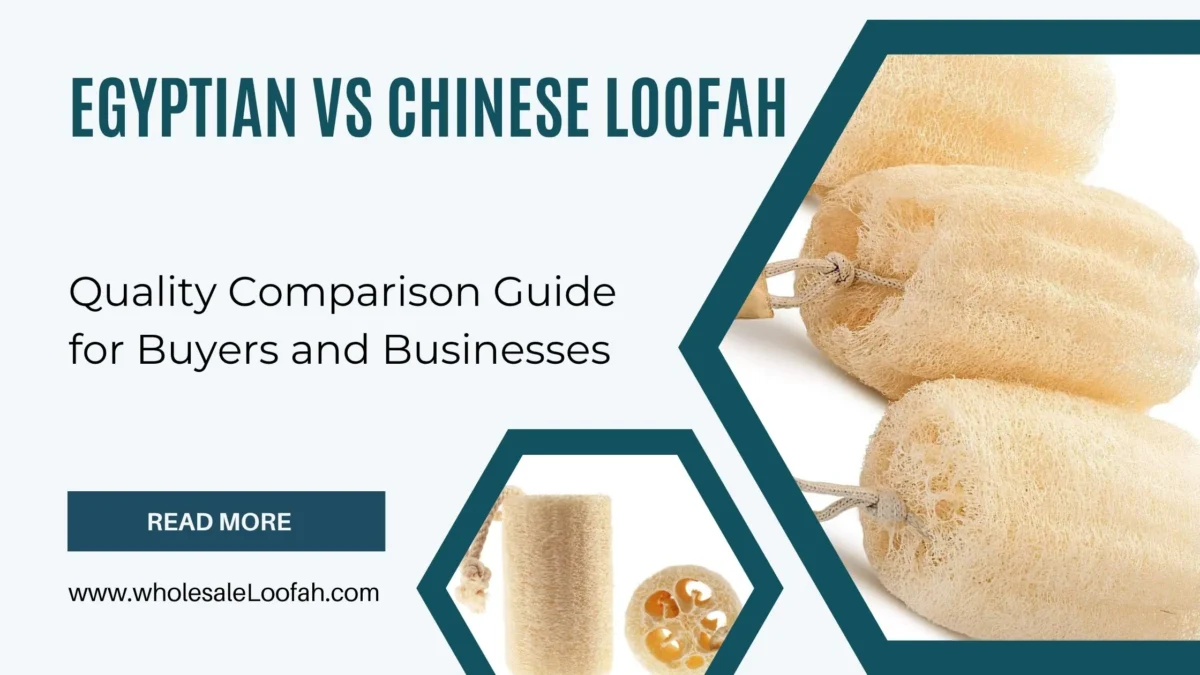
Loofah originates from the Luffa aegyptiaca plant, a climbing vine producing elongated gourds that develop fibrous interior structures when mature. Harvesting occurs after the fruit fully ripens on the vine, followed by processing that removes outer skin and seeds to reveal the usable fiber network.
Egyptian loofah commands premium market positioning due to superior growing conditions in the Nile Valley region. The combination of mineral-rich alluvial soil, consistent warm temperatures, and traditional cultivation expertise produces denser, more uniform fiber structures than loofah grown elsewhere.
For facial applications, Egyptian loofah undergoes additional preparation including cutting to appropriate sizes, softening treatments, and quality grading that ensures gentle enough texture for delicate facial skin. These prepared facial products differ significantly from body-grade loofah in both texture and pricing.
Wholesale buyers should understand that loofah quality varies dramatically across suppliers. Fiber density, uniformity, cleanliness, and preparation quality all impact end-user experience and satisfaction. Sourcing from established suppliers with quality control processes protects your reputation and reduces returns.
Konjac Sponge Fundamentals
Konjac sponge derives from the root of Amorphophallus konjac, a plant native to subtropical Asian regions. Manufacturing processes extract glucomannan from the root and form it into the characteristic sponge shape through controlled drying methods.
The resulting product arrives hard and compact, requiring water hydration before use. When wet, konjac sponge becomes extremely soft with a pillowy, almost gelatinous texture that provides gentle cleansing without meaningful exfoliation.
Konjac sponge gained Western market traction through K-beauty trend influence, appealing particularly to consumers seeking gentle skincare approaches. The product attracts sensitive skin customers and those preferring daily-use cleansing tools over periodic exfoliation products.
Manufacturing occurs primarily in Asian facilities, with quality varying by producer. Color variants including white, charcoal-infused black, pink clay, and green tea versions allow product line expansion within the konjac category.
Side-by-Side Wholesale Comparison
| Business Factor | Egyptian Loofah | Konjac Sponge |
|---|---|---|
| Primary Function | Mechanical exfoliation | Gentle cleansing |
| Target Customer | Texture and clarity seekers | Sensitive skin, daily cleansers |
| Typical Wholesale Cost | 0.80 to 2.50 USD per unit | 1.20 to 3.00 USD per unit |
| Suggested Retail Price | 4.00 to 12.00 USD | 6.00 to 15.00 USD |
| Gross Margin Potential | 65 to 80 percent | 55 to 75 percent |
| Customer Reorder Cycle | 4 to 6 months | 4 to 6 weeks |
| Annual Units Per Customer | 2 to 3 units | 9 to 13 units |
| Storage Requirements | Dry, room temperature | Climate controlled preferred |
| Shelf Life | 24 plus months | 12 to 18 months |
This comparison reveals distinct business models for each product. Loofah delivers higher per-unit margins with lower reorder frequency. Konjac generates more frequent transactions with slightly lower margins but higher annual customer value through repeat purchases.
Understanding Your Customer Segments
Successful product selection requires understanding which customers want which products and why. The facial exfoliation market segments clearly by skin type, age, skincare sophistication, and purchasing motivation.
Customer Segment Analysis
Segment A: Active Exfoliation Seekers
These customers specifically seek products providing noticeable exfoliation effects. They typically have normal to oily skin, experience congestion or dullness concerns, and want tools that actively improve skin condition rather than simply cleanse.
Demographics skew toward ages 25 to 45, predominantly female, with moderate to high skincare spending. They research products before purchasing and respond well to education about proper use techniques and expected results.
Egyptian loofah directly serves this segment. The fibrous texture delivers the mechanical exfoliation these customers seek, and the natural positioning aligns with their preference for non-synthetic skincare tools.
Segment B: Gentle Care Prioritizers
This segment prioritizes gentleness above all other product attributes. They typically have sensitive, dry, or reactive skin that responds poorly to aggressive treatment. Many have experienced negative reactions to exfoliation products and now approach the category cautiously.
Demographics include all ages but concentrate in the 35-plus range where skin sensitivity increases. Spending levels vary widely, but these customers exhibit strong brand loyalty once they find products working for their needs.
Konjac sponge serves this segment through its extremely soft texture and alkaline-balancing properties. Marketing emphasizing gentleness and suitability for sensitive skin resonates strongly with these buyers.
Segment C: Skincare Enthusiasts
Sophisticated skincare consumers use multiple specialized products for different purposes rather than seeking universal solutions. They understand that different tools serve different functions and build comprehensive routines incorporating various product types.
This segment tends younger, ages 20 to 35, with high social media engagement and strong influence over peer purchasing decisions. They follow skincare trends, try new products regularly, and spend significantly on personal care.
Both loofah and konjac appeal to this segment for different routine positions. They purchase Egyptian loofah for periodic exfoliation sessions and konjac sponge for gentle daily cleansing, often buying both products together.
Segment D: Natural Product Converts
Customers transitioning from synthetic to natural products represent a growing segment seeking alternatives to plastic loofahs, synthetic scrubs, and chemical exfoliants. Environmental concern drives many purchasing decisions alongside personal health considerations.
This segment spans all ages with concentration among environmentally conscious consumers, often overlapping with organic food purchasers and sustainable lifestyle adopters. They respond strongly to sustainability messaging and origin stories.
Both products serve this segment as plastic-free, biodegradable alternatives. Egyptian loofah’s heritage story and konjac’s plant-based composition both resonate with natural product values.
Segment Size and Growth Projections
| Customer Segment | Estimated Market Share | Growth Trajectory | Primary Product Match |
|---|---|---|---|
| Active Exfoliation Seekers | 35 percent | Stable | Egyptian Loofah |
| Gentle Care Prioritizers | 25 percent | Growing | Konjac Sponge |
| Skincare Enthusiasts | 20 percent | Rapidly Growing | Both Products |
| Natural Product Converts | 20 percent | Rapidly Growing | Both Products |
Market dynamics favor businesses stocking both product categories. The growing segments, skincare enthusiasts and natural converts, purchase across categories rather than exclusively preferring one option. Capturing these high-value customers requires comprehensive inventory.
Performance Characteristics That Drive Sales
Customer satisfaction and repeat purchases depend on products delivering expected results. Understanding performance differences enables accurate customer matching and realistic expectation setting that reduces returns and builds loyalty.
Exfoliation Effectiveness
Egyptian loofah provides genuine mechanical exfoliation that customers can see and feel working. The fibrous texture creates friction against skin that dislodges dead cells, clears pore congestion, and stimulates circulation. Users notice smoother texture and improved clarity within weeks of consistent use.
This effectiveness drives customer satisfaction and word-of-mouth referrals when expectations are properly set. Staff should explain that results require two to three weekly sessions over several weeks rather than instant transformation.
Konjac sponge provides minimal exfoliation despite marketing that sometimes suggests otherwise. The soft, yielding texture cannot generate sufficient friction for meaningful dead cell removal. Customers expecting exfoliation results from konjac experience disappointment that reflects poorly on the retailer who sold it.
Honest positioning of konjac as a gentle cleanser rather than exfoliator prevents expectation mismatch. Customers purchasing konjac for appropriate purposes report high satisfaction with the gentle cleansing experience.
Performance Metrics Comparison
| Performance Category | Egyptian Loofah Rating | Konjac Sponge Rating | Sales Implication |
|---|---|---|---|
| Dead Skin Removal | 8 out of 10 | 2 out of 10 | Match product to customer goal |
| Pore Cleansing | 8 out of 10 | 3 out of 10 | Loofah for congestion concerns |
| Texture Improvement | 9 out of 10 | 2 out of 10 | Loofah for visible results |
| Gentle Cleansing | 5 out of 10 | 9 out of 10 | Konjac for sensitive customers |
| Daily Use Suitability | 3 out of 10 | 9 out of 10 | Konjac for daily routine |
| Product Absorption Enhancement | 8 out of 10 | 3 out of 10 | Loofah before serums and treatments |
Training staff to match customer stated goals with appropriate product recommendations transforms browsers into buyers while building trust through honest guidance.
Inventory Planning and Management
Effective inventory management balances stock availability against carrying costs and obsolescence risk. Each product category presents distinct inventory considerations requiring tailored approaches.
Egyptian Loofah Inventory Factors
Extended shelf life represents a significant loofah inventory advantage. Properly stored dry loofah maintains quality for two years or longer, eliminating urgency to move aging stock and allowing larger quantity purchases that optimize per-unit costs.
Storage requirements remain minimal. Room temperature environments with low humidity preserve loofah quality without climate control expenses. Simple shelving in standard warehouse or retail backroom conditions suffices.
Demand patterns show moderate seasonality with slight increases during New Year resolution periods and summer months when skin exposure heightens exfoliation interest. Baseline demand remains relatively consistent year-round.
Reorder calculations should account for supplier lead times, particularly for Egyptian-origin product. International shipping typically requires four to eight weeks depending on supplier location and chosen shipping method. Maintaining safety stock prevents stockouts during replenishment periods.
Konjac Sponge Inventory Factors
Shorter shelf life creates inventory management challenges for konjac sponge. The twelve to eighteen month usable window before quality degradation requires more careful purchasing quantities and stock rotation.
Climate considerations impact konjac storage. High humidity environments can cause premature softening or mold development in packaging. Climate-controlled storage areas protect inventory quality in humid regions.
Higher reorder frequency per customer creates more consistent demand patterns. The four to six week replacement cycle means customers return regularly, smoothing demand fluctuations compared to longer-cycle products.
Faster inventory turnover partially offsets shorter shelf life concerns. Products move through stock before degradation becomes problematic when reorder frequency matches customer purchasing patterns.
Inventory Planning Matrix
| Planning Factor | Egyptian Loofah Approach | Konjac Sponge Approach |
|---|---|---|
| Optimal Order Quantity | Larger orders for cost efficiency | Moderate orders matching turnover |
| Safety Stock Level | 6 to 8 weeks of demand | 4 to 6 weeks of demand |
| Reorder Trigger Point | When stock reaches safety level | When stock reaches safety level |
| Storage Location | Standard dry storage | Climate controlled if possible |
| Stock Rotation Priority | Lower, long shelf life | Higher, monitor dating |
| Seasonal Adjustment | Slight increase Q1 and Q3 | Consistent year-round |
| Obsolescence Risk | Very low | Moderate |
Wholesale buyers can discuss volume pricing and delivery scheduling with suppliers to optimize inventory economics. The quotation request process provides customized pricing based on order volume and delivery requirements.
Margin Analysis and Pricing Strategy
Profitability depends on understanding cost structures and pricing strategies appropriate to each product category and target customer segment.
Cost Structure Breakdown
Egyptian loofah wholesale costs vary by quality grade, size, and order volume. Premium facial-grade Egyptian loofah typically ranges from 1.50 to 2.50 USD per unit at wholesale quantities, with volume discounts available for larger orders.
Additional costs include shipping, which varies by origin and method, plus any customs duties applicable to your importing country. Total landed cost typically adds 15 to 25 percent to base wholesale pricing for international shipments.
Konjac sponge wholesale pricing ranges from 1.20 to 3.00 USD depending on variety, quality, and supplier. Charcoal and specialty infusions command premium pricing over basic white versions. Asian manufacturing keeps base costs relatively low, though shipping distances increase landed costs.
Retail Pricing Strategies
Premium Positioning Strategy
Retailers targeting quality-focused customers can position Egyptian loofah at premium price points of 8 to 12 USD supported by origin story, quality differentiation, and educational selling. This approach maximizes per-unit margin while attracting customers valuing quality over price.
Premium positioning requires staff training, attractive merchandising, and marketing that communicates value justifying higher prices. Customers paying premium prices expect premium experience throughout the purchase process.
Value Positioning Strategy
Broader market appeal comes from moderate pricing in the 4 to 6 USD range that competes with mass-market alternatives while maintaining healthy margins. This approach prioritizes volume over per-unit margin.
Value positioning suits retailers with price-sensitive customer bases or competitive market environments. Lower price points reduce purchase hesitation while still delivering acceptable profitability.
Dual Product Strategy
Stocking both Egyptian loofah and konjac sponge enables good-better-best merchandising strategies. Konjac serves as the gentle daily-use option, while Egyptian loofah represents the premium exfoliation upgrade.
This approach captures sales across customer segments and enables upselling from konjac purchasers to loofah when customers express interest in stronger exfoliation results.
Margin Comparison Table
| Pricing Scenario | Egyptian Loofah | Konjac Sponge |
|---|---|---|
| Wholesale Cost (typical) | 2.00 USD | 2.00 USD |
| Premium Retail Price | 10.00 USD | 12.00 USD |
| Premium Gross Margin | 80 percent | 83 percent |
| Value Retail Price | 5.00 USD | 7.00 USD |
| Value Gross Margin | 60 percent | 71 percent |
| Units Per Customer Annually | 2.5 average | 10 average |
| Annual Revenue Per Customer (Premium) | 25.00 USD | 120.00 USD |
| Annual Revenue Per Customer (Value) | 12.50 USD | 70.00 USD |
This analysis reveals konjac’s higher annual customer value despite similar per-unit margins. The frequent replacement cycle drives significantly more revenue per customer over time. However, Egyptian loofah delivers strong per-transaction margins with lower customer acquisition costs per dollar of revenue.
Customer Education Framework
Knowledgeable customers make confident purchases, experience satisfaction with appropriate products, and return for repeat business. Developing customer education materials and training staff on key messaging transforms product knowledge into sales advantage.
Key Messages for Egyptian Loofah
What It Does: Egyptian loofah provides mechanical exfoliation that removes dead skin cells, clears pore congestion, and smooths skin texture through natural fiber friction.
Who It Suits: Customers with normal to oily skin seeking visible texture improvement, pore clarity, and enhanced skincare product absorption benefit most from Egyptian loofah.
How to Use: Soak in warm water for two to three minutes before use. Apply gentle circular motions with light pressure for 60 to 90 seconds per facial zone. Use two to three times weekly, not daily.
Expected Results: Noticeable texture improvement within two to three weeks of consistent use. Reduced blackhead occurrence and smoother skin surface. Enhanced absorption of serums and moisturizers applied after exfoliation.
Care Instructions: Rinse thoroughly after each use and hang to dry in ventilated area. Sanitize weekly by boiling or vinegar soaking. Replace every four to six months or when fibers show degradation.
Key Messages for Konjac Sponge
What It Does: Konjac sponge provides ultra-gentle cleansing that removes surface impurities and light makeup while naturally balancing skin pH through its alkaline composition.
Who It Suits: Customers with sensitive, dry, or reactive skin who need daily cleansing without irritation risk. Also suits those wanting gentle morning cleansing between exfoliation sessions.
How to Use: Soak in warm water until fully soft and expanded. Squeeze gently to remove excess water. Glide across face with no pressure needed. Can use with or without cleanser depending on cleansing intensity needed.
Expected Results: Clean, refreshed feeling without tightness or irritation. Maintained skin comfort for sensitive complexions. Gentle makeup removal with extended use time.
Care Instructions: Rinse thoroughly and squeeze gently after each use. Store in cool location, refrigeration optional. Replace every four to six weeks regardless of apparent condition due to bacterial accumulation.
Staff Training Topics
Effective staff training covers product knowledge, customer need identification, recommendation matching, and objection handling. Key training elements include:
Understanding the fundamental difference between exfoliation tools and cleansing tools prevents mismatching customers with inappropriate products.
Learning to ask qualifying questions reveals customer skin type, current concerns, and desired outcomes that guide appropriate recommendations.
Practicing benefit-focused language helps translate product features into customer-relevant value propositions that motivate purchases.
Handling common objections including price concerns, skepticism about natural products, and uncertainty about proper use builds confidence in closing sales.
For comprehensive product information supporting staff training, the loofah educational resources provide detailed guides on product characteristics and applications.
Market Trends Affecting Purchasing Decisions
Wholesale buyers benefit from understanding broader market trends influencing consumer preferences and demand patterns. These trends inform inventory decisions, marketing approaches, and long-term business planning.
Sustainability Trend Impact
Consumer preference for sustainable products continues strengthening across all demographic groups. Both Egyptian loofah and konjac sponge benefit from this trend as plastic-free, biodegradable alternatives to synthetic options.
Marketing emphasizing environmental benefits resonates increasingly with mainstream consumers, not just dedicated environmentalists. Highlighting compostability, absence of microplastics, and natural origins attracts sustainability-motivated purchases.
Packaging sustainability matters alongside product sustainability. Plastic-free or minimal packaging options command premium pricing and stronger customer response than conventionally packaged alternatives.
Clean Beauty Movement
The clean beauty trend favoring natural ingredients and traditional skincare approaches supports both product categories. Consumers increasingly distrust synthetic materials and chemical processes, preferring products with simple, recognizable compositions.
Egyptian loofah benefits from its single-ingredient simplicity and centuries of traditional use. The heritage story connecting modern products to ancient skincare practices appeals to clean beauty consumers seeking authenticity.
Konjac sponge aligns with clean beauty through its plant-based origin and association with traditional Asian skincare wisdom. The K-beauty connection provides trend credibility among beauty-engaged consumers.
Personalization Trend
Growing consumer expectation for personalized skincare solutions creates opportunity for retailers offering guided product selection rather than self-service shopping. Customers increasingly value expert guidance matching products to individual needs.
This trend favors retailers investing in staff training and customer consultation capabilities. The ability to recommend either Egyptian loofah or konjac sponge based on individual customer assessment differentiates knowledgeable retailers from commodity sellers.
Trend Impact Summary
| Market Trend | Impact on Loofah | Impact on Konjac | Retailer Opportunity |
|---|---|---|---|
| Sustainability | Strong positive | Strong positive | Eco-messaging both products |
| Clean Beauty | Strong positive | Strong positive | Heritage and natural origin stories |
| Personalization | Moderate positive | Moderate positive | Consultative selling approach |
| K-Beauty Influence | Neutral | Strong positive | Trend-focused marketing for konjac |
| Anti-Aging Focus | Moderate positive | Slight positive | Exfoliation as renewal messaging |
Understanding these trends enables marketing alignment that connects products with consumer motivations beyond basic functional benefits.
Supplier Selection Criteria
Product quality depends heavily on supplier selection. Establishing relationships with reliable suppliers protects product quality, ensures consistent availability, and enables competitive pricing.
Quality Assessment Factors
For Egyptian Loofah Suppliers:
Fiber density and uniformity indicate cultivation and processing quality. Dense, consistent fibers provide better exfoliation effectiveness and longer product lifespan than sparse or irregular alternatives.
Cleanliness and preparation quality affect customer experience and safety. Properly processed loofah arrives free of seeds, debris, and contaminants that could irritate skin or suggest poor quality control.
Grading accuracy matters for matching products to stated specifications. Suppliers with rigorous grading systems deliver consistent products matching catalog descriptions and sample quality.
Origin verification confirms Egyptian source claims. Some suppliers misrepresent origin to capture premium pricing without delivering Egyptian-quality product. Established suppliers provide origin documentation upon request.
For Konjac Sponge Suppliers:
Material purity affects product safety and performance. Pure konjac glucomannan produces better texture and skin compatibility than products containing fillers or lower-quality ingredients.
Manufacturing consistency determines product uniformity across orders. Reliable suppliers maintain quality control processes ensuring each shipment matches previous orders in texture, size, and performance.
Variety availability enables product line expansion. Suppliers offering white, charcoal, and specialty-infused versions from a single source simplify procurement and ensure consistent base quality across variants.
Packaging quality protects product integrity during shipping and storage. Sealed moisture-barrier packaging prevents premature hydration or contamination before retail sale.
Supplier Evaluation Checklist
| Evaluation Category | Key Questions | Red Flags |
|---|---|---|
| Product Quality | Sample quality match production quality? | Samples better than bulk orders |
| Origin Verification | Documentation available? | Vague or unavailable origin info |
| Quality Control | Processes described and verifiable? | No quality standards articulated |
| Communication | Responsive and clear? | Slow or confusing communication |
| Minimum Orders | MOQ reasonable for your volume? | Inflexible high minimums |
| Lead Times | Realistic and reliable? | Inconsistent or missed deadlines |
| Pricing Transparency | Clear pricing structure? | Hidden fees or unclear terms |
| References | Other buyers available to contact? | Unwilling to provide references |
Requesting samples before committing to orders protects against quality disappointment. The sample request process allows hands-on evaluation before purchasing decisions.
Business Application Scenarios
Different business types apply these products differently. Understanding application scenarios for your business type enables appropriate product selection and positioning.
Spa and Wellness Centers
Spas can incorporate Egyptian loofah into facial treatment menus as mechanical exfoliation steps preceding masks, serums, or other treatments. The professional application allows controlled technique delivering effective results while creating value-add service differentiation.
Retail sales complement treatment use. Clients experiencing loofah benefits during treatments often purchase products for home maintenance between appointments. This creates recurring revenue streams beyond service fees.
Konjac sponge suits spas serving clientele with sensitive skin concerns. The gentle cleansing step works within treatment protocols requiring non-irritating approaches, and retail sales serve clients unable to tolerate stronger exfoliation.
Consider private labeling options that build spa brand recognition on products clients use at home. Custom branding transforms commodity products into branded experiences extending spa relationship beyond facility visits. The custom product design options enable branded product development.
Boutique Retailers
Curated natural skincare selections benefit from including both loofah and konjac options to serve diverse customer needs. The consultative selling environment allows staff to guide customers toward appropriate choices based on individual skin assessments.
Educational merchandising including usage instructions, skin type guides, and benefit explanations supports customer self-selection while demonstrating expertise that builds trust and justifies premium pricing.
Product bundling creates higher transaction values. Combining Egyptian loofah with complementary skincare items or offering loofah plus konjac as comprehensive exfoliation kits increases average order value while serving customer needs comprehensively.
Online Retailers
E-commerce success with natural skincare tools requires detailed product descriptions compensating for inability to physically examine products. High-quality photography, comprehensive specifications, and clear usage guidance reduce purchase hesitation.
Customer reviews and ratings build social proof essential for online purchasing decisions. Encouraging satisfied customers to leave reviews and responding professionally to concerns demonstrates reliability that drives conversions.
Content marketing attracts organic search traffic. Educational blog content addressing customer questions positions your store as authoritative resource while driving traffic that converts to sales.
Distributors
Distribution businesses supplying retailers need comprehensive product knowledge to support downstream customer success. Training materials, marketing assets, and sales support resources help retailers sell effectively, driving reorder volume.
Portfolio breadth matters for distributor competitiveness. Offering both Egyptian loofah and konjac sponge enables retailers to single-source natural facial care tools rather than managing multiple supplier relationships.
Volume pricing enables competitive margins throughout the distribution chain. The wholesale quotation process provides volume-based pricing supporting distributor business models.
Frequently Asked Questions for Wholesale Buyers
Q: What are typical minimum order quantities for each product?
A: Egyptian loofah MOQs typically range from 100 to 500 units depending on supplier and product specifications. Konjac sponge MOQs often run higher at 200 to 1,000 units due to manufacturing batch requirements. Established suppliers sometimes offer lower MOQs for new customers building initial inventory, with expectations of larger reorders as business develops.
Q: How do I verify Egyptian loofah actually comes from Egypt?
A: Request origin documentation including certificates of origin, export documentation, or supplier attestation letters. Established Egyptian suppliers readily provide this documentation. Physical characteristics also indicate origin, with genuine Egyptian loofah showing denser, more uniform fiber structure than alternatives. Ordering samples before bulk purchase allows quality assessment.
Q: Which product generates more repeat business?
A: Konjac sponge generates more frequent repeat purchases due to its four to six week replacement cycle compared to loofah’s four to six month lifespan. A single konjac customer may purchase ten or more units annually versus two to three loofah units. However, loofah customers often exhibit stronger brand loyalty and willingness to pay premium prices.
Q: Should I stock both products or specialize?
A: Most retailers benefit from stocking both products to serve diverse customer needs. The growing skincare enthusiast segment specifically purchases both for different routine purposes. Specialization may suit businesses with narrowly defined customer bases, but broader inventory captures more market segments and enables consultative selling that builds customer relationships.
Q: What shelf life should I expect for each product?
A: Egyptian loofah maintains quality for 24 months or longer when stored dry at room temperature. Konjac sponge shelf life runs 12 to 18 months, with quality degradation accelerating in humid conditions. Stock rotation matters more for konjac to prevent selling aged product approaching end of usable life.
Q: How do I train staff to recommend the right product?
A: Focus training on understanding the fundamental difference between exfoliation and cleansing, identifying customer skin types through simple questions, and matching products to stated customer goals. Role-playing customer scenarios builds confidence in making recommendations. Product knowledge alone matters less than ability to translate that knowledge into customer-relevant guidance.
Q: What are the key quality indicators I should check when evaluating suppliers?
A: For Egyptian loofah, evaluate fiber density, uniformity, cleanliness, and preparation quality. Request samples and compare across potential suppliers. For konjac sponge, assess texture consistency, material purity, and packaging integrity. Verify supplier quality control processes and request references from other buyers when possible.
Q: Are there private labeling or custom branding options available?
A: Yes, many suppliers offer private labeling including custom packaging, branded inserts, and product customization. MOQs for custom orders typically run higher than standard product, often 500 to 1,000 plus units. Custom branding enables differentiation from competitors selling identical commodity products and supports premium pricing strategies.
Strategic Recommendations
The loofah vs konjac sponge comparison reveals complementary products serving different customer needs rather than competing alternatives requiring exclusive selection. Strategic buyers stock both categories to capture comprehensive market demand.
Egyptian loofah serves customers seeking genuine exfoliation results including texture improvement, pore clarity, and enhanced product absorption. These customers typically have normal to oily skin, prioritize effectiveness over gentleness, and respond to quality-focused premium positioning.
Konjac sponge serves customers prioritizing gentleness, particularly those with sensitive or dry skin requiring daily cleansing without irritation risk. Higher replacement frequency generates strong repeat purchase revenue despite shorter individual product relationships.
Market trends favor both product categories. Sustainability consciousness, clean beauty preferences, and growing skincare sophistication all drive demand for natural exfoliation tools positioned as alternatives to synthetic products.
Supplier selection significantly impacts business success. Quality variations within both categories mean that supplier relationships determine product quality reaching your customers. Investing time in supplier evaluation protects reputation and customer satisfaction.
Key Takeaways for Wholesale Buyers:
- Stock both products to serve comprehensive customer needs
- Understand distinct customer segments each product serves
- Train staff on product differences and appropriate customer matching
- Consider margin structures and replacement cycles in inventory planning
- Verify supplier quality and origin claims before committing to orders
Ready to Build Your Natural Skincare Inventory?
- Request Volume Pricing: Get a wholesale quotation
- Evaluate Product Quality: Request samples
- Download Product Specifications: Access the catalog
- Explore Custom Branding: Custom product options
- Learn More: Visit Loofah Guide for comprehensive product education