Why Smart Businesses Are Switching to Natural Loofah for Outdoor Cleaning
The commercial cleaning industry generates over 3 million tons of plastic waste annually, with synthetic sponges and scrubbers contributing significantly to this environmental burden. Forward-thinking businesses across automotive, hospitality, and retail sectors have discovered that using loofah to wash cars, bikes, and patio furniture delivers superior results while eliminating this waste stream entirely.
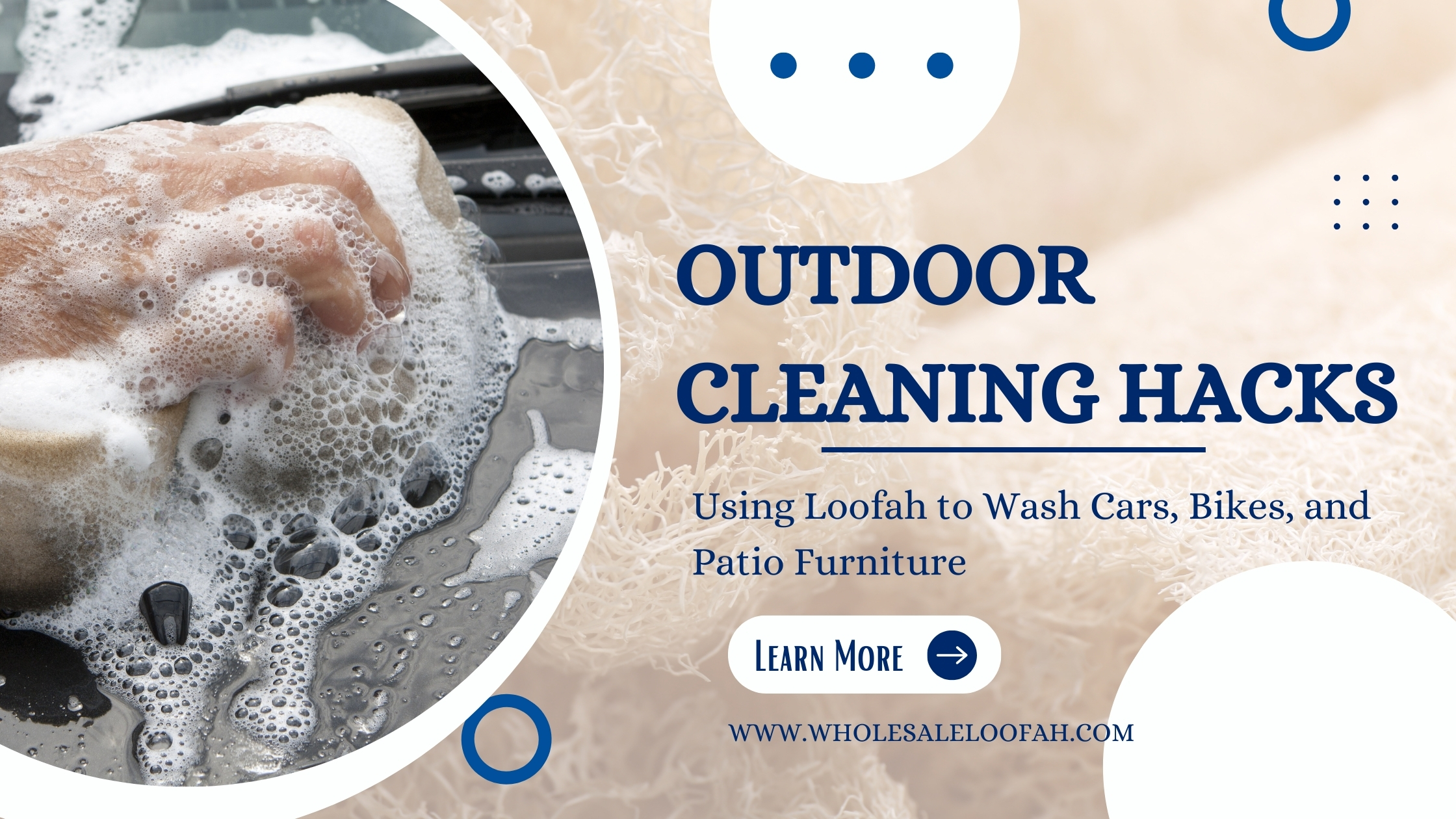
Natural loofah has moved far beyond bathroom shelves. Professional car wash operations, bicycle shops, resort maintenance teams, and cleaning service providers now rely on these versatile plant-based tools for demanding outdoor applications. These outdoor cleaning hacks represent more than environmental virtue signaling—they provide measurable performance advantages that translate directly to operational efficiency and customer satisfaction.
The business case strengthens when considering supply chain dynamics. Egyptian loofah, cultivated in the Nile Delta’s optimal growing conditions, offers consistent quality that synthetic alternatives struggle to match. Wholesale buyers accessing this supply chain gain cost advantages while positioning their operations for growing consumer demand for sustainable services and products.
This comprehensive resource serves wholesale purchasers evaluating loofah for commercial applications, retailers seeking to expand product offerings, and individual consumers interested in professional-grade outdoor cleaning techniques. From bulk sourcing strategies to staff training protocols, the information here supports informed decision-making across business scales.
The Commercial Advantage of Natural Loofah Fiber
Performance Characteristics That Matter for Business
Understanding loofah at the technical level helps procurement professionals make confident sourcing decisions. The plant’s fibrous interior develops through a natural dehydration process that creates interconnected channels and flexible support structures unlike any synthetic material.
These fibers measure between 150 and 450 micrometers in diameter, with Egyptian varieties clustering toward the denser end of this range. Density directly correlates with durability in commercial applications where products face repeated use across multiple cleaning cycles daily. Higher fiber density means longer service life and lower replacement frequency—critical factors for operations tracking consumable costs.
Flexibility under pressure distinguishes loofah from rigid scrubbing alternatives. When loofah contacts a surface, individual fibers deflect rather than concentrate force at contact points. This mechanical behavior prevents the scratching that causes customer complaints and potential liability in professional settings. Vehicle owners trust their paint to your car wash; furniture owners expect their pieces returned undamaged. Loofah delivers on these expectations consistently.
Water absorption characteristics provide additional commercial benefits. Quality loofah holds 15 to 20 times its dry weight in water, releasing cleaning solutions gradually during use. This controlled release reduces product consumption—a meaningful consideration when calculating chemical costs across thousands of washes annually.
Sustainability as Competitive Differentiation
Consumer research consistently demonstrates willingness to pay premiums for environmentally responsible services. A 2024 study found that 67 percent of consumers actively seek businesses demonstrating genuine sustainability commitments. Natural loofah provides visible, tangible evidence of such commitment.
Unlike greenwashing claims that sophisticated consumers increasingly recognize and reject, loofah represents authentic environmental benefit. The product biodegrades completely within 30 days of disposal, leaving zero persistent waste. Compare this to synthetic sponges that fragment into microplastics persisting for centuries in marine and terrestrial environments.
Marketing advantages extend beyond consumer perception. Business-to-business relationships increasingly require sustainability documentation. Hotels seeking eco-certifications, automotive dealerships pursuing green credentials, and municipalities mandating environmental purchasing all represent market segments where loofah sourcing supports competitive positioning.
For businesses ready to explore wholesale opportunities, Egexo provides comprehensive sourcing solutions backed by over 25 years of Egyptian loofah expertise.
Automotive Applications: From Single Vehicles to Fleet Operations
Professional Car Wash Integration
Commercial car wash operations process hundreds or thousands of vehicles monthly. At this volume, tool selection impacts labor efficiency, chemical consumption, supply costs, and customer satisfaction metrics. Natural loofah addresses each consideration favorably.
Labor Efficiency: Loofah’s conformable structure allows technicians to cover surface area quickly without repositioning for contours. Workers report reduced fatigue compared to rigid tools requiring repeated adjustment. Time studies at facilities implementing loofah show 8 to 12 percent reductions in per-vehicle cleaning time after staff adaptation periods.
Chemical Consumption: The controlled release mechanism described earlier translates to measurable soap savings. Facilities tracking consumption before and after loofah implementation report 18 to 25 percent reductions in wash solution usage. At commercial volumes, these savings substantially offset any premium in loofah versus synthetic tool costs.
Quality Outcomes: Scratch-free results eliminate rework and customer complaints. Professional detailing operations particularly value loofah’s gentleness on clear coats, where swirl marks directly impact customer perception of service quality.
Staff Training: Technicians familiar with synthetic sponges adapt to loofah techniques within one to two shifts. The primary adjustment involves learning optimal pressure—loofah requires less force than synthetic alternatives, and staff initially tend toward excessive pressure. Simple training protocols resolve this quickly.
Technique Standardization for Consistent Results
Operations seeking consistent outcomes across staff members benefit from standardized procedures. The following protocol provides a foundation adaptable to specific facility requirements.
Vehicle Reception: Rinse incoming vehicles thoroughly before contact washing begins. This step removes loose particulate matter that could become trapped in loofah fibers. High-pressure rinse systems work effectively; lower-pressure alternatives require longer rinse duration.
Loofah Preparation: Maintain dedicated soaking containers where loofahs remain submerged between uses. Saturated loofah performs optimally from first contact. Technicians retrieving tools should squeeze once to remove excess water before loading with wash solution.
Panel Sequence: Train staff to work top-to-bottom, completing upper surfaces before moving downward. This sequence prevents dirty water from upper panels contaminating freshly cleaned lower sections. Consistent sequencing also helps staff develop rhythm that improves throughput.
Rinse Protocol: Require loofah rinsing in clean water after every two to three panels. This discipline prevents grit accumulation that degrades results over time. Two-bucket systems facilitate this practice without workflow interruption.
Post-Wash Handling: Establish end-of-shift procedures for loofah cleaning and drying. Proper maintenance extends product life significantly, improving cost-per-use metrics that procurement tracks.
Automotive Business Application Matrix
| Business Type | Daily Volume | Recommended Inventory | Primary Benefits | ROI Timeline |
|---|---|---|---|---|
| Express Car Wash | 100-300 vehicles | 15-25 loofahs | Chemical savings, speed | 2-3 months |
| Full-Service Wash | 50-150 vehicles | 10-20 loofahs | Quality outcomes, complaints reduction | 3-4 months |
| Detailing Shop | 5-20 vehicles | 8-15 loofahs | Premium positioning, surface safety | 1-2 months |
| Dealership Service | 20-50 vehicles | 10-15 loofahs | Brand protection, customer satisfaction | 2-3 months |
| Fleet Maintenance | Variable | Based on fleet size | Standardization, cost control | 3-6 months |
| Mobile Detailing | 3-10 vehicles | 5-10 loofahs | Portability, eco marketing | 1-2 months |
For volume pricing on automotive-grade loofah products, request a wholesale quotation specifying your operational requirements.
Bicycle and Recreational Equipment Markets
Bike Shop Service Department Applications
Bicycle retailers increasingly recognize service departments as profit centers and customer retention tools. Cleaning services—whether standalone or bundled with mechanical work—provide revenue while building relationships that drive future sales.
Natural loofah fits this service model exceptionally well. The gentle yet effective cleaning action handles everything from carbon fiber road bikes to aluminum mountain bikes without finish concerns. Staff can work efficiently knowing the tool selection won’t generate damage claims that erode service profitability.
Carbon Fiber Considerations: High-end road and mountain bikes utilize carbon fiber extensively. This material requires careful handling during cleaning as harsh abrasives can create stress points that compromise structural integrity. Loofah’s flexible fibers clean effectively without risk, allowing shops to service premium bikes confidently.
Component Access: Bicycle geometry creates numerous recessed areas where contamination accumulates. Frame junctions, cable routing channels, and suspension pivot points all collect grime that affects both appearance and function. Loofah fibers work into these areas more effectively than flat-surfaced alternatives.
Chain and Drivetrain: Dedicated loofah tools remove chain grease and cassette buildup without damaging component finishes. This capability supports comprehensive cleaning services that customers value and pay premiums for.
Shops can differentiate their service offerings while aligning with sustainability values increasingly important to cycling enthusiasts. Marketing eco-friendly cleaning practices resonates particularly well with this environmentally conscious customer demographic.
Recreational Equipment Rental Operations
Businesses renting kayaks, paddleboards, golf equipment, camping gear, and similar items face constant cleaning demands. Equipment returning from customer use requires thorough cleaning before next rental—a labor-intensive process that consumes significant operational resources.
Loofah tools improve efficiency across rental cleaning workflows. The combination of effective cleaning action and gentle surface handling means staff work faster without fear of damaging inventory. Reduced damage translates directly to lower replacement costs and extended equipment service life.
Kayak and Paddleboard Rental: Hull cleaning removes algae, mineral deposits, and environmental residue that accumulates during water use. Loofah reaches hull contours effectively, and the natural fiber won’t scratch gelcoat or plastic surfaces.
Golf Equipment Rental: Club faces require cleaning between rentals to maintain performance and appearance. Loofah removes grass stains and soil from grooves without scratching club finishes.
Camping Gear: Tents, sleeping pads, and other equipment accumulate environmental residue requiring cleaning. Loofah handles coated fabrics and plastic components safely while delivering thorough cleaning.
Equipment Cleaning Efficiency Comparison
| Equipment Category | Traditional Cleaning Time | Loofah Cleaning Time | Surface Safety | Staff Preference |
|---|---|---|---|---|
| Road Bicycles | 25-35 minutes | 18-25 minutes | Excellent | High |
| Mountain Bikes | 35-50 minutes | 25-35 minutes | Excellent | High |
| Kayaks | 15-25 minutes | 10-18 minutes | Excellent | Moderate |
| Paddleboards | 10-15 minutes | 7-12 minutes | Excellent | Moderate |
| Golf Clubs (set) | 20-30 minutes | 15-22 minutes | Very Good | High |
| E-Bikes | 30-45 minutes | 22-32 minutes | Excellent | High |
Hospitality and Property Management Applications
Resort and Hotel Patio Furniture Programs
Hospitality properties maintain extensive outdoor furniture inventories requiring regular cleaning. Guest expectations for pristine poolside loungers, restaurant patio seating, and balcony furniture demand maintenance programs that deliver consistent results efficiently.
Natural loofah supports these programs across the diverse material types found in commercial outdoor furniture. From powder-coated aluminum frames to woven synthetic rattan, from teak wood tables to resin chaise lounges, loofah handles each material type safely and effectively.
Labor Deployment: Housekeeping and maintenance staff adapt quickly to loofah cleaning techniques. The intuitive nature of the tool requires minimal training investment while delivering professional outcomes. Staff report that loofah feels more effective than synthetic alternatives, improving job satisfaction in repetitive cleaning tasks.
Furniture Longevity: Aggressive cleaning with harsh tools accelerates furniture wear, requiring earlier replacement. Loofah’s gentle action maintains furniture appearance without contributing to surface degradation. Properties tracking furniture lifecycle costs report meaningful extensions when switching to natural loofah tools.
Guest Perception: Visible sustainability practices influence guest satisfaction and loyalty. Properties using natural cleaning tools can communicate this choice through in-room materials, staff training, and marketing content. The tangible nature of loofah—versus abstract sustainability claims—resonates with environmentally conscious travelers.
Property Management Efficiency
Residential and commercial property managers responsible for outdoor common areas face similar challenges at different scales. Pool deck furniture, courtyard seating, rooftop installations, and entrance landscaping elements all require regular maintenance.
Standardizing on loofah cleaning tools across properties simplifies procurement, training, and quality control. Staff moving between properties encounter consistent tools and procedures, maintaining quality regardless of assignment. Centralized purchasing leverages volume for better pricing while ensuring product quality consistency.
For hospitality and property management applications, explore wholesale purchasing options that support multi-property operations.
Hospitality Cleaning Program Cost Analysis
| Program Element | Synthetic Tools | Natural Loofah | Difference |
|---|---|---|---|
| Tool Cost (Annual) | $1,200-$1,800 | $1,400-$2,000 | +15-20% |
| Chemical Cost (Annual) | $3,500-$5,000 | $2,800-$4,000 | -20-25% |
| Labor Hours (Annual) | 1,200-1,500 | 1,000-1,250 | -15-20% |
| Furniture Replacement | $8,000-$12,000 | $6,000-$9,000 | -25-30% |
| Waste Disposal | $400-$600 | $50-$100 | -85-90% |
| Marketing Value | Minimal | Significant | N/A |
| Total Annual Impact | $13,300-$19,400 | $10,250-$15,350 | -20-25% |
Analysis based on mid-size resort property with 200+ outdoor furniture pieces
Wholesale Sourcing Strategy and Supplier Evaluation
Critical Factors for Procurement Professionals
Successful wholesale loofah procurement requires understanding factors that differentiate suppliers and products. Not all loofah reaches commercial-grade quality standards, and sourcing decisions significantly impact operational outcomes.
Geographic Origin: Egyptian loofah from the Nile Delta region consistently outperforms alternatives from other growing regions. The combination of climate, soil composition, and multi-generational cultivation expertise produces denser, more durable fibers. Verify supplier claims about Egyptian origin through documentation and sample evaluation before committing to volume purchases.
Processing Quality: Raw loofah requires careful processing to achieve commercial readiness. Proper drying prevents mold development while maintaining fiber flexibility. Complete seed removal ensures clean products that perform consistently. Grading accuracy determines whether received products match specifications. Egexo maintains rigorous quality standards across all product grades.
Supply Reliability: Commercial operations depend on consistent supply. Evaluate supplier capacity, inventory practices, and track record for on-time delivery. Request references from current customers in similar industries. Understand lead times for standard orders and expedited fulfillment when needed.
Communication Quality: International sourcing requires clear communication across time zones and potential language barriers. Assess supplier responsiveness during evaluation phases—communication quality during sales typically indicates ongoing relationship quality.
Documentation Completeness: Export documentation, quality certifications, and customs paperwork affect import smoothness. Experienced suppliers provide complete documentation packages that facilitate customs clearance without delays.
Supplier Evaluation Framework
| Evaluation Category | Weight | Key Questions | Documentation Needed |
|---|---|---|---|
| Product Quality | 30% | Sample quality, grade consistency, fiber density | Quality certificates, sample shipments |
| Supply Reliability | 25% | Production capacity, inventory levels, delivery track record | Customer references, capacity documentation |
| Pricing Structure | 20% | Volume pricing, payment terms, currency handling | Price lists, term sheets |
| Communication | 15% | Response time, language capability, problem resolution | Trial interaction assessment |
| Documentation | 10% | Export papers, certifications, customs support | Documentation samples |
Building Supplier Relationships
Long-term supplier relationships deliver advantages beyond transactional purchasing. Established relationships provide priority allocation during supply constraints, flexibility in order sizing, and access to new product development opportunities.
Begin relationships with smaller trial orders that test supplier performance before committing to volume. Sample requests allow hands-on quality evaluation without significant financial commitment. Successful trials build confidence for larger orders.
Communicate your business needs clearly, including volume projections, quality requirements, and delivery expectations. Suppliers who understand your operation can better support your success. Share feedback—positive and constructive—to help suppliers optimize their service to your needs.
Consider exclusivity arrangements for differentiated products. Custom product development and private label manufacturing create products unavailable to competitors, supporting market differentiation strategies.
Product Line Development for Retailers
Market Opportunity in Outdoor Cleaning
Retailers currently stock bathroom loofah products almost exclusively. The outdoor cleaning category remains dominated by synthetic products despite growing consumer demand for sustainable alternatives. This gap represents significant opportunity for retailers willing to pioneer natural loofah in outdoor applications.
Category Expansion: Adding outdoor cleaning loofah to existing bath product assortments requires minimal merchandising adjustment. Cross-category signage guides consumers to appropriate products while educating them about expanded applications.
New Customer Acquisition: Consumers shopping for car wash or patio furniture care products represent different demographics than bathroom accessory shoppers. Outdoor cleaning loofah attracts new customers to natural product sections, potentially introducing them to broader natural product assortments.
Margin Opportunity: Outdoor cleaning represents a less price-sensitive category than bathroom products. Consumers invest significantly in vehicles and outdoor furniture; protecting these investments with quality cleaning tools justifies premium pricing. Natural loofah commands higher margins than commoditized synthetic alternatives.
Product Assortment Recommendations
| Product Type | Target Application | Suggested Retail | Margin Potential | Consumer Appeal |
|---|---|---|---|---|
| Large Whole Loofah | Vehicle washing | $12-$18 | 55-65% | High |
| Medium Cut Sections | Bicycle, equipment | $8-$12 | 50-60% | Moderate |
| Multi-Pack Assortment | General outdoor | $15-$25 | 60-70% | High |
| Specialty Shapes | Detail work | $6-$10 | 45-55% | Moderate |
| Bulk Economy | Value shoppers | $20-$30 | 40-50% | Moderate |
Merchandising Best Practices
Placement Strategy: Position outdoor cleaning loofah products in multiple store locations. Primary placement near car care products captures automotive-focused shoppers. Secondary placement in outdoor living sections reaches furniture care shoppers. Cross-merchandising with garden and patio items extends reach further.
Educational Signage: Many consumers don’t associate loofah with outdoor cleaning applications. Clear signage explaining uses, benefits, and techniques educates shoppers and overcomes purchase hesitation. Include sustainability messaging that resonates with environmentally conscious consumers.
Demonstration Opportunities: Where feasible, in-store demonstrations showcase loofah effectiveness dramatically. Staff cleaning store fixtures or product samples generates customer interest and provides natural sales opportunities.
Bundling Strategies: Create bundles combining loofah with complementary products like eco-friendly car wash concentrate or furniture care solutions. Bundles increase transaction value while providing complete solutions customers appreciate.
For retail inventory sourcing, download the complete Egexo wholesale catalog featuring product specifications and volume pricing.
Care and Maintenance: Maximizing Commercial Product Life
Protocols for High-Volume Operations
Commercial operations cycling loofah products through multiple daily uses require maintenance protocols that maximize service life while ensuring consistent performance. Proper care dramatically impacts cost-per-use metrics that procurement professionals track.
Between-Use Rinsing: Establish mandatory rinse procedures after each use. Thorough rinsing removes trapped particulates that degrade both loofah fibers and cleaning results over time. Clean water rinse stations positioned at workstations facilitate compliance without workflow disruption.
End-of-Shift Processing: Collect all loofah products for thorough cleaning at shift end. Washing with mild detergent removes accumulated residue that daily rinsing misses. This processing maintains performance levels and prevents contamination buildup.
Drying Infrastructure: Invest in proper drying facilities. Ventilated racks, drying cabinets, or climate-controlled storage areas ensure complete drying between shifts. Incomplete drying promotes bacterial growth that shortens product life and creates hygiene concerns.
Rotation Systems: Maintain inventory levels supporting 48-hour minimum drying cycles. Products used one shift should dry completely before next use, requiring at least two complete sets in rotation. Larger operations may need three or more rotation sets depending on shift schedules.
Inspection and Replacement: Train staff to recognize replacement indicators including fiber breakdown, persistent odors, and reduced cleaning effectiveness. Timely replacement prevents degraded products from affecting service quality. Establish replacement schedules based on observed wear patterns in your specific application.
Commercial Maintenance Schedule
| Maintenance Activity | Frequency | Responsible Party | Time Investment | Impact |
|---|---|---|---|---|
| Use-cycle rinsing | After each use | Operator | 30-60 seconds | Critical |
| End-of-shift wash | Daily | Supervisor/designated | 5-10 minutes | Critical |
| Complete drying | 24-48 hours | Facility systems | Passive | Critical |
| Weekly sanitization | Weekly | Maintenance | 30 minutes | Important |
| Inventory inspection | Weekly | Supervisor | 15 minutes | Important |
| Replacement assessment | Monthly | Procurement | 30 minutes | Important |
| Protocol review | Quarterly | Management | 1 hour | Moderate |
Cost-Per-Use Optimization
Tracking cost-per-use provides objective data for maintenance protocol refinement. Calculate by dividing total loofah costs (purchase plus maintenance labor) by total uses before replacement.
Well-maintained commercial loofah achieves 150 to 250 uses before replacement in demanding applications like car washing. Poor maintenance reduces this to 50 to 80 uses—tripling effective product costs. The maintenance investment pays returns through extended product life.
Document maintenance compliance and correlate with product lifespan data. This analysis identifies which protocols deliver greatest impact, allowing resource allocation optimization. Share findings across locations to propagate best practices throughout operations.
Natural Versus Synthetic: Comprehensive Business Comparison
| Business Factor | Natural Loofah | Synthetic Sponge | Microfiber | Chamois |
|---|---|---|---|---|
| Initial Cost | Moderate | Low | Moderate-High | High |
| Lifespan | 4-6 months | 1-2 months | 6-12 months | 12-18 months |
| Cleaning Performance | Excellent | Good | Very Good | Good |
| Surface Safety | Excellent | Variable | Good when maintained | Excellent |
| Chemical Efficiency | Excellent | Moderate | Good | Poor |
| Environmental Impact | Positive | Negative | Negative | Neutral |
| Customer Perception | Positive | Neutral | Neutral | Neutral |
| Staff Preference | High | Moderate | Moderate | Moderate |
| Marketing Value | High | None | Low | Low |
| Disposal Cost | Minimal | Moderate | Moderate | Low |
| Supply Consistency | Good | Excellent | Excellent | Good |
| Customization Options | Extensive | Limited | Moderate | Limited |
FAQ Section
Q1: What minimum order quantities apply for wholesale loofah purchases?
A: Minimum order quantities vary by supplier and product type. Egexo offers flexible MOQs starting at approximately 500 pieces for standard products, with higher minimums for custom or private label items. Trial orders at reduced quantities help businesses evaluate products before volume commitments. Contact wholesale specialists to discuss quantities appropriate for your business scale and application.
Q2: How should businesses handle loofah products that contact different surface types?
A: Establish dedicated loofah inventories for distinct applications. Automotive operations should maintain separate loofahs for body panels versus wheels, preventing brake dust and road tar contamination from affecting paint-safe tools. Color coding or physical segregation prevents cross-contamination. This practice protects customer assets and extends individual product life by reducing exposure to aggressive contaminants.
Q3: What certifications should wholesale buyers request from loofah suppliers?
A: Key certifications include organic growing certifications where applicable, export documentation from country of origin, phytosanitary certificates confirming pest-free products, and quality grading documentation. Some applications may require specific certifications—food service contexts might need food-safe processing confirmation. Egexo maintains comprehensive documentation supporting various certification requirements.
Q4: Can loofah tools be sanitized for use across multiple customers?
A: Yes, with appropriate protocols. Between-customer sanitization using diluted bleach solutions, quaternary sanitizers, or steam treatment effectively eliminates bacterial contamination. Ensure thorough rinsing after chemical sanitization to prevent residue transfer to subsequent customers’ surfaces. Many operations prefer individual loofah assignment per vehicle or customer to simplify sanitation compliance.
Q5: How do seasonal factors affect loofah supply and pricing?
A: Egyptian loofah harvest occurs primarily in late summer through fall, with processing extending into winter months. Prices typically stabilize during peak supply periods and may increase slightly during spring when previous harvest inventory diminishes. Wholesale buyers benefit from forward ordering that secures inventory before seasonal tightening. Established suppliers maintain inventory buffers that smooth seasonal variations for regular customers.
Q6: What product sizes work best for commercial vehicle washing applications?
A: Whole loofah cylinders measuring 20 to 30 centimeters in length provide optimal surface coverage for vehicle body panels while remaining manageable for extended use. Larger products reduce reloading frequency but may prove cumbersome in tight spaces. Smaller cut sections serve detail areas around mirrors, door handles, and trim. Most operations maintain size assortments addressing different washing phases. Raw loofah products offer sizing flexibility for commercial applications.
Q7: How quickly can new suppliers fulfill initial wholesale orders?
A: Fulfillment timelines depend on order size, product specifications, and shipping method. Standard products typically ship within one to two weeks of order confirmation. Custom products require additional production time—four to eight weeks depending on complexity. Expedited shipping options reduce transit time for urgent needs. Discuss timeline requirements during quotation to ensure supplier capacity aligns with your needs.
Expert Insight from Egexo
Commercial applications represent the most exciting growth area for Egyptian loofah products. After decades supplying primarily consumer bath products, we now partner with automotive detailing operations, hospitality groups, and equipment rental businesses discovering loofah’s remarkable versatility.
The key insight for business buyers involves understanding that outdoor cleaning loofah differs from bathroom products despite shared origins. Commercial applications demand denser fiber structures, larger product sizes, and durability that withstands repeated professional use. Not all suppliers offer products meeting these specifications—selecting partners who understand commercial requirements prevents disappointing outcomes.
We encourage wholesale buyers to invest time in proper product evaluation before volume commitments. Request samples across grade levels and sizes. Test products in your actual applications with your staff following your procedures. This investment in evaluation pays returns through confident purchasing decisions that deliver expected operational results.
Egyptian loofah remains the best loofah choice for demanding commercial applications because our growing conditions produce the fiber density and structural integrity that professional use requires. Partner with suppliers who understand these requirements and maintain quality standards that support your business success.
Conclusion
Using loofah to wash cars, bikes, and patio furniture delivers compelling business advantages that extend far beyond environmental responsibility. These outdoor cleaning hacks improve operational efficiency, reduce consumable costs, enhance customer satisfaction, and support marketing differentiation in increasingly competitive markets.
The commercial case for natural loofah strengthens across diverse applications. Automotive operations benefit from chemical savings and quality outcomes. Bicycle shops and equipment rental businesses gain efficiency while protecting valuable inventory. Hospitality properties reduce furniture lifecycle costs while meeting guest expectations for sustainable practices.
Wholesale sourcing requires careful supplier evaluation focusing on product quality, supply reliability, and partnership commitment. Egyptian loofah from established suppliers like Egexo provides the consistency and commercial-grade specifications that professional applications demand.
Key Takeaways:
- Commercial loofah applications deliver 20 to 25 percent total cost reductions compared to synthetic alternatives
- Egyptian loofah’s fiber density and durability support demanding professional use cycles
- Proper maintenance protocols extend product life to 150-250 uses in commercial settings
- Retail opportunity exists in underserved outdoor cleaning category currently dominated by synthetics
- Supplier relationships built on quality evaluation and clear communication maximize sourcing success
Ready to explore wholesale loofah for your business?
- Request Volume Pricing: Get a wholesale quotation
- Evaluate Product Quality: Order samples
- Review Full Product Range: Download catalog
- Explore Custom Development: Private label options