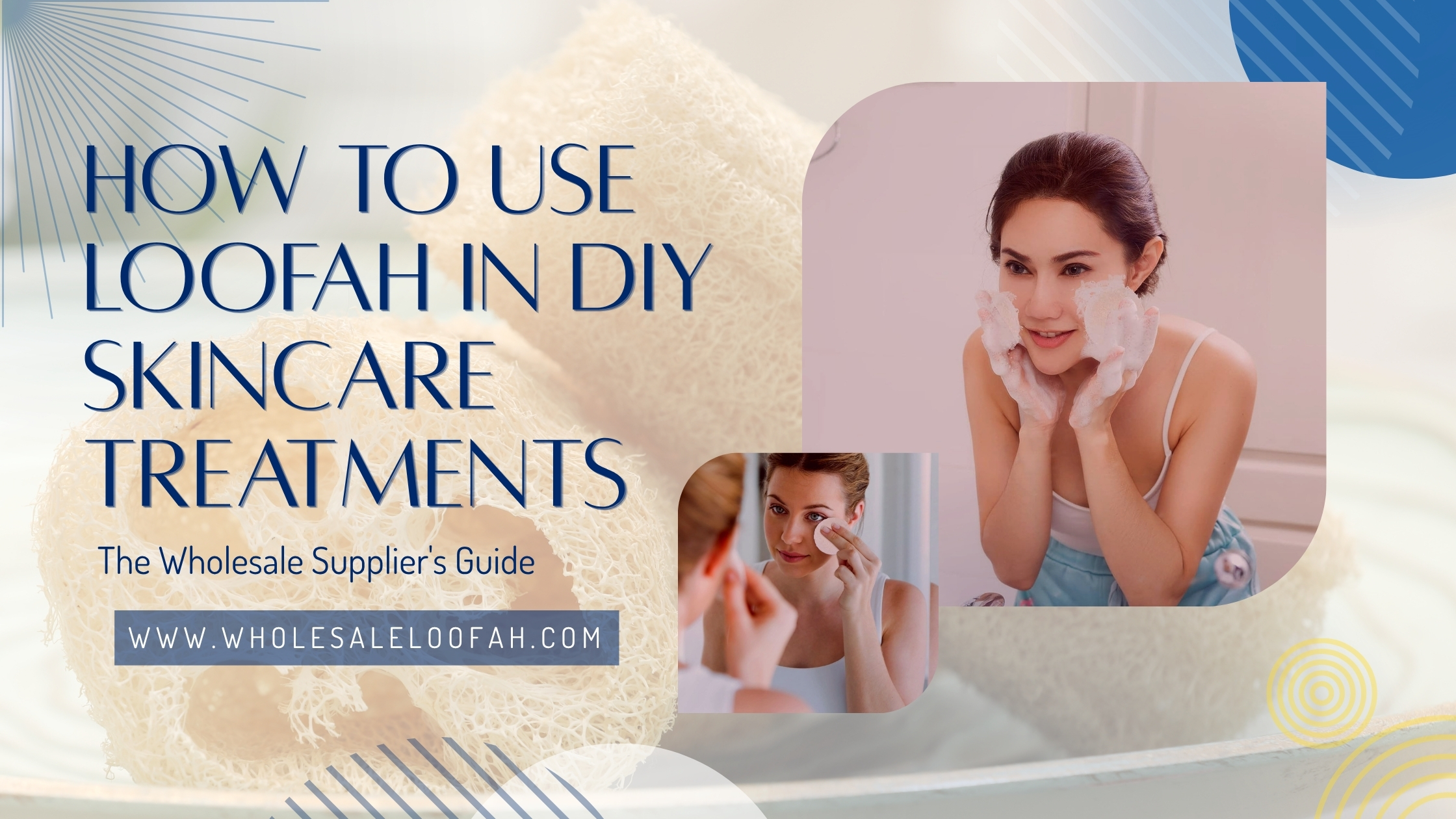
Why Understanding How to Use Loofah in DIY Skincare Treatments Matters to Wholesale Buyers
Here is something that most wholesale product guides skip entirely: the best way to sell a product is to understand, deeply and practically, how your end customer uses it. For natural loofah wholesale buyers, that means understanding how to use loofah in DIY skincare treatments well enough to speak your customer’s language, develop the right product assortment, and build marketing content that drives conversion.
The DIY skincare movement is not slowing down. Consumer interest in at-home spa treatments, natural ingredient body scrubs, and sustainable bathing routines grew by an estimated 23 percent between 2022 and 2025, and natural loofah is at the center of that growth. Retailers who understand what consumers are actually doing with their loofah in the bathroom are the ones positioning product categories correctly and driving the repurchase cycles that build sustainable revenue.
This guide serves two purposes. For spa professionals and wellness retailers who are also practitioners themselves, it provides the treatment knowledge that makes you a credible expert in your product category. For importers and distributors who are primarily commercial buyers, it provides the consumer insight that should be shaping your sourcing decisions, your product range, and your marketing brief to retail clients.
EGEXO has been exporting Egyptian loofah since 2015. Our farm-direct supply model and extensive product range are built around an intimate understanding of how natural loofah is used, what performance standards consumers expect, and what quality specifications make or break a product line. Visit WholesaleLoofah.com for additional wholesale resources, or explore Egexo’s full range at the Browse.
The DIY Skincare Market: What the Data Tells Wholesale Buyers
Before building a product range around DIY loofah skincare, wholesale buyers need a clear picture of the market they are entering.
Market Size and Growth Trends
The most commercially significant finding in this data is the repurchase frequency difference. Consumers who use natural loofah in active DIY skincare treatments replace their loofah every 6 to 8 weeks rather than the standard 3 to 4 months, because food-based ingredients accelerate fiber breakdown. This means your DIY-oriented customer generates roughly twice the repeat purchase volume of a basic shower user. Building marketing content that encourages DIY loofah use is therefore a direct driver of your own sales volume.
What DIY Skincare Consumers Actually Want from Natural Loofah
Based on consumer purchase behavior and review data from wellness retail channels, DIY skincare consumers prioritize these product attributes in order:
- Verified natural origin, with Egyptian origin commanding the highest trust
- Consistent fiber density for even exfoliation pressure
- Appropriate grade selection for their specific use (body vs face, firm vs soft)
- Natural color without bleaching or artificial treatment
- Eco credentials including biodegradability and plastic-free packaging
Each of these consumer priorities maps directly to a product specification decision that wholesale buyers need to make when sourcing. Egexo’s quality standards documentation addresses all five criteria with measurable specifications that you can communicate to your retail buyers.
How Consumers Use Loofah in DIY Skincare Treatments: A Practical Overview
Understanding the actual consumer use patterns is essential for product development and buyer communication. Here is how DIY skincare consumers are using natural loofah and what they need from the product at each stage.
Use Pattern 1: Weekly Body Scrub Ritual
The most common DIY use involves combining a natural loofah with a homemade scrub mixture, typically sugar or salt based, for a weekly full-body exfoliation treatment. This is usually done in the shower after a 5-minute warm-up period when pores are open and skin is receptive.
The loofah for this use needs to be firm enough to carry scrub ingredients and apply consistent pressure, but not so abrasive that it causes discomfort when loaded with coarse scrub particles. A standard grade Egyptian loofah with moderate fiber density is ideal.
Retail buyers stocking for this use case should source standard grade bath and body loofahs in mid-size diameters of 10 to 12 cm, which are the most versatile for full-body scrub application.
Use Pattern 2: Pre-Shower Dry Brushing
A growing segment of wellness consumers practices daily or near-daily dry brushing before showering. This technique uses a completely dry loofah in long upward strokes to stimulate lymphatic drainage and exfoliate without water.
Loofahs for dry brushing need to be slightly firmer than wet-use loofahs because the lack of water softening means the fiber is at its most abrasive. Consumers who dry brush prefer smaller, more manageable loofah sizes around 8 to 10 cm diameter that are easier to grip and control.
Use Pattern 3: Targeted Treatment Areas
Consumers treating specific body concerns like rough elbows, keratosis pilaris on the upper arms, or callused heels use loofah in a targeted way, often cutting a standard loofah into smaller pieces or using a dedicated small-format loofah pad.
Raw loofah scrubbers in bulk are the right product for retailers who want to offer consumers the option to cut and customize their loofah for targeted use. This is also a strong value-add for brands creating multi-piece DIY skincare kit products.
Use Pattern 4: DIY Spa Treatment Replication
This is the highest-value use segment. Consumers who have experienced professional spa loofah treatments want to replicate those results at home. They typically invest more in loofah quality, use premium DIY ingredient recipes, and follow more structured treatment protocols.
These consumers are the target audience for premium Egyptian loofah products and private label branded kits. For wholesale buyers, they represent the highest average transaction value and the strongest brand loyalty once a quality product earns their trust.
The DIY Treatment Recipes Driving Consumer Demand: What Wholesale Buyers Should Know
Wholesale buyers do not need to be skincare formulation experts, but understanding which DIY recipes are most popular helps you make better product decisions and communicate more effectively with your retail clients.
The Five Most Popular DIY Loofah Treatment Recipes (Consumer Trend Data)
| Recipe Type | Primary Ingredients | Target Concern | Loofah Grade Required |
|---|---|---|---|
| Coffee and coconut oil | Ground coffee, coconut oil, sugar | Cellulite, circulation | Standard to firm |
| Honey and sea salt | Raw honey, sea salt, carrier oil | – | Standard |
| Oatmeal and milk | Colloidal oatmeal, milk, lavender | Sensitive skin calming | Soft grade |
| Clay and charcoal | Bentonite clay, activated charcoal | Detox, congested pores | Standard to firm |
| Sugar and olive oil | Brown sugar, extra virgin olive oil | Hydration, gentle exfoliation | Standard |
Each of these recipes requires a specific loofah grade to perform correctly. A soft grade loofah cannot carry a heavy clay scrub effectively. A firm grade loofah used with the oatmeal calming recipe will over-exfoliate sensitive skin. Wholesale buyers who understand this match between recipe type and loofah grade are equipped to build a tiered product assortment and guide their retail buyers toward the correct product for each end use.
Sharing this kind of product knowledge with your retail customers transforms you from a commodity supplier into a category consultant. That is a positioning that commands better terms and earns longer partnerships.
Building a DIY Loofah Product Range: The Commercial Blueprint
For wholesale buyers who want to build a serious natural loofah product range around the DIY skincare opportunity, the following framework covers the key product category decisions.
Product Range Architecture for DIY Skincare
| Product Tier | Product Type | Target Use | Loofah Spec | Margin Profile |
|---|---|---|---|---|
| Entry level | Standard natural loofah | Basic weekly scrub | Standard grade, 10 cm | Moderate |
| Core range | Premium Egyptian loofah | Regular DIY treatments | Premium grade, 12 cm | High |
| Specialist | Soft grade facial loofah pad | Facial DIY treatments | Soft grade, 8 cm round | High |
| Professional | Extra firm body loofah | Intensive treatments, dry brushing | Firm grade, 14 cm | High |
| Kit | DIY skincare kit with 2-3 loofah formats | Multi-use home spa experience | Mixed grades | Very high |
| Private label | Branded Egyptian loofah | Retail differentiation | Premium grade, custom | Premium |
The kit tier and private label tier represent the highest margin opportunities in this range. Consumers purchasing a curated DIY skincare kit are paying for curation value on top of product value, which allows significant pricing premiums over individual product sales.
Egexo’s private label loofah manufacturing service supports the development of branded loofah products and kits at any tier in this range. The custom loofah product design team can develop bespoke loofah formats, including dual-texture pads and pre-cut treatment pieces, that add genuine product differentiation to your kit offering.
Download the Egexo product catalog to map available products to each tier in this framework before building your range plan.
Quality Sourcing: Why Egyptian Loofah Is the Only Credible Choice for Premium DIY Products
The DIY skincare consumer is more informed than any previous generation of personal care buyers. They read ingredient labels, research product origins, and share their experiences on social media platforms that have real purchasing influence. Sourcing inferior loofah for a DIY product line is a risk that manifests quickly in online reviews and returns.
Egyptian loofah from the Nile Delta is the only origin that carries universal recognition as a quality standard among informed consumers. It is the Ferrari of the loofah world in terms of what it means to say it on a product label.
What Makes Egyptian Loofah Technically Superior for DIY Applications
| Technical Attribute | Egyptian Loofah Standard | Generic Import Standard | DIY Impact |
|---|---|---|---|
| Fiber density | High, uniform mesh structure | Variable, often sparse | Consistent exfoliation pressure across treatment |
| Moisture content at export | Less than 12 percent (premium grade) | Often 15 to 20 percent | Longer usable life before mold risk |
| Fiber flexibility when wet | High, molds to body contours | Moderate, can feel rigid | Better scrub ingredient distribution |
| Size consistency across batch | Within 5 percent tolerance | Often 15 to 20 percent variation | Predictable retail presentation |
| Resistance to fiber breakdown | High with proper care | Lower, breaks apart faster | Better longevity, fewer consumer complaints |
These technical advantages translate into commercial outcomes that wholesale buyers can measure: lower return rates, stronger repeat purchase rates, fewer customer service issues, and a product that earns positive online reviews rather than negative ones.
Egexo’s farm to export process is one of the most transparent in the Egyptian loofah industry and documents exactly how these technical standards are maintained from agricultural cultivation through to export packaging.
For any wholesale buyer who wants to verify quality claims before committing to bulk orders, requesting loofah samples is the standard industry practice. Egexo supplies production-representative samples, not curated showcase pieces.
Practical Loofah Care Guidelines to Share with Your Retail Customers
Wholesale buyers who equip their retail clients with consumer care guidance reduce returns, increase customer satisfaction, and build the kind of end-user loyalty that drives repeat purchases.
Core Care Guidelines for DIY Use
| Care Step | Action | Frequency | Why It Matters |
|---|---|---|---|
| Rinse thoroughly | Under hot running water for at least 60 seconds | After every use | Removes food and scrub residue |
| Squeeze dry | Remove all moisture completely | After every use | Prevents bacterial growth |
| Hang to dry | In ventilated area, not in closed shower | After every use | Air circulation is essential |
| Vinegar soak | 1 part white vinegar to 4 parts water, 10 minutes | After every food-ingredient treatment | – |
| Sunlight drying | Lay in direct sunlight | Weekly when possible | – |
| Replace | With a new loofah | Every 6-8 weeks for DIY users | Food ingredient use accelerates breakdown |
Including a simple care card in your loofah retail packaging is a low-cost, high-value addition that improves the consumer experience and reduces the likelihood of complaints related to odor or fiber breakdown from improper care. Egexo’s custom loofah product design team can help incorporate care guidance into your packaging design.
FAQ Section
Q1: How do wholesale buyers use knowledge of DIY loofah skincare to improve their product range? A: Understanding how to use loofah in DIY skincare treatments allows wholesale buyers to match loofah grades to consumer use cases, build tiered product assortments, and develop higher-margin kit products. Buyers who understand that DIY users replace loofahs every 6 to 8 weeks rather than every 3 to 4 months can also model higher volume per customer account and communicate this repurchase advantage to their retail partners.
Q2: What loofah grades should I stock for a DIY skincare-focused retail assortment? A: A complete DIY-focused assortment should include at minimum three grades: soft grade for facial and sensitive skin applications, standard grade for general body scrub use, and firm grade for intensive treatments, dry brushing, and foot and heel care. A raw loofah scrubber option for consumers who want to cut and customize is a valuable fourth addition for specialty wellness retailers.
Q3: How does Egyptian loofah quality affect DIY treatment results for end consumers? A: Egyptian loofah’s dense, uniform fiber mesh provides consistent exfoliation pressure across the entire treatment surface, which is the key to even-toned results. Generic loofah with variable fiber density produces uneven exfoliation: some areas are over-treated while sparse fiber zones are under-treated. This inconsistency leads to consumer complaints and returns. Premium Egyptian loofah from Egexo eliminates this problem with verified fiber density grading.
Q4: What is the minimum order quantity for loofah grades suited to DIY skincare products? No minimum order on standard products. Private label from 1,000 units. Premium grade loofah for spa and high-end retail DIY applications starts at 1,000 units. Tiered MOQ structures are available for buyers building multi-grade assortments.
Q5: How should retailers communicate the DIY skincare benefits of natural loofah to customers? A: The most effective retail communication focuses on three benefits: better exfoliation results than synthetic alternatives, compatibility with homemade scrub recipes for a complete at-home spa experience, and zero environmental footprint through full biodegradability. Recipe cards included with product packaging, in-store demonstrations, and social media content showing DIY treatment techniques all convert browsers into buyers and encourage higher average basket sizes.
Q6: What DIY loofah products have the highest retail margin potential? A: Curated DIY skincare kits featuring two or three loofah grades alongside branded recipe cards or treatment guides carry the highest margin potential, typically priced between USD 25 and USD 65 at retail. Private label branded Egyptian loofah in premium packaging is the second highest margin opportunity, allowing retail price premiums of 40 to 60 percent over unbranded alternatives. Egexo’s private label service supports both product types.
Q7: How do I communicate the replacement frequency advantage of DIY loofah use to my retail buyers? A: Present the data directly: DIY skincare loofah users replace their product every 6 to 8 weeks versus every 3 to 4 months for basic shower users, representing 4 to 6 replacement purchases per year rather than 2 to 3. This higher repurchase frequency generates significantly more annual revenue per loyal customer. Retailers who understand this dynamic stock accordingly and actively educate consumers about proper replacement schedules, which drives sales rather than reducing them.
Expert Insight from EGEXO
From a wholesale supply perspective, the DIY skincare trend has changed how we think about loofah product specification. For years, the primary consideration was size and basic fiber density for standard shower use. Today, we receive detailed technical questions from product developers building DIY kit brands who need to understand the difference between grades at a level of precision we did not encounter 10 years ago. That shift reflects how seriously the market is taking natural loofah as a functional skincare tool rather than a commodity bathroom accessory. Our response has been to deepen our grading process, expand our grade range, and invest in documentation that helps buyers understand exactly what they are getting. For wholesale buyers who want to lead in this market, working with a supplier who understands these nuances at the cultivation level is not a luxury. It is a competitive requirement.
To discuss your order, request a quote from EGEXO.
Conclusion
Understanding how to use loofah in DIY skincare treatments is not peripheral knowledge for wholesale buyers. It is central to making the right product sourcing decisions, building the right retail assortments, and communicating effectively with both retail partners and end consumers. The DIY skincare category is growing, the natural loofah segment is growing faster, and Egyptian loofah from a verified farm-direct source is the product that delivers on the quality expectations this market demands.
Egexo supplies the premium Egyptian loofah that sits at the center of the most successful natural DIY skincare product lines in the market today.
Key Takeaways:
- DIY skincare loofah users repurchase every 6 to 8 weeks, generating double the volume of basic shower users
- A complete DIY-focused loofah assortment requires at minimum three grades: soft, standard, and firm
- Egyptian loofah’s fiber uniformity is the technical foundation of consistent DIY treatment results
- Curated DIY skincare kits with private label Egyptian loofah represent the highest margin wholesale opportunity
- Sharing consumer care and treatment knowledge with retail buyers is a commercial differentiator for wholesale suppliers
Ready to experience Egyptian loofah quality?
- For Wholesale Buyers: Request a quote or download our catalog
- For Individual Orders: Browse our collection or order samples