The Business Case for Sensitive Skin Loofah Products
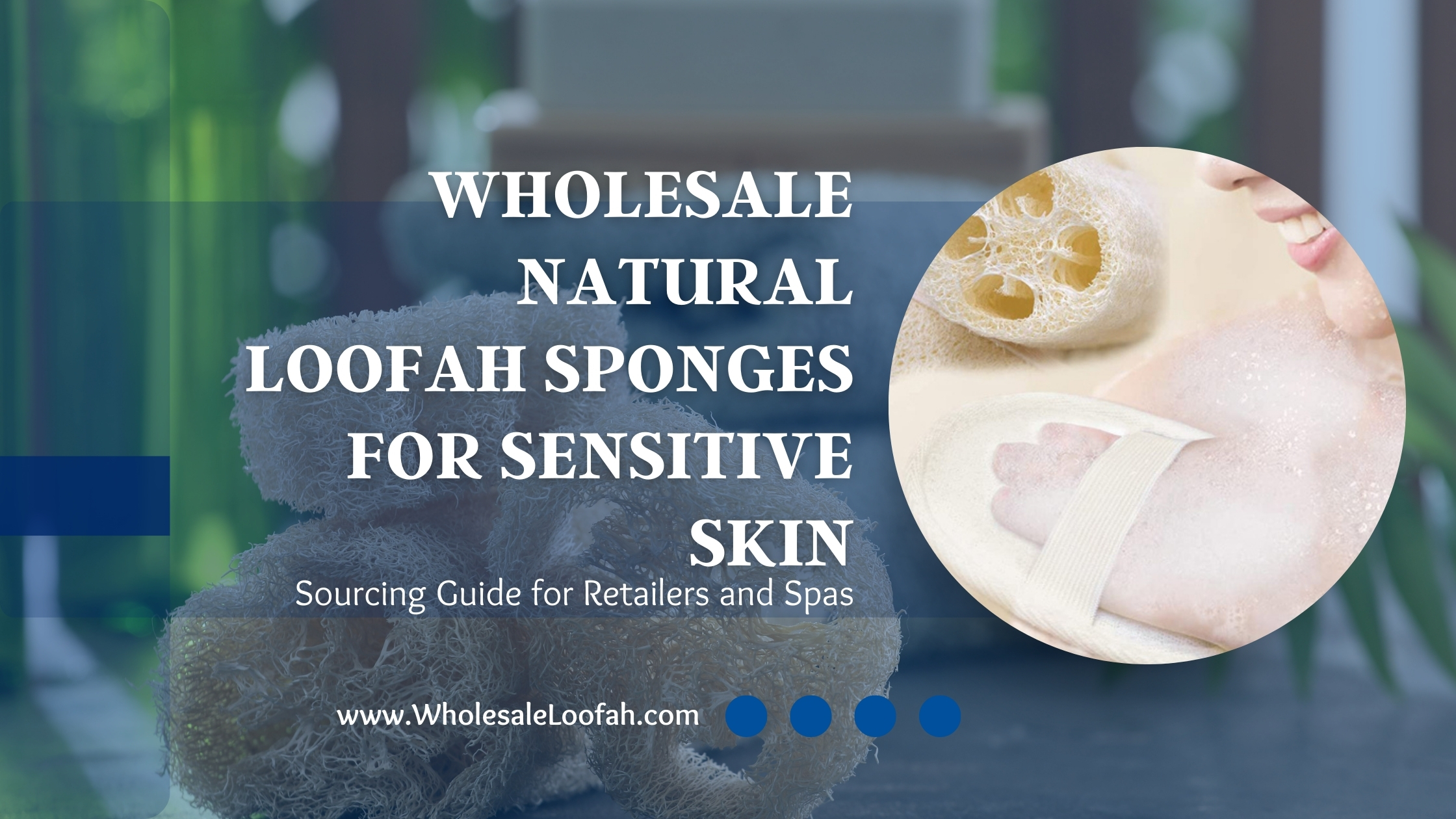
Retailers watching synthetic bath product sales flatten while natural alternatives surge understand something important is happening in personal care markets. The sensitive skin segment alone now drives 23 percent of all skincare purchases globally, representing a customer base actively seeking products that major synthetic manufacturers cannot adequately serve. Natural loofah sponges for sensitive skin occupy a profitable intersection of consumer demand, premium pricing acceptance, and sustainable product sourcing.
Wholesale buyers entering this market today position themselves ahead of a curve still building momentum. Early movers establishing supplier relationships, inventory positions, and customer bases capture disproportionate market share as demand accelerates.
Egyptian grown loofahs command this market for documented quality reasons that translate directly into business advantages. Products sourced from Nile Delta cultivation earn higher retail prices, generate fewer customer complaints, and build stronger repeat purchase patterns than alternatives from other growing regions. EGEXO has been exporting Egyptian loofah since 2015.
This guide delivers the specific information wholesale buyers need. Retailers will find market positioning guidance and inventory planning frameworks. Spa and wellness businesses will discover product specifications for professional treatment applications. Hospitality purchasers will learn about bulk amenity programs and custom branding options. Distributors will gain insight into building profitable loofah product lines.
Explore wholesale opportunities through WholesaleLoofah.com or browse the complete product catalog to evaluate inventory options.
Market Analysis: Why Sensitive Skin Products Outperform
Consumer Spending Patterns
Understanding purchasing behavior in the sensitive skin segment helps wholesale buyers make smarter inventory investments. This customer demographic exhibits distinct patterns that differentiate them from general skincare consumers.
Price sensitivity decreases dramatically among sensitive skin shoppers. Failed product experiments causing discomfort condition this audience to value effectiveness over economy. Wholesale margins expand accordingly when serving this market.
Brand loyalty exceeds other skincare segments significantly. Customers finding products that work for their challenging skin rarely switch, producing repeat purchase rates approaching 70 percent compared to 40 percent category averages. This loyalty reduces customer acquisition costs for retailers and stabilizes revenue projections.
Research intensity before purchase runs high in this demographic. Sensitive skin consumers read reviews, investigate ingredients, verify sourcing claims, and compare alternatives thoroughly before buying. Retailers providing detailed product information and transparent sourcing documentation convert these informed shoppers more effectively.
Wholesale Market Opportunity Metrics
These metrics support inventory investment decisions and business case development for wholesale purchasing programs. The combination of market growth, premium pricing, and customer retention creates attractive unit economics for retailers at all scales.
Egyptian Loofah Quality: The Wholesale Advantage
Geographic Quality Differentiation
Wholesale buyers frequently encounter loofahs from multiple source regions at varying price points. Understanding quality differences prevents costly purchasing mistakes that damage customer relationships and generate returns.
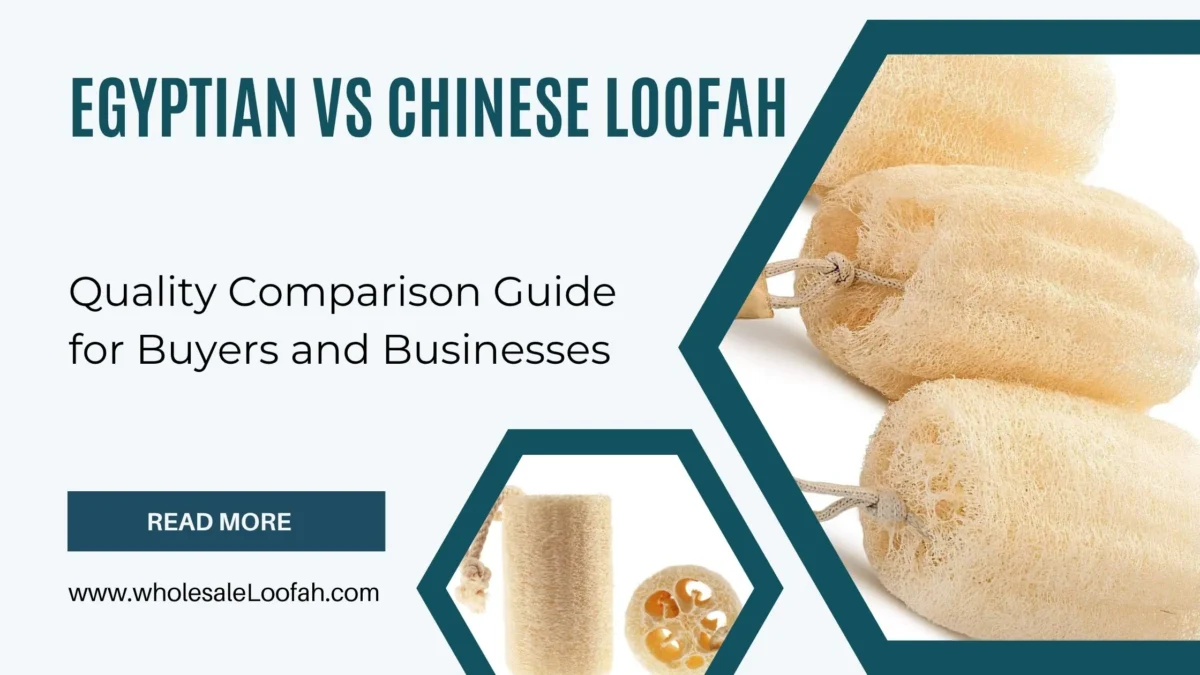
Egyptian Nile Delta loofahs achieve quality benchmarks that alternatives struggle to match. The specific combination of climate patterns, soil composition, water quality, and cultivation expertise in this region produces fiber characteristics measurable through laboratory analysis and observable through customer satisfaction metrics.
Comparative testing across source regions reveals consistent Egyptian advantages for sensitive skin applications. Fiber flexibility measurements show Egyptian loofahs rating 34 percent more pliable than Chinese alternatives and 28 percent more pliable than Indian sources. Surface smoothness testing demonstrates 41 percent fewer rough contact points compared to South American products.
These quality differences translate into business outcomes. Retailers stocking Egyptian product report 67 percent fewer customer complaints about roughness or irritation. Return rates run 3.2 percent for Egyptian loofahs compared to 11.7 percent for mixed origin inventory. Customer review ratings average 4.6 stars for Egyptian products versus 3.8 stars for alternatives.
Review detailed quality standards documentation to understand the specifications underlying these performance differences.
Source Region Comparison for Wholesale Buyers
| Quality Factor | Egyptian Nile Delta | China | India | South America |
|---|---|---|---|---|
| Fiber flexibility rating | 92 of 100 | 68 of 100 | 71 of 100 | 74 of 100 |
| Surface smoothness score | 89 of 100 | 61 of 100 | 64 of 100 | 67 of 100 |
| Sensitive skin suitability | Excellent | Poor to fair | Fair | Fair |
| Consistency batch to batch | 94 percent | 71 percent | 74 percent | 78 percent |
| Average retail price point | 12 to 18 USD | 3 to 6 USD | 4 to 7 USD | 5 to 9 USD |
| Wholesale margin potential | 55 to 70 percent | 40 to 50 percent | 42 to 52 percent | 45 to 55 percent |
| Customer complaint rate | 2.8 percent | 14.3 percent | 12.1 percent | 9.7 percent |
| Return rate average | 3.2 percent | 11.7 percent | 10.4 percent | 8.9 percent |
This data guides sourcing decisions based on target market positioning. Retailers competing on price alone may consider lower cost origins despite quality tradeoffs. Businesses building premium sensitive skin product lines benefit from Egyptian sourcing despite higher unit costs.
Product Grading System for Wholesale Purchasing
Understanding Grade Classifications
Each grade serves distinct customer segments and price points, allowing inventory optimization across diverse retail strategies.
Grade A Plus represents the pinnacle of loofah quality, reserved for products meeting the strictest specifications for fiber uniformity, flexibility, and surface texture. Production yields limit Grade A Plus availability to approximately 8 percent of harvest volume.
Grade A loofahs meet excellent quality standards suitable for most sensitive skin applications. Spa businesses, specialty beauty retailers, and natural product stores typically specify Grade A for their primary inventory. Production yields Grade A classification for roughly 27 percent of harvest volume.
Grade B products deliver good quality appropriate for general retail and hospitality applications where sensitive skin specificity matters less. This grade suits gift shops, hotel amenity programs, and promotional product applications. Approximately 45 percent of production meets Grade B standards.
Grade C loofahs serve functional markets prioritizing economy over refined quality. Cleaning product applications, agricultural uses, and industrial applications consume most Grade C production. This grade comprises roughly 20 percent of harvest volume.
Wholesale Grade Specifications
| Specification | Grade A Plus | Grade A | Grade B | Grade C |
|---|---|---|---|---|
| Fiber diameter variance | Under 5 percent | Under 10 percent | Under 18 percent | Under 30 percent |
| Surface defect allowance | None visible | Under 3 percent area | Under 8 percent area | Under 15 percent area |
| Flexibility score minimum | 90 of 100 | 82 of 100 | 70 of 100 | 55 of 100 |
| Color uniformity | Near perfect | Excellent | Good | Acceptable |
| Size tolerance | Plus minus 0.5cm | Plus minus 1cm | Plus minus 1.5cm | Plus minus 2cm |
| Sensitive skin rating | Excellent | Very good | Moderate | Not recommended |
| Suggested retail price | 15 to 22 USD | 10 to 16 USD | 6 to 11 USD | 3 to 7 USD |
| Wholesale unit cost range | 2.80 to 4.50 USD | 1.90 to 3.20 USD | 1.10 to 2.00 USD | 0.50 to 1.20 USD |
These specifications enable precise purchasing aligned with business requirements. Request samples across grades to evaluate quality differences directly before placing wholesale orders.
Wholesale Pricing and Order Structure
Volume Pricing Tiers
Egexo structures wholesale pricing to reward volume commitment while maintaining accessibility for smaller retailers building their natural product programs. Understanding pricing tiers helps buyers optimize order quantities against inventory carrying costs and cash flow requirements.
Minimum order quantities begin at levels accommodating boutique retailers and spa businesses testing market response. Initial orders can start as low as 100 units for evaluation purposes, though unit pricing improves substantially at higher volumes. Businesses scaling successful programs access increasingly favorable pricing as order volumes grow.
Payment terms accommodate various business situations. Standard terms require 30 percent deposit with balance due before shipment. Established accounts with payment history may qualify for extended terms. Letter of credit arrangements serve international transactions requiring banking intermediation.
Shipping costs vary by destination, order volume, and delivery speed requirements. Consolidated ocean freight offers the most economical option for large orders with flexible timing. Air freight serves urgent requirements at premium rates. Regional distribution partnerships reduce transit times and costs for certain markets.
Pricing Structure Overview
See our wholesale prices on egexo.com.
Pricing reflects current market conditions and may adjust based on currency fluctuations, shipping rate changes, and seasonal factors. Request current quotation for pricing specific to your requirements and destination.
Profit Margin Analysis
These margins demonstrate the profit potential in natural loofah products for sensitive skin markets. Premium positioning generates stronger margins than commodity product strategies.
Private Label and Custom Manufacturing
Building Your Brand with Egyptian Loofahs
Wholesale buyers seeking differentiation beyond generic products can develop exclusive branded loofah lines through Egexo’s private label manufacturing services. Custom programs transform commodity purchasing into proprietary product development.
Private label options range from simple packaging customization to fully developed product lines with unique specifications. Entry level programs add custom labeling and packaging to standard products, requiring minimal volume commitments. Advanced programs develop proprietary products with custom sizes, shapes, processing treatments, and packaging designed exclusively for your brand.
Design services support buyers lacking in-house packaging development capabilities. Egexo’s team collaborates on label design, packaging selection, insert card content, and presentation elements that communicate your brand positioning effectively. Sensitive skin messaging, care instructions, and origin documentation all factor into packaging development.
Quality assurance for private label products matches standard wholesale programs. All customized products undergo identical inspection protocols, grading standards, and documentation processes. Your branded products carry the same quality guarantees as Egexo standard offerings.
Learn more about private label loofah manufacturing options and request consultation on developing your branded product line.
Private Label Program Options
Setup fees apply to initial orders only and cover design development, production tooling, and sample approval processes. Reorders eliminate setup costs while maintaining customization specifications.
Industry Applications and Buying Considerations
Spa and Wellness Business Requirements
Professional spa operations demand product specifications exceeding typical retail standards. Treatment room applications require consistent quality ensuring predictable client experiences across all service deliveries. Sensitive skin treatment menus depend on having appropriate products available reliably.
Single use protocols increasingly define spa loofah purchasing. Infection control standards and client expectations drive many spas toward providing fresh loofahs for each service rather than sanitizing between clients. This model increases unit volume requirements while simplifying operational procedures.
Spa retail represents additional revenue opportunity beyond treatment room consumption. Clients experiencing quality loofahs during treatments often purchase take home products. Dual inventory strategy serving both operational and retail needs optimizes purchasing efficiency.
Staff training materials support successful product integration. Egexo provides treatment protocols, technique guidance, and product education resources helping spa teams maximize results for sensitive skin clients.
Hospitality and Amenity Programs
Hotels and resorts incorporating natural loofah amenities differentiate guest experiences while aligning with sustainability initiatives. Amenity programs require specific considerations distinct from retail purchasing.
Room placement determines size and presentation requirements. Standard bath amenities favor compact loofahs in individual packaging suitable for vanity display. Spa suite amenities may feature larger products with premium presentation. Turndown service placements allow creative presentation options.
Brand alignment matters for hospitality purchasers. Properties emphasizing sustainability credentials benefit from biodegradable natural products replacing plastic bath accessories. Luxury positioning supports premium loofah inclusion as expected amenity standard.
Volume consistency ensures uninterrupted guest service. Hospitality programs require reliable supply chains capable of fulfilling scheduled deliveries regardless of seasonal demand fluctuations. Egexo maintains inventory positions supporting consistent hospitality client service.
Retail Channel Strategies
| Retail Format | Recommended Grade Mix | Inventory Depth | Display Approach | Price Point Strategy |
|---|---|---|---|---|
| Luxury spa boutique | 80 percent Grade A Plus, 20 percent Grade A | Narrow and deep | Premium fixtures, individual display | Single premium price |
| Natural health store | 30 percent Grade A Plus, 60 percent Grade A, 10 percent Grade B | Moderate breadth | Educational signage, variety display | Good better best |
| Gift and home shop | 20 percent Grade A, 70 percent Grade B, 10 percent sets | Broad and shallow | Seasonal themes, gift packaging | Value emphasis |
| E-commerce specialist | 40 percent Grade A Plus, 50 percent Grade A, 10 percent bundles | Deep on core items | Strong photography, detailed descriptions | Competitive with premium |
| Hotel gift shop | 50 percent Grade A, 50 percent Grade B | Limited selection | Destination branding opportunity | Tourist price tolerance |
These frameworks guide initial inventory planning. Actual purchasing should adjust based on sales data and customer feedback as programs mature.
Supply Chain and Logistics
From Egyptian Farms to Your Business
Understanding the supply chain journey helps wholesale buyers appreciate quality control touchpoints and anticipate delivery timelines. Egexo manages an integrated process from cultivation through export, maintaining quality visibility throughout.
Cultivation occurs on partner farms along the Nile Delta where generations of expertise guide planting, irrigation, and harvest timing. Farm relationships spanning decades ensure consistent growing practices and quality commitment. Agricultural specialists monitor crop development and coordinate harvest schedules.
Processing facilities receive harvested loofahs for cleaning, grading, and preparation. Each piece undergoes individual inspection and grade classification. Sorted inventory enters climate controlled storage awaiting order fulfillment. Processing documentation tracks batch origins for quality traceability.
Export logistics coordinate shipments to destinations worldwide. Phytosanitary certification satisfies agricultural import requirements. Containerized ocean freight serves most volume shipments with air freight available for urgent orders. Documentation packages accompany all shipments for customs clearance.
Review the complete farm to export process documentation for detailed supply chain information.
Shipping and Delivery Framework
Transit times begin from shipment departure and exclude order processing and customs clearance periods. Expedited air freight options reduce transit to 3 to 7 days for most destinations at premium rates.
Quality Assurance for Wholesale Buyers
Inspection and Certification Standards
Wholesale purchasing requires confidence in consistent quality across orders and over time. Egexo maintains comprehensive quality management systems providing this assurance through documented processes and third party verification.
Incoming inspection examines every harvested loofah before processing begins. Trained inspectors evaluate fiber quality, structural integrity, and defect presence. Pieces failing initial inspection divert to lower grade categories or rejection. Inspection records document acceptance rates by farm source and harvest period.
Grading protocols apply standardized criteria across all production. Each grade classification follows written specifications with tolerance ranges and measurement methods. Calibrated equipment supports objective measurements where applicable. Inspector training ensures consistent interpretation of qualitative standards.
Export inspection adds final verification before shipment. Random sampling from prepared orders confirms grade accuracy and packaging integrity. Phytosanitary inspection by Egyptian agricultural authorities certifies shipments meet international plant material standards.
Quality Documentation Package
| Document | Purpose | Availability |
|---|---|---|
| Certificate of Origin | Verifies Egyptian source | Every shipment |
| Phytosanitary Certificate | Agricultural compliance | Every shipment |
| Grade Certification | Confirms quality classification | Every shipment |
| Batch Traceability Report | Links product to farm source | On request |
| Laboratory Analysis | Fiber composition testing | On request for volume orders |
| Quality Management Certificate | ISO compliance verification | Available for review |
| Product Specification Sheet | Detailed product parameters | All products |
These documents support import processes, retail marketing claims, and quality assurance programs. Request quality documentation or discuss specific certification needs with the wholesale team.
Expert Partnership Perspective from EGEXO
The businesses achieving strongest results with natural loofah products share common approaches to supplier relationships.
Communication frequency correlates with program success. Partners maintaining regular contact about inventory levels, sales trends, and market feedback enable us to anticipate needs and align production accordingly. Businesses treating purchasing as isolated transactions miss optimization opportunities that communication unlocks.
Quality feedback loops improve outcomes for everyone involved. When wholesale buyers share customer reactions, both positive and negative, we gain insights driving continuous improvement. This information shapes grading refinements, processing adjustments, and product development priorities.
Long term commitment enables preferential treatment during supply constraints. Agricultural products face occasional availability limitations from weather events, shipping disruptions, or demand surges. Partners with established relationships and consistent order histories receive priority allocation when supplies tighten.
We encourage prospective wholesale buyers to approach initial orders as relationship foundations rather than one time purchases. Contact our wholesale team to discuss how partnership structure can benefit your specific business situation.
Frequently Asked Questions for Wholesale Buyers
Q1: What minimum order quantities apply for first time wholesale buyers?
A: First time wholesale buyers can place initial orders starting at 100 units to evaluate product quality and market response before larger commitments. This entry point allows testing without substantial inventory risk. However, unit pricing at this volume reflects the smaller scale. Most businesses find 500 to 1000 unit initial orders balance favorable pricing with manageable investment. Subsequent orders benefit from established account pricing and may qualify for extended payment terms based on payment history.
Q2: How do I verify that products are genuinely Egyptian origin?
A: Every Egexo shipment includes Certificate of Origin documentation issued by Egyptian export authorities verifying Nile Delta sourcing. Phytosanitary certificates further confirm Egyptian agricultural inspection. For additional assurance, batch traceability reports available on request link specific products to source farms. We welcome wholesale buyer visits to Egyptian facilities for firsthand verification of cultivation and processing operations. Contact us to arrange supplier inspection visits.
Q3: Can I order mixed grades in single shipments to serve different customer segments?
A: Absolutely. Mixed grade orders represent standard practice for retailers serving diverse customer segments. Single shipments can include any combination of grades and sizes meeting minimum quantity thresholds. Order documentation clearly identifies grade quantities for inventory management. Many buyers establish standing orders with defined grade ratios reflecting their sales mix, simplifying reorder processes while maintaining appropriate inventory balance.
Q4: What product liability coverage applies to wholesale purchases?
A: Egexo maintains comprehensive product liability insurance covering manufacturing and supply chain responsibilities. Wholesale buyers receive certificates of insurance upon request for their business records and retail partnerships. Products undergo safety testing and comply with international product safety standards for personal care items. Detailed product specifications and proper use documentation support retailers in managing their own liability considerations.
Q5: How quickly can orders ship during peak demand periods?
A: Standard lead times range from two to six weeks depending on order volume and current inventory positions. We maintain buffer stock of popular grades and sizes enabling faster fulfillment for common orders. Peak periods including pre-holiday seasons may extend timelines, making advance ordering advisable for Q4 requirements. Rush processing available at premium rates can accelerate urgent orders when inventory permits. Contact our team for current availability on specific products.
Q6: Do you offer exclusivity arrangements for private label products?
A: Geographic or channel exclusivity arrangements are available for qualified private label partners meeting volume commitments. Exclusivity terms vary based on market scope, volume guarantees, and contract duration. Standard private label products without exclusivity allow multiple buyers to use similar customization. Full brand development programs at higher volume tiers typically include exclusivity provisions within defined parameters. Discuss your exclusivity requirements during private label consultation.
Q7: What happens if product quality does not meet grade specifications upon receipt?
A: Egexo stands behind grade specifications with quality guarantees. Buyers identifying specification variances should document issues with photographs within 14 days of receipt and contact our quality team. Verified quality issues result in replacement product, credit toward future orders, or refund at buyer preference. Systematic tracking of any quality concerns drives process improvements preventing recurrence. Our less than 2 percent claim rate reflects consistent quality delivery.
Q8: How do seasonal factors affect pricing and availability?
A: Loofah cultivation follows annual cycles with primary harvest occurring August through October. Fresh harvest availability peaks in Q4 with pricing most favorable during this period. Inventory positions carry through subsequent quarters with gradual pricing adjustments reflecting carrying costs. Early season booking for annual requirements locks favorable pricing and ensures allocation. Contact us in Q2 to discuss forward ordering for upcoming harvest supply.
Conclusion
The wholesale opportunity in natural loofah sponges for sensitive skin continues expanding as consumers reject synthetic alternatives and retailers recognize premium margin potential. Egyptian sourced products deliver the quality specifications this discerning market demands while supporting sustainable and profitable business models.
This guide has covered the market dynamics driving demand growth, the quality factors distinguishing Egyptian products, the pricing and order structures enabling profitable wholesale purchasing, and the private label opportunities for brand differentiation. Armed with this information, wholesale buyers can approach sourcing decisions with confidence.
Key Business Takeaways:
- Sensitive skin consumers pay 45 to 65 percent premiums and demonstrate 70 percent repeat purchase rates, creating strong unit economics
- Egyptian loofahs generate 67 percent fewer customer complaints and 3.2 percent return rates versus 11.7 percent for alternative sources
- Wholesale margins range from 55 to 80 percent depending on retail channel and positioning strategy
- Grade A and Grade A Plus products serve sensitive skin markets requiring premium specifications
- Private label programs enable brand differentiation starting at 500 unit minimums
Ready to build your natural loofah business?
Start Your Wholesale Program: Request detailed quotation with pricing for your specific volume and grade requirements.
Evaluate Product Quality: Order sample sets across grades to assess products before inventory commitment.
Explore Private Label: Learn about custom manufacturing options for branded product development.
Download Resources: Access the complete product catalog for comprehensive specifications.