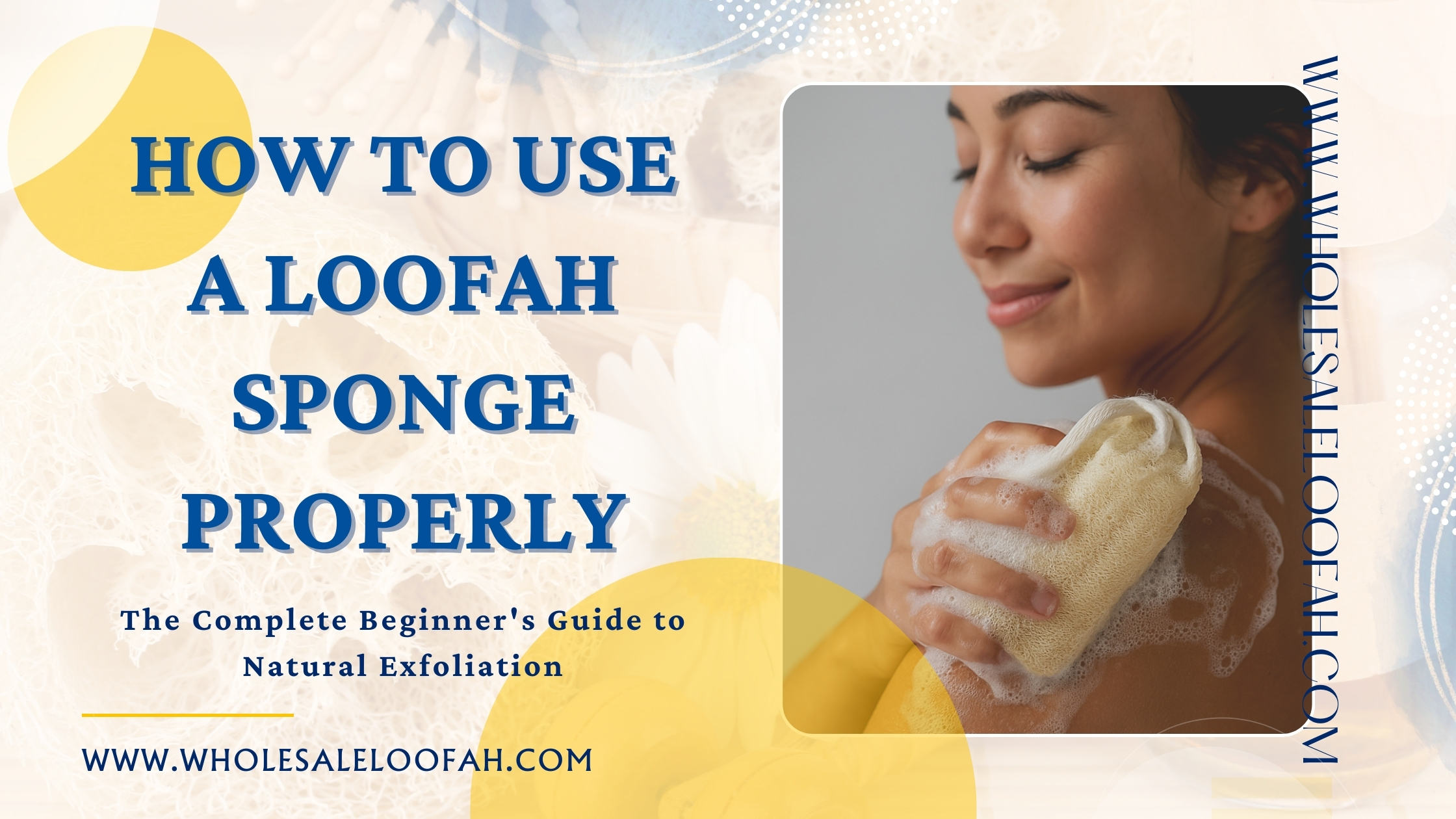
Most people who own a loofah sponge are using it incorrectly. They scrub too hard, skip essential preparation steps, store it in humid shower corners, and wonder why their skin feels irritated or why the loofah develops an unpleasant smell after just a week. The difference between ineffective loofah use and transformative results comes down to understanding a few fundamental principles that transform this simple plant fiber into a powerful skincare tool.
Learning how to use a loofah sponge properly unlocks benefits that no synthetic bath product can match. Natural loofahs derived from the Luffa aegyptiaca gourd provide the ideal texture for removing dead skin cells, stimulating circulation, and preparing skin to absorb moisturizers more effectively. When used correctly, a quality loofah becomes the foundation of a skincare routine that delivers visibly smoother, healthier skin within weeks.
This comprehensive guide walks through every aspect of proper loofah use, from initial preparation through daily technique to long-term care and replacement. Whether you have never used a natural loofah before or suspect your current approach could improve, the information presented here will help you maximize results while protecting your skin from common mistakes that lead to irritation, bacterial growth, or premature product failure.
For retailers and spa operators seeking premium Egyptian loofahs to stock or use in professional settings, Egexo provides wholesale access to products cultivated in the Nile Delta region where optimal growing conditions produce superior fiber quality.
Understanding Your Natural Loofah Before First Use
What Makes Natural Loofahs Different
Natural loofah sponges differ fundamentally from synthetic bath poufs and other exfoliation tools. Understanding these differences helps explain why specific techniques matter and why proper care extends beyond common sense assumptions based on synthetic product experience.
The loofah plant grows as a climbing vine producing elongated gourds that, when mature, develop an intricate internal fiber network. After harvest and processing, this fiber skeleton becomes the exfoliating surface familiar to consumers. Each fiber strand consists of cellulose arranged in a naturally textured pattern that creates gentle friction without the harshness of synthetic materials.
Unlike synthetic poufs that maintain consistent texture from first use until disposal, natural loofahs evolve throughout their lifespan. New loofahs feel firmer and require conditioning before optimal use. With regular use and proper care, fibers soften to ideal texture around the fifth to seventh use, then maintain this texture for several weeks before eventually showing wear. This evolution represents a feature rather than a flaw, as the changing texture reflects the natural material responding to use conditions.
Anatomy of a Quality Loofah
Recognizing quality indicators helps ensure your technique produces intended results. Inferior loofahs may not respond to proper technique the same way premium products do.
| Quality Indicator | What to Look For | Why It Matters |
|---|---|---|
| Fiber Density | Closely packed strands with minimal gaps | Denser fibers provide more consistent exfoliation |
| Color | Light tan to golden brown, uniform throughout | Even color indicates proper curing and processing |
| Flexibility | Slight give when pressed, returns to shape | Appropriate flexibility prevents skin damage |
| Structural Integrity | No loose fibers shedding when handled | Intact structure indicates mature harvest |
| Odor | Neutral or slightly earthy, not musty | Clean scent confirms proper drying |
| Weight | Feels light relative to size | Heavy weight may indicate retained moisture |
Premium Egyptian loofahs consistently meet these criteria due to ideal growing conditions and established cultivation expertise in the Nile Delta region. Wholesale buyers can explore quality standards in detail through our loofah grading guide.
Step One: Preparing Your New Loofah
The Essential Conditioning Process
New loofahs require conditioning before first use on skin. This preparation step softens fibers to appropriate texture, removes any residual plant material from processing, and ensures hygienic first use. Skipping conditioning represents the most common beginner mistake, leading to overly abrasive initial experiences that discourage continued use.
Complete Conditioning Protocol:
| Step | Action | Duration | Purpose |
|---|---|---|---|
| 1 | Fill basin with warm water | – | Warm water softens fibers faster than cold |
| 2 | Submerge loofah completely | 15 to 20 minutes | Allows water to penetrate all fiber layers |
| 3 | Add small amount of mild soap | During soaking | Optional extra cleansing before first use |
| 4 | Squeeze and release repeatedly | 2 to 3 minutes | Works water through internal structure |
| 5 | Rinse under running water | Until water runs clear | Removes any loosened material |
| 6 | Squeeze firmly to remove water | 30 seconds | Prepares for drying phase |
| 7 | Hang in ventilated area | Until completely dry | May take several hours |
After completing this process, your loofah is ready for first use. The fibers will continue softening over the first week of regular use, reaching optimal texture around days five through seven.
Adjusting Conditioning for Different Loofah Types
Different loofah products may require modified conditioning approaches based on their form and intended use.
| Product Type | Conditioning Modification | Ready for Use When |
|---|---|---|
| Whole Raw Loofah | Extend soaking to 25 to 30 minutes | Fibers compress easily under gentle pressure |
| Loofah Slices | Standard 15 to 20 minute soak | Slice bends without resistance |
| Facial Discs | Reduce soaking to 10 minutes | Disc feels soft throughout |
| Loofah Mitts | Standard soak, work water into seams | All areas feel equally soft |
| Loofah on Rope | Soak fully submerged despite rope | Fibers respond like standard slices |
For wholesale buyers interested in stocking various product forms, our complete product guide details specifications for each category.
Step Two: Mastering Basic Loofah Technique
The Fundamental Movement Pattern
Proper loofah sponge exfoliation techniques begin with understanding the basic movement pattern that maximizes dead skin removal while minimizing irritation risk. This technique applies across all body areas, with modifications for pressure and speed based on specific regions.
The circular motion forms the foundation of effective loofah use. Small circles approximately two to three inches in diameter allow fibers to contact skin from multiple angles, lifting dead cells more effectively than linear strokes. Each circle should overlap slightly with the previous one, ensuring complete coverage without excessive repetition over any single area.
Basic Technique Elements:
| Element | Correct Approach | Common Mistake |
|---|---|---|
| Motion Pattern | Small overlapping circles | Long back-and-forth scrubbing |
| Pressure | Gentle to moderate, skin moves slightly | Heavy pressure that reddens skin |
| Speed | Slow and deliberate | Rapid scrubbing |
| Coverage | Systematic progression across area | Random scattered movements |
| Duration per Area | 10 to 15 seconds | Extended scrubbing over same spot |
| Breathing | Normal relaxed breathing | Holding breath from concentration |
Pressure Calibration for Different Skin Types
The amount of pressure applied during loofah use should vary based on individual skin characteristics. Learning to calibrate pressure appropriately prevents irritation while ensuring effective exfoliation.
| Skin Type | Pressure Description | Visual Indicator | Sensation |
|---|---|---|---|
| Sensitive | Very light touch, loofah barely compresses | No visible skin movement | Gentle tickle |
| Normal | Moderate pressure, loofah compresses slightly | Skin moves slightly with strokes | Mild friction |
| Oily or Thick | Firmer pressure, loofah compresses noticeably | Visible skin movement | Definite friction |
| Rough Areas | Firm pressure, significant compression | Skin compressed slightly | Strong friction |
Begin with lighter pressure than you think necessary and increase gradually based on skin response. Redness that fades within five minutes indicates appropriate pressure, while redness persisting longer suggests excessive force.
Step Three: Body-Specific Techniques
Upper Body Exfoliation
Different body areas present unique characteristics that benefit from modified technique. The upper body generally features thinner, more sensitive skin requiring gentler approaches.
Face and Neck:
Facial skin demands the gentlest approach and specialized products. Standard body loofahs are too abrasive for facial use. Instead, use designated facial loofah discs processed for softness.
| Facial Area | Technique | Pressure | Frequency |
|---|---|---|---|
| Forehead | Horizontal circles, center to temples | Very light | Once weekly |
| Cheeks | Upward circular motions | Very light | Once weekly |
| Nose | Gentle downward strokes on sides | Light | Once weekly |
| Chin | Small circles | Light | Once weekly |
| Neck | Upward strokes toward jawline | Light | Once to twice weekly |
Shoulders and Arms:
| Area | Technique | Pressure | Notes |
|---|---|---|---|
| Shoulders | Circular motions front and back | Medium | Include often-neglected upper back |
| Upper Arms | Circles progressing downward | Medium | Extra attention to backs of arms |
| Elbows | Focused circular scrubbing | Firm | Rough skin area tolerates more pressure |
| Forearms | Circular motions, wrist to elbow | Medium | Cover all sides |
| Hands | Circles on backs, between fingers | Medium | Include often-missed finger webs |
Torso Techniques
The torso encompasses areas with varying sensitivity, requiring technique adjustment across relatively short distances.
Chest and Abdomen:
| Area | Technique | Pressure | Special Considerations |
|---|---|---|---|
| Chest | Outward circular motions from center | Gentle to medium | Lighter around breast tissue |
| Ribcage | Side-to-side circles | Medium | Follow natural contours |
| Abdomen | Clockwise circular pattern | Gentle to medium | Clockwise follows digestive direction |
| Sides | Vertical circular progressions | Medium | Easy to miss, ensure coverage |
Back:
Reaching the back effectively requires either a long-handled loofah or loofah on rope. These products enable coverage of otherwise inaccessible areas.
| Back Region | Technique | Pressure | Tool Recommendation |
|---|---|---|---|
| Upper Back | Diagonal strokes toward shoulders | Medium to firm | Long-handled loofah |
| Mid Back | Horizontal circles | Medium to firm | Loofah on rope |
| Lower Back | Circular motions | Medium | Either tool |
| Spine Area | Gentle vertical strokes | Light | Avoid heavy pressure on vertebrae |
Lower Body Exfoliation
Lower body skin tends toward greater thickness, tolerating and often benefiting from firmer exfoliation than upper body areas.
Hips and Buttocks:
| Area | Technique | Pressure | Frequency |
|---|---|---|---|
| Hips | Large circular motions | Medium to firm | Two to three times weekly |
| Buttocks | Circular motions covering entire area | Firm | Two to three times weekly |
| Hip Flexors | Gentle circles, sensitive area | Medium | Two times weekly |
Legs and Feet:
| Area | Technique | Pressure | Special Notes |
|---|---|---|---|
| Thighs | Long upward strokes with circular components | Medium to firm | Stroke toward heart supports circulation |
| Knees | Focused circular scrubbing | Firm | Rough skin area benefits from attention |
| Shins | Gentle circles avoiding bone | Light to medium | Less pressure over shinbone |
| Calves | Upward circular strokes | Medium to firm | Include inner and outer aspects |
| Ankles | Circles around entire ankle | Medium | Often neglected area |
| Feet Tops | Firm circles | Firm | Include between toes |
| Heels | Very firm scrubbing | Very firm | Thickest skin on body |
| Soles | Firm circular scrubbing | Firm | Focus on callused areas |
Spa professionals and retailers can find specialized products for different body areas through the Egexo product catalog.
Step Four: Creating Your Exfoliation Routine
Optimal Frequency Guidelines
Understanding how to use a loofah sponge includes knowing when not to use it. Over-exfoliation damages skin barrier function and creates problems worse than those exfoliation solves. Establishing appropriate frequency based on skin type prevents these issues while maximizing benefits.
| Skin Type | Recommended Frequency | Maximum Frequency | Warning Signs of Over-Exfoliation |
|---|---|---|---|
| Sensitive | Once weekly | Twice weekly | Any persistent redness or stinging |
| Normal | Two to three times weekly | Four times weekly | Tightness or unusual dryness |
| Oily | Three times weekly | Daily for rough areas only | Increased oil production |
| Combination | Two to three times weekly | Varies by area | Area-specific reactions |
| Mature | Once to twice weekly | Three times weekly | Increased sensitivity or papery texture |
Building a Complete Routine
Loofah exfoliation delivers best results when integrated into a complete skincare routine that includes preparation and follow-up steps.
Pre-Exfoliation:
| Step | Action | Purpose | Duration |
|---|---|---|---|
| 1 | Warm shower for 2 to 3 minutes | Opens pores, softens dead skin | Essential preparation |
| 2 | Wet loofah thoroughly | Softens fibers to optimal texture | 30 seconds |
| 3 | Apply cleanser to loofah or skin | Provides lubrication and cleansing | As needed |
During Exfoliation:
| Step | Action | Purpose | Duration |
|---|---|---|---|
| 4 | Begin with gentlest areas | Establishes pressure baseline | Variable |
| 5 | Progress systematically across body | Ensures complete coverage | 3 to 5 minutes total |
| 6 | Increase pressure for rough areas | Addresses thicker skin appropriately | As needed |
| 7 | Rinse skin as you progress | Removes loosened dead skin | Ongoing |
Post-Exfoliation:
| Step | Action | Purpose | Duration |
|---|---|---|---|
| 8 | Final thorough rinse | Removes all debris and cleanser | 1 minute |
| 9 | Pat skin dry gently | Prevents irritation from rubbing | As needed |
| 10 | Apply moisturizer immediately | Freshly exfoliated skin absorbs better | While skin slightly damp |
| 11 | Rinse loofah completely | Removes soap and skin cells | 30 seconds |
| 12 | Hang loofah to dry | Prevents bacterial growth | Until next use |
Step Five: Proper Loofah Care and Maintenance
Daily Care Requirements
Proper daily care determines whether your loofah remains hygienic throughout its useful life or becomes a bacterial breeding ground. These non-negotiable steps must follow every use.
After Every Use Protocol:
| Action | Method | Why It Matters |
|---|---|---|
| Rinse thoroughly | Squeeze under running water repeatedly | Removes trapped soap and skin cells |
| Remove excess water | Squeeze firmly multiple times | Initiates drying process |
| Shake out | Several firm shakes | Dislodges water from inner fibers |
| Hang properly | Ventilated location outside shower | Allows complete air drying |
Storage Location Requirements:
| Location Factor | Correct | Incorrect |
|---|---|---|
| Humidity Level | Low ambient humidity | Humid shower interior |
| Air Circulation | Good airflow around all sides | Enclosed cabinet or container |
| Light Exposure | Some natural light acceptable | Constant darkness |
| Temperature | Room temperature | Warm steamy environment |
| Position | Hanging freely | Sitting in puddles or on wet surfaces |
Weekly Deep Cleaning
Beyond daily care, weekly sanitization eliminates bacteria that accumulate despite proper daily protocols.
Weekly Sanitization Options:
| Method | Procedure | Effectiveness | Considerations |
|---|---|---|---|
| Vinegar Soak | Submerge in equal parts water and white vinegar for 5 minutes, rinse thoroughly | High | Natural, no harsh chemicals |
| Microwave | Place damp loofah in microwave for 30 seconds | High | Must be wet to prevent fire risk |
| Hydrogen Peroxide | Soak in 3% solution for 10 minutes, rinse well | High | Readily available |
| Boiling Water | Submerge in boiling water for 2 minutes | Very High | May accelerate fiber breakdown |
| Dilute Bleach | One tablespoon bleach per gallon water, soak 5 minutes, rinse very thoroughly | Very High | Requires extensive rinsing |
Choose one method and apply consistently each week. The vinegar method offers the best balance of effectiveness, gentleness on fibers, and safety.
Step Six: Knowing When to Replace Your Loofah
Replacement Timeline
Even with perfect care, natural loofahs have limited lifespans. Understanding replacement timing prevents using loofahs past their hygienic useful life.
| Usage Pattern | Expected Lifespan | Factors That Shorten Life |
|---|---|---|
| Daily Use | 3 to 4 weeks | Inadequate drying between uses |
| Every Other Day | 4 to 5 weeks | Harsh cleansers |
| Twice Weekly | 5 to 6 weeks | Hot water exposure |
| Premium Quality Loofah | Add 1 to 2 weeks to above | None, quality extends life |
Warning Signs Requiring Immediate Replacement
Certain indicators signal that a loofah should be replaced regardless of time in service. Continuing use after these signs appear risks skin infection or irritation.
| Warning Sign | Description | Risk if Ignored |
|---|---|---|
| Persistent Odor | Smell remains despite sanitization | Bacterial overgrowth |
| Visible Discoloration | Dark spots or overall color change | Mold or mildew growth |
| Fiber Shedding | Pieces break off during use | Reduced effectiveness, possible skin irritation |
| Loss of Texture | Fibers feel mushy or fail to return to shape | Insufficient exfoliation, bacterial haven |
| Structural Breakdown | Tears, holes, or sections separating | Product has exceeded useful life |
When replacement time arrives, consider composting your old loofah rather than discarding it in trash. Natural loofahs biodegrade completely within approximately 30 days in active compost, returning nutrients to soil.
For retailers needing consistent supply to meet customer replacement cycles, our wholesale ordering guide explains bulk purchasing options.
Common Mistakes and How to Avoid Them
Technique Errors
| Mistake | Why It Happens | Correct Approach | Consequence of Mistake |
|---|---|---|---|
| Scrubbing too hard | Assumption that harder equals better | Let texture do the work with moderate pressure | Skin irritation, barrier damage |
| Using on dry skin | Rushing, forgetting to wet skin first | Always use on thoroughly wet, warm skin | Excessive friction, potential micro-tears |
| Skipping areas | Not establishing systematic routine | Follow consistent body progression pattern | Uneven results |
| Over-exfoliating | Desire for faster results | Respect frequency limits for skin type | Compromised skin barrier |
| Using on broken skin | Not inspecting skin before use | Avoid cuts, rashes, sunburn, active acne | Infection risk, delayed healing |
Care Errors
| Mistake | Why It Happens | Correct Approach | Consequence of Mistake |
|---|---|---|---|
| Leaving in shower | Convenience | Hang outside shower in ventilated area | Bacterial and mold growth |
| Not rinsing after use | Rushing, forgetting | Thorough rinse every time | Soap and cell buildup |
| Skipping weekly sanitization | Not knowing it’s necessary | Weekly vinegar soak or alternative | Bacterial accumulation |
| Using past replacement date | Frugality, not tracking time | Replace per guidelines, set reminders | Hygiene risks |
| Storing in sealed container | Assumption of cleanliness | Open air storage only | Trapped moisture enables bacteria |
Product Selection Errors
| Mistake | Why It Happens | Correct Approach | Consequence of Mistake |
|---|---|---|---|
| Choosing synthetic over natural | Lower price, availability | Select genuine plant-based loofahs | Inferior exfoliation, environmental impact |
| Using body loofah on face | Not knowing difference matters | Use designated facial products | Facial skin irritation |
| Selecting wrong firmness | Not understanding options | Match firmness to skin type | Inadequate or excessive exfoliation |
| Buying lowest quality | Price-driven decisions | Invest in quality for better results | Shorter lifespan, inconsistent texture |
Understanding quality differences helps both consumers and retailers make informed decisions. Our loofah quality standards guide provides detailed grading information.
Advanced Techniques for Enhanced Results
Dry Brushing Variation
Some users employ loofahs in a dry brushing technique that provides different benefits than wet exfoliation. This method requires specific product types and careful execution.
Dry Brushing Protocol:
| Aspect | Guidelines |
|---|---|
| Best Loofah Type | Raw, firmer loofahs; not appropriate for soft processed types |
| Timing | Before showering, on completely dry skin |
| Pressure | Very light, barely touching skin |
| Stroke Pattern | Long strokes toward heart, always upward on limbs |
| Duration | 2 to 3 minutes for whole body |
| Frequency | Two to three times weekly maximum |
| Follow-up | Shower immediately after, then moisturize |
| Not Recommended For | Sensitive skin, facial use, broken or irritated skin |
Dry brushing provides enhanced lymphatic stimulation and circulation benefits but carries higher irritation risk than wet exfoliation. Begin with once weekly application and increase only if skin tolerates well.
Combining with Other Products
Loofahs pair effectively with various skincare products to enhance results.
| Product Combination | Method | Benefits | Cautions |
|---|---|---|---|
| Exfoliating Body Wash | Apply wash to loofah, use normally | Enhanced exfoliation, chemical plus mechanical action | May be too intense for sensitive skin |
| Natural Oils | Apply oil to skin before loofah use | Gentler glide, moisturizing | Rinse loofah thoroughly after to prevent oil buildup |
| Body Scrubs | Apply scrub, use loofah over it | Maximum exfoliation | Use rarely, very gentle pressure |
| Gentle Cleansers | Standard application to loofah | Appropriate for most uses | Best everyday option |
Special Considerations
Skin Conditions Requiring Modified Approach
Certain skin conditions require modified loofah sponge exfoliation techniques or temporary discontinuation.
| Condition | Modification Required | When to Resume Normal Use |
|---|---|---|
| Eczema | Avoid during flares, very gentle when clear | After flare completely resolved plus one week |
| Psoriasis | Avoid plaques entirely, gentle on clear skin | When plaques inactive |
| Acne | Avoid active breakouts, gentle on clear areas | When breakout resolved |
| Sunburn | Do not use until fully healed | When peeling complete and skin comfortable |
| Keratosis Pilaris | Can help, use gentle consistent technique | Ongoing with condition |
| Sensitive Skin | Reduce pressure, frequency, and duration | Adjust ongoing based on response |
| Rosacea | Avoid affected areas | Permanent modification |
| Recent Procedures | Follow provider guidance | When cleared by provider |
Pregnancy Considerations
Pregnant individuals can safely use loofahs with minor modifications.
| Trimester | Considerations | Modifications |
|---|---|---|
| First | Increased skin sensitivity possible | Reduce pressure, monitor for reactions |
| Second | Skin stretching may increase sensitivity | Gentle approach on abdomen |
| Third | Difficulty reaching some areas, very sensitive abdominal skin | Long-handled loofah helpful, avoid abdomen |
| Postpartum | Wait until incision healed if applicable | Clear with provider before resuming |
Information for Retailers and Spa Professionals
Understanding proper loofah technique benefits wholesale buyers in multiple ways. Retailers who can educate customers about correct usage build trust and encourage repeat purchases when customers experience genuine results. Spa professionals implementing proper technique deliver better client outcomes while maximizing product lifespan.
Customer Education Opportunities
| Touchpoint | Education Method | Benefit |
|---|---|---|
| Point of Sale | Include care instruction cards with purchase | Reduces returns from misuse |
| Website | Technique videos and guides | Positions retailer as expert resource |
| In-Store Display | Demonstration materials | Increases conversion through education |
| Follow-Up Email | Usage tips series | Builds relationship, encourages reorder |
Professional Spa Application
| Service Type | Loofah Application | Technique Notes |
|---|---|---|
| Body Treatments | Full-body exfoliation | Follow systematic progression |
| Facial Services | Facial disc for gentle exfoliation | Very light pressure only |
| Foot Treatments | Intensive heel and sole work | Firmer pressure appropriate |
| Pre-Massage Prep | Light exfoliation for product absorption | Moderate technique |
Wholesale buyers can access professional-grade products through Egexo’s wholesale portal or by downloading the complete product catalog.
Frequently Asked Questions
Q: How long should I soak a new loofah before first use?
A: Soak a new loofah in warm water for 15 to 20 minutes before first use. This conditioning step softens fibers to appropriate texture for skin contact. Whole raw loofahs benefit from extended soaking of 25 to 30 minutes, while facial discs need only 10 minutes. After conditioning, rinse thoroughly and allow to dry completely before first use on skin.
Q: Can I use my loofah every day?
A: Daily loofah use is appropriate only for those with oily or very thick skin, and even then, full-body daily exfoliation is excessive. Most skin types benefit from loofah use two to three times weekly. Over-exfoliation damages the skin barrier, potentially causing irritation, increased sensitivity, and paradoxically worsened skin texture. Start with twice weekly and adjust based on how your skin responds.
Q: Why does my loofah smell bad even though I rinse it after use?
A: Bad odor indicates bacterial growth, typically caused by inadequate drying between uses. Rinsing alone is insufficient because bacteria thrive in moist environments. After rinsing, squeeze out all excess water and hang your loofah in a well-ventilated area outside the shower where it can dry completely. Add weekly sanitization with a vinegar soak. If odor persists despite proper care, replace the loofah immediately.
Q: Is it safe to use a loofah on my face?
A: Standard body loofahs are too abrasive for facial skin. However, specially processed facial loofah discs provide appropriate gentleness for facial use. When using facial discs, apply very light pressure, use only once weekly, and avoid eye area and any active breakouts. Those with sensitive facial skin or conditions like rosacea should avoid facial loofah use entirely.
Q: How do I know if I’m scrubbing too hard?
A: Signs of excessive pressure include skin redness lasting more than five minutes after use, stinging or burning sensation during or after exfoliation, increased skin sensitivity in following days, or visible skin irritation. The loofah should do the work through its texture rather than through force. If you see skin moving significantly under the loofah or feel substantial friction, reduce pressure immediately.
Q: What’s the difference between natural and synthetic loofahs?
A: Natural loofahs come from the Luffa plant and consist of biodegradable cellulose fibers that provide texture through their natural structure. Synthetic poufs are made from nylon or plastic mesh that creates texture through construction. Natural loofahs offer superior exfoliation, environmental sustainability, and adaptive fiber response. Synthetic products release microplastics during use and persist in landfills for centuries.
Q: How often should I replace my loofah?
A: Replace natural loofahs every three to four weeks with daily use, or four to six weeks with less frequent use. Replace immediately if you notice persistent odor, visible discoloration, fiber shedding, mushy texture, or structural breakdown regardless of time in use. Premium quality loofahs from established sources may last one to two weeks longer than economy alternatives.
Conclusion
Mastering how to use a loofah sponge properly transforms this simple plant-based tool into one of the most effective components of any skincare routine. The techniques outlined in this guide, from initial conditioning through daily use and long-term care, represent the difference between disappointing results and genuinely healthier, smoother skin.
The key principles bear repeating because they contradict common assumptions. Let the loofah’s texture work rather than applying excessive pressure. Proper drying matters more than any other care factor. Replacement timing is non-negotiable for hygiene regardless of apparent product condition. Frequency limits exist to protect skin barrier function, not as arbitrary restrictions.
Loofah sponge exfoliation techniques require practice to master, but the learning curve is brief. Within two to three weeks of consistent proper use, most individuals notice meaningful improvements in skin texture, clarity, and overall health. The mechanical exfoliation stimulates cellular turnover, improves circulation, and prepares skin to absorb subsequent skincare products more effectively.
Key Takeaways:
- Condition new loofahs with a 15 to 20 minute warm water soak before first use
- Use gentle circular motions rather than aggressive scrubbing
- Allow complete drying between uses in ventilated location outside shower
- Replace every three to four weeks or immediately when warning signs appear
- Adjust pressure, frequency, and technique based on body area and skin type
Ready to source premium loofahs for your business?
For Wholesale Buyers: Request a quotation or download the product catalog
For Retailers: Explore our wholesale ordering guide for bulk purchasing options
For Product Information: Visit our complete loofah products guide
For Individual Purchases: Browse the Egexo products page or request samples