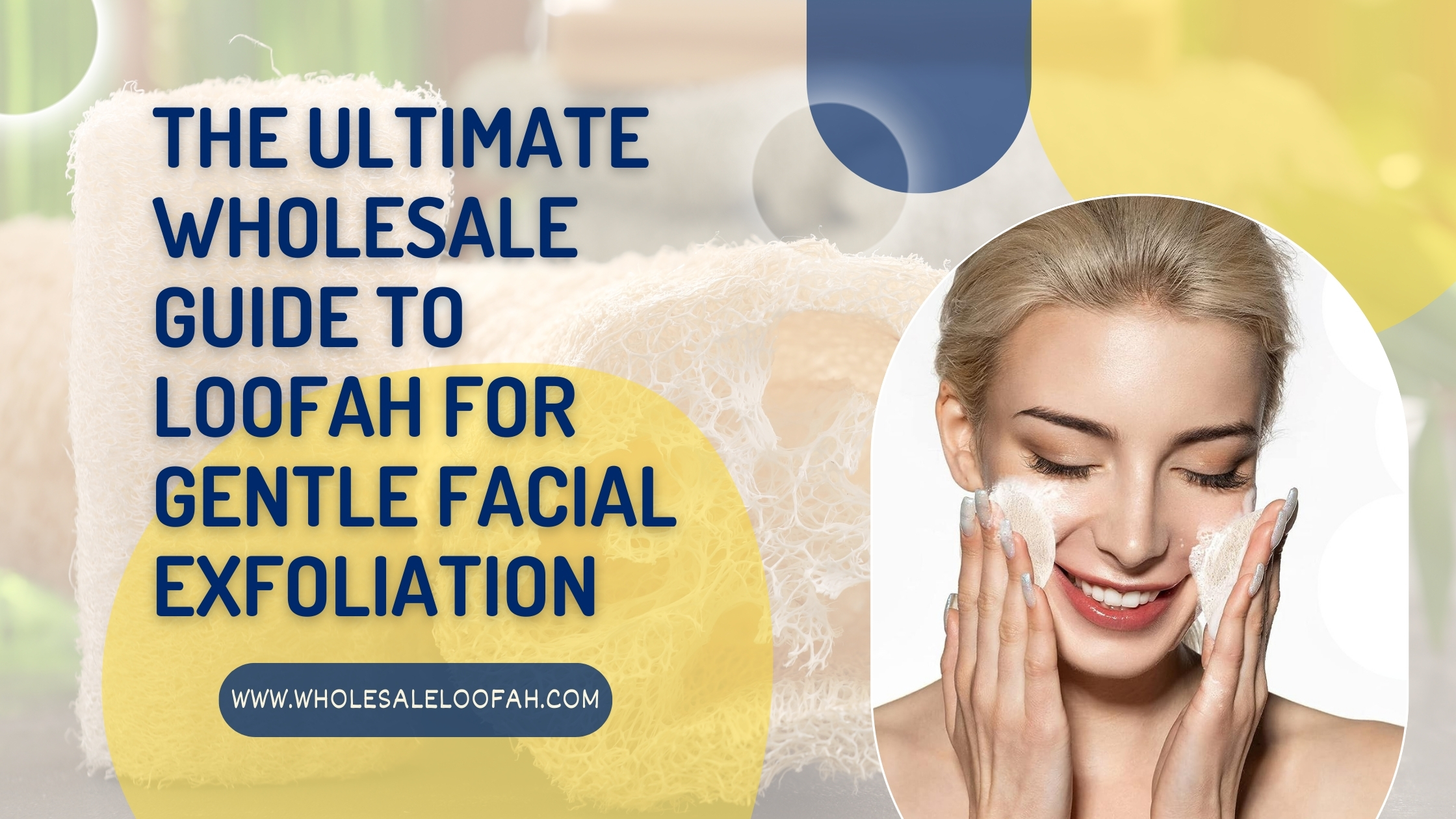
The Growing Market for Facial-Grade Loofah Products
The natural skincare industry continues its remarkable expansion, with facial exfoliation products representing one of the fastest-growing segments. Retailers, spa operators, and distributors seeking profitable product lines increasingly recognize that loofah for gentle facial exfoliation meets consumer demand for effective, sustainable skincare solutions.
Market research indicates that consumers now prioritize ingredient transparency and environmental responsibility alongside product effectiveness. Natural loofah products satisfy all three criteria, positioning them favorably against synthetic alternatives that face growing consumer skepticism. This shift creates substantial opportunity for businesses prepared to source and market quality facial-grade loofahs effectively.
Understanding the wholesale landscape for facial loofah products requires knowledge spanning agricultural origins, quality specifications, supplier evaluation, and market positioning. This comprehensive guide delivers the insights wholesale buyers need to make informed sourcing decisions and build profitable product offerings.
Whether you operate a boutique skincare retail shop, manage spa inventory, distribute to multiple outlets, or develop private label product lines, the information presented here supports strategic decision-making. We draw from industry expertise and insights from leading Egyptian loofah suppliers with decades of cultivation and export experience to provide authoritative guidance.
Understanding Facial Exfoliation Science for Product Positioning
Why Consumers Seek Natural Exfoliation Solutions
Effective product marketing requires understanding the problems your products solve. Loofah for gentle facial exfoliation addresses specific consumer concerns that drive purchasing decisions.
Human skin naturally sheds approximately 30,000 to 40,000 dead cells per minute, yet this process becomes less efficient with age, environmental exposure, and lifestyle factors. Accumulated dead cells create visible problems including dull complexion, enlarged pore appearance, uneven texture, and reduced effectiveness of other skincare products.
Consumers increasingly understand these dynamics and actively seek solutions. The mechanical exfoliation provided by natural loofah removes accumulated cells through gentle friction, immediately improving appearance while stimulating increased cellular turnover over time. This mechanism appeals to consumers preferring physical methods over chemical alternatives.
Environmental consciousness further drives preference for natural loofah. Unlike synthetic scrubbers that shed microplastic particles into water systems, natural loofah biodegrades completely within weeks. This sustainability advantage resonates powerfully with the environmentally conscious demographic that dominates premium skincare purchasing.
For wholesale buyers, understanding these consumer motivations enables effective product positioning and supports retail partners in converting browsers to buyers.
The Mechanical Advantage of Natural Loofah Fibers
The Luffa aegyptiaca plant produces a fibrous structure uniquely suited for skin exfoliation. This natural architecture offers advantages that wholesale buyers should understand and communicate through their sales channels.
Natural loofah contains an interconnected vascular network that originally transported nutrients throughout the living plant. When dried and prepared for skincare use, this network creates a texture that adapts to skin contours rather than presenting uniform rigidity like synthetic alternatives.
The fiber structure absorbs and releases water effectively, allowing end users to control softness through soaking duration. This adjustability makes properly graded facial loofah suitable across skin types when used correctly. Wholesale buyers benefit from products with broad applicability rather than narrow niche appeal.
Natural fiber variation within acceptable quality parameters actually enhances effectiveness compared to engineered uniformity. The micro-variations in loofah texture provide more thorough exfoliation than perfectly uniform surfaces while remaining gentle enough for facial application.
Facial-Grade Loofah Specifications for Wholesale Buyers
Grade Classifications and Applications
Not all loofah suits facial use. Wholesale buyers must understand grade distinctions to source appropriately and avoid customer dissatisfaction or safety concerns.
| Grade | Fiber Density | Thickness | Texture Description | Facial Suitability | Wholesale Applications |
|---|---|---|---|---|---|
| Ultra-Fine | Very high | 2 to 4 mm | Silky, densely packed | Excellent | Premium facial products, sensitive skin lines |
| Fine | High | 4 to 6 mm | Soft, tight weave | Good | Standard facial products, spa services |
| Medium | Moderate | 6 to 10 mm | Balanced, moderate density | Not recommended | Body care products only |
| Coarse | Lower | 10 to 15 mm | Open weave, firm | Avoid for face | Heavy-duty body exfoliation |
| Raw | Variable | 15 mm plus | Unprocessed, inconsistent | Not for skin | Crafts, industrial cleaning |
Facial product lines require ultra-fine or fine grade inventory exclusively. Sourcing inappropriate grades for facial applications creates liability exposure and damages brand reputation through negative customer experiences.
Premium suppliers maintain strict grading protocols with documented quality standards. Request grade specifications in writing before placing orders, and verify delivered products match stated grades through physical inspection.
Quality Indicators for Wholesale Assessment
Evaluating loofah quality before committing to bulk purchases prevents costly inventory problems. Develop systematic assessment protocols using these criteria:
Color Assessment: Quality facial-grade loofah displays natural cream to light tan coloring throughout. Bright white indicates bleaching treatments that may leave chemical residues unsuitable for facial application. Dark discoloration suggests age, improper storage, or contamination. Reject lots with significant color variation within single pieces.
Structural Integrity: Bend dry loofah samples gently to assess fiber quality. Premium products flex smoothly without cracking, breaking, or shedding fibers. Brittleness indicates age, poor storage conditions, or inferior plant genetics. Rigid samples that resist bending will remain too harsh even after proper soaking.
Fiber Distribution: Hold samples against light to evaluate density uniformity. Quality facial-grade products show consistent fiber distribution without gaps, holes, or clumped sections. Irregular distribution creates uneven exfoliation results and customer complaints.
Aromatic Profile: Natural loofah carries a neutral, slightly earthy scent. Chemical odors indicate processing treatments requiring investigation. Musty or moldy smells reveal moisture damage and potential contamination warranting lot rejection.
Wet Performance Test: Soak samples for 60 seconds and press against inner wrist skin. Facial-grade loofah feels soft and gentle immediately, similar to damp cotton. Persistent scratchiness indicates grade misrepresentation or quality failure.
Document assessment results for each supplier and lot to build quality tracking data supporting future sourcing decisions.
Sourcing Strategies for Facial-Grade Loofah
Geographic Origin and Quality Correlation
Loofah cultivation occurs across multiple regions globally, but quality varies significantly based on growing conditions, agricultural practices, and processing methods. Understanding geographic factors supports informed supplier selection.
Egyptian loofah, particularly from the Nile Delta region, consistently demonstrates superior characteristics for facial-grade applications. The unique combination of climate, soil composition, water quality, and traditional cultivation methods developed over generations produces loofahs with notably higher fiber density and uniformity.
This density translates directly to smoother exfoliation texture and longer product lifespan, justifying premium positioning and pricing.
Asian production centers offer cost advantages but typically produce coarser grades better suited for body care or industrial applications. Central American sources vary widely in quality, requiring more intensive supplier vetting and ongoing quality monitoring.
For wholesale buyers building facial product lines, Egyptian origin provides marketing advantages alongside quality benefits. Consumer awareness of Egyptian loofah reputation supports premium pricing and differentiates products from commodity alternatives.
Supplier Evaluation Framework
Systematic supplier evaluation prevents quality problems and supply disruptions that damage business performance. Apply this framework when assessing potential loofah suppliers:
| Evaluation Criteria | Key Questions | Red Flags |
|---|---|---|
| Production Capacity | Can they meet your volume needs consistently? | Vague capacity answers, reluctance to discuss |
| Quality Documentation | Do they provide written specifications and certifications? | No documentation available, verbal assurances only |
| Sample Program | Will they provide samples before bulk orders? | Sample refusal, excessive sample fees |
| Communication Responsiveness | How quickly and thoroughly do they respond? | Delayed responses, incomplete answers |
| Export Experience | Do they understand international shipping requirements? | Confusion about documentation, logistics gaps |
| Reference Availability | Will they provide customer references? | Reference refusal, only very recent customers |
| Pricing Transparency | Is pricing clear with all fees disclosed? | Hidden fees discovered later, frequent price changes |
| Minimum Order Flexibility | Can they accommodate your business scale? | Rigid minimums inappropriate for your volume |
Request samples before any bulk commitment. Reputable suppliers like Egexo offer sample programs specifically supporting wholesale buyer evaluation. Evaluate samples using the quality criteria outlined above before proceeding.
Review supplier documentation thoroughly. Quality-focused suppliers provide detailed information about their quality standards and production processes. Lack of documentation suggests quality control gaps.
Building Reliable Supply Relationships
Long-term supplier relationships deliver advantages beyond transactional purchasing. Consistent quality, preferential allocation during supply constraints, flexible terms, and collaborative problem-solving reward relationship investment.
Start new supplier relationships with smaller initial orders despite higher per-unit costs. This approach limits exposure while validating quality consistency and operational reliability. Increase order volumes as confidence develops through successful transactions.
Communicate your quality expectations clearly and in writing. Document agreed specifications in purchase orders and reference them when evaluating deliveries. This documentation supports quality discussions and provides recourse for specification failures.
Maintain relationships with multiple qualified suppliers even when one performs excellently. Supply disruptions from agricultural problems, logistics issues, or business changes affect even reliable partners. Secondary supplier relationships provide business continuity protection.
EGEXO has been exporting Egyptian loofah since 2015. Their wholesale quotation process provides customized pricing based on specific requirements, and their product catalog details available options comprehensively.
Product Line Development for Facial Loofah
Market Segmentation Opportunities
Facial-grade loofah supports multiple product line approaches serving distinct market segments. Strategic segmentation maximizes market coverage and revenue potential.
| Segment | Product Characteristics | Price Position | Target Channel | Margin Potential |
|---|---|---|---|---|
| Premium Spa | Ultra-fine grade, elegant packaging, branded | High | Professional spas, luxury retail | Highest |
| Natural Beauty | Fine grade, eco-conscious packaging, education-focused | Medium-high | Health food stores, boutiques | High |
| Everyday Wellness | Fine grade, practical packaging, value messaging | Medium | Mass natural retailers, online | Moderate |
| Professional Bulk | Ultra-fine and fine grades, minimal packaging | Varies | Estheticians, spa services | Volume-dependent |
| Private Label | Custom specifications and branding | Varies | Retailers building house brands | Highest with volume |
Most wholesale buyers benefit from focusing on one or two segments initially rather than attempting comprehensive market coverage. Segment focus enables deeper market understanding, more effective marketing, and operational efficiency.
Consider your existing customer relationships and channel access when selecting segments. Leveraging established relationships reduces customer acquisition costs and accelerates market entry.
Private Label Opportunities
Private label facial loofah products offer the highest margin potential for wholesale buyers with established retail channels or brand-building aspirations. This approach requires greater investment but delivers superior returns.
Private labeling involves sourcing unbranded loofah products and applying your own branding, packaging, and marketing. Quality suppliers like Egexo offer private label manufacturing services supporting this strategy, handling production while you focus on marketing and distribution.
Benefits of private label approach include brand equity building, pricing control, customer relationship ownership, and protection from supplier brand competition. These advantages compound over time as brand recognition grows.
Private label success requires investment in branding, packaging design, and marketing beyond product sourcing costs. Calculate total investment requirements before committing to this path. Ensure your volume projections support the additional investment.
For businesses seeking differentiation beyond branding alone, custom product design services enable unique product configurations. Custom shapes, sizes, or product combinations create distinctive offerings difficult for competitors to replicate.
Complementary Product Bundling
Facial loofah products pair naturally with complementary items, creating bundle opportunities that increase average order value and customer satisfaction.
Effective bundle combinations include facial loofah with gentle cleansers formulated for exfoliation use, loofah with natural storage solutions promoting proper drying, facial and body loofah sets for complete care routines, and loofah with post-exfoliation serums or moisturizers.
Bundling also addresses the consumable nature of loofah products. Subscription or multi-pack offerings providing three to four months supply at modest discount encourage larger initial purchases while ensuring customers maintain replacement inventory.
Consider the replacement cycle when designing bundles and subscription programs. Properly maintained facial loofahs require replacement every three to four weeks. Annual supply bundles containing 12 to 15 units address this cycle while maximizing customer lifetime value.
End-User Education for Retail Success
Why Education Drives Sales
Wholesale buyers supplying retail channels benefit from supporting end-user education. Informed consumers purchase more confidently, experience better results, and generate fewer returns and complaints.
Many potential customers lack knowledge about proper facial loofah use. They may not understand grade differences, proper technique, or maintenance requirements. This knowledge gap creates purchase hesitation and suboptimal experiences that prevent repeat purchasing.
Providing educational resources through retail partners addresses these barriers. Educational content positions products as part of complete solutions rather than commodity items, supporting premium pricing and brand differentiation.
Technique Guidance for End Users
Effective use of loofah for gentle facial exfoliation follows specific protocols that maximize results while preventing irritation. Ensure this information reaches end users through packaging, inserts, or retail partner training.
Preparation Requirements: End users should remove all makeup and surface products before exfoliation. The loofah requires 30 to 60 seconds of warm water soaking to reach optimal softness. Excess water should be squeezed out, leaving the loofah damp but not dripping.
Application Method: Light pressure with small circular motions provides effective exfoliation. Total treatment duration should not exceed two to three minutes. Users should work systematically across facial zones, giving appropriate attention to each area without over-treating any single zone.
The forehead receives small circular motions from temple to temple. The nose gets downward strokes on the bridge with circles on the sides. Cheeks require upward circles from jaw toward cheekbone. The chin receives small circles across the entire area. The jawline follows bone structure toward ears. The upper lip needs only gentle horizontal strokes. The neck benefits from upward strokes from collarbone to jaw.
Post-Treatment Protocol: Thorough cool water rinsing follows exfoliation. Products absorb exceptionally well on freshly exfoliated skin, making this the optimal time for toners and serums. Moisturizer application completes the routine, and sunscreen is essential if exfoliating during morning hours.
Frequency Recommendations by Skin Type
Over-exfoliation causes more customer complaints than any other facial loofah issue. Clear frequency guidance prevents problems and builds customer confidence.
| Skin Type | Recommended Frequency | Special Considerations |
|---|---|---|
| Normal | 2 to 3 times weekly | Most flexible, adjust based on results |
| Oily | 3 to 4 times weekly | Higher tolerance, watch for paradoxical oil increase |
| Dry | Once to twice weekly | Always follow with rich moisturizer |
| Sensitive | Once weekly maximum | Ultra-fine grade only, very light pressure |
| Combination | 2 to 3 times weekly | Focus on T-zone, lighter pressure on cheeks |
| Mature | Once to twice weekly | Gentlest pressure essential |
| Acne-prone | Once to twice weekly | Never exfoliate active breakouts |
Include these recommendations in product packaging or educational inserts. Emphasize starting at the lower end of ranges and increasing only if no adverse reactions occur.
Maintenance Instructions Supporting Product Lifespan
Proper maintenance extends loofah lifespan and ensures hygienic use. Clear instructions benefit customers while supporting appropriate replacement purchasing cycles.
After each use, end users should rinse the loofah thoroughly under running water, squeezing repeatedly to flush debris from fiber interiors. Shaking vigorously expels water, and hanging in a well-ventilated location away from shower humidity promotes complete drying.
Weekly deep cleaning using diluted vinegar solution or brief microwave treatment eliminates accumulated microorganisms. These simple protocols maintain product safety throughout the usage cycle.
Replacement indicators include fiber shedding, persistent odor after cleaning, discoloration not removed by washing, rougher texture than when new, and extended drying time. End users should expect replacement every three to four weeks with typical use frequency.
Business Operations for Facial Loofah Products
Inventory Management Considerations
Natural product inventory requires attention to storage conditions and turnover rates that differ from synthetic alternatives. Proper inventory management protects product quality and prevents losses.
Store loofah inventory in cool, dry conditions away from direct sunlight. Humidity promotes mold growth that ruins product and creates safety concerns. Temperature fluctuations stress natural fibers and accelerate degradation. Climate-controlled storage protects inventory investment.
Natural loofah has finite shelf life even under optimal storage. Plan inventory turnover to sell products within six to twelve months of receipt. Implement first-in-first-out rotation to prevent aged inventory accumulation. Monitor inventory age and discount older stock before quality degradation becomes apparent.
Order quantities should balance volume pricing advantages against turnover realities. Calculate optimal order sizes based on your sales velocity, storage capacity, and supplier lead times. Avoid tying up capital in inventory that ages beyond optimal freshness.
Pricing Strategy Development
Facial-grade loofah supports premium pricing when positioned effectively. Develop pricing strategy based on value delivery rather than cost-plus calculations alone.
| Pricing Factor | Consideration | Strategy Implication |
|---|---|---|
| Quality Grade | Higher grades command higher prices | Invest in premium grades for premium positioning |
| Origin Story | Egyptian origin supports premium pricing | Leverage origin in marketing materials |
| Packaging Quality | Premium packaging justifies higher prices | Match packaging investment to target segment |
| Educational Value | Informed customers pay more | Include educational materials with products |
| Sustainability Credentials | Eco-conscious consumers pay premiums | Emphasize biodegradability and natural origin |
| Competitive Landscape | Market prices set customer expectations | Position relative to alternatives strategically |
Research competitive pricing in your target channels before finalizing strategy. Understand how your offering compares on quality, presentation, and value-added elements. Price to reflect genuine differentiation rather than arbitrary premium.
Calculate margins at each channel level to ensure viability throughout distribution chain. Retail partners require sufficient margin to justify shelf space allocation and sales effort. Pricing that squeezes partner margins limits distribution success.
Quality Assurance Protocols
Systematic quality assurance protects brand reputation and prevents costly problems. Establish protocols appropriate to your business scale and risk tolerance.
Incoming inspection should verify delivered products match order specifications. Check grade accuracy, color consistency, structural integrity, and absence of contamination. Document inspection results and retain samples from each lot for reference if customer issues arise.
Storage monitoring ensures conditions remain appropriate throughout inventory holding period. Regular checks of temperature, humidity, and product condition catch problems before they affect large inventory quantities.
Pre-shipment verification confirms products leaving your facility meet quality standards. This final checkpoint catches any degradation occurring during storage and prevents shipping products that will generate customer complaints.
Maintain quality records supporting continuous improvement. Track issues by supplier, lot, and time period to identify patterns requiring attention. Share relevant quality data with suppliers to support collaborative improvement.
Expert Perspective from Industry Leadership
Wholesale buyers entering the facial loofah market face a favorable competitive landscape. Consumer demand grows while many competitors offer commodity products without differentiation. Quality-focused wholesalers can capture premium market positions.
Success requires commitment to quality sourcing above short-term cost savings. The price difference between adequate and excellent loofah appears small on a per-unit basis but compounds significantly in customer satisfaction, return rates, and repeat purchasing. Invest in quality suppliers even when cheaper alternatives exist.
Education represents the most underleveraged competitive advantage in this category. Most retailers treat facial loofah as a simple commodity, providing minimal customer guidance. Wholesale buyers who support retail partners with educational resources differentiate their offerings and build loyalty throughout the distribution chain.
Geographic origin increasingly influences purchasing decisions. Egyptian loofah carries reputation advantages that competitors from other regions cannot easily replicate. Leveraging authentic Egyptian sourcing in marketing supports premium positioning and provides defensible differentiation.
For wholesale buyers evaluating Egyptian suppliers, look for demonstrated expertise, transparent processes, and flexibility to serve businesses at various scales. Quality suppliers invest in long-term relationships rather than maximizing short-term transaction value.
Their commitment to quality documentation, sample programs, and flexible ordering accommodates wholesale buyers from initial market entry through scaled operations.
To discuss your order, request a quote from EGEXO.
Frequently Asked Questions
Q1: What minimum order quantities should wholesale buyers expect for facial-grade loofah?
A: Minimum order quantities vary significantly among suppliers, ranging from 100 units to several thousand. No minimum order on standard products. Private label from 1,000 units. Smaller initial orders typically carry higher per-unit costs but allow quality verification before larger commitments. Discuss your volume needs and growth projections with potential suppliers to negotiate appropriate terms.
Q2: How do wholesale buyers verify that loofah products are genuinely facial-grade?
A: Request written grade specifications from suppliers and verify through physical inspection upon delivery. Facial-grade loofahs display cream to light tan coloring, flex smoothly without brittleness, show uniform fiber density when held to light, and feel soft against wrist skin after 60-second soaking. Document inspection results and reject lots failing to meet specifications. Established suppliers provide quality documentation and support inspection protocols.
Q3: What profit margins should wholesale buyers expect on facial loofah products?
A: Margins vary based on sourcing costs, positioning strategy, and channel structure. Wholesale buyers selling to retailers typically achieve 30 to 50 percent gross margins on quality facial-grade products. Private label approaches can yield higher margins with sufficient volume. Premium positioning with Egyptian origin products and quality packaging supports the upper margin range. Calculate total costs including shipping, storage, and quality assurance when projecting margins.
Q4: How should wholesale buyers handle quality complaints from retail customers?
A: Establish clear quality standards and communicate them to suppliers and retail partners. When complaints arise, investigate root causes by examining retained samples from the relevant lot. If supplier quality caused the issue, document the problem and pursue resolution including replacement or credit. If the issue stems from customer misuse, provide educational resources to retail partners for preventing future occurrences. Track complaints by supplier and product line to identify patterns requiring systemic response.
Q5: What shipping and logistics considerations apply to facial loofah importing?
A: Natural loofah requires protection from moisture during transit. Ensure packaging provides adequate moisture barrier, and specify dry container shipping for bulk imports. Verify supplier documentation meets import requirements for your destination country, including phytosanitary certificates where required. Build adequate lead time into ordering cycles, as agricultural products face more variable transit times than manufactured goods. Experienced exporters like Egexo understand international shipping requirements and provide appropriate documentation.
Q6: How can wholesale buyers differentiate facial loofah products in competitive markets?
A: Differentiation opportunities include quality positioning with documented Egyptian origin, educational resources supporting end-user success, attractive and sustainable packaging, private label branding building customer relationship ownership, and bundling with complementary products. Focus differentiation efforts on factors meaningful to your target customers rather than attempting comprehensive differentiation. Consistent quality delivery over time builds reputation differentiation that competitors cannot quickly replicate.
Q7: What certifications or documentation should wholesale buyers request from suppliers?
A: Request quality standards documentation detailing grading criteria and quality control processes. Phytosanitary certificates verify products meet plant health requirements for international trade. Processing documentation confirming absence of harmful chemical treatments matters for natural product positioning. Export licenses demonstrate supplier legitimacy and regulatory compliance. Reputable suppliers provide this documentation proactively and welcome verification requests.
Q8: How do seasonal factors affect facial loofah sourcing and pricing?
A: Loofah harvests occur seasonally, typically with primary harvest in late summer through fall in Egyptian growing regions. Post-harvest periods offer best selection and competitive pricing. Pre-harvest periods may see reduced availability and higher prices as previous harvest inventory depletes. Build relationships with suppliers who manage inventory to provide year-round availability. Consider larger orders during favorable pricing periods if storage capacity and turnover projections support this approach.
Conclusion
The market for loofah for gentle facial exfoliation presents substantial opportunity for wholesale buyers positioned to deliver quality products with effective market positioning. Consumer trends favoring natural, sustainable skincare solutions continue strengthening, creating favorable conditions for well-executed market entry and expansion.
Key Takeaways for Wholesale Buyers:
- Facial applications require ultra-fine or fine grade loofah exclusively, with quality verification essential before bulk purchasing
- Egyptian origin provides quality advantages and marketing differentiation supporting premium positioning
- Systematic supplier evaluation using documented criteria prevents quality problems and supply disruptions
- Product line segmentation enables focused market approaches with higher success probability
- End-user education drives retail success by improving customer outcomes and reducing complaints
- Quality assurance protocols protect brand reputation and support continuous improvement
Success in this category rewards commitment to quality, investment in supplier relationships, and attention to end-user education. The businesses that thrive treat facial loofah as a premium natural skincare solution rather than commodity product.
Ready to Source Premium Facial-Grade Egyptian Loofah?
- Request wholesale pricing: Get a customized quotation
- Evaluate quality firsthand: Order supplier samples
- Review available products: Download the complete catalog
- Explore private label options: Learn about custom manufacturing
Discover why leading businesses choose Egexo as their trusted Egyptian loofah supplier.