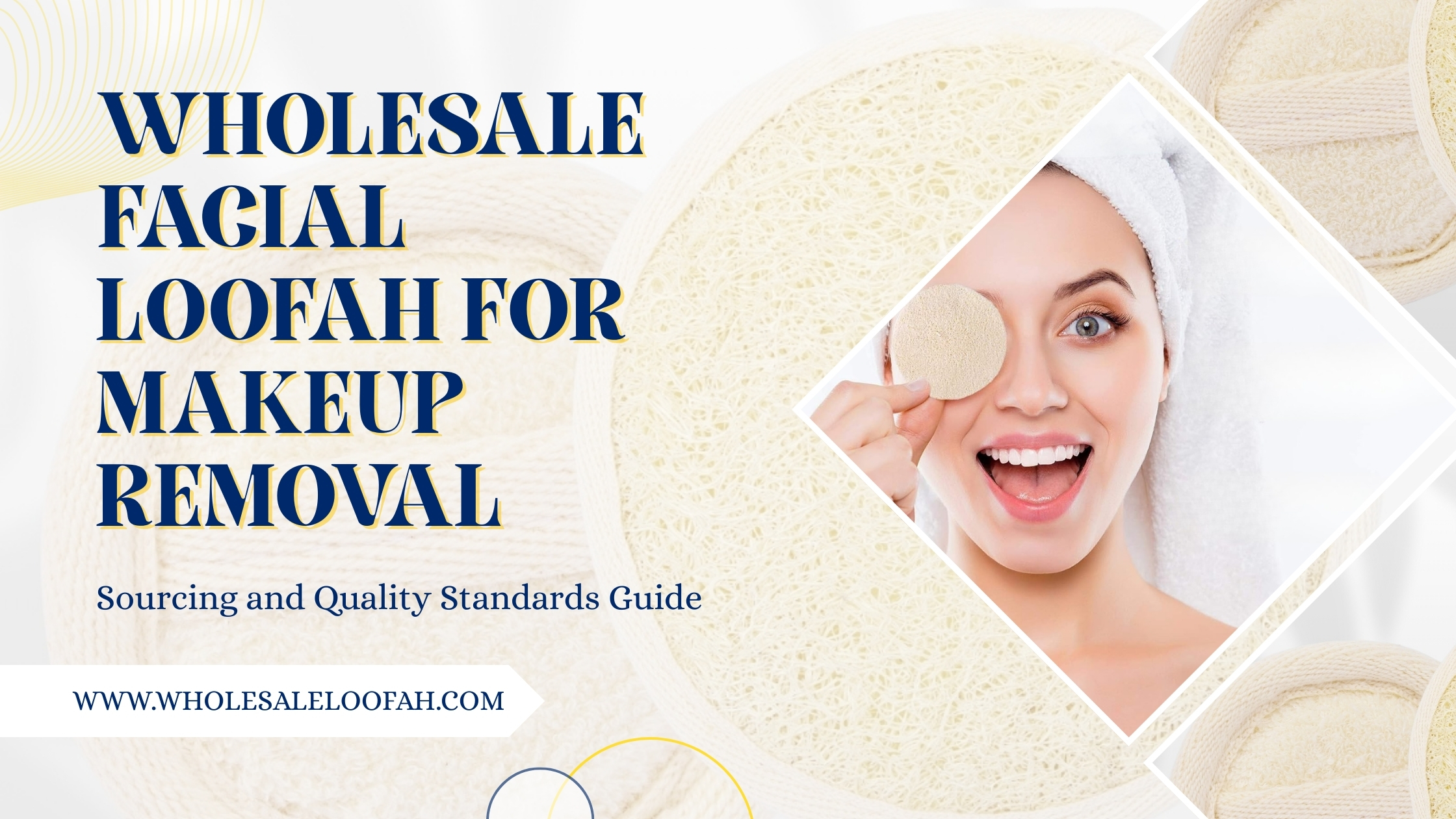
The professional skincare accessories market continues expanding as spa operators, aestheticians, and retailers recognize consumer demand for sustainable alternatives to disposable cleansing products. Facial loofah for makeup removal represents a growing product category with strong profit margins and repeat purchase potential, making it attractive for businesses seeking reliable wholesale suppliers.
Egyptian loofah dominates the premium segment of this market due to superior fiber characteristics developed through generations of cultivation expertise in the Nile Delta region. Wholesale buyers sourcing facial-grade products benefit from established quality frameworks that distinguish professional-grade material from commodity-level agricultural output. This distinction matters significantly when products will contact customers’ facial skin during makeup removal services or retail sale.
This comprehensive guide addresses the business considerations involved in sourcing wholesale facial loofah for makeup removal applications. From understanding product grades and specifications to evaluating supplier reliability and calculating inventory requirements, the information here supports informed purchasing decisions. Whether you operate a single spa location or distribute to hundreds of retail accounts, these frameworks apply to your sourcing process.
Market Overview for Facial Loofah in Skincare Applications
The natural skincare accessories segment has experienced consistent growth as consumers increasingly reject single-use plastic products. Market analysis indicates the sustainable beauty tools category grows at approximately 8 to 12 percent annually, with facial exfoliation products representing a significant portion of this expansion.
Facial loofah for makeup removal occupies a specific niche within this broader category. Unlike body-grade loofahs that compete primarily on price, facial products command premium positioning based on fiber quality, texture consistency, and appropriate processing for delicate skin contact. This premium positioning creates higher margin opportunities for retailers and service providers willing to educate customers on proper selection and use.
Spa and aesthetician services represent the primary professional channel for facial loofah products. Makeup removal constitutes a standard preliminary step in most facial treatments, and natural loofah provides a sustainable, effective tool for this application. Many spas either sell used loofahs to clients after services or include complimentary product with treatment packages, creating both service and retail revenue streams from single inventory items.
Retail distribution spans multiple channels including natural product stores, beauty supply retailers, online marketplaces, and specialty boutiques. Each channel presents different requirements for minimum quantities, packaging standards, and pricing structures. Wholesale buyers benefit from understanding these channel variations when planning inventory allocation and supplier negotiations.
Consumer Demand Drivers
Several factors contribute to growing consumer interest in facial loofah for makeup removal, creating the underlying demand that supports wholesale purchasing.
Environmental consciousness ranks among the primary motivators. Consumers increasingly understand the waste implications of disposable cleansing products and actively seek reusable alternatives. Natural loofah’s complete biodegradability and plant-based origin align perfectly with these values, providing marketing advantages that synthetic alternatives cannot match.
Interest in traditional and natural beauty practices also drives demand. Social media content featuring ancient beauty rituals and natural skincare routines reaches millions of viewers, normalizing products like loofah that may have seemed outdated a decade ago. This cultural shift positions natural products favorably for continued growth.
Skin health awareness contributes additional demand. Educated consumers recognize that appropriate mechanical exfoliation supports healthy skin function, and they seek tools that provide this benefit without chemical ingredients. The controllable nature of loofah exfoliation appeals to those who prefer non-chemical skincare approaches.
Understanding Facial Loofah Quality Grades and Specifications
These quality differentiations directly impact end-user satisfaction, return rates, and repeat purchasing.
While specific terminology varies between suppliers, the underlying quality factors remain consistent across the industry.
The following table outlines standard quality grades for facial loofah products intended for makeup removal and general facial cleansing applications.
| Grade | Fiber Characteristics | Visual Standards | Typical Applications | Relative Position |
|---|---|---|---|---|
| Premium A | Ultra-fine, highly uniform fibers throughout | No visible defects, consistent natural color | Luxury spa services, high-end retail | Top tier |
| Grade A | Fine fibers with minimal texture variation | Minor natural markings acceptable, good appearance | Professional aesthetician use, quality retail | Upper tier |
| Standard B | Good fiber quality with visible natural variation | Natural markings present, functional appearance | Mass market retail, promotional items | Mid tier |
| Economy C | Acceptable fiber quality, noticeable inconsistency | Significant variation, functional only | Budget retail, bulk promotional use | Lower tier |
For facial loofah intended for makeup removal, Premium A or Grade A products best support quality claims and customer satisfaction. The investment in higher-grade material typically generates positive returns through reduced complaints, stronger reviews, and improved repeat purchase rates. Economy grades may suit promotional giveaways but generally prove inappropriate for retail sale or professional service use.
Technical Specifications for Facial Grade Products
Beyond general quality grades, wholesale buyers should specify technical parameters that ensure products meet facial use requirements. These specifications help prevent receipt of body-grade product incorrectly labeled for facial application.
| Specification | Facial Grade Requirement | Body Grade Typical | Importance for Makeup Removal |
|---|---|---|---|
| Fiber density | Low to medium | Medium to high | Lower density provides gentler texture |
| Fiber diameter | Fine, under 0.5mm average | Medium to coarse, 0.5mm plus | Finer fibers reduce irritation risk |
| Flexibility | High flex without breakage | Moderate flex acceptable | Flexibility allows controlled pressure |
| Surface texture | Uniform across product | Some variation acceptable | Consistency ensures predictable performance |
| Processing standard | Food-grade or cosmetic-grade | General agricultural | Higher standards ensure cleanliness |
| Moisture content | Under 12 percent for storage | Under 15 percent acceptable | Lower moisture prevents mold during storage |
These specifications should appear in supplier agreements and quality assurance documentation. Reputable suppliers provide certificates of analysis or quality documentation that confirms products meet stated specifications. Buyers should request this documentation before finalizing orders, particularly when establishing new supplier relationships.
Supplier Evaluation Framework for Facial Loofah Sourcing
Selecting reliable suppliers for wholesale facial loofah requires systematic evaluation of multiple factors. The following framework helps buyers assess potential suppliers and compare alternatives objectively.
Agricultural Expertise and Cultivation Background
Loofah quality begins with cultivation practices, making supplier agricultural knowledge critically important. Suppliers with direct farming operations or long-term relationships with established growers typically deliver more consistent quality than trading companies sourcing opportunistically.
Egyptian loofah benefits from specific growing conditions in the Nile Delta region, where generations of farmers have refined cultivation techniques. Suppliers with documented presence in this region, ideally with decades of operational history, demonstrate the expertise needed for consistent premium production.
Questions to assess agricultural expertise include: How long has your organization cultivated or sourced loofah? What farming practices do you employ or require from growers? How do you handle crop quality variation between seasons? What percentage of your supply comes from owned versus contracted farms?
Processing and Quality Control Capabilities
Raw loofah requires significant processing before becoming suitable for facial use. This processing includes cleaning, drying, fiber treatment, cutting, and quality inspection. Suppliers’ processing capabilities directly impact final product quality.
Evaluate processing by requesting facility documentation, quality control procedures, and grading standards. Inquire about inspection processes at each production stage and ask how rejected material is handled. Suppliers maintaining rigorous quality control at multiple points deliver more consistent final products.
For facial loofah intended for makeup removal, processing should include thorough cleaning to remove plant residue, controlled drying to achieve appropriate moisture levels, and gentle handling that preserves fiber integrity. Harsh processing can damage fine fibers, producing products that appear acceptable but perform poorly during use.
Documentation and Certification Capabilities
International buyers require various documentation for import compliance. Suppliers’ ability to provide accurate, timely documentation affects shipment clearance and can prevent costly delays.
| Document Type | Purpose | When Required |
|---|---|---|
| Phytosanitary certificate | Confirms product free of plant pests and diseases | All international shipments of plant material |
| Certificate of origin | Verifies country of cultivation and manufacture | Most import scenarios |
| Commercial invoice | Details products, quantities, and values | All commercial shipments |
| Packing list | Specifies package contents and weights | All shipments |
| Quality certificate | Confirms product meets stated specifications | As specified in purchase agreements |
| – | – | – |
| – | Required for cosmetic accessory importers to US | US market entry |
Established suppliers maintain systems for generating required documentation efficiently. New market entrants or trading companies may lack experience with specific document requirements, potentially causing compliance issues. Verify documentation capabilities during supplier evaluation, requesting samples of relevant certificates before placing orders.
Communication and Service Quality
Ongoing supplier relationships require effective communication. Assess responsiveness during initial inquiries, clarity of answers to technical questions, and willingness to accommodate specific requirements.
Red flags during evaluation include slow response times, vague answers to specific questions, unwillingness to provide samples, and reluctance to share documentation. These issues typically worsen rather than improve after orders are placed, suggesting the relationship may prove problematic long-term.
Cultural and language considerations affect communication with international suppliers. Egyptian suppliers generally communicate effectively in English for business purposes, though timezone differences require planning for synchronous communication. Establish communication protocols early, including preferred contact methods, expected response times, and escalation procedures for urgent matters.
Ordering and Inventory Management for Facial Loofah
Effective inventory management for wholesale facial loofah balances adequate stock availability against storage costs and product degradation risks. Understanding ordering parameters and storage requirements supports optimal inventory decisions.
Minimum Order Quantities and Pricing Structures
Suppliers establish minimum order quantities based on production economics and logistics efficiency. MOQs vary significantly between suppliers and product types, affecting which suppliers suit different buyer scales.
| Buyer Type | Typical Order Size | Appropriate Supplier Type | Pricing Considerations |
|---|---|---|---|
| Single spa location | 100 to 500 units | Distributors, smaller exporters | Higher per-unit cost, lower total investment |
| Multi-location spa group | 500 to 2,000 units | Direct manufacturer, larger exporters | Volume discounts available |
| Regional distributor | 2,000 to 10,000 units | Direct manufacturer | Significant volume pricing |
| National distributor | 10,000 plus units | Direct manufacturer with export capacity | Best per-unit pricing |
Pricing typically follows tiered structures with per-unit costs decreasing at volume thresholds. Request detailed price breaks when evaluating suppliers to understand the economic benefits of different order quantities. However, avoid ordering beyond reasonable consumption timelines solely for pricing advantages, as storage costs and product degradation can offset per-unit savings.
Lead Times and Production Planning
Loofah harvesting follows seasonal patterns, with primary Egyptian harvest occurring between August and November. This seasonality affects production capacity and lead times throughout the year.
Orders placed during or shortly after harvest season typically ship within four to six weeks. Off-season orders may require eight to twelve weeks if production inventory has depleted. Understanding these patterns helps buyers plan orders to avoid stockouts during high-demand periods.
Establishing regular ordering schedules with suppliers helps ensure consistent availability. Many buyers negotiate annual supply agreements with quarterly or monthly shipments, providing predictability for both parties while maintaining fresh inventory rotation.
Storage Requirements and Shelf Life
Proper storage preserves loofah quality throughout inventory holding periods. Natural loofah stored correctly maintains quality for twelve to eighteen months, providing reasonable flexibility for inventory management.
| Storage Factor | Recommended Condition | Risk If Violated |
|---|---|---|
| Temperature | Cool to room temperature, under 25C preferred | Heat can degrade fiber quality over time |
| Humidity | Low, under 50 percent relative humidity | High humidity promotes mold growth |
| Light exposure | Avoid direct sunlight | UV exposure can discolor and weaken fibers |
| Packaging integrity | Maintain original sealed packaging until use | Exposure to air increases degradation |
| Pest control | Standard facility pest management | Insects can damage stored plant material |
Monitor stored inventory regularly for signs of degradation including discoloration, odor development, or visible mold. First-in-first-out inventory rotation ensures oldest stock ships before newer arrivals, minimizing degradation risk.
Product Positioning and Sales Strategies for Facial Loofah
Successfully selling facial loofah for makeup removal requires appropriate positioning and customer education. These strategies help wholesale buyers and their retail or service customers maximize returns on product investments.
Retail Positioning Approaches
Facial loofah competes in the natural skincare accessories category, typically positioned against reusable cotton rounds, silicone cleansing pads, and konjac sponges. Successful positioning emphasizes unique loofah benefits while addressing common consumer questions.
Sustainability messaging resonates strongly with target consumers. Emphasize complete biodegradability, renewable plant sourcing, and waste reduction compared to disposable alternatives. These claims differentiate loofah from synthetic reusable products while building connection with environmentally conscious shoppers.
Educational content supports sales by helping consumers understand proper selection and use. In-store materials, packaging inserts, and online content explaining skin type matching, preparation procedures, and maintenance practices reduce customer confusion and post-purchase regret. Well-educated customers become repeat buyers and brand advocates.
Premium positioning generally proves more successful than competing on price. Quality facial loofah from Egyptian sources commands prices that provide healthy margins while delivering genuine value to consumers. Attempting to compete with lowest-price commodity products typically fails because the target consumer prioritizes quality and sustainability over minimal cost.
Service Application Positioning
Spa and aesthetician services use facial loofah as both service tools and retail products. This dual application creates multiple revenue opportunities from single inventory items.
During services, loofah-based makeup removal demonstrates product benefits directly to clients. This experiential introduction proves more effective than passive retail display for generating interest. Many clients who experience loofah during professional services request products for home use.
Service protocols should include brief education on proper loofah care. Explaining maintenance requirements during service creates perceived value and reduces likelihood of customer dissatisfaction from improper home use. This education positions the spa as expertise source rather than merely product vendor.
Consider service models that include product with treatment pricing. Makeup removal using new loofah, followed by gifting or selling the used product to client, creates perceived luxury while generating product revenue. Clients appreciate receiving a usable takeaway product rather than watching their loofah enter waste bins.
B2B Sales Considerations
Distributors selling to retail or service accounts benefit from understanding downstream customer needs. Providing accounts with educational materials, display recommendations, and sales training supports their success, which in turn supports reorder activity.
Develop tiered programs for accounts based on order volume and commitment. Larger accounts may receive marketing support, exclusive products, or enhanced pricing. Smaller accounts benefit from lower minimums and flexible terms that allow market testing without excessive risk.
Sample programs prove particularly effective for facial loofah products. The tactile experience of quality product often converts skeptical buyers who might not order based on descriptions or images alone. Budget for sample distribution as customer acquisition cost, recognizing that converted accounts provide ongoing value.
Customization and Private Label Opportunities
Many wholesale buyers seek customized products that differentiate their offerings from competitors. Egyptian loofah suppliers increasingly offer customization options that accommodate these requirements.
Available Customization Options
| Customization Type | Description | Typical MOQ Impact | Cost Impact |
|---|---|---|---|
| Custom sizing | Specific dimensions for facial application | Private label from 1,000 units | Low to moderate |
| Shape modifications | Rounds, ovals, contoured shapes | No minimum order on standard products | Moderate |
| Handle additions | Attached handles or straps | No minimum order on standard products | Moderate to high |
| Packaging design | Custom retail packaging with branding | Private label from 1,000 units | Moderate to high |
| Labeling | Private label with buyer’s brand | Private label from 1,000 units | Low |
| Kitting | Bundled with other products | No minimum order on standard products | Low |
Private labeling represents the most accessible customization, allowing buyers to present products under their own brands without product modifications. Suppliers typically require modest minimums for private label orders, often in the 500 to 1,000 unit range for facial products.
More extensive customization requires larger commitments. Custom shapes or sizes may require 2,000 to 5,000 unit minimums to justify production setup. Complex modifications involving handles or added materials require higher volumes still. Evaluate customization costs against anticipated sales volumes before committing to specialized products.
Developing Custom Product Lines
Successful custom product development follows a structured process that minimizes risk while achieving differentiation goals. Begin with clear product specifications that address specific market needs or gaps. Request samples or prototypes before committing to production quantities.
Test custom products with target customers before scaling production. Limited market tests reveal customer response without large inventory commitments. Gather feedback on pricing, positioning, and product characteristics to refine offerings before major launch.
Establish clear agreements with suppliers regarding custom product ownership, exclusivity, and quality standards. Document specifications thoroughly to ensure production consistency across multiple orders. Include quality inspection provisions that allow rejection of products not meeting agreed standards.
FAQ Section
Q1: What minimum order quantities should I expect for wholesale facial loofah for makeup removal?
A: Minimum order quantities vary significantly by supplier and product type. Typical MOQs range from 500 to 2,000 units for standard facial grade products from direct manufacturers. Distributors may offer lower minimums of 100 to 500 units at higher per-unit costs. Custom or private label products generally require 1,000 to 5,000 unit minimums depending on customization complexity. Negotiate MOQs during supplier discussions based on your specific volume requirements.
Q2: How should I evaluate sample quality when considering new suppliers?
A: Request multiple samples from each potential supplier, ideally from different production batches. Evaluate fiber consistency across samples, flexibility when dry, softening behavior after soaking, and performance during actual facial use. Test samples personally rather than relying solely on visual inspection. Compare supplier samples directly against each other and against products from your current suppliers. Note any inconsistency between samples as this may indicate production variability.
Q3: What documentation do I need to import facial loofah products?
A: Required documentation depends on your country and intended use claims. Standard requirements include commercial invoice, packing list, phytosanitary certificate, and certificate of origin. Request documentation samples from suppliers during evaluation to verify their ability to provide required paperwork. Work with customs brokers familiar with natural product imports to ensure compliance.
Q4: How do seasonal harvest patterns affect ordering and pricing?
A: Egyptian loofah harvest occurs primarily between August and November. Post-harvest periods typically offer best availability and pricing as fresh inventory enters the market. Pre-harvest periods may see limited availability and potential price increases as previous season inventory depletes. Plan major orders for the October through February period when fresh harvest is available. Establish annual supply agreements to lock pricing and ensure allocation during tighter supply periods.
Q5: What profit margins can I expect on facial loofah for makeup removal?
A: Profit margins vary by channel and positioning. Retail margins typically range from 50 to 70 percent depending on brand positioning and competitive environment. Service application margins vary based on whether products are consumed during service or sold to clients. Premium positioning generally supports stronger margins than price-competitive approaches. Factor shipping, storage, and marketing costs into margin calculations for accurate profitability assessment.
Q6: How do I handle quality complaints from customers or accounts?
A: Establish clear quality standards with suppliers and document specifications in purchase agreements. Maintain samples from each batch received to facilitate complaint investigation. When complaints arise, compare customer samples against retained batch samples to determine if issues result from product quality or improper use. Address legitimate quality issues directly with suppliers, documenting incidents to support quality improvement discussions or supplier changes if necessary.
Verify specific certifications held by suppliers and request copies of current certificates.
Q8: What shipping methods work best for loofah imports?
A: Shipping method choice depends on order size, urgency, and cost priorities. Ocean freight provides lowest cost for large orders but requires eight to twelve weeks transit time. Air freight delivers within one to two weeks at significantly higher cost. Consolidated shipping services offer middle-ground options for medium-sized orders. Discuss shipping options with suppliers who typically arrange freight to major ports. Factor landed costs including shipping, duties, and local delivery into total cost calculations.
Expert Insight from EGEXO
EGEXO has been exporting Egyptian loofah since 2015. The most successful partnerships begin with clear communication about quality expectations and intended applications.
For buyers sourcing facial loofah for makeup removal specifically, we recommend requesting our facial-grade samples before committing to orders. The difference between facial and body grades becomes immediately apparent during testing, and this experience helps buyers specify appropriate products confidently. We provide detailed quality documentation with all shipments and maintain batch samples for traceability.
Our private labeling and custom product design services help buyers differentiate their offerings while maintaining the quality consistency Egyptian loofah is known for. We work with buyers to develop specifications that match their market positioning, whether luxury spa brands or accessible retail products. EGEXO handles documentation requirements for major markets including the USA, Europe, Canada, Australia, the Gulf and every other country we can ship to Pacific.
To discuss your order, request a quote from EGEXO.
Conclusion
Sourcing wholesale facial loofah for makeup removal requires understanding quality standards, supplier evaluation criteria, and inventory management practices that maximize returns on purchasing investments. Egyptian loofah from experienced suppliers provides the consistent quality that professional and retail applications demand.
Key Takeaways:
- Quality grading significantly impacts end-user satisfaction and repeat purchasing rates
- Supplier evaluation should assess agricultural expertise, processing capabilities, and documentation proficiency
- Lead times vary seasonally with Egyptian harvest occurring August through November
- Proper storage maintains product quality for twelve to eighteen months
- Private labeling offers accessible customization with modest minimum requirements
- Educational content and premium positioning typically outperform price competition strategies
Ready to source premium Egyptian facial loofah?
- Request Wholesale Quote: https://egexo.com/get-quotation-loofah-wholesale/
- Download Product Catalog: https://egexo.com/wp-content/uploads/2025/08/EGEXO-Loofah-Wholesale-Supplier-Product-Catalog.pdf
- Order Samples: https://egexo.com/request-loofah-samples/
- Explore Private Label Options: https://egexo.com/private-label-loofah-manufacturing/