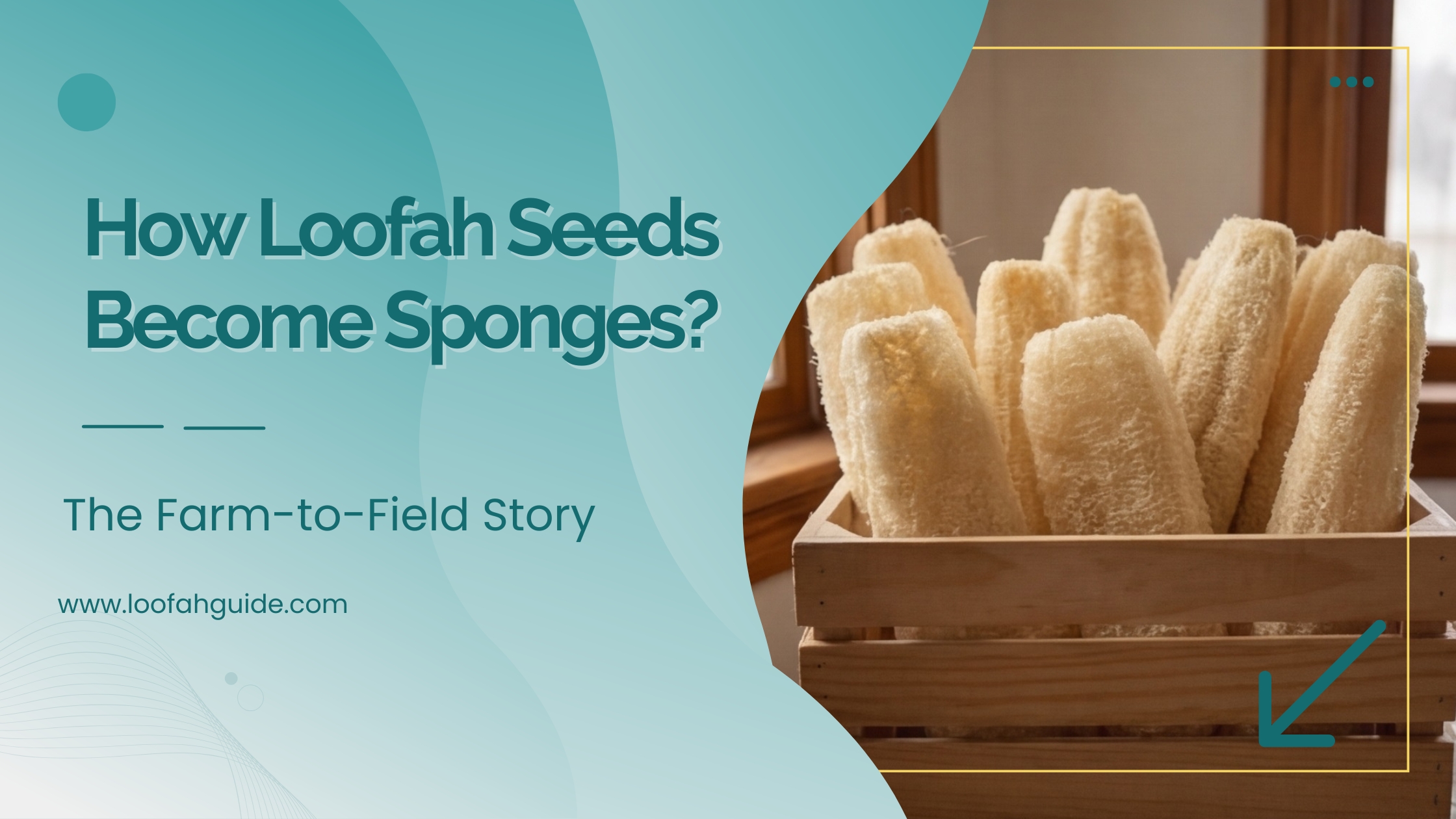
Wholesale loofah buyers making procurement decisions benefit enormously from understanding how loofah seeds transform into the products filling their warehouses and retail shelves. This farm to field story provides the context needed to evaluate suppliers, specify quality requirements, and anticipate supply chain variables affecting availability and pricing. Knowledge of production fundamentals separates informed buyers from those making decisions based solely on quoted prices.
The natural sponge supply chain begins in agricultural fields where skilled cultivators nurture loofah seeds through a 150 to 200 day growing cycle before harvest and processing. Egypt produces over 80 percent of premium-grade natural sponges reaching international markets, with the Nile Delta region offering ideal climate conditions and generations of accumulated cultivation expertise. Understanding why Egyptian production dominates helps buyers appreciate sourcing decisions affecting their product quality and supply reliability.
Market data shows natural sponge demand growing 18 percent annually since 2020, driven by consumer preference for sustainable alternatives to plastic products. This growth creates both opportunities and supply pressures that informed buyers navigate more successfully than those lacking production knowledge. Anticipating seasonal availability patterns, understanding quality variation causes, and recognizing supplier capability indicators all depend on farm to field comprehension.
Whether you source loofahs for spa distribution, retail product lines, hospitality amenity programs, or private label manufacturing, this guide equips you with essential supply chain knowledge.
Agricultural Foundation: Loofah Seed Selection and Genetics
Commercial loofah production quality begins with seed genetics. Suppliers controlling their seed stock demonstrate commitment to consistent product quality that translates directly into reliable supply for wholesale buyers. Understanding seed selection practices reveals supplier sophistication levels affecting long-term partnership value.
Seed Stock Development and Selection Criteria
Professional loofah cultivators maintain proprietary seed lines developed through decades of selective breeding. Each harvest season, seeds from plants producing top-grade sponges receive priority for the following planting cycle. This ongoing selection pressure incrementally improves fiber density, color consistency, and structural durability across generations.
Seed selection criteria include germination viability rates, genetic consistency for uniform product characteristics, and disease resistance markers reducing crop losses. Premium agricultural seeds from professional programs achieve 92 to 95 percent viability compared to 75 to 80 percent for generic commercial seeds. This viability difference directly impacts planting efficiency and harvest consistency.
For wholesale buyers evaluating potential suppliers, questions about seed stock origins reveal cultivation sophistication. Suppliers using purchased generic seeds face inherent quality limitations regardless of processing expertise. Those maintaining controlled seed programs demonstrate vertical integration supporting consistent quality across order volumes and seasons.
Variety Selection for Commercial Applications
Different loofah varieties produce sponges with varying characteristics suited to specific end uses. Commercial sponge varieties prioritize fiber density and structural integrity over the softer characteristics valued in culinary loofah types grown for food consumption. Variety selection at planting time determines maximum achievable quality regardless of subsequent cultivation and processing excellence.
| Variety Characteristic | Impact on Wholesale Products | Buyer Consideration |
|---|---|---|
| Fiber Density | Durability, scrubbing effectiveness | Higher density commands premium pricing |
| Growth Period | Harvest timing, seasonal availability | Longer periods may affect supply scheduling |
| Disease Resistance | Crop reliability, supply consistency | Resistant varieties reduce supply disruption risk |
| Size Uniformity | Processing efficiency, product consistency | Uniform sizing simplifies inventory management |
| Color Characteristics | Finished product appearance | Natural cream preferred for most applications |
Understanding that variety selection occurs months before harvest helps buyers appreciate the planning horizons suppliers navigate. Quality commitments made at ordering time depend on cultivation decisions already completed. Established supplier relationships provide access to production planning visibility supporting reliable supply agreements.
Cultivation Infrastructure and Quality Implications
Physical infrastructure supporting loofah cultivation significantly impacts achievable quality levels. Wholesale buyers benefit from understanding these infrastructure requirements when evaluating supplier capabilities and price quotations.
Trellising and Vertical Cultivation
Commercial loofah operations train vines vertically on trellis systems reaching 2 to 3 meters height. This infrastructure investment yields substantial quality returns through multiple mechanisms. Vertical growth improves air circulation reducing fungal disease pressure. Developing fruits hang freely preventing soil contact damage. Light distribution throughout the canopy enhances fiber development.
Research comparing cultivation methods documents that trellised production yields 25 to 35 percent more marketable Grade A sponges than ground cultivation of identical genetic material. For wholesale buyers, this translates into supplier ability to fulfill large orders with consistent premium quality rather than blending grades to meet volume requirements.
Buyers can assess supplier trellising practices through farm visit documentation, certification records, or detailed quality specifications. Suppliers providing transparent cultivation information demonstrate confidence in their practices and facilitate informed purchasing decisions.
Irrigation and Nutrient Management
Water and nutrient delivery systems affect both yield quantity and quality characteristics. Modern drip irrigation reduces water consumption 40 to 60 percent compared to traditional methods while improving crop uniformity. Precise nutrient management optimizes fiber development throughout the growing season.
The final weeks before harvest involve deliberate water reduction that triggers plants to strengthen fiber structures. This controlled stress produces the firm, resilient texture wholesale buyers specify for quality products. Understanding these cultivation practices helps buyers recognize that quality specifications require production expertise beyond basic farming knowledge.
For buyers emphasizing sustainability credentials in their product positioning, supplier irrigation practices represent meaningful differentiators. Water-efficient cultivation aligns with environmental messaging and may support certification requirements for eco-conscious market segments.
Growing Season and Supply Timing Considerations
Loofah production follows agricultural seasonality that affects supply availability, quality variation, and pricing throughout the year. Wholesale buyers planning procurement strategies benefit from understanding these seasonal patterns.
Egyptian Growing Calendar
Egyptian loofah cultivation operates on annual cycles aligned with regional climate patterns. Spring plantings in March and April position the longest growth period during peak summer heat when loofah plants thrive. Harvest typically occurs September through November when mature fruits reach optimal processing readiness.
| Production Phase | Typical Timing | Wholesale Buyer Implications |
|---|---|---|
| Planting | March to April | Production commitments established |
| Vegetative Growth | April to July | Crop progress monitoring possible |
| Flowering and Fruit Set | July to August | Yield estimates become reliable |
| Fruit Maturation | August to October | Quality characteristics developing |
| Harvest | September to November | Fresh inventory entering processing |
| Processing | October to December | New season products available |
| Export Season | Year-round with peak availability January to June | Optimal procurement timing |
Understanding this calendar helps buyers time orders strategically. Fresh season inventory typically offers best quality at competitive pricing. Late season orders may encounter limited grade availability as premium inventory sells through. Advance ordering with established suppliers secures allocation from new harvests before general market availability.
Quality Variation by Season Position
Harvest timing within the season affects sponge characteristics buyers should understand when specifying requirements. Early season harvests capture fruits reaching maturity first, typically from vines with optimal growing conditions. Mid-season harvests represent peak volume with consistent quality. Late season harvests may include fruits that developed under less favorable late-season conditions.
These variations influence specification strategies for different product applications. Applications requiring strict consistency benefit from mid-season sourcing when production uniformity peaks. Applications tolerating wider variation may achieve cost advantages through late-season procurement accepting broader grade ranges.
Harvest and Processing: Converting Agricultural Output to Commercial Products
Post-harvest processing transforms raw gourds into the finished sponges wholesale buyers receive. Understanding processing stages helps buyers specify requirements accurately and evaluate supplier capabilities.
Harvest Practices Affecting Quality
Professional harvest operations practice selective picking rather than comprehensive field harvesting. Individual fruits reach maturity at different rates based on pollination timing and vine position. Selective harvest ensures each sponge enters processing at optimal maturity, maximizing grade yield percentages.
Harvest handling prevents damage that downgrades otherwise excellent sponges. Careful cutting techniques protect fiber structures near stem attachments. Padded containers and controlled stacking prevent compression damage during transport to processing facilities. These practices require trained harvest teams and appropriate equipment investment.
Large scale operations harvest 1,000 to 5,000 gourds daily during peak season. This capacity matters for wholesale buyers placing substantial orders requiring timely fulfillment. Inquiries about harvest capacity reveal supplier ability to scale production supporting growing business relationships.
Processing Facility Capabilities
Processing facilities vary dramatically in capability, from basic manual operations to sophisticated integrated plants. Facility capabilities directly impact achievable quality consistency, processing capacity, and certification compliance.
Manual processing suits small volume operations but introduces variation from worker-to-worker differences. Semi-automated facilities standardize key processes while retaining manual finishing. Fully integrated plants control each process step through documented procedures with quality verification at each stage.
| Facility Type | Typical Capacity | Quality Consistency | Certification Capability |
|---|---|---|---|
| Basic Manual | 500 to 2,000 units daily | Variable | Limited |
| Semi-Automated | 2,000 to 10,000 units daily | Good | Standard certifications |
| Fully Integrated | 10,000 plus units daily | Excellent | Full compliance capability |
For wholesale buyers requiring consistent quality across large orders or needing specific certifications, facility capability assessment represents essential supplier evaluation criteria. Egexo maintains fully integrated processing supporting comprehensive quality standards documentation for buyer requirements.
Quality Grading Systems
Understanding grade definitions enables precise specification communication and fair price-quality comparisons across suppliers.
Premium A grade represents the highest quality tier with very high fiber density, excellent color uniformity, and no structural defects. These sponges command highest pricing and suit applications demanding premium presentation including luxury spas, high-end retail, and branded product lines.
Grade A products show high fiber density with good color uniformity and minor superficial variations acceptable. This tier suits most retail and hospitality applications requiring quality presentation without premium pricing.
Grade B sponges have medium to high fiber density with acceptable color variations including some darker spots. Small structural imperfections remain acceptable. This tier serves applications including kitchen products, bulk retail, and price-sensitive markets.
Grade C and utility grades serve industrial, craft, and specialty applications where appearance matters less than functional fiber characteristics.
Wholesale buyers should specify required grades in ordering and request grade certification documentation supporting quality claims. Suppliers unable to provide grade documentation may lack systematic quality control processes affecting order consistency.
Wholesale Buyer Quality Evaluation Framework
Effective supplier evaluation requires systematic assessment of multiple factors affecting order fulfillment and product quality. This framework guides buyer due diligence processes.
Supplier Capability Assessment
| Evaluation Category | Key Questions | Quality Indicators |
|---|---|---|
| Cultivation Control | Own farms or contracted growers? | Vertical integration signals quality commitment |
| Seed Stock | Proprietary selection or purchased? | Controlled seed programs indicate sophistication |
| Processing Facilities | Manual, semi-automated, or integrated? | Facility investment reflects capability |
| Quality Systems | Documented procedures and inspections? | Systematic quality control ensures consistency |
| Certifications | Which certifications held? | Certifications verify capability claims |
| Export Experience | Years exporting, markets served? | Experience indicates reliable fulfillment |
| References | Client references available? | References verify supplier claims |
Egexo provides comprehensive transparency regarding cultivation practices, processing capabilities, and quality systems. The why choose Egexo page addresses common evaluation questions wholesale buyers raise during supplier assessment.
Sample Evaluation Protocol
Before committing to large orders, wholesale buyers should evaluate product samples systematically. Sample assessment reveals actual quality characteristics that specifications alone cannot verify.
Physical Examination Checklist:
- Fiber density: Compress sponge firmly, assess resistance and recovery
- Color consistency: Examine under neutral lighting for uniformity
- Structural integrity: Check for thin spots, holes, or weak areas
- Cleanliness: Verify absence of debris, seed fragments, or residue
- Odor: Smell dry and after wetting, should be neutral or slight plant scent
- Dimensional accuracy: Measure against stated specifications
Functional Testing:
- Water absorption: Time to fully saturate and feel after saturation
- Wet texture: Evaluate softening appropriate for intended use
- Durability: Squeeze and scrub motions to assess fiber binding
- Drying speed: Time to return to dry state under typical conditions
Request samples to conduct hands-on evaluation before larger procurement commitments.
Order Specification and Communication
Clear specification communication prevents misunderstandings affecting order fulfillment and buyer satisfaction. Wholesale buyers should address these elements when placing orders or requesting quotations.
Essential Specification Elements
Product Requirements:
- Product type and dimensions with tolerances
- Quality grade required with acceptance criteria
- Quantity needed including allowable variance
- Packaging requirements for shipping and retail presentation
Documentation Needs:
- Required certifications with specific standards
- Quality inspection documentation expectations
- Phytosanitary and import compliance documents
- Certificate of origin requirements
Logistics Parameters:
- Destination port or delivery location
- Required delivery timeframe
- Preferred shipping method
- Insurance and Incoterms requirements
Commercial Terms:
- Payment terms and methods
- Order confirmation and modification processes
- Quality dispute resolution procedures
- Ongoing supply agreement interests
Comprehensive initial specifications reduce back-and-forth clarification delays and prevent fulfillment surprises. Experienced suppliers like Egexo welcome detailed specifications enabling accurate quotation and reliable execution. Request a quotation with your complete requirements for responsive pricing.
Private Label and Custom Product Development
Many wholesale buyers develop branded loofah products for their specific markets. Understanding private label manufacturing processes helps buyers evaluate custom product opportunities.
Private Label Service Components
Private label manufacturing encompasses multiple service elements beyond basic product supply:
Product Customization:
- Custom dimensions and shapes per buyer specifications
- Density and firmness selection for target applications
- Finishing options including texture and appearance treatments
- Multi-component products combining loofahs with other materials
Branding and Packaging:
- Custom packaging design and production
- Brand labeling and hang tag insertion
- Display packaging for retail presentation
- Gift set assembly and specialty packaging
Documentation and Compliance:
- Private label product certifications
- Custom quality documentation with buyer branding
- Regulatory compliance verification for target markets
- Import documentation support
Egexo private label manufacturing services support buyers from initial concept through ongoing production. Custom product design capabilities enable unique products differentiated from commodity offerings.
Minimum Order Requirements for Custom Products
Custom manufacturing requires setup investments affecting minimum order economics. Buyers should understand typical minimums when planning custom product programs:
| Customization Level | Typical MOQ Range | Lead Time |
|---|---|---|
| Standard Products, Custom Packaging | Private label from 1,000 units | Confirmed with the quote |
| Custom Dimensions from Standard Shapes | Private label from 1,000 units | Confirmed with the quote |
| Custom Shapes or Multi-Component | Private label from 1,000 units | Confirmed with the quote |
| New Product Development | No minimum order on standard products | 7 to 25 days from payment |
Initial orders at minimum levels test market acceptance before scaling commitments. Experienced manufacturers structure programs accommodating growth from test quantities through volume production.
Logistics and International Trade Considerations
Successfully importing wholesale loofahs requires navigating international trade logistics. Understanding these processes helps buyers plan procurement timelines and evaluate supplier export capabilities.
Export Documentation Requirements
International loofah shipments require comprehensive documentation for customs clearance:
- Commercial invoice with accurate product descriptions and values
- Packing list detailing contents, weights, and dimensions
- Certificate of origin verifying Egyptian production
- Phytosanitary certificate confirming agricultural safety compliance
- Quality certifications per buyer requirements
- Bill of lading or airway bill for shipping
Experienced exporters maintain current knowledge of destination country requirements and prepare documentation accordingly. Documentation errors cause clearance delays and potential penalties. Supplier export experience reduces these risks for buyers.
Shipping Options and Trade Terms
See our wholesale prices on egexo.com.
Incoterms specification clarifies responsibility boundaries between buyers and suppliers. Common terms for loofah imports include:
- FOB (Free on Board): Supplier responsibility ends at port loading
- CIF (Cost, Insurance, Freight): Supplier arranges shipping to destination port
- DDP (Delivered Duty Paid): Supplier handles all logistics to buyer location
Buyers new to importing may prefer DDP terms eliminating logistics complexity, accepting potentially higher total cost for simplified procurement.
The farm to export process documentation provides detailed information about Egexo export capabilities and procedures.
Market Positioning and Product Applications
Understanding end market applications helps wholesale buyers identify opportunities and specify products appropriately for target customers.
Application Segment Overview
Product line development matching grade availability to segment requirements optimizes procurement economics while meeting customer expectations.
Consumer Trend Alignment
Current consumer trends favor natural loofah products across multiple dimensions:
Sustainability: Growing environmental awareness drives demand for plastic alternatives. Natural loofahs offer complete biodegradability and renewable sourcing that resonates with eco-conscious consumers.
Natural and Clean Products: Consumer preference for products without synthetic ingredients extends to personal care accessories. Plant-based loofahs align with natural lifestyle positioning.
Quality over Disposability: Some consumers seek durable products over disposable alternatives, supporting premium natural sponge positioning despite higher unit cost than synthetics.
Wholesale buyers can leverage these trends through product messaging and market positioning that communicates natural loofah advantages to end consumers.
FAQ Section
Q: What minimum order quantities should wholesale buyers expect from Egyptian loofah suppliers?
A: Standard product MOQs typically range from 500 to 2,000 units depending on product type and supplier. Custom products and private label orders may require 2,500 to 5,000 unit minimums to justify setup costs. Sample orders allow quality evaluation before larger commitments. Established suppliers often offer flexible MOQs for new buyer relationships with volume growth expectations.
Q: How do loofah seeds and growing conditions affect wholesale product quality?
A: Seed genetics establish maximum quality potential while growing conditions determine actual achievement. Professional cultivators maintain controlled seed stock programs selecting from top-performing plants across generations. Optimal cultivation including proper trellising, irrigation management, and harvest timing maximizes genetic potential. Suppliers controlling both seed genetics and cultivation practices deliver more consistent quality than those relying on contracted or purchased materials.
Q: What certifications should wholesale buyers require from loofah suppliers?
A: Certification requirements depend on end use applications and destination markets. Buyers should specify required certifications when requesting quotations to verify supplier capability and include certification costs in pricing.
Q: How long does the loofah production cycle affect supply availability?
A: The complete farm to field journey requires 6 to 8 months from planting to finished product availability. Egyptian production follows annual cycles with harvest typically September through November and peak export availability January through June. Understanding this timeline helps buyers plan procurement, particularly for large orders requiring significant inventory allocation.
Q: What causes quality variation in wholesale loofah orders?
A: Quality variation results from multiple factors throughout the production cycle. Seed genetics, growing conditions, harvest timing, and processing care all contribute to finished product characteristics. Systematic quality control with documented grading reduces variation within orders. Buyers seeking maximum consistency should specify narrow grade requirements and evaluate supplier quality systems during selection.
Q: How should wholesale buyers evaluate potential loofah suppliers?
A: Effective evaluation examines cultivation control, seed stock programs, processing facilities, quality systems, certifications, export experience, and client references. Sample orders enable hands-on quality assessment. Facility documentation or visits verify capability claims. Long-term partnership potential matters beyond initial pricing, as consistent supply and quality support sustainable business growth.
Expert Insight from EGEXO
EGEXO has been exporting Egyptian loofah since 2015.
Price comparison alone misleads wholesale buyers. The lowest quoted price often correlates with quality shortcuts visible only after inventory arrives. We regularly encounter buyers transitioning from price-focused suppliers after experiencing grade inconsistency, documentation problems, or fulfillment delays that cost more than initial savings.
Supply chain integration matters increasingly in tightening markets. Suppliers owning cultivation through processing control quality variables others cannot. When demand exceeds supply, integrated operations prioritize their own inventory. Buyers relying on middlemen face allocation challenges during tight periods.
Communication responsiveness during the quotation process indicates supplier service orientation. Partners investing time understanding your requirements before quoting demonstrate commitment to successful relationships. Those providing generic responses without engaging your specific needs rarely improve after orders are placed.
We welcome detailed discussions about your loofah sourcing requirements and encourage thorough supplier evaluation processes. Quality partnerships develop from mutual understanding that specifications and documentation establish.
To discuss your order, request a quote from EGEXO.
Conclusion
The journey from loofah seeds to wholesale sponges encompasses agricultural expertise, processing sophistication, and supply chain management capabilities that vary dramatically across suppliers. Wholesale buyers who understand this farm to field story make better sourcing decisions, develop more effective specifications, and build supplier relationships supporting long-term business success.
Egyptian loofah production dominates premium natural sponge markets through the combination of ideal growing conditions and generations of cultivation expertise. Buyers prioritizing quality and supply reliability benefit from establishing relationships with suppliers demonstrating integrated control from seed selection through export fulfillment.
Market growth driven by sustainability trends creates opportunity for wholesale buyers positioning natural loofah products effectively. Understanding production fundamentals enables compelling product messaging that differentiates from commodity alternatives and supports premium positioning.
Key Takeaways:
- Loofah production requires 150 to 200 day growing cycles affecting supply timing and availability
- Supplier seed stock control and cultivation practices fundamentally determine achievable quality
- Processing facility capabilities affect consistency, capacity, and certification compliance
- Egyptian production dominance reflects genuine quality advantages from climate and expertise
Ready to source premium wholesale loofahs?
- Get Quotations: Request detailed pricing for your specific requirements
- Review Products: Download the complete catalog showing available options
- Evaluate Quality: Order samples for hands-on assessment before larger orders
- Explore Products: Browse raw loofah scrubbers and other product categories