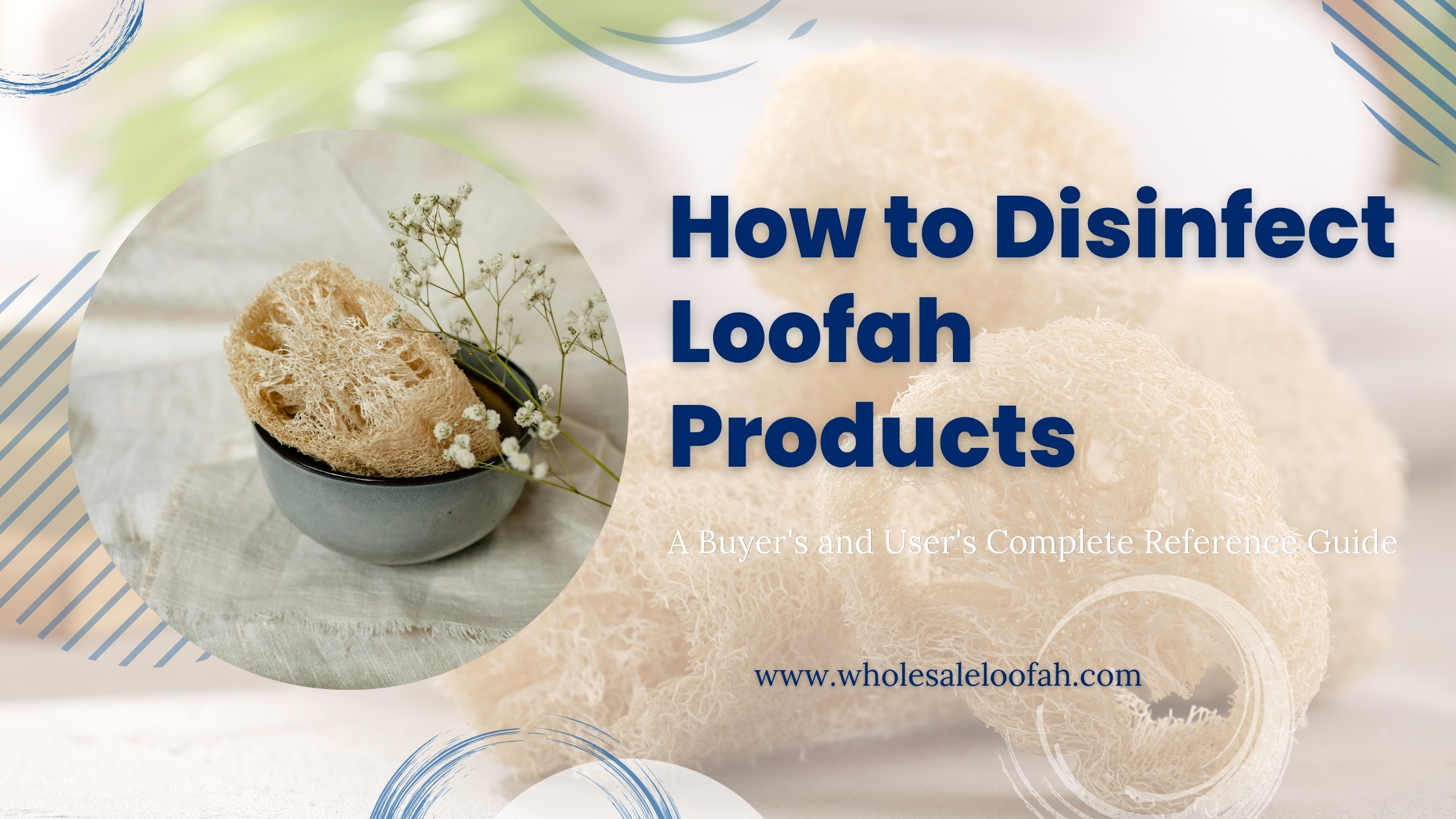
Loofah Hygiene Starts Before the Product Reaches the Consumer
For anyone working in the loofah supply chain — whether you are an importer, a spa owner, a skincare brand, or a retail buyer — the question of how to disinfect loofah products is both a consumer concern and a business consideration. A loofah that arrives in perfect condition but lacks proper hygiene guidance for the end user generates complaints, returns, and damaged brand perception.
Understanding the disinfection options available — primarily white vinegar and household bleach — and knowing how to communicate them to your customers is a competitive advantage. It is also simply the right thing to do when you are sourcing a product that goes directly onto human skin.
This guide serves two groups simultaneously. For consumers, it delivers clear, actionable instructions on how to disinfect loofah products safely and effectively at home. For wholesale buyers, distributors, and brand owners, it provides the technical background, protocol frameworks, and sourcing insights needed to build better product specifications and customer education materials.
Natural Egyptian loofahs remain the benchmark for quality in the global natural loofah market. EGEXO has been exporting Egyptian loofah since 2015. For a full overview of available product types and specifications, the Egexo wholesale loofah catalog covers everything importers and buyers need to evaluate sourcing decisions.
The Biology Behind Loofah Contamination: What Buyers and Users Both Need to Know
How Bacteria Colonize Natural Loofah Fibers
A natural loofah’s structural composition — a three-dimensional matrix of dried plant cellulose derived from the Luffa aegyptiaca plant — creates an environment that is functionally excellent for both exfoliation and bacterial colonization. The same fibrous channels that deliver superior mechanical scrubbing action also trap moisture, organic compounds, and the warm, humid conditions that bacteria require to multiply.
In a used loofah that is rinsed but not disinfected or properly dried, bacterial populations can double every 20 to 40 minutes under optimal temperature conditions. Common bathroom temperatures — typically between 20 and 30 degrees Celsius — fall squarely within optimal bacterial growth ranges. This means a morning shower loofah left in a closed shower caddy can accumulate millions of bacteria before its next use that evening.
For consumers with healthy skin, this bacterial load creates heightened risk of folliculitis, skin irritation, and aggravated conditions like acne. For users with any disruption to the skin barrier — cuts, eczema, psoriasis — the risk includes more serious infections from opportunistic pathogens.
The Quality Link: Why Sourcing Matters for Hygiene
From a supply chain perspective, the quality of the loofah at the point of manufacturing directly influences how much bacterial risk accumulates in use. Loofahs that are processed with residual plant material, seeds, or organic debris embedded in the fiber matrix harbor higher baseline bacterial populations before the consumer even opens the packaging.
Egyptian loofahs processed to Egexo’s standards are cleaned, sorted, and packaged under humidity-controlled conditions. The farm-to-export process removes seed residue and applies controlled drying to achieve a moisture content at packaging that minimizes mold risk throughout the entire distribution chain. Buyers evaluating suppliers should request moisture content specifications as a standard quality metric — it is one of the most telling indicators of processing quality.
For a detailed breakdown of grading criteria, the Egexo quality standards page is the reference document used by importers and quality control teams sourcing Egyptian loofah products.
Disinfection Method 1: White Vinegar for Natural Loofah Care
Why the Industry Recommends Vinegar as a Primary Disinfectant
Its recommendation profile is driven by four characteristics that align well with natural loofah’s specific requirements.
It is effective. Acetic acid achieves 70 to 80 percent bacterial reduction in a 5-minute soak. It is safe for natural fibers. Unlike oxidizing agents, acetic acid does not break down cellulose polymer chains, meaning a loofah treated with vinegar regularly maintains its structural integrity throughout its full lifespan. It is consumer-friendly — widely available, inexpensive, non-toxic, and familiar. And it aligns with eco-conscious brand positioning, which matters in a market where natural and sustainable product credentials drive purchasing decisions.
Vinegar Disinfection Protocol: Step-by-Step Reference
| Step | Instruction | Time | Specific Notes |
|---|---|---|---|
| 1 | Rinse loofah under warm water | 60 sec | Remove surface debris before soaking |
| 2 | Squeeze out excess moisture gently | 20 sec | Do not twist — protects fiber alignment |
| 3 | Fill clean container with enough white vinegar to submerge loofah fully | 1 min | Use standard 5% white distilled vinegar — undiluted |
| 4 | Submerge and press loofah to ensure full saturation | 15 sec | All fiber sections must contact vinegar |
| 5 | Soak with periodic gentle compression | 5-10 min | Compress and release 2-3 times during soak |
| 6 | Remove and rinse under warm running water | 90 sec | Multiple rinse passes until vinegar odor is minimal |
| 7 | Gently reshape and squeeze moisture out | 20 sec | Handle gently at this stage |
| 8 | Hang to dry in open, ventilated space | 2-3 hours minimum | Never store damp — this is the most critical step |
For Brand Owners: Communicating This Protocol to Customers
If you are developing private-label loofah products or curating natural bath collections for retail, incorporating a printed care card or packaging insert with this protocol reduces the most common customer complaint — odor and perceived short lifespan — significantly. Egexo’s private label manufacturing service includes options for custom care instruction packaging, allowing brands to deliver this guidance at point of purchase rather than leaving customers to discover it independently.
Disinfection Method 2: Bleach for Deep Loofah Sanitization
Understanding When Bleach Is the Right Choice
Diluted sodium hypochlorite — household bleach at the correct concentration — delivers a fundamentally different level of disinfection than vinegar. Where vinegar achieves 70 to 80 percent bacterial reduction, properly diluted bleach achieves 99 percent or greater elimination across a much broader spectrum of organisms, including bacterial spores, most viruses, and established fungal colonies.
This power comes with a critical constraint: bleach is an oxidizing agent that attacks cellulose fiber bonds alongside microbial cells. Each bleach treatment causes incremental and cumulative structural degradation. Used sparingly — monthly for personal use, weekly maximum for professional settings — this degradation is acceptable and manageable. Used too frequently, it will visibly weaken and fray the loofah within weeks.
Bleach Disinfection Protocol: Reference Table
| Step | Instruction | Time | Key Requirement |
|---|---|---|---|
| 1 | Prepare solution: 1 tablespoon bleach per 1 gallon cool water | 2 min | Do not use hot water — reduces bleach effectiveness |
| 2 | Wear gloves and ventilate the workspace | 1 min | Bleach fumes cause respiratory irritation |
| 3 | Rinse loofah under cool water before immersion | 45 sec | Prevents dilution of bleach solution |
| 4 | Fully submerge loofah — weight down if needed | 15 sec | Incomplete submersion leaves untreated zones |
| 5 | Soak — strictly 3 to 5 minutes | 3-5 min | Exceeding 5 minutes accelerates fiber damage |
| 6 | Remove and rinse under running water | 2+ min | Multiple complete rinse cycles are mandatory |
| 7 | Smell test — zero residual bleach odor required | 30 sec | Any bleach smell means continue rinsing |
| 8 | Hang in ventilated area to fully air dry | 3-4 hours | Bleach-treated loofahs require longer drying time |
Bleach Use in Professional Settings: Spa and Wellness Protocols
In spa and wellness environments where loofahs are used across multiple clients in a single day, the disinfection requirements are higher than in personal use contexts. Industry hygiene standards for shared personal care tools recommend disinfection between each client use and complete replacement on a schedule of 2 to 4 weeks under daily professional use.
For spa owners sourcing loofahs at scale, the replacement frequency directly informs procurement volume. A 10-treatment-room spa replacing loofahs every three weeks requires approximately 130 to 170 units per year per room, depending on session volume. Planning procurement around this model with a reliable wholesale supplier prevents stock-outs and quality inconsistencies. To discuss bulk supply arrangements and pricing, request a wholesale quotation from Egexo or browse pet and spa grooming loofah options.
Full Comparison Analysis: Vinegar vs Bleach Across All Key Dimensions
Side-by-Side Comparison Table
| Dimension | White Vinegar (5% Acetic Acid) | Diluted Bleach (0.05% Sodium Hypochlorite) |
|---|---|---|
| Bacterial reduction per treatment | 70-80% | 99%+ |
| Mold effectiveness | Good for early mold and prevention | Excellent, including established colonies |
| Viral effectiveness | Limited | Broad spectrum |
| Fiber impact per treatment | None detectable | Minor oxidation |
| Cumulative fiber damage | Negligible across full loofah life | Significant after 6-8 treatments |
| Post-rinse skin safety | Excellent | Good with thorough rinsing |
| Recommended use frequency | Every 2-3 uses | Monthly (personal), weekly maximum (professional) |
| Eco-credential alignment | Excellent | Moderate |
| Cost per treatment (approximate) | Under 0.10 USD | Under 0.15 USD |
| Consumer accessibility | Universally available | Universally available |
| Compatibility with natural loofah | Fully compatible | Compatible with controlled use |
| Compatibility with private label positioning | Ideal for eco/natural brands | Appropriate for clinical/professional positioning |
Strategic Recommendation for Wholesale Buyers
For brands and distributors, this comparison carries strategic implications. If your target market is eco-conscious consumers, natural health brands, or sustainability-positioned retailers, building your care instruction guidance around the vinegar method strengthens brand alignment. If your primary market is professional spa and wellness operators who require clinical-level disinfection assurance, the bleach protocol aligns with institutional hygiene expectations.
Egexo’s team works with buyers across both market segments. If you are developing a new product line or private label brand and want to discuss how care protocols, packaging, and loofah specifications can align with your target customer, the custom product design service and why choose Egexo overview are both valuable starting points.
Loofah Product Specifications: What Disinfection Resistance Looks Like in Quality Metrics
Technical Specifications That Influence Disinfection Outcomes
Not all natural loofahs respond identically to disinfection treatments. The following specifications determine how well a loofah withstands repeated disinfection while maintaining performance quality.
Product Specification and Disinfection Performance Table
| Specification | Optimal Range | Impact on Disinfection Outcome |
|---|---|---|
| Fiber Density | High (measured by weight per unit volume) | Denser fibers rinse more cleanly and dry faster |
| Moisture Content at Packaging | Under 12% | Lower starting moisture reduces initial mold risk |
| Seed Residue | Zero visible seed material | Residual seeds create high-bacteria microenvironments |
| Fiber Uniformity | Greater than 85% uniform cross-section | Uniform fibers allow consistent disinfectant penetration |
| Pre-treatment (bleaching) | Applied to natural grade or export grade | Reduces baseline bacterial load before consumer use |
| Cellulose Integrity Rating | No visible fiber damage at inspection | Indicates resistance to repeated disinfection treatment |
| Loofah Length (body scrubber) | 15-30 cm typical range | Larger items require longer disinfectant soak times |
| Loofah Diameter | 8-15 cm typical range | Greater diameter requires extended vinegar penetration time |
Egyptian loofahs consistently achieve the upper end of these specification ranges due to the growing conditions of the Nile Delta — high mineral soil content, controlled irrigation, and a cultivation climate that produces dense, well-formed fruit. This is why experienced importers return to Egyptian supply year after year regardless of price competition from other origins. To verify these specifications against your current supply, request loofah samples from Egexo for direct comparison.
Building a Loofah Hygiene Protocol for Retail and Hospitality Businesses
The Maintenance Schedule That Maximizes Product Lifespan
For businesses selling or using natural loofah products, formalizing a maintenance protocol is the most effective way to control product quality perception and reduce customer dissatisfaction. The following schedule is appropriate for communication to retail customers and for internal operations in spa and hospitality settings.
Maintenance Schedule Checklist
| Timeframe | Action | Method | Notes |
|---|---|---|---|
| After every use | Rinse thoroughly and hang to dry | Warm running water | Never store damp |
| Every 2-3 uses | Full disinfection soak | White vinegar, 5-10 minutes | Primary maintenance method |
| Weekly | Visual inspection | None — visual only | Check for dark spots, odor, or structural fraying |
| Monthly | Deep disinfection | Diluted bleach, 3-5 minutes | Followed by thorough rinsing and extended drying |
| Every 4-6 weeks | Replace entirely | New loofah | Regardless of apparent condition after this period |
| Before first use | Pre-treatment soak | Vinegar or brief bleach soak | Removes any handling or transit contaminants |
Supplier Evaluation Checklist for Wholesale Loofah Buyers
| Evaluation Criterion | What to Ask the Supplier | Why It Matters |
|---|---|---|
| Moisture content at packaging | What is the documented moisture percentage? | Determines mold risk during transit and storage |
| Pre-treatment process | Is the loofah bleached, cleaned, or left natural pre-packaging? | Affects baseline hygiene of the product |
| Fiber origin certification | Can you confirm Egyptian origin with documentation? | Egyptian loofahs command quality premium for legitimate reasons |
| MOQ flexibility | What is the minimum order for samples vs bulk? | Evaluating product before commitment reduces risk |
| Lead time accuracy | What is the documented average lead time and variance? | Critical for inventory planning |
| Quality grading documentation | Do you provide graded specifications with each batch? | Ensures consistency across orders |
| Private label capability | Can packaging be customized including care instructions? | Adds brand value and reduces consumer complaints |
| Export certifications | What certifications cover your export batches? | Required by many markets for customs clearance |
Egexo addresses every criterion on this checklist. Their why choose Egexo page outlines their certification profile, export experience, and the specific commitments made to wholesale buyers. For buyers ready to proceed to inquiry, the quotation request process is the recommended next step.
Expert Insight from EGEXO
We field questions from importers and distributors every week about how to position loofah hygiene to their retail customers and end users.
When a buyer sources Egyptian loofahs from EGEXO, they receive a product that starts from a position of superior cleanliness and structural quality. That process gives the end consumer the best possible foundation.
What happens next depends on the retailer or brand communicating proper care to the consumer. Brands that include vinegar disinfection protocols in their packaging see customer satisfaction scores consistently higher than those that leave the consumer without guidance. We offer custom product design support that includes packaging with care instructions precisely because we understand this connection. A loofah that stays clean longer reflects well on every party in the supply chain — grower, exporter, brand, and retailer alike.
FAQ Section
Q1: What is the correct bleach-to-water ratio for disinfecting a natural loofah? A: The correct dilution is one tablespoon of standard household bleach per one gallon of cool water. This produces approximately a 0.05% sodium hypochlorite solution, which is effective for broad-spectrum disinfection without causing rapid fiber degradation. Never use undiluted bleach on a natural loofah. Soak time at this dilution should not exceed 5 minutes, followed by extensive rinsing.
Q2: How should wholesale buyers account for loofah replacement cycles in their procurement planning? A: Personal use loofahs require replacement every 4 to 8 weeks. Spa and professional use loofahs require replacement every 2 to 4 weeks. A retail business should plan inventory levels that account for these replacement rates multiplied by the estimated customer base. Building a standing purchase order arrangement with a consistent supplier like Egexo eliminates the risk of stock-outs during peak periods.
Q3: Can vinegar disinfection be used on kitchen loofahs as well as bath loofahs? A: Yes. White vinegar disinfection is appropriate for both bath and body loofahs and kitchen loofah scrubbers. Kitchen loofahs often require more frequent disinfection due to exposure to food residue and grease, which create a richer growth medium for bacteria. Vinegar is particularly suitable for kitchen use given its food-safe profile. Browse Egexo’s kitchen loofah category for bulk options in this segment.
Q4: What should importers look for on arrival inspection to assess loofah hygiene quality? A: Arrival inspection should check moisture content (dry to the touch throughout), odor (neutral or faintly natural — no mold or sour smell), color uniformity (no dark patches or staining), freedom from seed and plant debris, and packaging integrity. Any batch showing moisture, mold indicators, or unusual odor should be quarantined for further testing before distribution. Egexo provides batch-level quality documentation that can be matched against these arrival criteria.
Q5: How do I explain loofah disinfection to retail customers in a way that builds trust? A: Frame disinfection as part of the premium loofah experience, not as a sign of product weakness. The fact that a natural loofah needs care is a feature of its natural composition — the same organic structure that makes it superior for exfoliation also requires regular cleaning. Provide a simple three-step reminder: soak in vinegar, rinse thoroughly, and dry completely. Brands that communicate this clearly see significantly higher customer retention than those that stay silent on maintenance.
Q6: Does disinfection affect the color or appearance of natural loofahs? A: White vinegar disinfection has no visible effect on loofah color or appearance. Bleach disinfection may cause a slight brightening effect on naturally tan loofahs with repeated use — this is a side effect of the oxidizing action on plant pigments. It is cosmetic rather than structural and does not indicate fiber damage at normal dilution levels and soak times.
Q7: What is the minimum order quantity for natural loofahs from Egexo, and are samples available? A: Egexo offers sample orders for qualified buyers before any bulk commitment is required. Full MOQ details by product type are available in the product catalog. To discuss your specific volume requirements and receive a tailored quotation, the quotation request page connects you directly with EGEXO.
Q8: Is it possible to customize loofah packaging to include disinfection instructions? A: Yes. Egexo’s private label and custom product design services allow buyers to specify packaging content including care and disinfection instructions in any language. This is one of the most impactful customization options available because it directly improves end-user experience and satisfaction scores. Details are available on the private label manufacturing page and the custom design service page.
Conclusion
Whether you are teaching a customer how to disinfect loofah products they purchased last week or building a procurement strategy for a spa chain’s quarterly supply needs, the principles are the same: quality matters at the source, method matters in maintenance, and communication matters at every step of the chain.
White vinegar handles routine disinfection reliably, safely, and affordably. Bleach handles deep disinfection with precision when the situation demands it. Together, applied on a sensible schedule, they extend natural loofah lifespan and protect the skin health of every person who uses these products.
Egyptian natural loofahs from Egexo represent the highest standard available in the global market.
Key Takeaways:
- Vinegar is the routine disinfection standard — effective, safe, and fiber-friendly
- Bleach is the deep disinfection tool — powerful but requires controlled use
- Drying is non-negotiable — incomplete drying reverses all disinfection benefit
- Egyptian loofah quality makes disinfection more effective and longer lasting
- For wholesale buyers, communicating hygiene protocols to customers is a business asset
Ready to source with confidence?
- For Wholesale Buyers: Request a bulk quotation or download the complete product catalog
- For Individual Shoppers: Shop bath and body loofahs or order samples to evaluate quality